跳至内容
Fishing Marine Equipment Guide for Commercial Operations

Fishing Marine Equipment Guide for Commercial Operations

The fishing marine industry represents a critical intersection of traditional knowledge, modern technology, and sustainable resource management. For commercial operations across the Pacific, selecting the right fishing marine equipment determines not only catch efficiency but also long-term viability of marine ecosystems. Whether you're managing a community fishery in the Cook Islands or operating a commercial vessel off New Zealand's coast, understanding the full spectrum of fishing marine supplies-from specialized nets to support equipment-ensures both operational success and environmental responsibility.

Understanding Fishing Marine Equipment Fundamentals

The fishing marine sector encompasses far more than just nets and lines. Modern commercial operations require a comprehensive suite of equipment designed to withstand harsh saltwater environments while maintaining peak performance. The foundation of any successful fishing marine operation starts with understanding how different components work together as an integrated system.

Core fishing marine equipment categories include:

  • Fishing nets (set nets, drag nets, cast nets)
  • Floats and buoyancy systems
  • Ropes and lines (including marine-grade materials)
  • Anchoring systems and weights
  • Preservation and storage equipment
  • Navigation and safety gear

The quality of fishing marine supplies directly impacts operational efficiency. Commercial fisheries processing hundreds of kilograms daily cannot afford equipment failures mid-season. This reality drives demand for wholesale fishing accessories that meet stringent durability standards while remaining cost-effective for bulk operations.

Material Science in Fishing Marine Applications

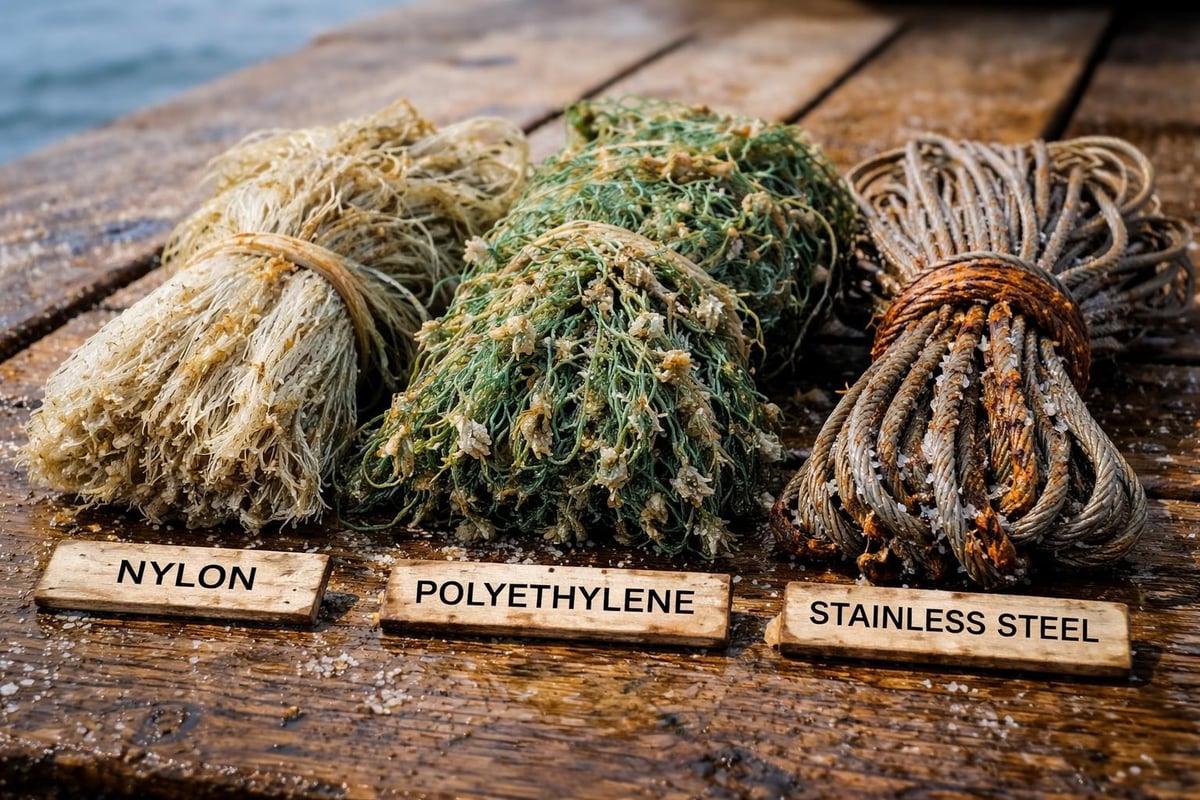
Modern fishing marine equipment leverages advanced materials engineered specifically for saltwater exposure. Nylon monofilament, polyethylene, and specialized synthetic fibers have revolutionized net construction, offering superior strength-to-weight ratios compared to traditional materials. These innovations extend equipment lifespan significantly, reducing replacement costs and environmental waste.

Marine-grade stainless steel components, particularly AISI316 wire rope, provide corrosion resistance essential for long-term saltwater deployment. The 7x19 construction pattern delivers flexibility without compromising tensile strength, making it ideal for rigging applications where equipment must withstand constant movement and load variations.

Fishing marine equipment material durability

Commercial Fishing Net Selection and Specifications

Selecting appropriate fishing nets requires matching mesh specifications to target species while considering local regulations and conservation requirements. The fishing marine industry has developed standardized mesh sizes optimized for different species, ensuring compliance with sustainable fishing practices outlined by organizations like the Food and Agriculture Organization.

Species Target Mesh Size Range Net Type Typical Deployment
Baitfish/Herrings 12-25mm Set/Drag Shallow coastal
Snapper 125-156mm Set Mid-depth zones
Flounder 100-118mm Drag Bottom fishing
Mullet 85-100mm Drag Estuaries/harbors

Understanding these specifications prevents both undersized catch issues and excessive bycatch. Modern fishing marine operations increasingly adopt selective gear that allows juvenile fish to escape, supporting population regeneration. This approach aligns with NOAA's best practices for sustainable fishing, which emphasize habitat protection and stock conservation.

Ready-to-Use versus Custom Net Solutions

The fishing marine market offers two primary procurement paths: ready-to-use nets and custom-manufactured solutions. Ready-to-use options provide immediate deployment capability with standardized dimensions, ideal for operators who need quick replacements or seasonal expansions. New Zealand manufacturers produce significant volumes-over 350,000 meters annually-of ready-to-use fishing nets designed for Pacific conditions.

Custom solutions address specific operational requirements: unusual bottom topography, targeted species behavior, or unique vessel configurations. These specialized fishing marine products require detailed consultations but deliver optimized performance for particular fishing grounds.

Sustainable Fishing Marine Practices for 2026

The fishing marine industry faces increasing pressure to demonstrate environmental stewardship. Research published in Nature examining fishing-focused marine conservation reveals that effective planning must balance ecosystem health with community economic needs. This dual focus reshapes how commercial operations select and deploy fishing marine equipment.

Sustainable fishing marine practices now integrate traditional knowledge with scientific research. Studies on traditional fishing methods demonstrate that ancestral techniques often incorporated natural conservation mechanisms-selective harvest timing, gear restrictions, and spatial management-that modern fisheries are rediscovering through formal science.

Key sustainability considerations for fishing marine operations:

  1. Mesh selectivity: Allowing juvenile escapement
  2. Soak time management: Preventing ghost fishing
  3. Seasonal adjustments: Respecting spawning periods
  4. Bycatch reduction devices: Protecting non-target species
  5. Gear maintenance: Preventing marine debris
  6. Reporting accuracy: Supporting stock assessments

Understanding New Zealand fishing rules and regulations provides a framework for compliant operations. These guidelines reflect scientific understanding of species-specific reproductive patterns and ecosystem carrying capacity.

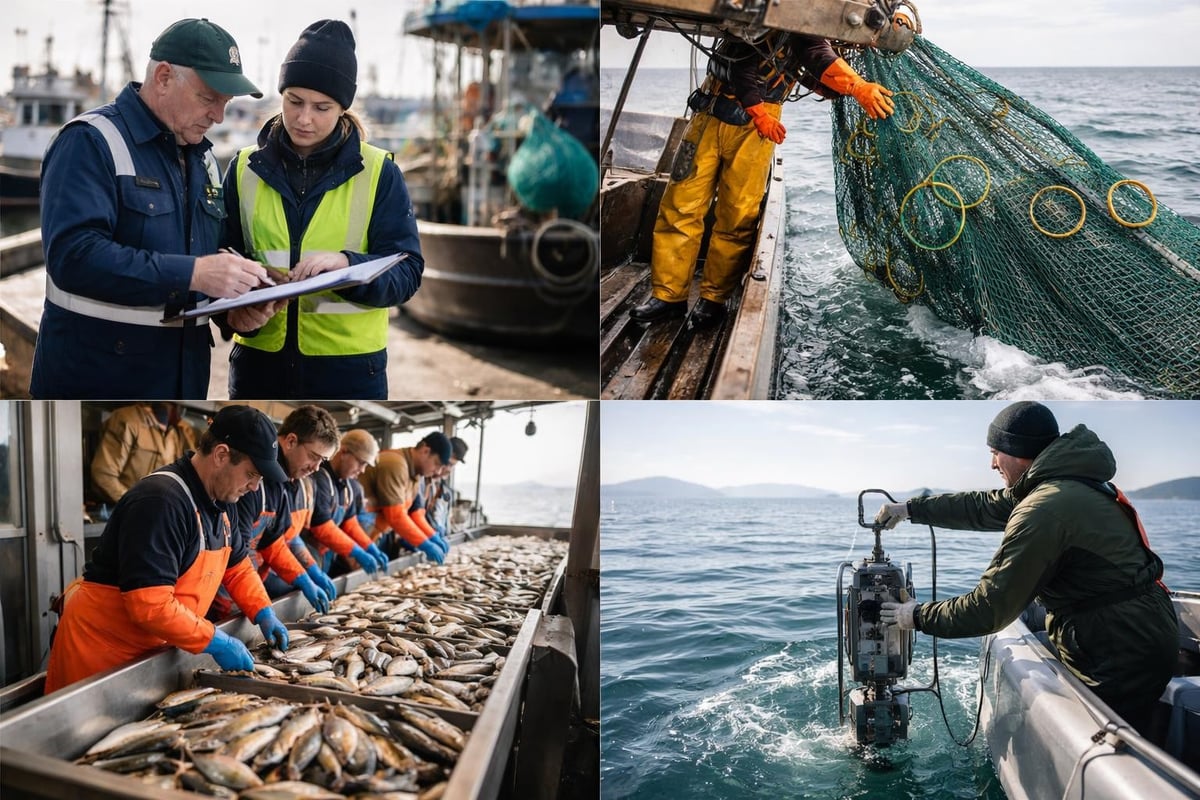
Sustainable fishing marine workflow

Supporting Equipment and Accessories

Beyond nets themselves, successful fishing marine operations depend on comprehensive supporting systems. Float systems determine net positioning and visibility, while rope configurations affect deployment efficiency and retrieval success. The fishing marine accessory market has evolved to offer specialized solutions for virtually every operational challenge.

Float and Buoyancy Systems

Proper float selection ensures nets maintain intended positioning throughout deployment periods. Variables include:

  • Buoyancy capacity matched to net weight and current conditions
  • Visibility features for navigation safety and theft prevention
  • Durability ratings for expected deployment duration
  • Attachment methods ensuring secure connection under load

Commercial fishing marine operations typically employ graduated float systems, with larger floats at corners and smaller units distributed along headropes. This configuration maintains even net spread while minimizing material costs.

Rope and Line Specifications

Marine-grade ropes serve multiple functions: net construction, mooring, retrieval, and equipment securing. Material selection impacts performance characteristics significantly. Nylon offers stretch capacity that absorbs shock loads, while polyethylene provides superior abrasion resistance and floatability.

Rope Material Strengths Best Applications
Nylon Shock absorption, strength Mooring, anchor lines
Polyethylene Float, UV resistance Surface lines, buoys
Polypropylene Economy, light weight General utility
Wire rope (SS316) Maximum strength Heavy-duty rigging

The fishing marine industry increasingly specifies diameter-to-strength ratios, ensuring operators select appropriate lines without excessive weight or bulk. This optimization reduces handling fatigue and vessel storage requirements.

Regional Considerations for Pacific Fisheries

Pacific Island fisheries face unique fishing marine challenges: remote locations, limited infrastructure, export requirements, and diverse target species. Equipment must withstand tropical conditions-intense UV exposure, warm saltwater, and seasonal weather extremes-while remaining economically accessible to community-based operations.

Export-ready fishing marine products require specific quality standards and documentation. New Zealand-manufactured equipment gains preference in Pacific markets due to established quality reputations, relatively short shipping distances, and compliance with international fishing gear standards. Products designed for Pacific deployment incorporate reinforced construction addressing coral reef environments and powerful tidal movements.

Understanding species behavior improves fishing marine equipment effectiveness. Recent research on red snapper movement patterns demonstrates how fish behavior data informs optimal gear placement and deployment timing. Similar behavioral studies for Pacific species guide net specifications and fishing strategies across the region.

Community Fishery Requirements

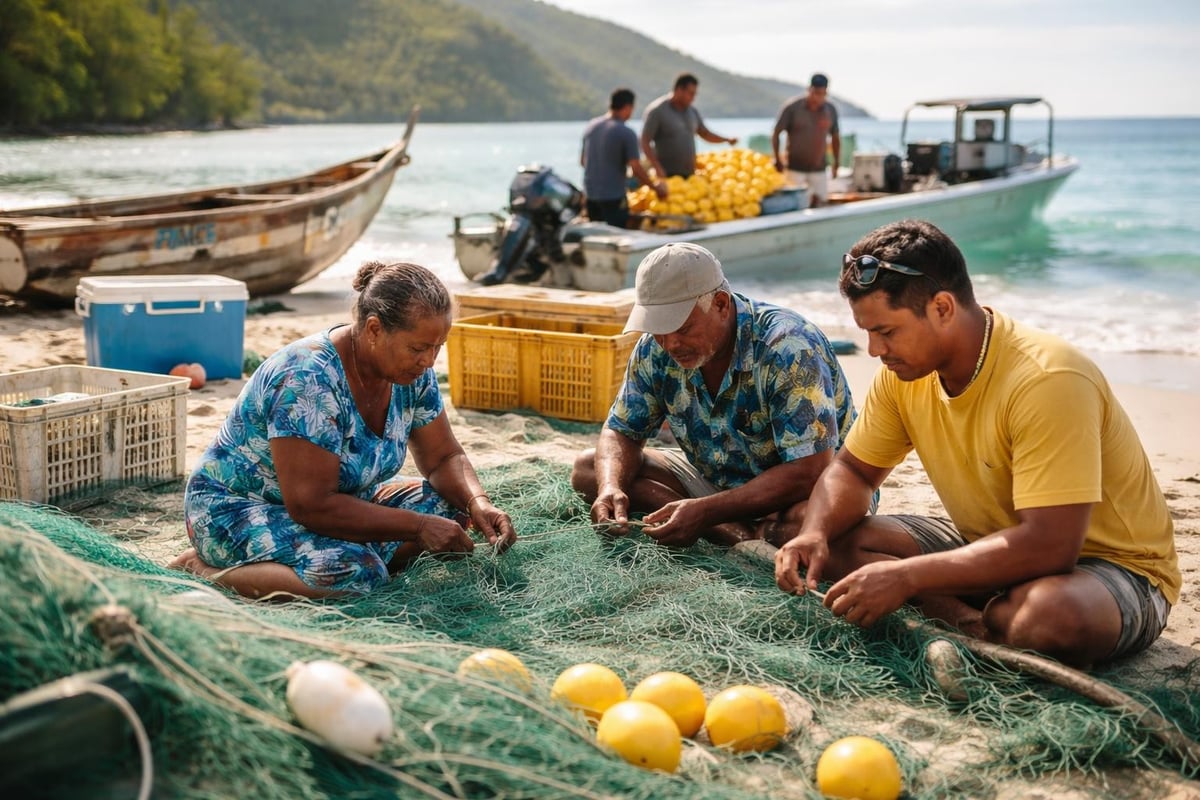
Community-scale fishing marine operations balance traditional practices with modern efficiency. Equipment must be:

  • Maintainable with locally available skills and tools
  • Affordable for cooperative purchasing models
  • Scalable from small family operations to village-level production
  • Adaptable to changing environmental conditions

Many Pacific communities employ seasonal rotation systems, alternating fishing grounds to prevent overexploitation. This practice requires fishing marine equipment that transports easily and deploys efficiently across multiple locations.

Pacific fishing marine operations

Equipment Maintenance and Longevity

Proper fishing marine equipment maintenance extends operational life significantly and prevents costly mid-season failures. Saltwater exposure accelerates degradation through multiple mechanisms: UV radiation breaks down synthetic fibers, salt crystals act as abrasives, and biological fouling increases drag while harboring corrosive bacteria.

Essential maintenance practices include:

  1. Freshwater rinsing after each deployment
  2. Shade storage protecting from direct UV exposure
  3. Regular inspections identifying wear patterns early
  4. Prompt repairs preventing small issues from expanding
  5. Rotation schedules distributing wear across equipment inventory
  6. Documentation systems tracking usage and performance

Commercial operators often maintain detailed equipment logs recording deployment dates, locations, catches, and observed damage. This data identifies optimal replacement intervals and highlights specific fishing grounds or conditions causing accelerated wear.

Net repair skills remain essential for fishing marine operations. Even minor damage can propagate rapidly under load, potentially resulting in complete net failure and lost catch. Many operations maintain repair kits containing spare mesh sections, needles, twine, and float replacements for field repairs.

Innovations Shaping Fishing Marine Technology

The fishing marine sector continuously evolves, incorporating technological advances that improve efficiency and sustainability. Developments in fishing innovations for 2026 demonstrate industry commitment to enhanced performance while reducing environmental impact.

Smart fishing marine equipment now incorporates sensors monitoring deployment depth, temperature, and soak time. This data streams to vessel systems, enabling real-time adjustments optimizing catch quality while preventing overfishing. GPS-enabled floats reduce gear loss and improve retrieval efficiency, particularly in challenging weather conditions.

Material science advances produce fishing marine products with enhanced durability. Polymer treatments increase UV resistance without adding weight, while innovative weaving patterns distribute loads more evenly across net structures. These refinements reduce replacement frequency, lowering operational costs and decreasing marine debris risks.

Integration with Management Systems

Modern fishing marine operations increasingly integrate equipment with broader fisheries management systems. Electronic reporting requirements in many jurisdictions demand accurate catch data, deployment locations, and effort metrics. Equipment manufacturers respond by designing products facilitating compliance-numbered floats enabling identification, standardized mesh patterns simplifying reporting, and documentation systems tracking individual net performance.

Recreational fishing science developed for sport fisheries increasingly informs commercial fishing marine practices. Catch-and-release techniques, hook design modifications, and handling protocols minimize stress on non-target species, supporting ecosystem health while maintaining commercial viability.

Sourcing Quality Fishing Marine Equipment

Procurement decisions significantly impact operational success. The fishing marine market offers varying quality levels at different price points, but false economy-purchasing inadequate equipment requiring frequent replacement-costs more than initial investment in reliable gear. Established manufacturers with proven track records provide confidence that equipment will perform as specified under actual deployment conditions.

Local sourcing advantages include reduced shipping times, easier warranty service, and support for regional economies. For Pacific operations, New Zealand-based suppliers offer geographical proximity combined with manufacturing expertise. Quick turnaround times prove essential when equipment failures threaten seasonal fishing windows or contractual delivery obligations.

Finding reliable essential fishing equipment stores requires evaluating multiple factors beyond pricing. Consider technical support availability, product range breadth, custom manufacturing capabilities, and understanding of specific operational requirements. Suppliers serving commercial fishing marine sectors should demonstrate knowledge of regulatory compliance, species-specific gear requirements, and regional environmental conditions.

Bulk purchasing arrangements benefit fishing marine operations through volume discounts and inventory predictability. Establishing relationships with manufacturers enables customized solutions addressing unique operational challenges while maintaining cost effectiveness. Many suppliers offer seasonal payment arrangements aligned with fishing income cycles, improving cash flow management for community-based operations.

Regulatory Compliance and Documentation

The fishing marine industry operates within comprehensive regulatory frameworks designed to ensure sustainable resource use. Equipment specifications often carry legal requirements: minimum mesh sizes preventing juvenile harvest, maximum net lengths controlling effort, and mandatory markings enabling enforcement. Understanding applicable regulations prevents costly violations and supports conservation objectives.

California's ocean sport fishing regulations exemplify detailed gear restrictions common across modern fisheries management. While focused on recreational fishing, these frameworks illustrate the specificity with which authorities regulate fishing marine equipment. Commercial operators must navigate similar requirements tailored to their jurisdictions and target species.

Documentation requirements extend beyond initial compliance. Many fishing marine operations maintain detailed records supporting sustainability certifications, export permits, and market access. Traceability systems tracking catches from deployment through processing increasingly demand equipment-level documentation, connecting specific nets to individual catches and fishing locations.


Success in commercial fishing depends fundamentally on selecting appropriate fishing marine equipment matched to operational requirements and environmental conditions. By combining quality gear with sustainable practices and proper maintenance, Pacific fisheries can maintain productive operations while supporting ecosystem health. Action Outdoors Limited provides New Zealand-made fishing marine equipment engineered for Pacific conditions, backed by technical expertise and rapid delivery across the region. Whether you need ready-to-use nets for immediate deployment or custom solutions addressing unique challenges, our comprehensive range supports commercial and community fisheries with reliable, export-ready products.

上一篇文章 Small Landing Nets: Essential Guide for 2026
下一篇文章 Fishing Bait Nets: Complete Guide for 2026

发表评论

*必填栏