跳至内容
Best Fishing Equipment for Beginners: Complete Guide

Best Fishing Equipment for Beginners: Complete Guide

Starting your fishing journey requires the right foundation of gear, and choosing the best fishing equipment for beginners can feel overwhelming with countless options available in 2026. The good news is that you don't need to invest in expensive professional-grade equipment to enjoy successful fishing trips. Understanding the essential gear and making informed choices will help you build confidence on the water while staying within budget. This comprehensive guide explores the fundamental equipment every new angler needs, from rods and reels to nets and tackle, ensuring you're properly prepared for your first fishing adventures.

Understanding Rod and Reel Combinations

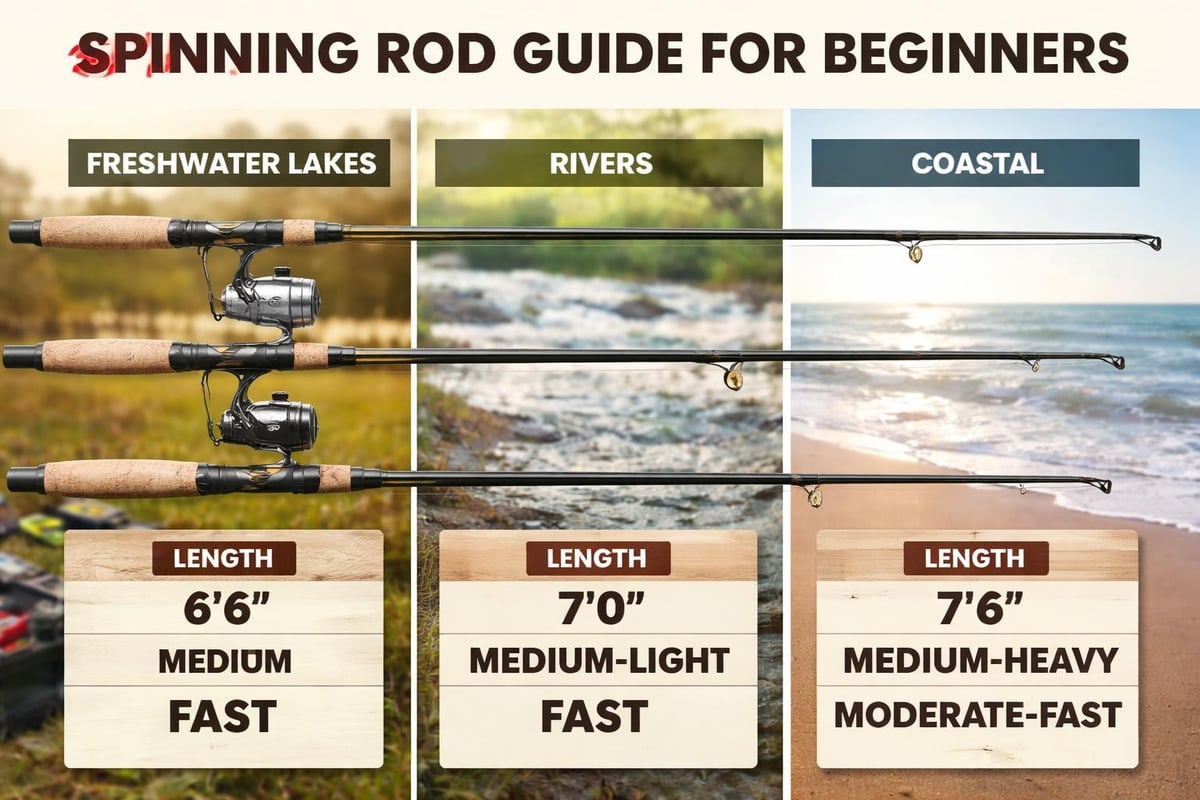
The rod and reel combo represents the cornerstone of your fishing setup, and selecting the right combination significantly impacts your learning experience. For beginners, spinning rod and reel combos offer the most versatile and user-friendly option across various fishing environments.

Choosing Your First Spinning Rod

A medium-power, 6 to 7-foot spinning rod provides excellent versatility for most beginner fishing situations. This length offers sufficient casting distance while maintaining control and maneuverability. The medium power rating handles a wide range of fish sizes, from panfish to bass, making it an ideal learning tool.

When evaluating rods, consider these key features:

  • Action rating: Medium or medium-fast action provides good sensitivity while forgiving casting mistakes
  • Material: Graphite composite rods balance affordability with performance
  • Handle comfort: Cork or EVA foam grips reduce hand fatigue during extended fishing sessions
  • Guide quality: Stainless steel guides prevent line wear and corrosion

The best beginner fishing rods combine durability with forgiving performance characteristics that help new anglers develop proper techniques without frustration.

Rod and reel selection guide

Selecting a Reliable Spinning Reel

Your reel should match your rod's specifications and provide smooth, consistent performance. A size 2500 to 3000 spinning reel works well with most beginner rod setups, offering adequate line capacity and drag strength for common fish species.

Reel Feature Beginner Specification Why It Matters
Ball Bearings 3-5 bearings minimum Smoother retrieve and longer lifespan
Gear Ratio 5.2:1 to 6.2:1 Balanced speed for various techniques
Drag System Front or rear drag, 10+ lbs Prevents line breaks with larger fish
Spool Material Aluminum or composite Reduces weight while maintaining strength

Look for fishing rod and reel combos that come pre-spooled with line, saving time and ensuring proper line installation from the start.

Essential Fishing Line Selection

Fishing line connects you to your catch, and understanding the three main types helps you make informed decisions. Each line type offers distinct advantages for different fishing situations.

Monofilament Line Benefits

Monofilament remains the most popular choice for beginners due to its forgiving nature and versatility. This single-strand nylon line stretches under pressure, absorbing shock from aggressive strikes and reducing the likelihood of pulled hooks. A 6 to 10-pound test monofilament line suits most beginner applications, providing sufficient strength without sacrificing castability.

Monofilament advantages include:

  • Lower cost compared to alternatives
  • Easy handling and knot tying
  • Good visibility for monitoring line movement
  • Neutral buoyancy for various presentation techniques

Braided and Fluorocarbon Alternatives

While monofilament serves as an excellent starting point, understanding braided and fluorocarbon lines expands your capabilities. Braided line offers superior strength-to-diameter ratio and zero stretch, making it ideal for heavy cover fishing. Fluorocarbon's near-invisibility underwater and abrasion resistance make it popular for leader material in clear water conditions.

Most beginners should start with monofilament and gradually experiment with other line types as their skills develop and fishing situations become more specialized.

Critical Tackle Box Components

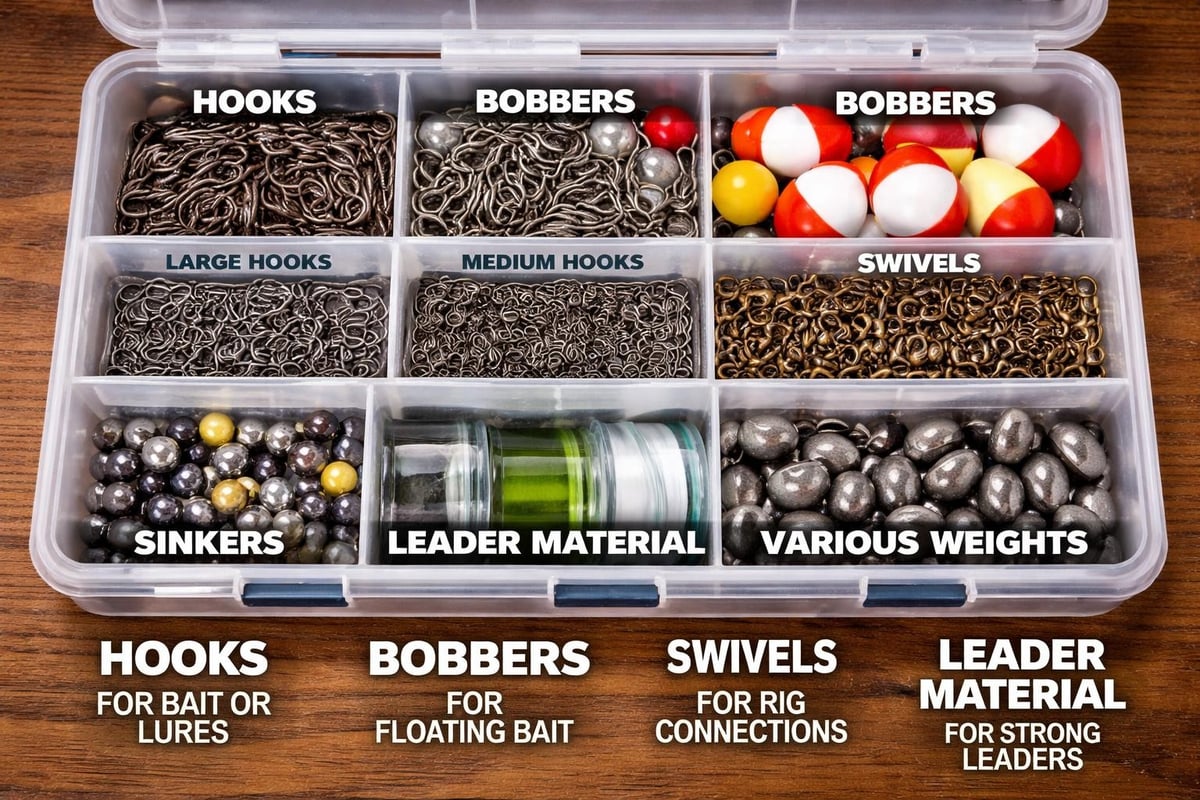
A well-organized tackle box contains the essential terminal tackle items needed to present your bait effectively. The best fishing equipment for beginners includes a thoughtfully curated selection of hooks, weights, and accessories rather than an overwhelming array of specialized items.

Hooks, Weights, and Swivels

Start with a basic assortment covering common fishing scenarios:

Hook Selection:

  • Size 6-10 Aberdeen hooks for live bait
  • Size 1/0-3/0 circle hooks for catch-and-release fishing
  • Size 4-8 octopus hooks for versatile applications

Weight Options:

  • Split shot assortment (various sizes)
  • Sliding egg sinkers (1/4 to 1 ounce)
  • Bank sinkers for bottom fishing

Connection Hardware:

  • Barrel swivels (size 10-14)
  • Snap swivels for quick lure changes
  • Bobber stops for slip float setups

The top fishing tackle every beginner needs includes these fundamental items organized for quick access during fishing trips.

Bobbers and Strike Indicators

Bobbers serve multiple purposes beyond simply suspending bait at specific depths. They act as visual strike indicators, helping beginners detect subtle bites they might otherwise miss. Round snap-on bobbers work well for calm water, while slip bobbers allow precise depth control in deeper water.

Tackle organization system

Nets and Landing Equipment

Quality nets represent an often-overlooked component of beginner fishing setups, yet they play a crucial role in successfully landing fish while minimizing injury to both angler and catch. Action Outloors Limited manufactures professional-grade nets suitable for recreational anglers, combining durability with fish-friendly designs.

Choosing the Right Net Size

Net selection depends on your target species and fishing environment. A 15 to 20-inch hoop diameter handles most freshwater fish that beginners encounter, from trout to medium-sized bass. The handle length should allow comfortable reach while maintaining maneuverability in confined spaces like kayaks or shore fishing.

Consider these net specifications:

Net Feature Beginner Recommendation Application
Hoop Diameter 15-20 inches Panfish, trout, bass
Handle Length 24-36 inches extendable Shore and boat fishing
Mesh Material Rubber-coated or knotless Fish protection
Mesh Depth 12-18 inches Secure fish retention

Mesh Material Considerations

Rubber-coated and knotless mesh materials protect fish by preventing scale damage and reducing slime coat removal. These materials also resist odor absorption and rinse clean more easily than traditional knotted nylon nets. For beginners practicing catch-and-release fishing, these fish-friendly options represent responsible choices that support sustainable fishing practices.

Bait and Lure Fundamentals

The best fishing equipment for beginners includes a balanced selection of live bait options and artificial lures. Starting with proven producers builds confidence before experimenting with specialized presentations.

Live Bait Options

Live bait remains the most reliable choice for beginners learning to detect strikes and set hooks properly. Worms, minnows, and insects trigger natural feeding responses in most fish species, increasing catch rates during the learning process.

Universal Live Baits:

  1. Nightcrawlers for bass, walleye, catfish
  2. Red worms for panfish and trout
  3. Minnows for predatory species
  4. Crickets and grasshoppers for surface feeders

Store live bait in appropriate containers with adequate ventilation and temperature control. Bait shops provide specialized containers, but simple solutions work well for beginners on limited budgets.

Beginner-Friendly Artificial Lures

Artificial lures offer reusability and eliminate live bait maintenance, making them practical for anglers who fish frequently. Start with these proven lure categories:

  • Soft plastic worms: Texas-rigged in various colors for bass fishing
  • Inline spinners: Size 2-4 for trout and panfish
  • Crankbaits: Shallow-running models for versatile presentations
  • Jigs: 1/8 to 1/4 ounce with grub trailers

The comprehensive guide to starting out right emphasizes matching lure size and color to local conditions and target species for optimal results.

Safety and Utility Accessories

Beyond rods, reels, and tackle, several accessories enhance safety and convenience during fishing trips. These items might not directly catch fish, but they significantly improve your overall experience.

Essential Safety Items

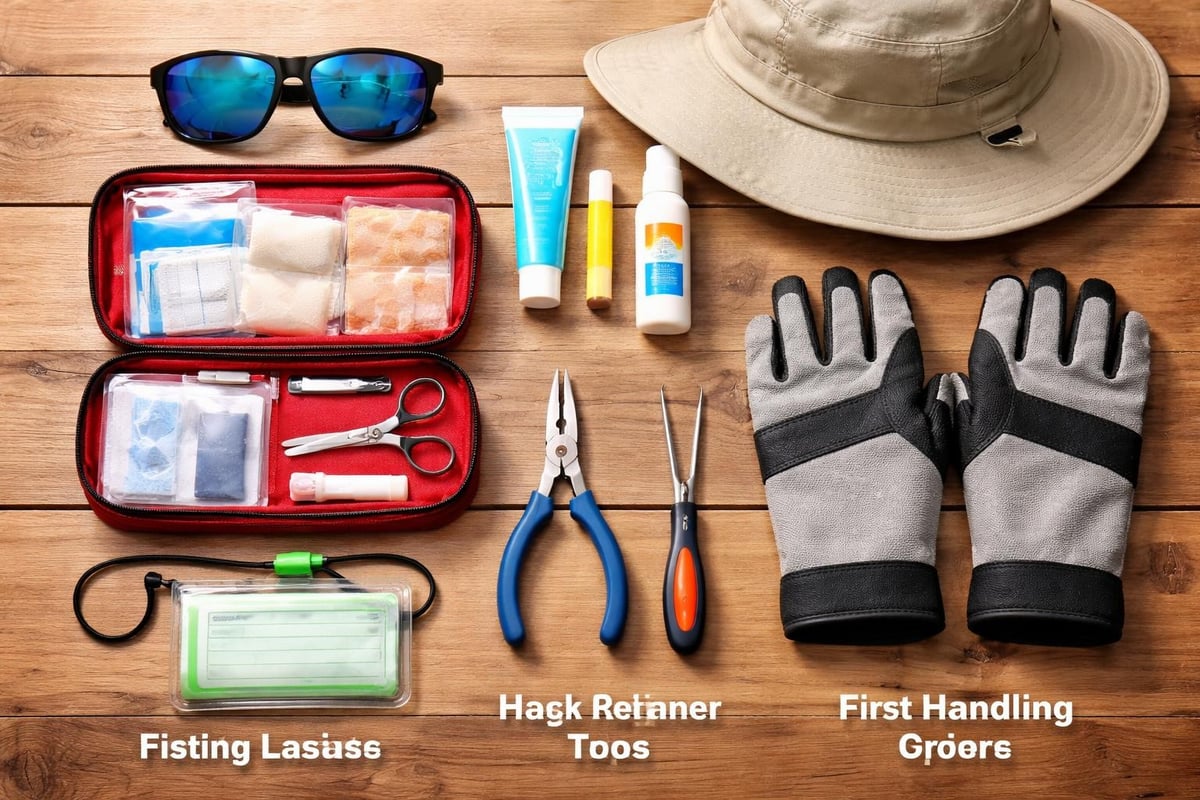
Required Safety Gear:

  • Polarized sunglasses protecting eyes from hooks and UV rays
  • Sun protection including hat and sunscreen
  • First aid kit with bandages and antiseptic
  • Pliers or multi-tool for hook removal
  • Fishing license and regulation guide

Polarized sunglasses serve double duty by protecting your eyes while reducing glare, allowing you to spot fish and underwater structure more easily. Quality fishing pliers remove hooks safely and crimp split shot weights effectively.

Fishing safety checklist

Practical Convenience Items

A few additional items make fishing more enjoyable and productive:

  • Tackle bag or box: Waterproof storage with organized compartments
  • Fishing hat: Wide brim for sun and rain protection
  • Measuring tape: Verify legal size limits before keeping fish
  • Stringer or cooler: Maintain catch freshness
  • Towel and hand wipes: Clean hands after handling bait and fish

Consider a basic fishing vest or tackle bag with multiple pockets for keeping frequently used items readily accessible. This organization reduces time spent searching through gear and increases time spent fishing.

Budget Planning and Value Maximization

Building a complete fishing setup requires financial planning, but beginners can assemble quality gear without excessive spending. Understanding where to invest and where to economize helps maximize value while avoiding frustrating equipment failures.

Prioritizing Your Purchases

Allocate your budget strategically across essential categories:

Equipment Category Budget Allocation Priority Level
Rod and Reel Combo 35-40% High
Fishing Line 10-15% High
Terminal Tackle 15-20% Medium
Net and Landing Gear 10-15% Medium
Lures and Bait 10-15% Medium
Accessories 10-15% Low

The value guide for essential fishing gear under $100 demonstrates how careful selection creates functional setups within modest budgets.

Economical Shopping Strategies

Smart shopping extends your budget further without compromising quality. Consider these budget-friendly tips:

  1. Purchase combo packages bundling rod, reel, and line together
  2. Buy terminal tackle in bulk packs rather than individual pieces
  3. Start with versatile items serving multiple purposes
  4. Focus on essential gear before specialty items
  5. Watch for seasonal sales at the end of fishing seasons

Many quality manufacturers offer beginner-focused product lines that deliver reliable performance at accessible price points. These introductory models provide excellent learning platforms without the premium costs of professional-grade equipment.

Storage and Maintenance Practices

Proper care extends the life of your fishing equipment significantly, protecting your investment while ensuring reliable performance. Simple maintenance routines prevent common problems and keep gear ready for your next fishing trip.

Rod and Reel Care

After each fishing trip, rinse your rod and reel with fresh water, especially after saltwater use. This simple step prevents corrosion and removes debris that accumulates in reel mechanisms and rod guides. Check guide inserts for cracks or chips that might damage your fishing line, and tighten loose reel handles or bail arms before they fail during critical moments.

Post-Trip Maintenance Checklist:

  • Rinse equipment with fresh water
  • Dry components thoroughly
  • Check guides and reel seat for damage
  • Loosen drag slightly for storage
  • Store rods horizontally or vertically supported

Tackle Organization Systems

Organized tackle storage saves time and prevents loss or damage to expensive components. Separate hooks by size and type, store soft plastics away from hard lures to prevent chemical reactions, and keep terminal tackle in labeled compartments. Replace rusty hooks and damaged line regularly rather than discovering failures while fishing.

The essential fishing equipment suppliers emphasize quality storage solutions that complement their fishing gear offerings, recognizing that proper organization enhances the fishing experience.

Learning Resources and Skill Development

The best fishing equipment for beginners works in harmony with developing knowledge and techniques. Investing time in learning fundamentals accelerates your progress and increases enjoyment on the water.

Educational Resources

Multiple channels provide valuable fishing education:

  • Local fishing clubs: Connect with experienced anglers offering mentorship
  • State fish and wildlife websites: Access regulations, stocking reports, and techniques
  • YouTube channels: Visual demonstrations of knot tying, casting, and fish handling
  • Fishing forums: Community knowledge sharing and local fishing reports

Focus on essential gear and practical tips that apply to your local fishing environment. Regional variations in species, regulations, and techniques require localized knowledge for optimal success.

Practice and Patience

Mastering fishing fundamentals requires practice in controlled environments before tackling challenging conditions. Practice casting in open areas without water to develop accuracy and distance control. Learn essential knots at home where you can focus without distraction. Understanding your equipment thoroughly in comfortable settings builds confidence for real fishing situations.

Start with accessible fishing locations offering high fish populations and easier conditions. Success breeds confidence, and early positive experiences encourage continued participation in the sport. As skills develop, gradually challenge yourself with more demanding techniques and target species.

Seasonal Considerations and Adaptability

Fishing equipment needs vary across seasons, and understanding these differences helps beginners prepare appropriately. The best fishing equipment for beginners includes versatile items that perform across multiple seasons while allowing seasonal specialization as skills advance.

Weather-Appropriate Gear

Temperature extremes influence both fish behavior and angler comfort. Cold weather fishing requires layered clothing, hand warmers, and modified techniques accounting for slower fish metabolism. Warm weather demands sun protection, hydration, and adjusted fishing times to avoid midday heat.

Seasonal Equipment Adjustments:

  • Spring: Lighter tackle for aggressive post-spawn feeding
  • Summer: Early morning and evening gear for optimal fishing windows
  • Fall: Medium to heavy tackle for pre-winter feeding frenzies
  • Winter: Specialized cold-water techniques and insulated accessories

Maintaining sharp knives and proper cutting tools ensures efficient fish processing across all seasons. Quality whetstones maintain sharp edges on fillet knives and fishing tools, extending their useful life through regular maintenance.

Adapting to Local Conditions

Regional fishing environments require equipment modifications based on water types, structure, and target species. Coastal anglers need corrosion-resistant components and heavier tackle than freshwater anglers. River fishing demands different weight and presentation strategies compared to still-water lake fishing.

Research local fishing reports and talk with tackle shop staff familiar with regional conditions. Their insights help you select the most effective equipment variations for your specific fishing environment, avoiding wasted purchases on inappropriate gear.

Building Your Fishing Community

Fishing offers social connections beyond individual pursuits, and joining the fishing community enhances your learning experience significantly. The essential fishing gear discussion extends beyond equipment to include the people who use it.

Finding fishing partners creates accountability, shares transportation costs, and provides immediate feedback on techniques. Experienced anglers willingly share knowledge with enthusiastic beginners who show respect for the sport and the environment. Local fishing clubs organize group outings, skills workshops, and conservation projects that benefit both members and local fisheries.

Social media groups and online forums connect anglers across geographic distances, offering trip reports, technique discussions, and equipment reviews. These digital communities supplement in-person interactions, providing year-round engagement during off-seasons or between fishing trips. Participate actively by asking questions, sharing your experiences, and contributing to discussions about the best fishing equipment for beginners.

Environmental Responsibility and Conservation

Modern anglers recognize their role as stewards of aquatic resources, and beginning your fishing journey with conservation-minded practices establishes positive lifelong habits. Proper fish handling, selective harvest, and habitat protection ensure fishing opportunities for future generations.

Catch and Release Best Practices

When practicing catch and release, minimize fish handling time and keep fish in water as much as possible. Use barbless hooks or crimp down barbs for easier hook removal. Support fish in current until they swim away strongly, and avoid fishing during extreme temperature periods that stress fish populations unnecessarily.

Rubber or knotless nets significantly reduce scale damage and slime coat removal compared to traditional knotted nylon nets. This equipment choice demonstrates commitment to fish welfare while maintaining functionality for successful landings.

Respecting Fishing Regulations

Familiarize yourself with local fishing regulations including size limits, bag limits, and seasonal closures. These rules protect fish populations during critical spawning periods and maintain balanced ecosystems. Licensing requirements fund habitat restoration, stocking programs, and access improvements benefiting all anglers.

Carry current regulations with your fishing gear and verify rules before keeping any fish. Size and species identification mistakes can result in violations, so when in doubt, release the fish. Ethical fishing practices distinguish responsible anglers from those who take without giving back to the resource.


Starting your fishing journey with the right equipment sets the foundation for years of enjoyment on the water, and understanding essential gear helps you make confident purchasing decisions. From versatile rod and reel combos to quality nets and organized tackle storage, each component plays a role in your success as an angler. Whether you're fishing New Zealand's pristine waters or exploring Pacific fisheries, Action Outdoors Limited provides comprehensive fishing and marine equipment backed by New Zealand manufacturing quality and expert knowledge. Visit Action Outdoors Limited to explore their full range of fishing gear and discover how their products support anglers at every skill level.

上一篇文章 Uses for Pro-Manila Synthetic Manila Rope in Your Daily Life
下一篇文章 Fishing Techniques with a 10FT 1 Inch White Cast Net

发表评论

*必填栏