跳至内容
Cast Net Fishing Price: Complete 2026 Buying Guide

Cast Net Fishing Price: Complete 2026 Buying Guide

Understanding the cast net fishing price landscape helps anglers and commercial fishers make informed purchasing decisions that balance quality with budget. Whether you're a recreational fisher targeting baitfish in coastal waters or managing commercial fishing operations across the Pacific, knowing what drives pricing allows you to invest wisely in equipment that delivers lasting value. The market offers everything from entry-level options under $30 to professional-grade nets exceeding $200, with each price point reflecting specific construction methods, materials, and intended applications.

Understanding Cast Net Price Ranges in 2026

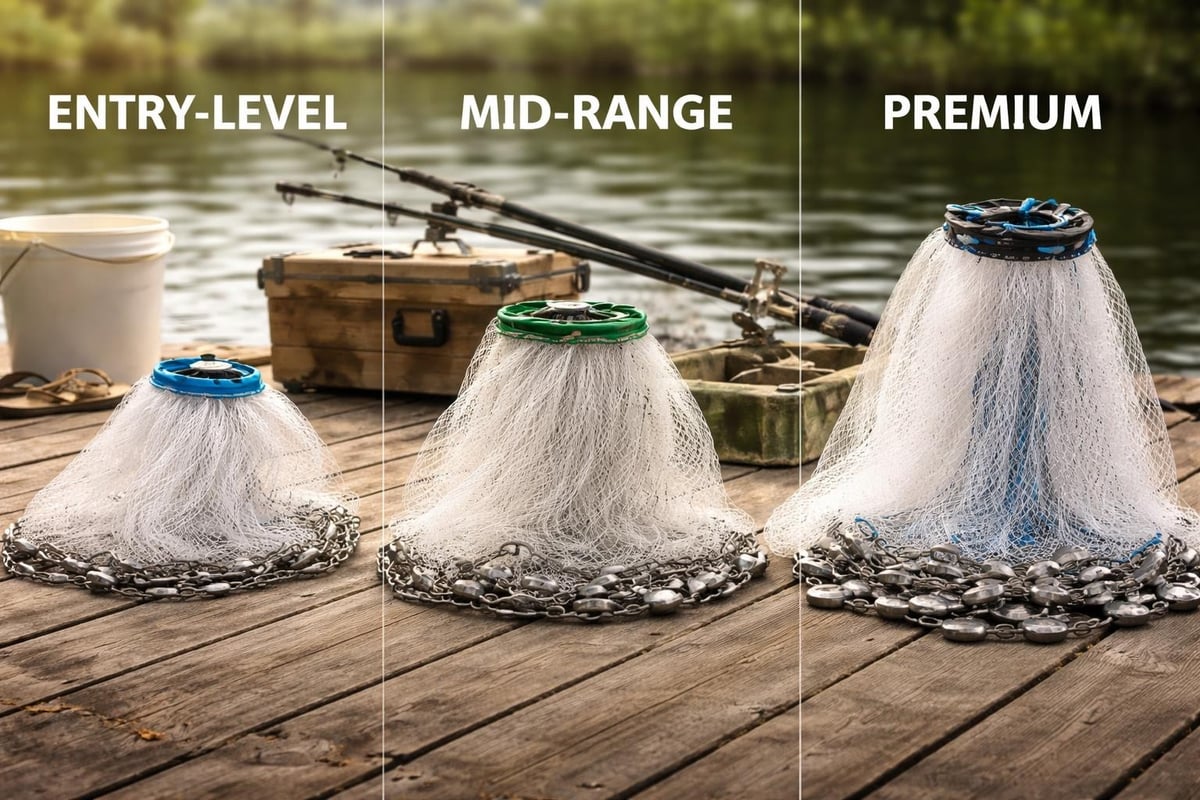
The cast net fishing price spectrum varies dramatically based on several core factors. Entry-level nets typically range from $25 to $50, mid-range options fall between $50 and $120, while premium commercial-grade nets can command $150 to $300 or more.

Budget-friendly options serve recreational anglers who fish occasionally or beginners learning proper casting techniques. These nets generally feature monofilament construction with lighter lead weights and smaller diameters, making them affordable but less durable for intensive use.

Mid-range nets represent the sweet spot for serious hobbyists and semi-professional operations. They incorporate better materials, reinforced construction, and thoughtful design features that extend lifespan considerably. Many fishers in New Zealand and Pacific Island communities find this category offers the best value proposition.

Premium nets justify their higher cast net fishing price through superior craftsmanship and materials designed for daily commercial use. These nets withstand harsh saltwater environments, heavy workloads, and repeated casting sessions without degrading quickly.

Price Category Typical Range Best For Expected Lifespan
Entry-Level $25-$50 Beginners, occasional use 6-12 months
Mid-Range $50-$120 Serious hobbyists, frequent use 1-3 years
Premium $150-$300+ Commercial operations, daily use 3-5+ years
Cast net price categories

Key Factors That Influence Cast Net Fishing Price

Material Composition and Quality

The materials used in net construction significantly impact both performance and cost. Monofilament netting offers affordability and works well in clear water conditions where visibility matters less. Multifilament netting costs more but provides superior strength and longevity, especially in commercial applications.

Lead weight quality varies considerably across price points. Cheaper nets use lighter, lower-grade lead that may corrode or detach over time. Premium options incorporate heavier, marine-grade lead weights that maintain integrity through years of saltwater exposure.

Mesh construction techniques separate budget from premium nets. Hand-tied knots provide superior strength compared to machine-welded joints, though they increase labor costs and final pricing. For detailed insights into how construction methods affect pricing, the comprehensive analysis of cast net prices breaks down these differences thoroughly.

Net Diameter and Mesh Size Specifications

Larger diameter nets require significantly more material, directly increasing the cast net fishing price. A 4-foot radius net uses roughly half the material of an 8-foot model, creating substantial cost differences. However, diameter selection should align with target species and fishing environment rather than budget alone.

Mesh size determines what species you can effectively catch and retain. Smaller mesh (3/8-inch to 1/2-inch) works for tiny baitfish but requires more material and labor to produce, increasing costs. Larger mesh (1-inch to 2-inch) reduces material needs but limits target species.

  • Small mesh (3/8" - 1/2"): Ideal for small baitfish, higher material costs
  • Medium mesh (5/8" - 3/4"): Versatile for multiple species, balanced pricing
  • Large mesh (1" - 2"): Targeting larger bait, reduced material requirements

The essential fishing equipment suppliers guide provides context for evaluating different equipment options in 2026.

Brand Reputation and Manufacturing Standards

Established manufacturers command premium pricing because they've proven reliability over time. Companies like Action Outdoors Limited, producing over 350,000 meters of fishing nets annually, maintain rigorous quality control that justifies higher initial investment through extended product life.

Lesser-known brands might offer lower upfront costs but potentially compromise on quality assurance. Manufacturing location also influences pricing-nets produced in countries with lower labor costs generally retail for less, though quality can vary significantly. New Zealand-made products typically reflect higher manufacturing standards and fair labor practices.

According to the historical overview and construction details on Wikipedia, cast nets have evolved significantly over centuries, with modern manufacturing techniques enabling greater consistency and quality control.

Comparing Cast Net Options Across Different Retailers

Online Marketplace Pricing Strategies

Major fishing supply retailers offer varying cast net fishing price points and selection depth. Lee Fisher Fishing Supply's cast net collection showcases diverse options with detailed specifications, allowing buyers to compare features against price points effectively.

Similarly, Capt. Harry's Fishing Supply provides another perspective on pricing structures, demonstrating how different retailers position similar products. These established suppliers often bundle accessories or offer seasonal promotions that effectively reduce overall costs.

Specialty retailers focusing on specific fishing methods typically charge premium prices but provide expert guidance and product knowledge. Their staff can recommend appropriate net specifications for particular fishing conditions, potentially saving money by preventing mismatched purchases.

Direct manufacturer purchasing often yields the best cast net fishing price value. Companies like Action Outdoors Limited eliminate middleman markups while maintaining quality standards, especially beneficial for commercial operations requiring multiple nets or bulk orders.

International vs. Local Manufacturing Price Differences

Nets manufactured in Asia and available through platforms like Alibaba's cast net marketplace frequently offer the lowest upfront costs. However, shipping expenses, import duties, and quality inconsistencies can offset initial savings.

Locally manufactured nets from New Zealand producers generally cost 20-40% more than imported alternatives but provide several advantages. Shorter supply chains mean faster delivery, easier warranty claims, and support for local economies. For Pacific Island fisheries, proximity to New Zealand manufacturers ensures quicker restocking and better customer service.

Quality assurance represents perhaps the most significant difference. Local manufacturers maintain consistent standards because their reputation depends on product performance within their community. This accountability often translates to better long-term value despite higher initial pricing.

Budget Considerations for Different Fishing Applications

Recreational and Bait Fishing Needs

Weekend anglers pursuing baitfish for larger game fish catches typically need 4-6 foot radius nets with 3/8-inch to 1/2-inch mesh. For this application, a cast net fishing price between $40 and $80 provides adequate quality without overinvestment.

Recreational users should prioritize ease of use and weight over maximum durability. A slightly lighter net casts more easily for beginners learning proper technique, while reasonable quality ensures multiple seasons of service.

Consider these factors when budgeting for recreational use:

  1. Frequency of use: Occasional fishing justifies lower investment
  2. Skill level: Beginners benefit from lighter, more forgiving nets
  3. Storage conditions: Proper care extends lifespan of budget options
  4. Target species size: Smaller baitfish require smaller, less expensive mesh
Recreational cast net specifications

Commercial and Professional Operations

Commercial fishers cannot afford equipment failures that cost fishing time and potential income. Their cast net fishing price considerations emphasize total cost of ownership rather than initial purchase price alone. A $200 net lasting five years outperforms a $50 net requiring annual replacement.

Professional operations typically deploy 8-12 foot radius nets with mesh sizes tailored to specific target species. These larger dimensions and heavier construction significantly increase material and labor costs but deliver proportionally greater catches per cast.

Durability requirements for commercial use demand premium materials and construction. Reinforced brail lines, double-stitched seams, and corrosion-resistant hardware prevent failures during critical fishing windows. The seemingly high cast net fishing price for commercial-grade equipment quickly justifies itself through reduced downtime and replacement costs.

Application Recommended Diameter Mesh Size Realistic Budget
Recreational Bait 4-6 feet 3/8" - 1/2" $40-$80
Serious Hobbyist 6-8 feet 1/2" - 3/4" $80-$140
Semi-Commercial 8-10 feet 3/4" - 1" $140-$220
Full Commercial 10-12 feet 1" - 2" $220-$350+

Community and Subsistence Fishing Requirements

Pacific Island communities often depend on fishing for both food security and economic activity. Their net selection must balance affordability with reliability, as equipment failures directly impact nutrition and income.

Community fishing operations benefit from mid-range nets offering proven durability at accessible prices. Options in the $80-$140 range typically provide several years of service when properly maintained, making them cost-effective for regular use.

Group purchasing arrangements can substantially reduce per-unit costs. When communities or fishing cooperatives order multiple nets, manufacturers like Action Outdoors Limited often provide volume discounts that make quality equipment more accessible.

Value-Added Features Worth the Investment

Construction Enhancements That Justify Higher Prices

Hand-tied knots throughout the net increase the cast net fishing price by 15-30% compared to machine-welded alternatives, but they virtually eliminate knot failures that destroy cheaper nets. Each hand-tied connection distributes stress more effectively and resists the abrasion that quickly degrades welded joints in saltwater environments.

Reinforced brail lines represent another worthwhile upgrade. These critical components bear the entire net's weight plus catch during retrieval. Budget nets often use undersized cordage that stretches or breaks under load, while quality manufacturers incorporate appropriately rated lines with chafe protection.

Swivel mechanisms prevent line tangling and extend net life by allowing natural rotation during throws and retrieves. This seemingly minor component adds $8-$15 to manufacturing costs but prevents the frustrating tangles that waste fishing time and cause premature net retirement.

UV-resistant treatments preserve netting strength in harsh sunlight exposure. While adding to initial costs, these treatments significantly extend useful life in tropical climates where unprotected nylon degrades rapidly.

Warranty and Customer Support Considerations

Reputable manufacturers backing products with meaningful warranties demonstrate confidence in their construction quality. A one-year warranty might seem standard, but it signals the company expects their product to perform reliably through that period.

Companies like those featured in the 2026 fishing innovations guide increasingly offer extended warranties on premium products, recognizing that superior materials and construction justify longer guarantee periods.

Customer service accessibility matters significantly when problems arise. Local manufacturers provide easier communication and faster resolution compared to overseas suppliers requiring international shipping for warranty claims. This convenience factor adds tangible value beyond the base cast net fishing price.

Seasonal Pricing Patterns and Buying Strategies

Optimal Purchase Timing for Best Value

Cast net fishing price fluctuations follow predictable seasonal patterns. Retailers typically offer deepest discounts during winter months when fishing activity declines in temperate regions. Patient buyers can save 20-35% by purchasing during November through February clearance periods.

Pre-season sales in early spring provide another opportunity for value-conscious buyers. Retailers stock up before peak fishing season and often incentivize early purchases through promotional pricing. These sales offer better selection than end-of-season clearances while still delivering meaningful discounts.

Holiday promotions around major shopping events can yield excellent deals, though selection may be limited to specific models. Black Friday and end-of-financial-year sales often feature quality nets at reduced prices as retailers clear inventory.

However, waiting for sales carries risks for commercial operations. Peak fishing seasons don't accommodate delayed equipment purchases, making it wiser to invest in proper gear when needed rather than compromising operations for modest savings.

Bulk Purchasing and Fleet Discounts

Commercial operations and fishing cooperatives achieve substantial savings through bulk orders. Volume discounts typically begin at three units and increase with order size. A ten-net purchase might yield 15-25% savings compared to individual retail pricing.

Manufacturers appreciate bulk orders because they enable production efficiency and predictable workflow. This value gets passed to customers through reduced per-unit pricing. For community fishing groups, coordinating orders maximizes everyone's purchasing power.

Fleet standardization offers additional benefits beyond direct cost savings. When an operation uses identical nets, maintenance knowledge transfers across the fleet, spare parts inventory simplifies, and crew training becomes more efficient.

Bulk purchasing advantages

Maintenance Impact on Long-Term Value

Care Practices That Extend Net Lifespan

Proper maintenance significantly influences the effective cast net fishing price by extending useful life. Rinsing nets thoroughly with fresh water after saltwater use prevents corrosion and material degradation that quickly destroys untreated equipment. This simple five-minute practice can double net lifespan.

Proper storage protects nets from UV damage and physical stress. Hanging nets loosely in shaded areas prevents mildew growth while avoiding compression damage from folding. Many premature net failures result from improper storage rather than fishing use.

Regular inspection catches small problems before they become major failures. Checking for:

  • Worn or frayed brail lines requiring replacement
  • Damaged mesh sections needing repair
  • Corroded or loose lead weights
  • Weakened swivel connections
  • UV-degraded netting material

Early intervention through minor repairs costs far less than replacing entire nets. A $15 repair kit can salvage a $150 net, making maintenance an excellent investment in equipment longevity.

Repair vs. Replacement Decision Factors

Determining when repairs make economic sense depends on damage extent and net age. Minor mesh tears affecting less than 10% of surface area typically justify repair, especially on premium nets. The repair cost remains well below replacement pricing while restoring full functionality.

Structural failures involving brail lines, horn attachments, or extensive mesh damage often signal replacement time, particularly on older nets. At that point, accumulated wear throughout the net means other failures will likely follow soon.

The cast net fishing price for quality replacement should be weighed against repair costs plus remaining useful life. A three-year-old budget net requiring $40 in repairs probably deserves replacement with a better-quality option. That same repair cost on a one-year-old premium net makes perfect sense.

Making Informed Purchase Decisions

Matching Specifications to Fishing Conditions

Successful net selection aligns specifications with actual fishing environments and target species. A perfect net for shallow coastal bays performs poorly in deeper offshore waters, regardless of quality or price. Understanding your specific requirements prevents costly mismatches.

Water depth significantly influences appropriate net diameter and weight distribution. Shallow water under six feet allows larger radius nets, while deeper water requires heavier lead weight per foot to achieve adequate sink rate. The cast net fishing price increases proportionally with these specification adjustments.

Target species behavior dictates mesh size selection. Schooling baitfish like pilchards work well with 3/8-inch mesh, while larger species like mullet require 3/4-inch or larger openings. Using incorrectly sized mesh either allows target species to escape or captures excessive unwanted catch.

Current strength and water clarity also influence net effectiveness. Strong currents demand heavier lead weight and smaller radius for control. Murky water permits more aggressive bait fish that tolerate visible netting, while clear water situations often require more expensive monofilament for reduced visibility.

Evaluating Total Cost of Ownership

Smart buyers calculate total cost rather than focusing exclusively on initial purchase price. A $60 net requiring annual replacement costs $300 over five years, while a $180 net lasting that entire period saves $120 plus the hassle of repeated purchases.

Transportation and import costs add significantly to advertised pricing for international purchases. A $50 net with $35 shipping and $15 import duties actually costs $100, potentially exceeding locally manufactured alternatives offering better quality and service.

Warranty coverage and customer support accessibility represent tangible value often overlooked in price comparisons. Local suppliers providing easy warranty claims and knowledgeable technical support save time and frustration worth far more than modest upfront savings.

Consider these total ownership factors:

  1. Expected lifespan based on construction quality
  2. Shipping and import costs for delivered price
  3. Warranty terms and claim process complexity
  4. Replacement part availability and pricing
  5. Maintenance requirements and associated costs

For New Zealand anglers seeking reliable local suppliers, checking options at tackle shops in your area provides opportunities to examine quality firsthand before committing to purchases.

Quality Indicators Beyond Price Tags

Recognizing Superior Construction Standards

Physical examination reveals construction quality that separates premium nets from budget alternatives. Uniform mesh knots throughout indicate careful manufacturing, while inconsistent knot sizing suggests rushed production or inadequate quality control affecting durability.

Lead weight distribution should be even around the net's circumference with secure attachment. Loose or irregularly spaced weights compromise casting performance and sink rate consistency. Quality manufacturers crimp leads onto netting rather than using cheap tie-off methods that fail quickly.

Netting material assessment requires checking for smooth, consistent fibers without rough spots or thin sections. Monofilament should be clear and uniform, while multifilament strands should feel supple rather than stiff. The cast net fishing price often correlates directly with material grade.

Swivel quality varies dramatically across price points. Premium nets use sealed ball-bearing swivels that operate smoothly through thousands of rotations, while budget options employ simple barrel swivels that seize or fail within months. Testing swivel action before purchase reveals much about overall quality.

Manufacturer Reputation and Product Reviews

Established manufacturers with decades of experience generally deliver more consistent quality than newcomers. Their reputation depends on product performance, creating strong incentives for maintaining standards. Companies producing hundreds of thousands of meters annually, like Action Outdoors Limited, achieve manufacturing efficiency that enables competitive pricing without quality compromise.

Customer reviews provide valuable insights into real-world performance beyond marketing claims. Patterns in feedback reveal common issues or exceptional qualities. Multiple reviews mentioning premature failure or superior durability carry more weight than isolated opinions.

Industry certifications and compliance with fishing regulations demonstrate manufacturer commitment to proper standards. Nets meeting specific fishery requirements ensure legal use while indicating attention to design details that affect performance.

Professional endorsements from commercial fishers or fishing guides carry particular weight because these users demand equipment capable of daily professional use. Their willingness to recommend specific brands or models speaks volumes about proven reliability.


Understanding what drives cast net fishing price empowers buyers to select equipment matching their specific fishing applications and budget constraints while avoiding costly mistakes. Whether you need a basic net for occasional bait fishing or professional-grade equipment for commercial operations, informed decision-making ensures optimal value from your investment. Action Outdoors Limited manufactures quality fishing nets backed by New Zealand craftsmanship and decades of Pacific fishing expertise, offering equipment that balances performance with fair pricing for recreational and commercial fishers throughout the region. Our extensive range and knowledgeable staff help match the right net to your exact fishing requirements.

上一篇文章 Fishing Nets Large: Commercial Guide for 2026
下一篇文章 Small Landing Nets: Essential Guide for 2026

发表评论

*必填栏