Fishing Bait Nets: Complete Guide for 2026
Fishing bait nets represent an essential tool for anglers, commercial fisheries, and bait dealers who understand that successful fishing begins with securing quality live bait. These specialized nets differ significantly from standard fishing nets in their design, mesh size, and handling characteristics, all engineered to capture and transport delicate baitfish without injury. Whether you're a recreational angler preparing for a day on the water or a commercial operation supplying Pacific Island markets, understanding the nuances of fishing bait nets can dramatically improve your fishing efficiency and bait survival rates.
Understanding Fishing Bait Net Design and Construction
The construction of fishing bait nets prioritizes bait preservation over catch volume. Unlike commercial fishing nets designed to harvest large quantities of fish, bait nets feature finer mesh, softer materials, and gentler handling characteristics that keep fragile baitfish alive and active.
Mesh Size and Material Selection
Mesh size determines which baitfish species you'll successfully capture while allowing smaller organisms to escape. Most fishing bait nets utilize mesh ranging from 6mm to 25mm, depending on target bait species. Monofilament netting offers transparency that reduces bait stress, while soft nylon mesh minimizes scale loss and abrasion during collection.
The material composition directly impacts bait survival rates. Research on baiting gill nets and fish behavior demonstrates how net materials influence fish responses, with softer materials generating less stress during capture.
| Mesh Size | Target Baitfish | Common Applications |
|---|---|---|
| 6-10mm | Small minnows, whitebait | Freshwater stream fishing |
| 12-15mm | Medium baitfish, pilchards | Coastal fishing, estuaries |
| 18-25mm | Larger bait species, mullet | Commercial bait operations |

Frame Construction and Handle Design
Modern fishing bait nets incorporate ergonomic features that reduce fatigue during extended use. Lightweight aluminum frames provide strength without excess weight, while telescoping handles allow anglers to reach productive bait holding areas without entering the water.
The frame shape influences netting efficiency. D-shaped frames excel in confined spaces like boat wells and pier pilings, while circular frames provide maximum surface area for open water bait collection. Consider your primary fishing environment when selecting frame geometry.
Types of Fishing Bait Nets for Different Applications
Different fishing scenarios demand specialized bait net designs. Understanding these variations ensures you select equipment matched to your operational requirements.
Cast Nets for Baitfish Collection
Cast nets remain the most efficient method for capturing large quantities of baitfish in open water. These circular nets feature weighted perimeters that sink rapidly, trapping bait as the net settles to the bottom. Bait net basics provide comprehensive guidance on cast net techniques, particularly valuable for anglers working Florida waters and similar coastal environments.
Proper casting technique requires practice but delivers superior results. The synchronized throw creates a perfect circle that maximizes coverage area, while quick retrieval prevents bait escape through the mesh openings.
Dip Nets and Scoop Designs
Dip nets serve anglers who need to capture individual baitfish or transfer live bait between containers. Delta Net & Twine's dip net collection demonstrates the variety available, from compact handheld designs to extended-reach models for commercial operations.
- Short-handle dip nets: Ideal for boat-based bait collection
- Telescoping models: Reach shoreline bait schools without wading
- Large-mouth designs: Efficient for high-volume bait transfers
- Fine-mesh variants: Capture smallest bait species without damage
Seine Nets for Shallow Water Operations
Seine nets excel in shallow coastal areas and estuaries where baitfish congregate. These rectangular nets feature floats along the top edge and weights on the bottom, creating a vertical wall that herds baitfish into concentrated areas. Minnow seine nets specifically target small baitfish, with mesh sizes and net lengths optimized for efficient bait collection in freshwater and brackish environments.
Two-person seine operations deliver impressive results in water depths from ankle-deep to chest-high, making them invaluable for community fishing operations and bait dealers serving multiple anglers.
Selecting the Right Fishing Bait Nets for Your Operation
Choosing appropriate fishing bait nets requires evaluating your target species, fishing environment, and operational scale. Commercial operations demand different specifications than recreational anglers, and regional fishing conditions further influence selection criteria.
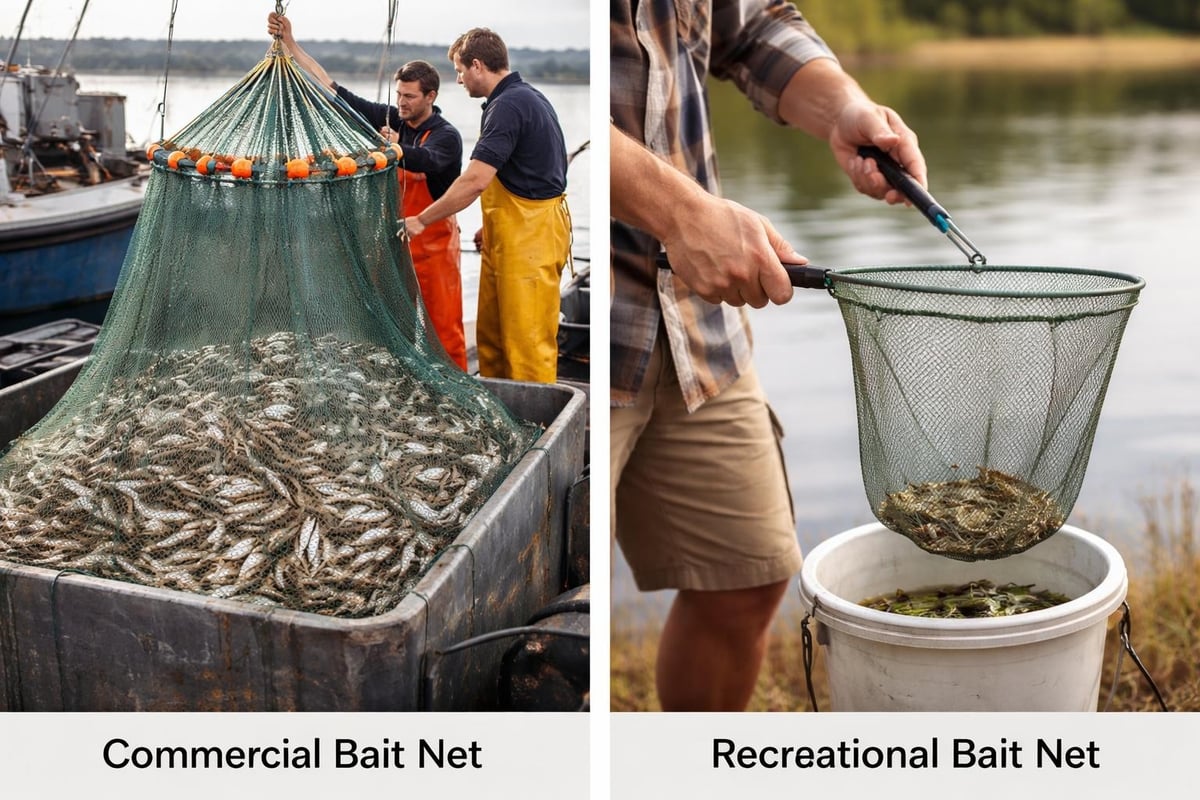
Commercial Versus Recreational Requirements
Commercial bait operations prioritize durability and high-volume capacity. Heavy-duty construction withstands daily use, while larger net dimensions increase catch efficiency. New Zealand manufacturers like Action Outdoors Limited produce commercial-grade nets that meet the demanding requirements of Pacific Island fisheries, where equipment must perform reliably in challenging marine environments.
Recreational anglers benefit from portable, easy-to-use designs that store compactly in boats or vehicles. Essential fishing equipment for 2026 highlights how modern tackle shops now stock specialized bait nets alongside traditional fishing gear.

Environmental Considerations
Water clarity, current strength, and bottom composition all influence net selection. Turbid water environments require nets with higher visibility components, while clear water benefits from transparent monofilament construction that doesn't spook cautious baitfish.
Strong currents demand heavier weighted nets that maintain bottom contact, preventing the net from sweeping downstream before baitfish enter. Conversely, calm estuary conditions allow lighter nets that create less disturbance during deployment.
| Environment Type | Recommended Features | Net Style |
|---|---|---|
| Rocky shorelines | Abrasion-resistant mesh, reinforced edges | Dip nets, short seines |
| Sandy beaches | Fine mesh, lightweight frames | Cast nets, seine nets |
| Boat operations | Telescoping handles, collapsible frames | Dip nets, scoop nets |
| Commercial docks | Heavy-duty construction, large capacity | Seine nets, commercial dip nets |
Proper Techniques for Using Fishing Bait Nets
Technical proficiency separates successful bait collection from frustrating, unproductive sessions. Master these fundamental techniques to maximize your catch while minimizing bait stress and mortality.
Cast Net Deployment Methods
The circular throw requires coordinated upper body movement that distributes the net evenly across the water surface. Begin with a coiled gathering of the net, securing the hand line while distributing weights evenly. The throwing motion combines rotation and release, creating centrifugal force that opens the net mid-flight.
Practice on land before attempting water deployments. Mark a target circle using rope or chalk, refining your technique until you consistently achieve full net spread. This preparation dramatically improves water-based success rates.
Seine Net Operations
Effective seining requires two operators working in synchronized movements. Start by positioning the net perpendicular to the shoreline, with one person holding each end. Walk parallel to shore, gradually moving toward each other while maintaining bottom contact. The key lies in steady, consistent movement that doesn't spook baitfish into escape attempts.
Current direction influences seine strategy. Position the net downstream from bait concentrations, allowing natural water flow to push baitfish into the mesh. This passive approach reduces energy expenditure while increasing catch rates.
Dip Net Handling for Maximum Survival
Quick, decisive scooping movements capture baitfish before they detect the net's approach. Submerge the net slightly below the surface, then sweep upward through the bait school in one smooth motion. Specialized bait nets like the Wet-Net incorporate design features that minimize baitfish harm during this critical collection phase.
- Pre-wet the net: Dry mesh damages protective slime coats
- Use smooth motions: Sudden movements increase stress
- Minimize air exposure: Transfer bait quickly to holding containers
- Avoid overcrowding: Capture quantities your aeration system supports
Maintenance and Care for Extended Net Lifespan
Proper maintenance protects your investment while ensuring fishing bait nets perform reliably when needed. Saltwater, UV exposure, and organic debris all degrade netting materials over time, but systematic care routines substantially extend service life.
Post-Use Cleaning Protocols
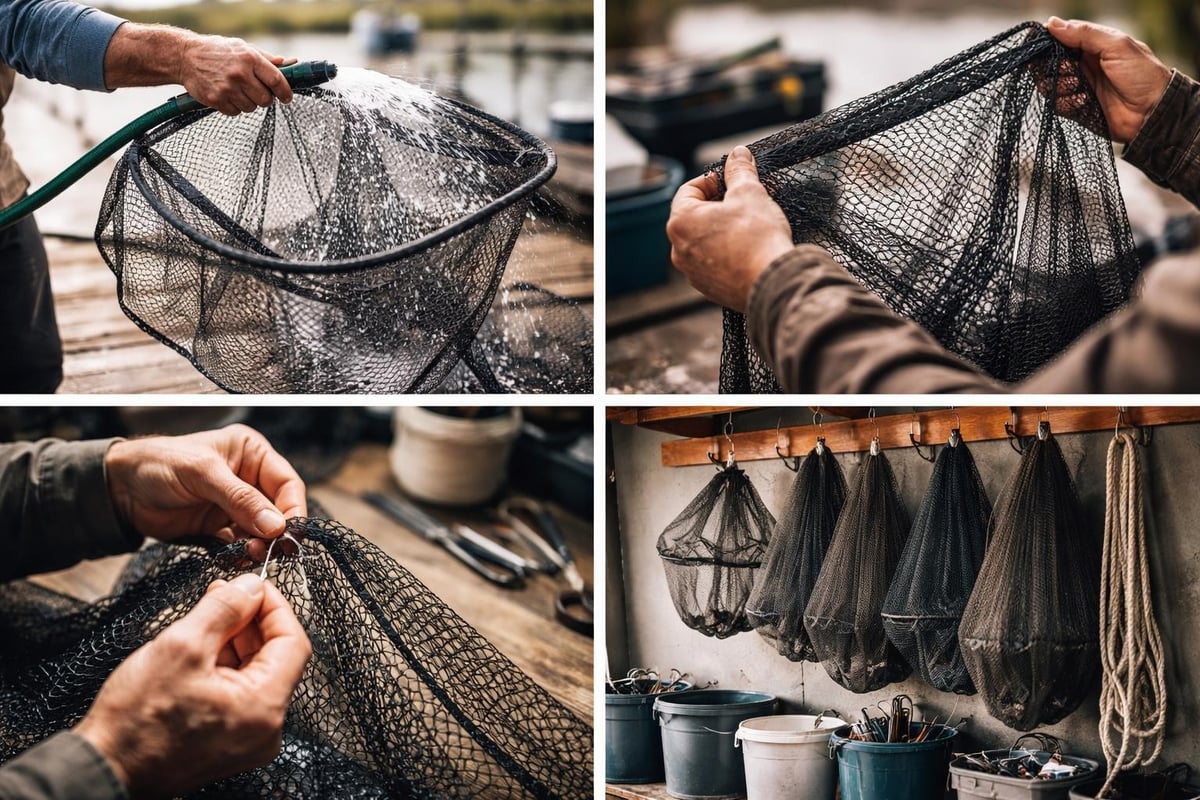
Freshwater rinsing after every saltwater use prevents crystalline salt buildup that weakens mesh fibers. Pay particular attention to frame joints and connection points where salt accumulation accelerates corrosion. Hang nets in shaded areas for drying, avoiding direct sunlight that degrades synthetic materials through UV damage.
Remove organic matter promptly. Decomposing baitfish, algae, and seaweed harbor bacteria that compromise netting integrity. A soft brush and mild detergent effectively clean stubborn deposits without damaging delicate mesh.
Storage Best Practices
Store fishing bait nets in cool, dry locations away from direct sunlight and petroleum products. Folding nets loosely prevents permanent creases that weaken mesh at stress points. Wholesale fishing accessories suppliers often provide specialized storage solutions designed for commercial operations maintaining extensive equipment inventories.
- Avoid floor storage: Prevents rodent damage and mildew growth
- Use mesh bags: Allows continued air circulation during storage
- Inspect regularly: Identify and repair damage before it spreads
- Rotate stock: Use older nets first to prevent aging-related failures

Repair Techniques and When to Replace
Minor mesh damage responds well to field repairs using monofilament line and a mesh needle. Learn basic net mending techniques that restore functionality without compromising structural integrity. However, extensive damage, particularly to load-bearing sections or frame components, typically requires professional repair or replacement.
Frabill's durable bait nets demonstrate construction quality that withstands demanding use while remaining repairable when damage occurs. Investing in quality equipment from established manufacturers reduces long-term replacement costs while improving operational reliability.
Regional Considerations for Pacific Island Markets
Pacific Island fisheries present unique challenges that influence fishing bait net selection and usage. Understanding these regional factors helps commercial suppliers and local fishing communities optimize their equipment choices.
Climate and Weather Impacts
Tropical environments accelerate equipment degradation through intense UV exposure and high humidity. Select nets manufactured with UV-stabilized materials that resist tropical sun damage. New Zealand-made nets from manufacturers experienced in Pacific exports often incorporate these protective features as standard specifications.
Monsoon seasons and tropical storms demand equipment that withstands sudden weather changes. Quick-drying materials prevent mildew growth during extended wet periods, while corrosion-resistant hardware maintains functionality despite constant moisture exposure.
Species-Specific Bait Requirements
Different gamefish species prefer specific baitfish, influencing the fishing bait nets required for successful live bait operations. Pacific islands host diverse gamefish populations, from tuna and marlin to reef species, each with distinct bait preferences.
Pelagic gamefish typically pursue fast-swimming baitfish like scad and frigate mackerel, requiring cast nets or seine nets that efficiently capture these active species. Reef fishing operations often utilize smaller baitfish accessible through dip nets and fine-mesh designs.
Export and Import Regulations
Commercial suppliers exporting fishing bait nets to Pacific Island markets must navigate various regulatory requirements. Understanding fishing innovations for 2026 includes awareness of changing equipment standards and certification requirements that affect international sales.
Documentation requirements, material restrictions, and biosecurity protocols vary by destination country. Work with experienced manufacturers who understand these complexities and provide compliant products with proper certification.
Integrating Fishing Bait Nets Into Complete Fishing Systems
Fishing bait nets function as one component within comprehensive fishing operations. Optimizing the entire system from bait collection through gamefish capture maximizes efficiency and success rates.
Live Bait Well Compatibility
Your bait net selection should complement your live well capacity and aeration system. Capturing more baitfish than your system can maintain alive wastes resources and creates ethical concerns. Calculate your live well's sustainable capacity based on water volume, aeration capability, and target species oxygen requirements.
Gradual acclimation prevents shock when transferring bait from net to holding container. Temperature differentials exceeding 5 degrees Fahrenheit stress baitfish, reducing survival rates. Use dip nets to transfer small batches, allowing gradual temperature equalization.
Coordination With Fishing Techniques
Different fishing methods require varying bait presentations and quantities. Trolling operations consume bait slowly, requiring smaller initial captures but extended bait survival. Chunking and live-lining techniques may use bait rapidly, demanding efficient collection systems that quickly replenish supplies.
Historical fishing net development demonstrates how equipment evolved alongside fishing techniques, with specialized designs emerging to serve specific operational needs. Modern fishing bait nets continue this tradition, offering targeted solutions for contemporary fishing methods.
Economic Considerations for Commercial Operations
Commercial fishing operations must balance equipment costs against operational efficiency and catch value. Strategic fishing bait net investments deliver measurable returns through improved bait quality and reduced collection time.
Cost-Benefit Analysis
Quality fishing bait nets command premium prices but deliver extended service life and superior performance. Calculate total cost of ownership rather than initial purchase price. A durable net lasting five seasons costs substantially less per use than budget alternatives requiring annual replacement.
Labor efficiency represents another critical factor. Nets that capture bait quickly reduce employee hours dedicated to bait collection, freeing personnel for revenue-generating fishing activities. For commercial operations paying crew wages, this efficiency directly impacts profitability.
| Investment Category | Budget Option | Premium Option | 5-Year Cost Difference |
|---|---|---|---|
| Initial purchase | $150 | $450 | $300 higher upfront |
| Replacement cycle | Annual | 5+ years | $600 savings |
| Repair costs | $100/year | $50/year | $250 savings |
| Total 5-year cost | $900 | $700 | $200 savings |
Volume Discounts and Bulk Purchasing
Commercial operations serving multiple vessels or community fishing programs benefit from bulk purchasing arrangements. Manufacturers often provide significant discounts for large orders, particularly when establishing ongoing supply relationships.
New Zealand-based suppliers serving Pacific markets understand seasonal demand fluctuations and can structure ordering schedules that align with fishing seasons while optimizing shipping costs. Coordinating orders with other operators in your region may unlock additional volume discounts.
Quality Standards and Manufacturing Considerations
Not all fishing bait nets meet the performance standards required for professional operations. Understanding quality indicators helps buyers identify equipment that delivers reliable service under demanding conditions.
Material Quality and Construction Methods
Examine mesh knot construction closely. Double-knotted mesh resists unraveling better than single-knot designs, while heat-sealed knots provide maximum security in synthetic materials. Frame joints should feature reinforced connections using marine-grade fasteners that resist saltwater corrosion.
The fishing net manufacturing process significantly impacts final product quality. Manufacturers producing over 350,000 meters of netting annually, like Action Outdoors Limited, develop specialized expertise and quality control systems that smaller operations cannot match. This scale enables investment in advanced manufacturing equipment and rigorous testing protocols.
Regional Manufacturing Advantages
New Zealand-made fishing nets benefit from stringent quality standards and proximity to Pacific Island markets. Reduced shipping distances lower freight costs while enabling faster delivery for urgent orders or seasonal demand spikes. Local manufacturing also simplifies warranty service and product support compared to distant overseas suppliers.
Compliance and Certification
Verify that fishing bait nets comply with relevant fishing regulations in your operational area. Some jurisdictions restrict mesh sizes, net dimensions, or materials for conservation purposes. New Zealand fishing rules and regulations provide examples of regulatory frameworks affecting equipment specifications.
Emerging Technologies in Bait Net Design
Innovation continues advancing fishing bait net capabilities through new materials, design approaches, and integrated technologies. Staying informed about these developments positions operators to adopt improvements that enhance efficiency and sustainability.
Advanced Material Science
Modern synthetic fibers offer superior strength-to-weight ratios compared to traditional materials. Ultra-high-molecular-weight polyethylene (UHMWPE) provides exceptional abrasion resistance in lightweight constructions, while treated nylon blends resist UV degradation without sacrificing mesh softness that protects baitfish.
Antimicrobial treatments prevent bacterial growth that accelerates mesh decomposition. These treatments prove particularly valuable in tropical climates where high temperatures and humidity create ideal conditions for microbial activity.
Sustainable and Eco-Friendly Options
Environmental consciousness increasingly influences fishing equipment purchases. Biodegradable netting materials reduce environmental impact if nets are lost or discarded, though they sacrifice some durability compared to conventional synthetics. Recycled materials offer another sustainable option, diverting waste from landfills while producing functional fishing bait nets.
Responsible manufacturing practices extend beyond material selection. Suppliers minimizing waste, utilizing renewable energy, and implementing closed-loop production systems appeal to environmentally conscious fishing operations and align with broader Pacific fisheries sustainability initiatives.
Smart Technology Integration
Experimental designs incorporate sensors monitoring bait well conditions, alerting operators to oxygen depletion, temperature changes, or overcrowding before baitfish mortality occurs. While still emerging, these technologies promise to revolutionize live bait management for sophisticated commercial operations.
GPS-enabled net tracking helps recover accidentally lost equipment, reducing environmental impact and equipment replacement costs. As these technologies mature and costs decrease, they'll become increasingly accessible to commercial fishing operations throughout the Pacific region.
Training and Skill Development for Net Operations
Technical equipment requires skilled operators who understand proper techniques and best practices. Investing in training improves bait collection efficiency while reducing equipment damage and bait mortality.
Hands-On Training Programs
Experienced operators should mentor new personnel, demonstrating proper casting techniques, seine operations, and dip net handling. Video analysis helps identify technique flaws that reduce efficiency, allowing targeted correction before bad habits become entrenched.
Practice sessions using damaged or retired nets allow skill development without risking operational equipment. Focus on muscle memory development through repetition, gradually increasing difficulty as proficiency improves.
Safety Considerations
Fishing bait nets present specific safety hazards that training must address. Cast net weights can cause injury if the net tangles during throwing. Seine operations in current or surf conditions risk operators losing footing. Dip nets with extended handles create leverage that can pull operators off balance.
- Wear appropriate footwear: Prevents slips on wet surfaces
- Use personal flotation devices: Essential in deeper water operations
- Establish communication protocols: Coordinates multi-person operations
- Monitor weather conditions: Avoids unnecessary risk exposure
- Implement buddy systems: Ensures assistance availability if problems arise
Continuous Improvement Practices
Regular performance reviews identify opportunities for technique refinement and efficiency gains. Track metrics like bait capture rates, survival percentages, and collection time to establish baselines and measure improvement over time. Share successful techniques among crew members, fostering a culture of continuous learning and operational excellence.
Mastering fishing bait nets transforms bait collection from a time-consuming challenge into an efficient process that consistently delivers healthy, active baitfish ready for productive fishing sessions. Whether you're operating commercial fisheries across Pacific markets or supplying community fishing programs with reliable equipment, quality nets manufactured to exacting standards make the difference between success and frustration. Action Outdoors Limited produces over 350,000 meters of ready-to-use fishing nets annually, combining New Zealand manufacturing quality with deep understanding of Pacific fishing requirements to deliver equipment that performs reliably in the most demanding conditions. Explore our comprehensive range of fishing and marine supplies to find the bait nets and supporting equipment your operation needs.
发表评论