

The fishing net manufacturer landscape is entering a period of unprecedented change. By 2026, advances in technology, rising sustainability demands, and shifts in global markets promise to reshape the industry.
Whether you are an established fishing net manufacturer, a supplier, or new to this field, understanding these changes is crucial. This guide is designed to provide you with a practical, data-driven roadmap for navigating upcoming challenges and seizing new opportunities.
Discover how material innovation, automation, and eco-friendly practices can give your business a competitive edge. Explore proven strategies for market analysis, manufacturing upgrades, regulatory compliance, supply chain management, and future trends.
Prepare to future-proof your fishing net manufacturer operations and position your business for long-term growth.
Global Fishing Net Market Landscape in 2026
The fishing net manufacturer sector is entering a period of accelerated change as global demand, sustainability pressures, and regulatory shifts converge. By 2026, understanding the evolving market landscape will be crucial for every fishing net manufacturer seeking growth and resilience.
Market Size, Growth, and Segmentation
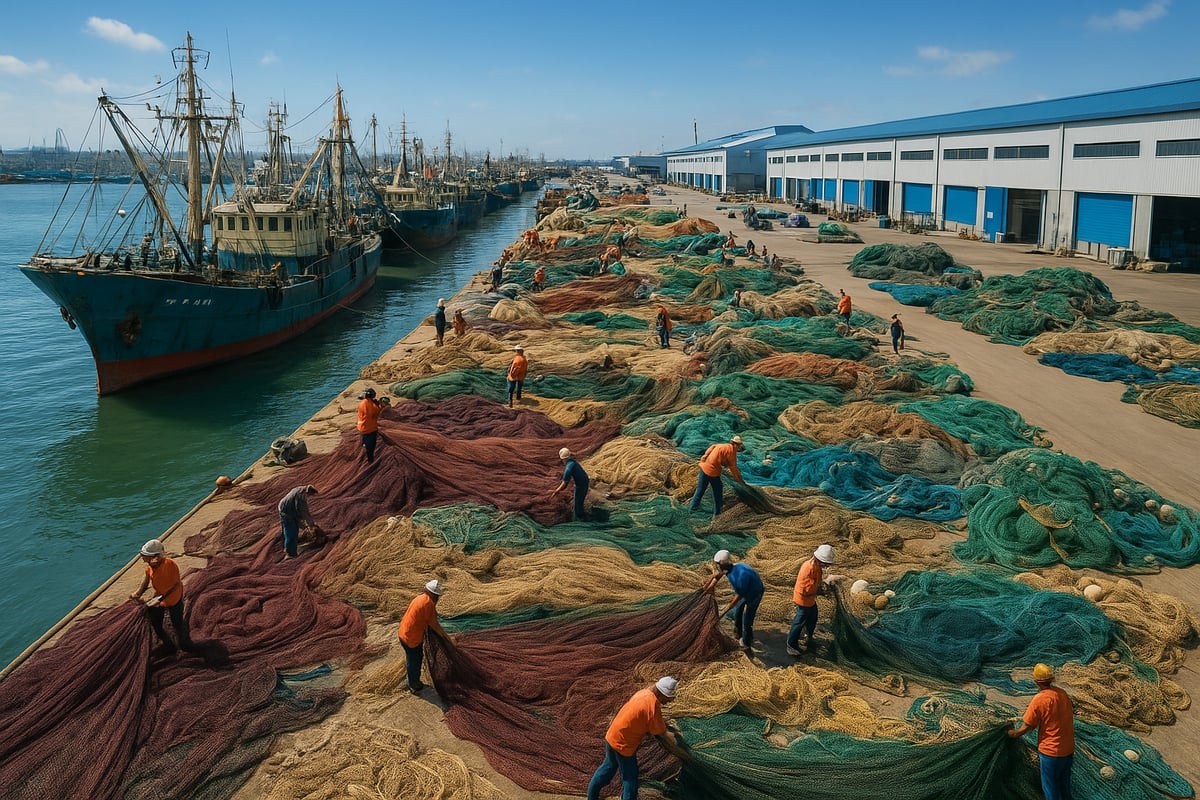
The global fishing net market is projected to surpass USD 2.5 billion by 2026, with a compound annual growth rate (CAGR) of around 5 percent. The Asia-Pacific region leads the world, accounting for over 50 percent of demand in 2023, followed by rising markets in Africa and Latin America.
Segmentation reveals a diverse landscape. Commercial fishing dominates, but aquaculture nets, sports, and recreational fishing are expanding quickly. Major players include established multinationals and regional specialists, each catering to unique application needs.
For those seeking deeper insights into the types of nets serving these segments, the resource Types of Fishing Nets Explained outlines key net categories and their uses. This knowledge is vital for any fishing net manufacturer planning product development or market entry.
| Region | Market Share (2023) |
|---|---|
| Asia-Pacific | 50%+ |
| Africa | 12% |
| Latin America | 10% |
| Europe & N. America | 28% |
Demand Drivers and Challenges
Several factors drive growth for the fishing net manufacturer industry. Rising seafood consumption and global population increases are boosting net demand, particularly in Asia and emerging markets. Meanwhile, stricter environmental regulations are reshaping net design and material selection, prompting manufacturers to innovate.
However, challenges persist. Overfishing has led to calls for more sustainable practices, requiring changes in both materials and manufacturing processes. Supply chain disruptions, such as those witnessed during the COVID-19 pandemic, have exposed vulnerabilities in sourcing raw materials and meeting delivery schedules.
Manufacturers must also manage price volatility for key inputs and navigate evolving customer expectations around sustainability and traceability. Proactive adaptation will be essential for any fishing net manufacturer aiming to stay ahead.
Competitive Landscape
The fishing net manufacturer market features both global giants and agile regional producers. Leading companies maintain their edge through innovation, scale, and extensive distribution networks. Meanwhile, regional specialists excel by tailoring products to local fisheries and regulations.
Recent years have seen a wave of mergers, acquisitions, and strategic partnerships, as firms seek to expand their portfolios and geographic reach. Barriers to entry remain significant, including the need for capital investment, technical expertise, and compliance with international standards.
Yet, opportunities abound for niche and custom net producers. Companies offering species-specific solutions, advanced coatings, or traceable products are capturing new market segments. For an aspiring fishing net manufacturer, identifying a unique value proposition is increasingly important.
Technological and Regulatory Influences
Technology is reshaping what it means to be a leading fishing net manufacturer. Automation, digital design tools, and smart manufacturing are improving productivity, quality, and customization options. These advances are helping companies meet stricter international standards and customer demands for precision.
Regulations are also having a profound impact. International bodies such as the FAO and directives from the EU are setting new benchmarks for material safety, labeling, and environmental responsibility. Notably, the EU’s recent ban on certain plastic nets has sent ripples through global supply chains, prompting manufacturers worldwide to adjust materials and processes.
Staying current with these technological and regulatory trends will be vital for every fishing net manufacturer seeking long-term success in the evolving marketplace.
Fishing Net Manufacturing: Materials, Technology & Innovation
The fishing net manufacturer landscape is evolving rapidly as new materials, cutting-edge technologies, and innovative practices reshape the industry. Staying ahead means understanding the latest advancements and integrating them into your operations. This section offers a deep dive into how manufacturers can leverage these trends to remain competitive and sustainable.
Material Science and Sustainability
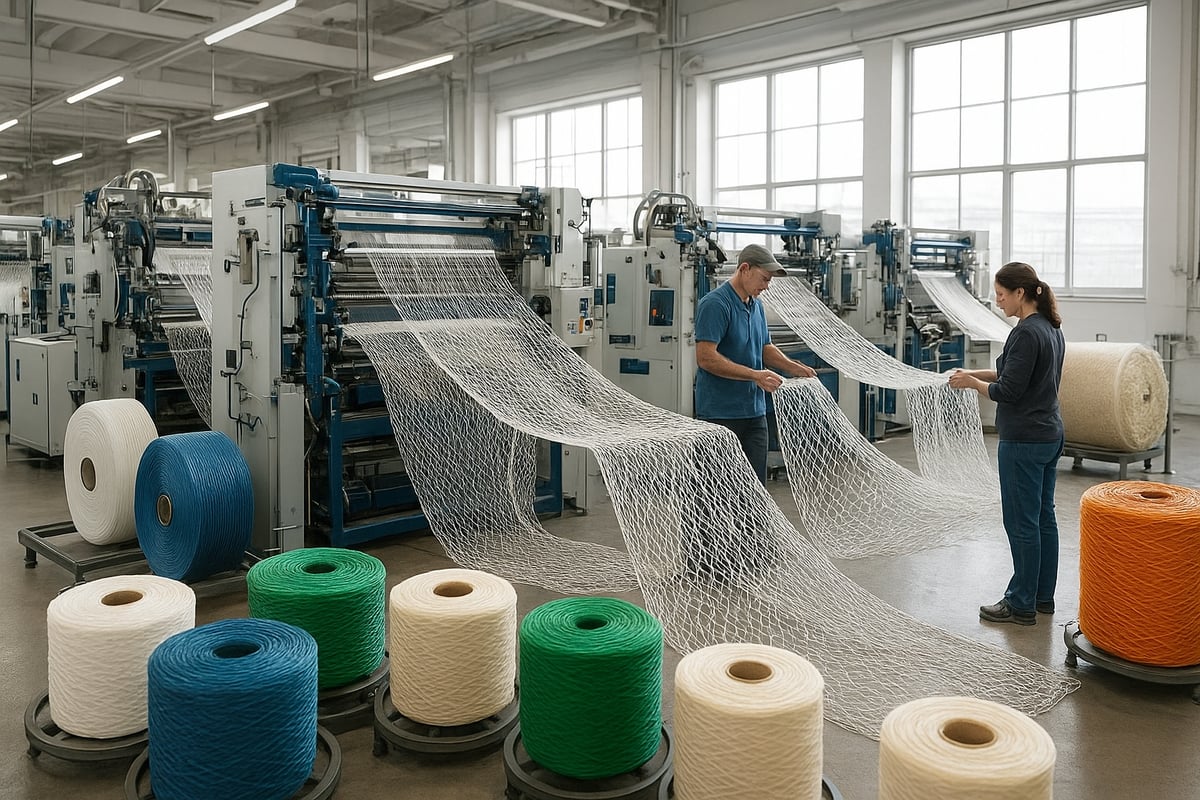
A fishing net manufacturer must stay at the forefront of material science to meet evolving market and regulatory demands. Traditionally, nylon and polyethylene have dominated, prized for their strength and affordability. However, environmental concerns and stricter regulations are driving a shift toward advanced materials.
Emerging material options include:
- Biodegradable polymers
- Recycled plastics
- High-strength fibers (e.g., UHMWPE)
Switching to sustainable materials offers reduced environmental impact and can open new market opportunities. For instance, European fisheries are increasingly adopting biodegradable nets to comply with new standards. According to MarketsandMarkets, biodegradable nets are projected to grow at an 8% CAGR by 2026.
Transitioning is not without challenges. Sustainable options may have higher upfront costs or require process adjustments. However, the long-term benefits, such as access to eco-conscious buyers and compliance with future regulations, are significant. Learn more about how biodegradable fishing nets reduce marine pollution and why they are becoming essential for every forward-thinking fishing net manufacturer.
Manufacturing Processes and Automation
The evolution of manufacturing methods is key for any fishing net manufacturer aiming to boost efficiency and quality. Traditional net weaving and knotting remain foundational, but automation is making significant inroads.
Modern advancements include:
- Automated net-making machines that cut production time by up to 30%
- Digital design and patterning software for custom orders
- IoT integration for real-time machine monitoring
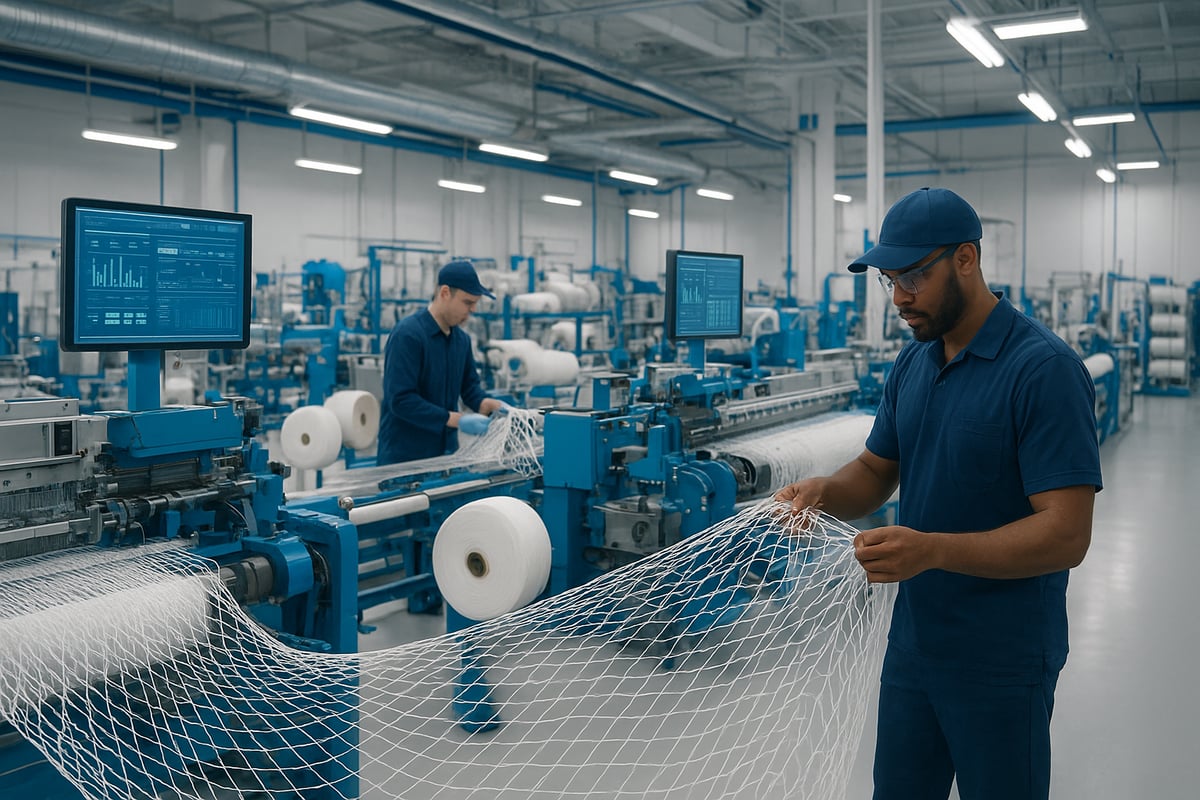
Industry 4.0 is transforming factories into smart environments. Automated quality control, predictive maintenance, and connected equipment ensure consistent output and minimize downtime. These technologies not only improve productivity but also help fishing net manufacturer businesses respond swiftly to market demand shifts.
Table: Traditional vs. Modern Manufacturing Approaches
| Aspect | Traditional | Automated/Smart |
|---|---|---|
| Labor Intensity | High | Low |
| Production Speed | Moderate | High |
| Customization | Manual Adjustments | Digital Patterning |
| Quality Control | Visual Inspection | Automated Sensors |
Embracing automation positions a fishing net manufacturer for scalable, cost-effective growth.
Product Innovation and Customization
Innovation is crucial for a fishing net manufacturer seeking to serve diverse markets. Demand for species-specific and application-specific nets is on the rise, driven by aquaculture, commercial fisheries, and recreational sectors.
Key innovations include:
- Anti-fouling and UV-resistant coatings to extend net life
- Custom branding and labeling for traceability
- RFID tags and QR codes for supply chain transparency
Case studies show that custom nets with anti-predator features are gaining traction in aquaculture, protecting valuable stock and reducing losses. By offering tailored solutions, a fishing net manufacturer can build strong customer loyalty and tap into niche markets.
Quality Standards and Testing
Every reputable fishing net manufacturer must adhere to rigorous quality standards. International benchmarks like ISO and ASTM set the criteria for tensile strength, knot stability, and mesh uniformity.
Essential quality assurance steps:
- Laboratory testing of materials and finished products
- Standard operating procedures for inspection
- Regular calibration of measurement tools
Meeting these standards is not just about compliance; it is a market differentiator. Buyers increasingly demand documented proof of quality. By investing in robust protocols, a fishing net manufacturer can reduce product returns and enhance their reputation.
Sustainability Certifications and Eco-labeling
Sustainability certifications are becoming a must-have for any fishing net manufacturer targeting global markets. Eco-labels such as MSC and Friend of the Sea influence buying decisions and open doors to premium customers.
Steps to certification:
- Audit supply chain for sustainable sourcing
- Implement traceability systems
- Undergo third-party assessments
Consumer demand for traceable, eco-friendly nets is rising. Achieving certification demonstrates a fishing net manufacturer’s commitment to responsible practices, increasing trust and expanding market reach.
In summary, the fishing net manufacturer industry is undergoing profound change. By embracing new materials, automation, innovation, and sustainability, manufacturers can future-proof their operations and outpace global competitors.
Step-by-Step Guide: Setting Up or Upgrading a Fishing Net Manufacturing Operation
Launching or upgrading your fishing net manufacturer operation requires careful planning, strategic investments, and a clear understanding of market dynamics. This guide walks you through the essential stages to build a resilient, competitive, and future-ready business. Each step is designed to help you navigate challenges and seize opportunities in the evolving fishing net sector.
Market Research and Business Planning
Every successful fishing net manufacturer begins with in-depth market research. Start by analyzing local and global demand trends, focusing on sectors like commercial fishing, aquaculture, and recreational markets. Identify your target customers and their specific requirements.
Conduct a thorough competitive analysis. Understand what sets your business apart, whether it is product innovation, pricing, or customer service. Evaluate regulatory compliance needs for each target market, such as mesh size limits or material restrictions.
Develop a comprehensive business plan. This should cover your value proposition, financial projections, risk assessment, and growth strategy. For example, if you are targeting New Zealand, familiarize yourself with its unique fisheries regulations to ensure your products meet all legal standards.
Facility Design and Equipment Selection
Designing an efficient facility is crucial for any fishing net manufacturer. Start by mapping out a logical workflow that minimizes material handling and maximizes productivity. Prioritize areas for raw material storage, weaving, inspection, and packaging.
When selecting equipment, consider factors like machine speed, automation capabilities, and scalability. Automated net-making machines can significantly boost output and ensure consistent quality. Compare options using a table to evaluate cost, maintenance requirements, and compatibility with different net materials.
| Equipment Type | Automation Level | Output Capacity | Maintenance Needs |
|---|---|---|---|
| Manual Knotting Machine | Low | Low | Low |
| Semi-Automated Loom | Medium | Medium | Medium |
| Fully Automated Net Maker | High | High | High |
Incorporate safety and environmental compliance into your facility design. Install proper ventilation, waste management systems, and safety barriers around machinery. Plan for future expansion by allocating space for additional machines or storage.
Sourcing Raw Materials and Suppliers
A reliable supply chain is the backbone of any fishing net manufacturer. Source high-quality materials such as nylon, polyethylene, or biodegradable fibers based on your product range and market demands.
Evaluate suppliers for quality consistency, delivery reliability, and sustainability credentials. It is wise to diversify your sources to mitigate risks from price volatility or supply disruptions. Building long-term relationships with trusted providers can secure better terms and priority service.
To streamline the sourcing process, explore platforms that offer a wide range of netting components, like Fishing Net Parts and Supplies. These platforms provide access to ropes, floats, meshes, and other essentials needed for manufacturing.
Monitor global trends in raw material prices, especially as shortages can impact delivery times and profitability. Always maintain a buffer stock of critical components to avoid production delays.
Production Workflow and Workforce Training
Establish clear standard operating procedures (SOPs) for each stage of production. This includes net assembly, inspection, packaging, and storage. SOPs help maintain product quality and ensure consistency across batches.
Invest in training programs for machine operators, quality inspectors, and maintenance staff. Skilled workers can spot defects early, operate machinery safely, and adapt to new technologies. Regular safety drills and ongoing education create a culture of continuous improvement.
Implement quality control checkpoints at each step. Inspect tensile strength, mesh uniformity, and knot stability before products leave the facility. Use digital tools for tracking production data and managing inventory in real time.
Marketing, Sales, and Distribution Channels
Building a strong brand identity sets a fishing net manufacturer apart in a crowded market. Develop a professional online presence, including a user-friendly website and active social media profiles. Highlight features like eco-friendly materials, custom net solutions, and rapid order fulfillment.
Target a diverse client base: commercial fisheries, aquaculture farms, retailers, and government agencies. Attend industry trade shows and form partnerships with distributors to expand your reach. For export markets, ensure compliance with international trade regulations and logistics best practices.
Case studies show that entering new regions, such as Pacific Island nations, often requires tailored marketing and distribution strategies. Local partnerships and community engagement can help establish trust and drive adoption of your products.
Navigating Regulations, Compliance & Environmental Responsibility
Meeting regulatory and environmental standards is crucial for every fishing net manufacturer aiming for global reach and long-term success. As the industry faces increasing scrutiny, understanding both legal requirements and sustainability expectations is vital for risk management and market access.
Key Global and Regional Regulations
For any fishing net manufacturer, keeping up with regulations is non-negotiable. International bodies like the FAO set broad guidelines for net design, mesh size, and material use. The EU has led with strict directives, including bans on certain plastic nets to reduce marine pollution, and the US enforces labeling and safety standards.
National policies can vary greatly. Some countries have banned monofilament nets due to their environmental impact, while others mandate biodegradable materials in sensitive waters. Asia-Pacific nations, key players in the sector, are tightening import/export controls and traceability requirements.
Table: Major Regional Regulations
| Region | Key Regulation | Impact on Manufacturer |
|---|---|---|
| EU | Ban on some plastics | Material sourcing changes |
| US | Labeling & safety, mesh size | Product design, documentation |
| Asia-Pacific | Traceability, import/export controls | Supply chain transparency |
For a fishing net manufacturer, proactive compliance not only avoids penalties but also opens new markets.
Environmental Impact and Mitigation Strategies
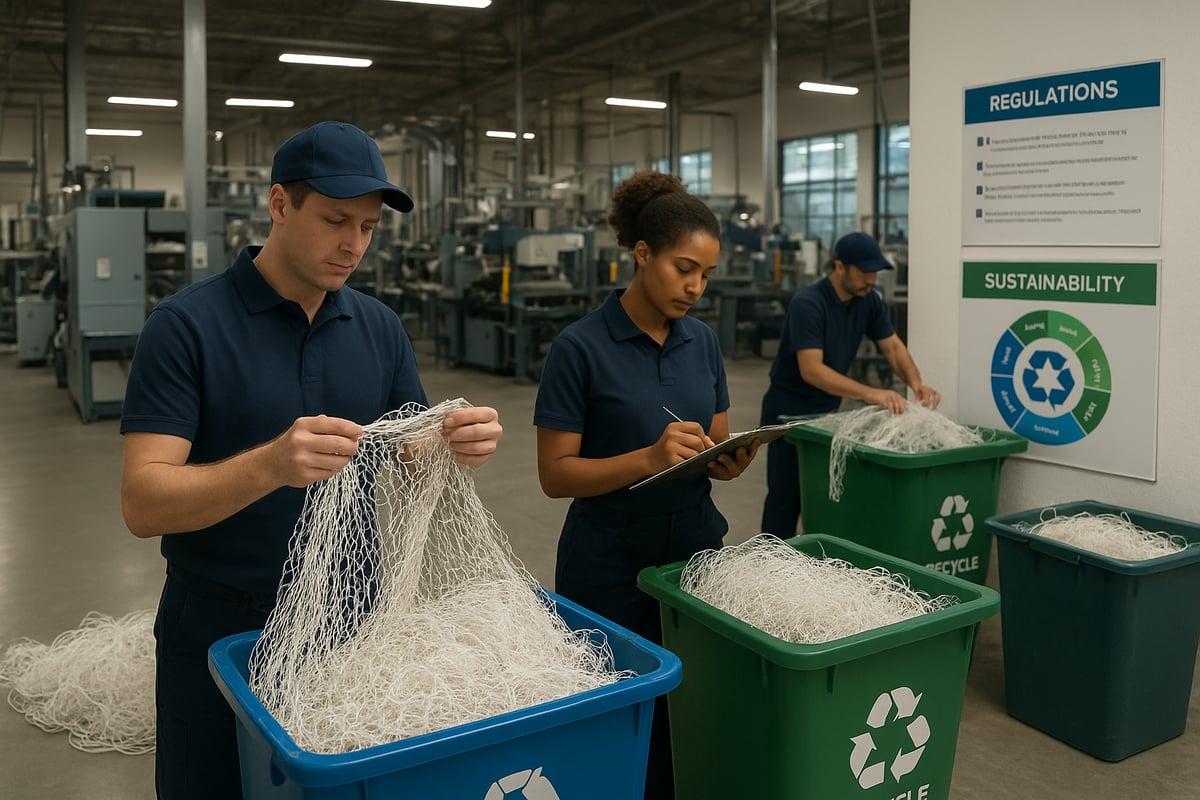
Environmental responsibility is now central to the fishing net manufacturer’s reputation and growth. Ghost nets—lost or discarded gear—cause significant marine damage. Manufacturers are expected to design nets that are less prone to loss and easier to retrieve.
Mitigation strategies include:
- Using biodegradable or recycled materials
- Partnering with fisheries for net retrieval programs
- Supporting recycling initiatives for end-of-life nets
An inspiring example is the collaboration that repurposes discarded nylon fishing nets into surfboard components, turning waste into valuable products and supporting circular economy goals. Learn more about this innovative approach to recycling fishing nets into surfboard components here.
By integrating such measures, a fishing net manufacturer can significantly reduce their environmental footprint and align with evolving customer values.
Compliance Management and Documentation
Robust compliance management is essential for every fishing net manufacturer. Staying audit-ready means meticulous documentation of materials, production processes, and distribution chains. Digital compliance platforms are increasingly used to track certifications, manage regulatory updates, and store traceability records.
Best practices include:
- Maintaining up-to-date compliance checklists
- Documenting every batch of materials and production runs
- Using digital tools for real-time tracking and reporting
Regular audits and staff training ensure that compliance is embedded throughout the operation. With regulations evolving, a fishing net manufacturer should review documentation protocols quarterly and leverage technology to streamline workflows.
Stakeholder Engagement and Community Relations
Long-term success for a fishing net manufacturer hinges on strong relationships with stakeholders. This includes close collaboration with fishers, regulators, NGOs, and local communities. Transparent communication about product safety, environmental initiatives, and regulatory changes builds trust and fosters industry goodwill.
Effective engagement strategies:
- Hosting educational workshops on sustainable net use
- Supporting community-led net collection and recycling programs
- Participating in policy discussions with regulators
Case studies have shown that involving communities in net retrieval and recycling not only improves compliance but also enhances brand reputation. For a fishing net manufacturer, proactive engagement translates to shared value, smoother regulatory navigation, and a more sustainable future.
Future Trends and Opportunities in Fishing Net Manufacturing
The next few years present remarkable opportunities for every fishing net manufacturer ready to embrace innovation. As the industry pivots toward advanced materials, digital transformation, and sustainability, those who adapt will lead the market. Let us explore the most influential trends shaping the future for fishing net manufacturers.
Emerging Materials and Smart Nets
Material innovation is rapidly redefining the fishing net manufacturer landscape. New fibers like Ultra-High Molecular Weight Polyethylene (UHMWPE) offer exceptional strength, durability, and lighter weight, leading to improved fuel efficiency and lower operational costs. For example, UHMWPE nets enhance fuel efficiency in deep-sea fishing, delivering measurable savings for fleets.
Smart nets are also on the rise. These products integrate RFID tags or embedded sensors to monitor gear location, detect damage, and track usage. Self-repairing and biodegradable materials are being piloted, promising a future where lost gear is minimized and environmental impact is reduced. For any fishing net manufacturer, investing in these advanced materials and technologies is key to staying competitive.
Market Expansion and Diversification
Market opportunities are expanding beyond traditional fisheries. The demand for specialized nets in aquaculture, sports, and even agriculture is growing. Many fishing net manufacturer businesses are diversifying their product lines to serve fish farms, recreational anglers, and non-fishing sectors such as safety netting for construction or sports facilities.
E-commerce is transforming sales channels. Direct-to-consumer platforms are expected to drive online fishing gear sales to $2.1 billion by 2026. This shift allows manufacturers to reach new markets globally, build brand loyalty, and offer customized solutions. Diversification ensures resilience against market fluctuations and opens doors to untapped revenue streams.
Digital Transformation and Industry 4.0
Digital transformation is revolutionizing how every fishing net manufacturer operates. Industry 4.0 tools such as AI, machine learning, and predictive maintenance help optimize production lines, reduce downtime, and enhance product quality. The adoption of digital twin technology, as seen in digital twin technology in aquaculture net monitoring, enables real-time monitoring of net cages, predicting wear and guiding preventive action.
Digital twins and data analytics provide valuable insights into net performance and lifespan. Manufacturers integrating these technologies can offer better service, ensure consistent quality, and reduce operational risks. Embracing smart manufacturing is crucial for those aiming to lead in efficiency and innovation.
Sustainability and Circular Economy
Sustainability is now a central concern for any fishing net manufacturer. Regulations and consumer demand are pushing the industry toward circular models, emphasizing repair, reuse, and recycling of nets. Manufacturers are developing take-back programs, using recycled materials, and designing nets for easier recovery at end-of-life.
Transparency across the supply chain is becoming a differentiator. Certification programs and eco-labels reward sustainable practices, build trust with buyers, and open access to premium markets. By embedding sustainability into their operations, manufacturers can future-proof their business and appeal to environmentally conscious customers.
Strategic Partnerships and Innovation Hubs
Collaboration is driving rapid progress in the fishing net sector. Strategic partnerships with research institutions, technology providers, and innovation hubs enable manufacturers to access cutting-edge developments and scale new solutions quickly. Joint ventures are fueling the creation of next-generation nets with enhanced functionality, such as predator deterrence or real-time tracking.
Industry clusters and innovation hubs foster knowledge sharing and accelerate product development. By engaging in these networks, a fishing net manufacturer can stay ahead of regulatory changes, leverage collective expertise, and seize emerging market opportunities.
In summary, the future belongs to the fishing net manufacturer who invests in advanced materials, digital transformation, sustainability, and strategic collaboration. Embracing these trends will secure a competitive edge and ensure long-term growth amid evolving global demands.
As we navigate the fast-changing landscape of fishing net manufacturing, it’s clear that staying ahead means making smart decisions and relying on partners who understand your needs. Whether you’re looking to upgrade your operations, source reliable equipment, or ensure quality and compliance, having access to trusted products is key. That’s why Action Outdoors Limited stands out as New Zealand’s leader—they deliver proven solutions and dependable service, supporting businesses across the Pacific with New Zealand-made excellence. If you’re ready to take your business to the next level and secure the supplies you need for 2026 and beyond, Buy Now.