Fishing Rod Setup Complete Guide for 2026
Setting up a fishing rod properly can mean the difference between a successful day on the water and constant frustration with tangled lines, lost fish, and missed opportunities. Whether you're preparing gear for commercial fishing operations across the Pacific or equipping yourself for recreational angling in New Zealand's pristine waters, understanding the fundamentals of a proper fishing rod setup ensures your equipment performs reliably when it matters most. This comprehensive guide walks through every component and step required to assemble, configure, and optimize your fishing rod for maximum effectiveness in various fishing scenarios.
Understanding Your Rod Components and Construction
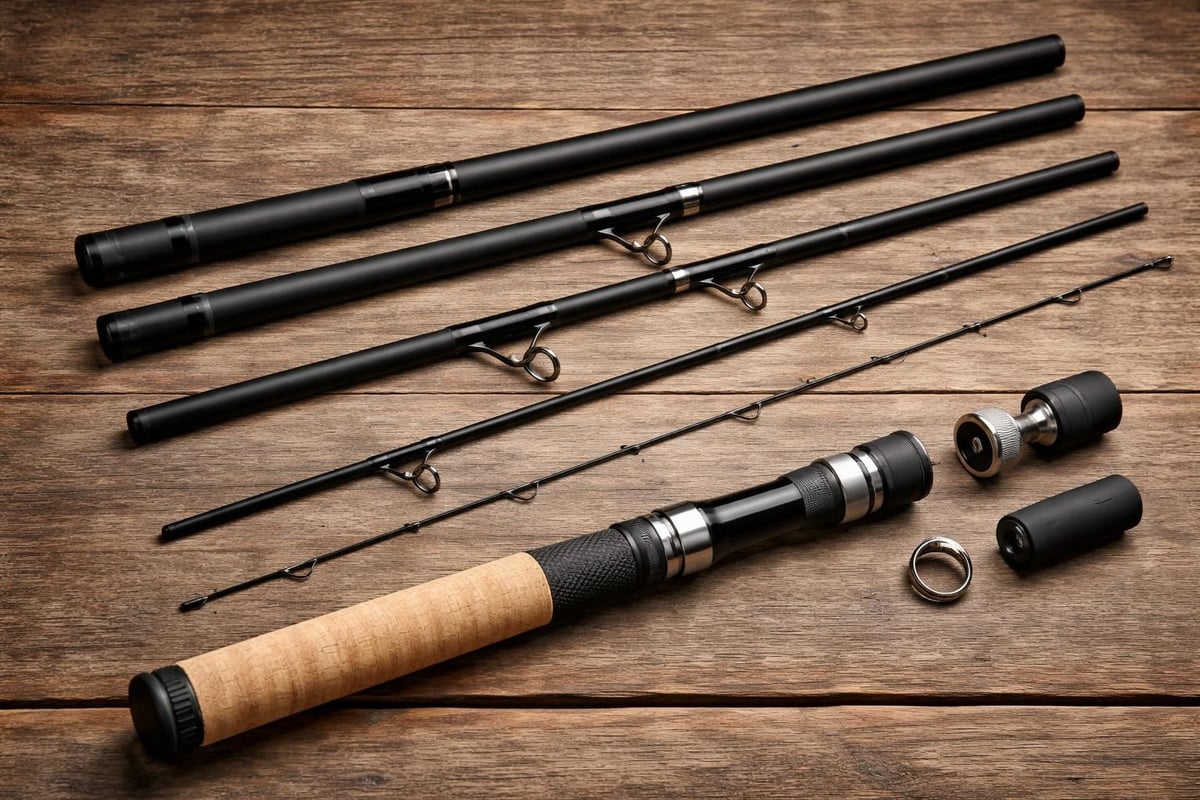
Before diving into assembly, familiarize yourself with the essential parts of your fishing rod system. Modern fishing rods consist of several key elements that work together to provide casting distance, sensitivity, and fish-fighting power.
Rod Blank and Guide System
The rod blank forms the backbone of your setup, constructed from materials like fiberglass, graphite, or composite blends. Each material offers distinct characteristics in terms of sensitivity, durability, and power. The guide system, consisting of line guides mounted along the blank, directs your fishing line from the reel to the rod tip while minimizing friction and preventing tangles.
Key guide considerations include:
- Guide spacing and alignment for smooth line flow
- Ring material (ceramic, stainless steel, or titanium)
- Frame durability for saltwater environments
- Proper sizing to match your line weight
Rod sections typically connect through ferrules, which must align perfectly to maintain blank integrity. When assembling multi-piece rods, ensure each ferrule connection seats fully without gaps or wobbling. A properly aligned rod delivers consistent action throughout its length, transferring energy efficiently from angler to lure.
Selecting and Mounting Your Fishing Reel
Choosing the appropriate reel completes half of your fishing rod setup equation. Reel selection depends on your target species, fishing environment, and technique preferences. For those working with essential fishing equipment suppliers, understanding reel-to-rod compatibility ensures optimal performance.
Reel Types and Applications
| Reel Type | Best For | Advantages | Considerations |
|---|---|---|---|
| Spinning | Versatile freshwater/inshore | Easy to use, excellent casting | Line twist potential |
| Baitcasting | Bass, larger species | Accuracy, power | Learning curve required |
| Overhead/Conventional | Big game, deep water | Maximum strength | Requires practice |
| Fly | Trout, specialized techniques | Presentation control | Technique-specific |
Mounting your reel properly ensures balanced rod performance. Spinning reels attach underneath the rod, with the reel foot secured in the reel seat through a locking mechanism. Position the reel so the rod balances comfortably when held at the grip, typically with slightly more weight forward of your hand. Tighten the locking nut or sliding rings firmly to prevent movement during casting and fighting fish.
Conventional and baitcasting reels mount on top of the rod. Thread the reel foot into the reel seat, positioning it for comfortable thumb access to the spool. The rod and reel pairing process requires matching line capacity, gear ratio, and drag strength to your rod's power rating and intended application.
Line Selection and Spooling Techniques
Your fishing rod setup quality depends significantly on proper line selection and spooling. The three primary line types serve different purposes and fishing conditions across New Zealand waters and the Pacific region.
Line Type Characteristics
Monofilament line offers stretch and forgiveness, making it ideal for beginners and situations requiring shock absorption. Its buoyancy suits topwater presentations, while its affordability makes it practical for commercial applications where line replacement occurs frequently.
Braided line provides zero stretch for maximum sensitivity and hooksets at distance. Its thin diameter allows greater line capacity and cuts through wind effectively. Commercial fishing operations particularly value braided line's strength-to-diameter ratio when working with nets and heavy-duty applications.
Fluorocarbon line becomes nearly invisible underwater due to its refractive index matching water. As leader material or main line, fluorocarbon resists abrasion better than monofilament while sinking faster for bottom presentations.
Spooling Your Reel Correctly
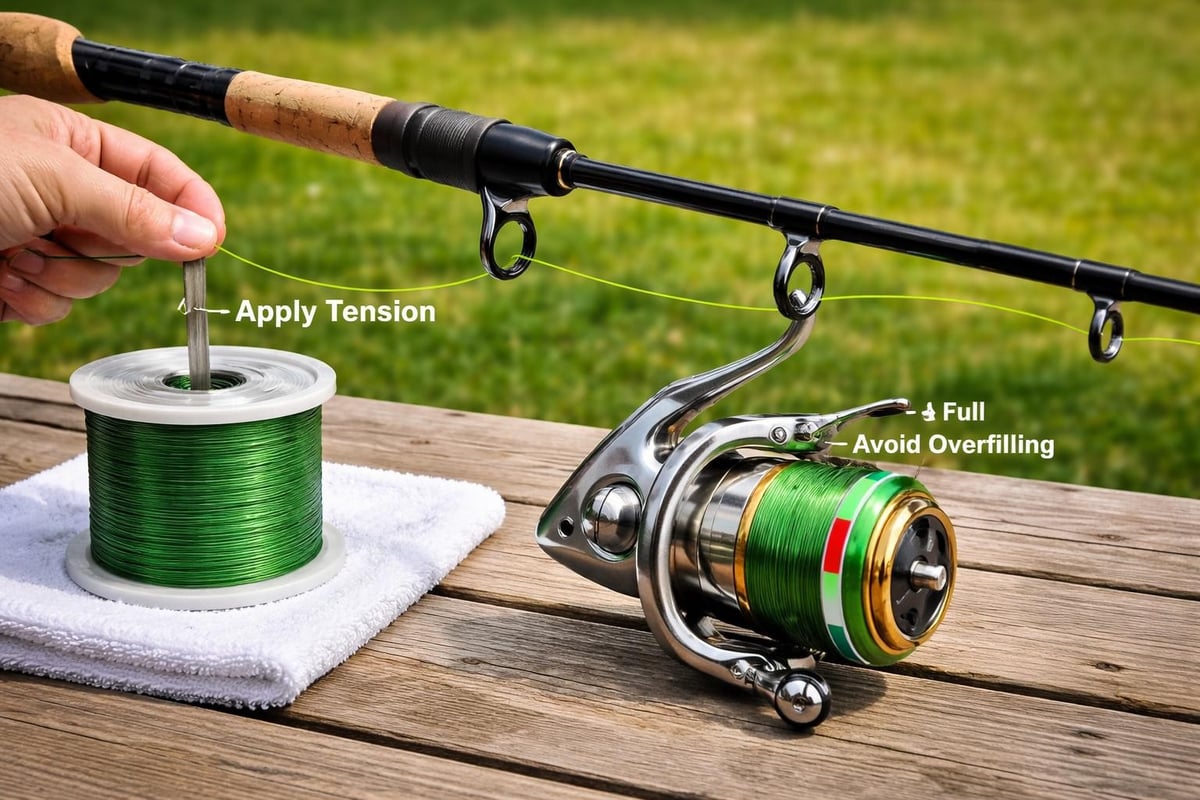
Proper spooling prevents line twist, tangles, and casting problems. For spinning reels, place the line spool on the floor with the label facing up. Run the line through your rod guides from tip to reel, ensuring it feeds onto the reel spool in the same direction it comes off the supply spool.
- Thread the line through all guides starting at the tip
- Attach to the reel spool using an arbor knot
- Apply tension by pinching the line with a cloth
- Fill the spool to within 1/8 inch of the rim
- Check for twist by letting line hang freely
For baitcasting and conventional reels, the line should come off the supply spool in a direct, straight path onto the reel spool. Many anglers find the step-by-step assembly process valuable for avoiding common spooling mistakes that plague beginners and experienced anglers alike.
Terminal Tackle Configuration
The business end of your fishing rod setup involves selecting and rigging terminal tackle appropriate for your target species and fishing method. Terminal tackle includes hooks, weights, swivels, leaders, and lures that directly interact with fish.
Leader Systems for Different Conditions
Leaders protect your main line from abrasion, provide stealth in clear water, and offer shock absorption when battling aggressive fish. Length and material vary based on conditions and species.
For inshore fishing:
- 2-4 feet of fluorocarbon leader
- 15-30 pound test for snapper, kahawai
- Improved clinch or Palomar knot connections
For offshore and big game:
- 6-15 feet of heavy fluorocarbon or wire
- 80-200 pound test for tuna, marlin
- Crimped connections for maximum strength
For bottom fishing:
- Short, heavy leaders (1-3 feet)
- Abrasion-resistant monofilament
- Snelled hooks for direct presentations
Knot Selection for Reliability
Your fishing rod setup is only as strong as your weakest knot. Master these essential connections for reliable performance:
- Improved Clinch Knot: Quick, reliable for hooks and lures
- Palomar Knot: Strongest for braided line to terminal tackle
- Surgeon's Knot: Simple, effective for joining different line types
- FG Knot: Slim, strong braid-to-leader connection
- Arbor Knot: Secures line to reel spool
Test each knot by pulling firmly before fishing. A properly tied knot should fail at the line's rated strength, not at the knot itself. Wet knots with saliva before tightening to reduce friction heat that weakens line material.
Rod Action and Power Matching
Understanding rod action and power helps you select the right fishing rod setup for specific techniques and species. Action describes where the rod bends along its length, while power indicates the force required to flex the blank.
Action Categories
Fast action rods bend primarily in the top third, providing sensitivity for detecting subtle bites and power for driving hooks home at distance. These excel for techniques requiring quick hooksets like jigging and topwater fishing.
Moderate action rods bend through the middle section, offering versatility for various presentations. This action forgives angler mistakes during fights and works well with treble-hooked lures that require the fish to fully take the bait.
Slow action rods bend throughout their length, creating parabolic curves under load. Traditional for live bait fishing and species like trout that require gentle presentations, slow action rods reduce the chance of pulling hooks from soft-mouthed fish.
Power Ratings and Applications
| Power Rating | Line Weight | Lure Weight | Target Species |
|---|---|---|---|
| Ultra-Light | 2-6 lb | 1/32-1/4 oz | Trout, panfish |
| Light | 4-8 lb | 1/16-3/8 oz | Small bass, kahawai |
| Medium | 8-12 lb | 3/16-5/8 oz | Snapper, bass |
| Medium-Heavy | 12-20 lb | 3/8-1 oz | Kingfish, large bass |
| Heavy | 20-40 lb | 1-4 oz | Tuna, marlin |
The beginner's guide to fishing pole setup emphasizes matching power ratings to expected fish size, preventing both underpowered rods that can't control fish and overpowered rods that remove the sporting element.
Specialized Setups for Pacific Waters
New Zealand and Pacific fishing environments present unique challenges requiring specific fishing rod setup configurations. Coastal, offshore, and commercial operations each demand tailored approaches.
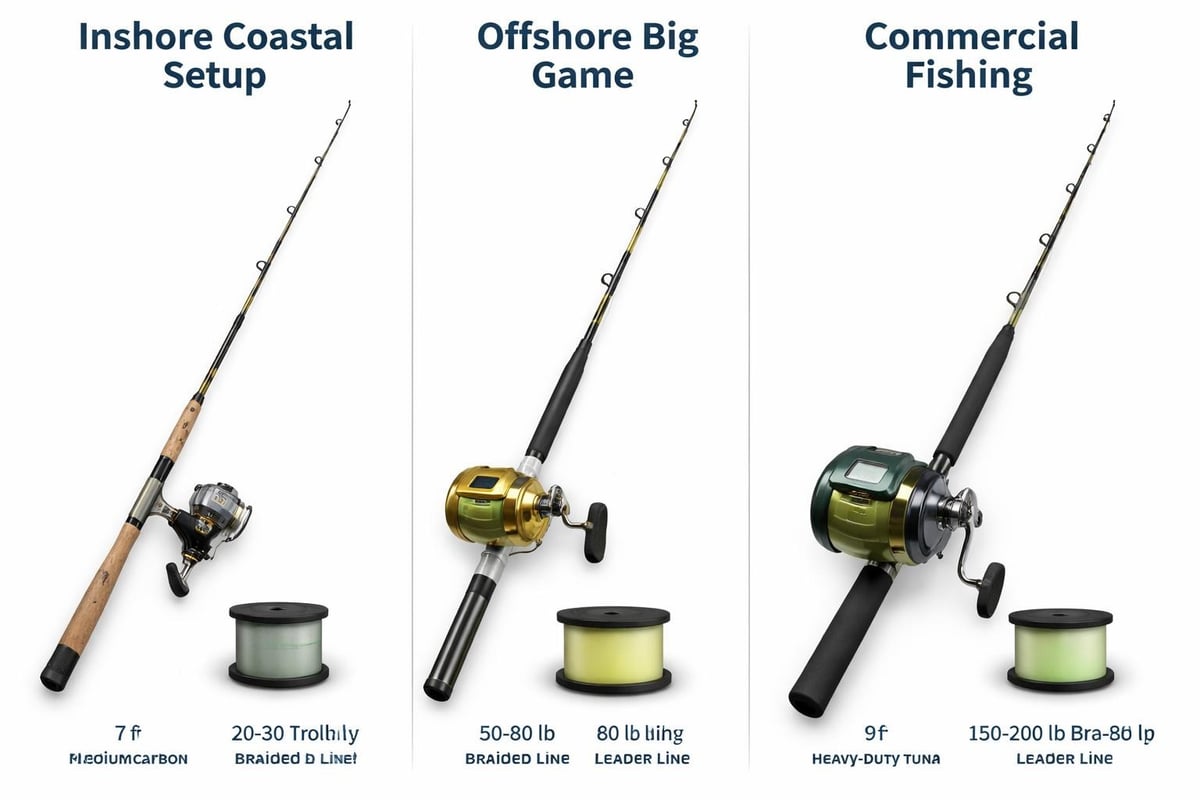
Inshore Coastal Configuration
Inshore fishing around rocks, reefs, and estuaries requires versatile setups handling various species and conditions. A 7-8 foot medium-power spinning rod paired with 4000-size reel covers most situations. Spool with 15-20 pound braided main line connected to 20-30 pound fluorocarbon leader.
This configuration works effectively for:
- Snapper around rocky structure
- Kahawai schools in harbors
- Trevally along beaches
- Kingfish in moderate depths
Offshore Big Game Setup
Serious offshore fishing targeting tuna, marlin, and sharks demands robust fishing rod setup specifications. Conventional reels holding 400+ yards of 50-80 pound line pair with 6-7 foot rods rated for appropriate line class. Heavy-duty roller guides reduce friction during extended fights.
Essential offshore components:
- Full roller guide sets for braided line
- Gimbal butt for fighting belt/chair
- Lever drag reels for precise adjustments
- Wind-on leaders for landing large fish
Commercial and Net Fishing Integration
For commercial operations and those working with fishing nets, rod setups serve complementary roles to primary net fishing operations. When working with quality fishing equipment, understanding how rod fishing supplements net operations maximizes efficiency and harvest quality.
Shorter, powerful rods excel for landing individual fish from nets or handling by-catch. These setups prioritize strength and durability over casting distance, typically featuring:
- 5-6 foot heavy-power rods
- Conventional reels with high retrieve ratios
- 40-60 pound monofilament or braid
- Heavy-duty construction for daily commercial use
Maintenance and Pre-Fishing Inspection
A reliable fishing rod setup requires regular maintenance and pre-trip inspection. Saltwater environments, common throughout New Zealand and Pacific fishing grounds, accelerate corrosion and wear without proper care.
After-Fishing Care Procedures
Immediate rinse routine:
- Spray entire rod and reel with fresh water
- Work reel handle while rinsing to flush salt
- Wipe down with clean cloth
- Allow to air dry completely
- Store in rod holders or horizontal racks
Never store rods in enclosed spaces while damp, as moisture promotes corrosion and mold growth. Pay special attention to reel seats, guides, and ferrules where salt crystals accumulate.
Pre-Trip Inspection Checklist
Before each fishing session, conduct a systematic inspection to identify potential failures:
- Guide inspection: Check for cracks, grooves, or loose wraps
- Ferrule fit: Ensure tight connections without play
- Reel seat security: Verify locking mechanisms function properly
- Line condition: Examine for abrasion, nicks, or discoloration
- Drag operation: Test smoothness and stopping power
- Handle integrity: Check for loose or damaged grips
Replace any questionable components before heading out. The cost of a new guide or reel seat pales compared to losing trophy fish due to equipment failure. Anglers pursuing proper fishing techniques understand that maintenance separates consistent success from frustrating failures.
Advanced Setup Modifications and Customization
Experienced anglers often customize their fishing rod setup to match personal preferences and specific fishing scenarios. These modifications optimize performance beyond factory configurations.
Guide Replacement and Upgrades
Aftermarket guide systems offer improvements in weight, friction reduction, and durability. Upgrading to premium guides enhances casting distance and extends line life, particularly valuable for commercial operations where equipment sees daily use.
Popular guide upgrades include:
- Silicon carbide rings for extreme smoothness
- Titanium frames for weight reduction
- Single-foot guides for sensitivity improvement
- Micro-guides for long-distance casting
Handle and Grip Modifications
Handle length, material, and configuration affect rod balance, leverage, and comfort during extended fishing sessions. Split-grip handles reduce weight while maintaining control points. Extended rear grips provide leverage for two-handed casting or fighting large fish.
Cork remains the traditional choice for its comfort and grip when wet, while EVA foam offers durability and requires less maintenance. Some commercial applications benefit from rubberized grips that withstand harsh conditions and provide positive grip even with wet, cold hands.
Reel Seat Upgrades
Upgrading from basic plastic reel seats to machined aluminum or carbon fiber alternatives improves durability and reduces overall weight. Locking mechanisms vary in security and convenience, with options including:
- Down-locking for balanced feel
- Up-locking for maximum security
- Skeletal designs for weight reduction
- Cushioned hoods for reel foot protection
Troubleshooting Common Setup Problems
Even experienced anglers encounter fishing rod setup issues that affect performance. Recognizing and resolving these problems quickly restores functionality and prevents wasted fishing time.
Line Twist Issues
Excessive line twist causes tangling, reduced casting distance, and poor lure presentation. This commonly results from improper spooling, certain lure types, or fighting fish that roll. Address line twist by:
- Removing all terminal tackle and letting line trail behind moving boat
- Using quality swivels between main line and leader
- Checking that line feeds onto reel spool correctly
- Replacing line when twist becomes unmanageable
Guide Problems and Solutions
Damaged guides create friction hot spots that wear through line rapidly. Cracked or grooved guide rings require immediate replacement to prevent line failure at critical moments. Run a cotton ball through each guide – catching fibers indicates damage requiring repair.
Reel Seat Slippage
Reels that shift during use compromise rod balance and can damage reel feet. This typically indicates worn reel seat components or incorrect installation. Ensure the reel foot fully seats before tightening locks. Consider reel seat shims for slightly undersized reel feet, or replace worn reel seats entirely on valuable rods.
Seasonal Adjustments for Optimal Performance
Your fishing rod setup may require adjustments based on seasonal conditions and target species migrations throughout New Zealand and Pacific waters. Temperature, water clarity, and fish behavior patterns change throughout the year.
Winter Configuration Considerations
Colder water temperatures slow fish metabolism, often requiring lighter presentations and more finesse-oriented setups. Downsize line diameter and lure weight during winter months to match reduced feeding aggression.
Winter setup adjustments:
- Lighter line for clearer winter water
- Slower action rods for subtle presentations
- Smaller lures and baits
- Increased stealth in approach
Summer High-Activity Setup
Warmer water increases fish activity and aggression, allowing heavier tackle and faster presentations. Summer conditions often permit using your fishing rod setup's full power potential.
Summer typically brings:
- Heavier line for aggressive fish
- Fast-action rods for quick hooksets
- Larger lures creating more vibration
- Increased focus on topwater action
For those maintaining sharp fishing knives and complete tackle systems, seasonal adjustments extend beyond rod setup to encompass entire fishing operations from harvest through processing.
Multi-Species Versatility Strategies
Creating a fishing rod setup that handles multiple species reduces equipment requirements while maintaining effectiveness across various fishing scenarios. This approach particularly benefits recreational anglers and small commercial operations.
The Two-Rod System
Many anglers find success with just two well-chosen rods covering most situations:
Rod One: Medium-power spinning (7-7.5 feet)
- Handles species from 2-15 pounds
- Versatile lure weight range
- Works inshore and light offshore
- Suitable for casting and trolling
Rod Two: Medium-heavy baitcasting or conventional (6.5-7 feet)
- Targets larger species 10-40 pounds
- Heavy cover and structure fishing
- Bottom fishing capabilities
- Big lure and bait presentations
This minimalist approach mirrors the practical philosophy behind selecting dependable marine equipment that performs reliably across diverse applications without unnecessary complexity.
Quick-Change Terminal Systems
Developing quick-change leader systems allows rapid adaptation to changing conditions or species without complete re-rigging. Pre-tied leaders with loop connections enable switching from bottom fishing to topwater presentations in seconds.
Maintain a selection of pre-rigged leaders in various configurations:
- Light fluorocarbon for finesse presentations
- Heavy mono for abrasion resistance
- Wire leaders for toothy species
- Long leaders for spooky fish in clear water
Loop-to-loop connections or quality snap swivels facilitate these rapid changes while maintaining connection strength approaching directly tied knots.
Safety Considerations and Best Practices
A proper fishing rod setup includes safety awareness protecting both anglers and equipment. Particularly relevant for commercial operations and those fishing remote Pacific locations, safety preparedness prevents injuries and equipment loss.
Electrical Hazard Awareness
Graphite and carbon fiber rods conduct electricity efficiently, creating serious hazards near power lines. Always maintain awareness of overhead electrical infrastructure when assembling, transporting, or using fishing rods. A raised rod contacting power lines can result in electrocution.
Sharp Hook Management
Terminal tackle featuring multiple hooks poses puncture risks during setup, storage, and use. Follow first-cast success principles by maintaining hook awareness throughout rigging processes. Use hook covers or embedded foam strips during transport and storage.
Environmental Responsibility
Proper fishing rod setup includes consideration for environmental impact. Use non-toxic weights, biodegradable materials where practical, and ensure all tackle components remain secured to prevent marine debris. Lost fishing gear continues catching fish indefinitely through ghost fishing, particularly relevant for those working with nets and commercial equipment.
Mastering your fishing rod setup transforms fishing from a frustrating struggle into a productive, enjoyable pursuit whether targeting recreational species or conducting commercial operations. From proper assembly and component selection through maintenance and seasonal adjustments, each element contributes to overall system performance and reliability on the water. For comprehensive marine equipment needs beyond rod and reel systems, Action Outdoors Limited provides New Zealand-made quality across fishing nets, ropes, floats, and complete fishing equipment solutions for Pacific waters, backed by quick turnaround times and dependable service for both commercial and recreational applications.
发表评论