

Fishing Swivels NZ: Complete Guide for 2026
Fishing swivels are essential components in both commercial and recreational fishing setups throughout New Zealand waters. These small but critical pieces of tackle prevent line twist, connect different line types, and maintain the integrity of fishing rigs under pressure. Whether you're setting up longlines off the Pacific coast or rigging recreational gear for snapper in the Hauraki Gulf, understanding fishing swivels nz options ensures your equipment performs reliably when it matters most.
Understanding Fishing Swivel Fundamentals
The primary purpose of fishing swivels is to prevent line twist caused by spinning lures, rotating bait, or current action. When fishing line twists excessively, it weakens, tangles, and ultimately fails at crucial moments. A quality swivel rotates freely under load, allowing connected components to spin independently without transferring torque through the line.
In New Zealand's diverse fishing environments, swivels face unique challenges. Saltwater corrosion, strong currents around coastal structures, and powerful pelagic species all demand robust terminal tackle. Commercial operations targeting species like tuna and marlin require swivels that can handle hundreds of pounds of tension while maintaining smooth rotation after thousands of uses.
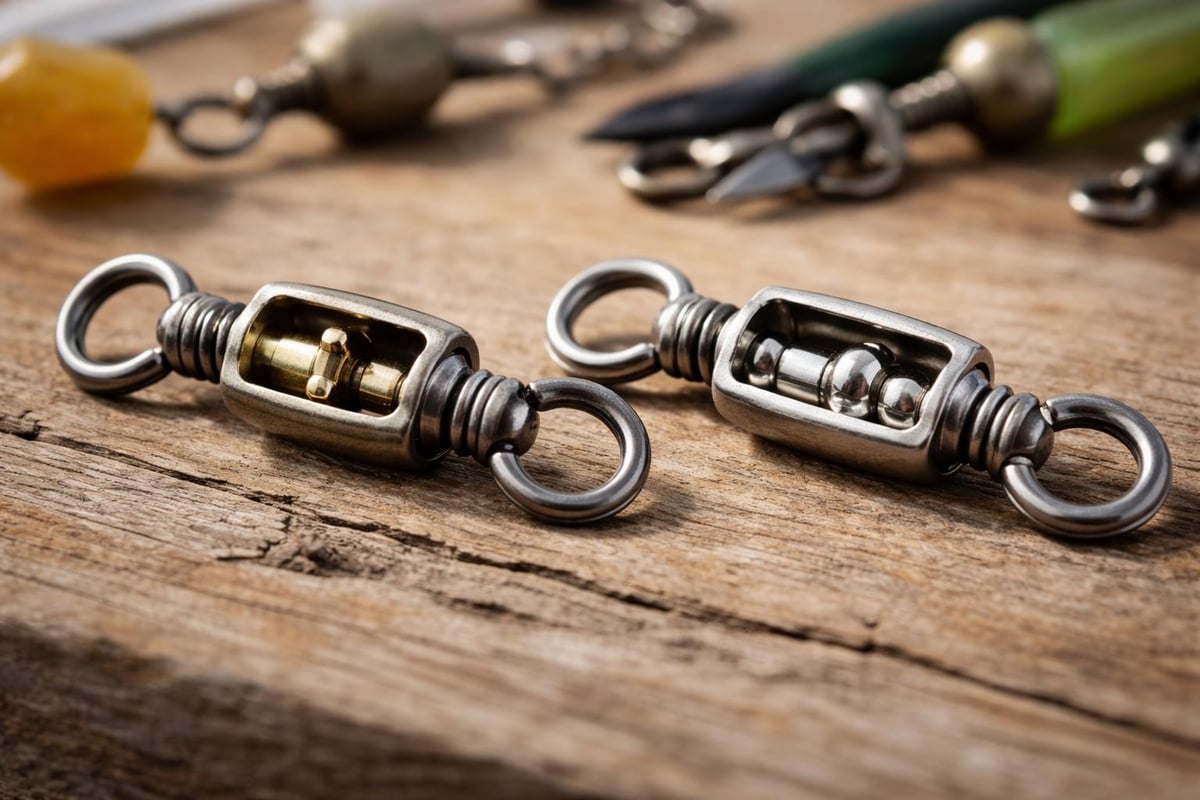
Key Components of Swivel Design
Modern fishing swivels consist of several precision-engineered parts working together:
- Body rings that connect to fishing line or leaders
- Rotating barrels that allow independent movement
- Bearing systems (in premium models) that reduce friction
- Welded or brazed joints that prevent failure under load
The quality of materials and manufacturing directly impacts performance. Stainless steel swivels resist corrosion in marine environments better than brass alternatives, though brass remains popular for freshwater applications due to its affordability and adequate strength.
Types of Fishing Swivels Available in New Zealand
New Zealand anglers and commercial operators have access to various swivel types designed for specific applications. Selecting the appropriate style depends on fishing method, target species, and environmental conditions.
Barrel Swivels
Barrel swivels represent the most common and versatile design. These consist of two eye rings connected by a rotating cylindrical barrel. They're suitable for general fishing applications where moderate rotation is needed without excessive load.
Advantages of barrel swivels:
- Cost-effective for bulk purchases
- Adequate for most recreational fishing situations
- Available in extensive size ranges from 14 to 1/0 and larger
- Simple to rig with improved clinch knots or loop knots
Commercial operations often use barrel swivels in quantity for setting longlines or maintaining gillnet float systems. Their straightforward design makes them reliable workhorses when matched appropriately to line strength.
Ball-Bearing Swivels
Ball-bearing swivels incorporate precision bearings that dramatically reduce friction and increase rotational efficiency. These premium components are essential when fishing situations demand maximum rotation under heavy loads.
| Feature | Barrel Swivel | Ball-Bearing Swivel |
|---|---|---|
| Rotation efficiency | Moderate | Excellent |
| Load capacity | 50-200 lbs typical | 100-400+ lbs |
| Corrosion resistance | Good (stainless) | Excellent (sealed) |
| Cost per unit | $0.50-$2.00 | $3.00-$15.00 |
| Best applications | General fishing | Trolling, big game |
For serious recreational anglers targeting kingfish or tuna around New Zealand's northern waters, ball-bearing swivels prevent costly line twist that can ruin expensive fluorocarbon leaders. The investment pays dividends through reduced tackle loss and improved presentation.
Three-Way Swivels
Three-way swivels feature three connection points arranged at angles, typically 90 degrees or 120 degrees apart. These allow simultaneous attachment of mainline, leader, and sinker or additional rigging.
Dropper rigs, spreader bars, and certain commercial netting configurations utilize three-way swivels extensively. When setting up bottom rigs for hapuku or bluenose in deep water, three-way swivels separate sinker weight from hook leaders, reducing tangles and maintaining proper bait presentation.
Coastlock and Snap Swivels
Coastlock swivels combine rotation with a quick-change snap mechanism. The integrated snap allows rapid lure changes without retying knots, making them popular for trolling applications where lure rotation is frequent.
Snap swivels do add a potential failure point compared to solid eye designs. Many experienced anglers avoid them for trophy fishing, preferring to tie direct connections for maximum strength. However, for commercial operations where efficiency matters and fish sizes are predictable, coastlock swivels streamline operations considerably.
Selecting Fishing Swivels NZ for Different Applications
Choosing appropriate fishing swivels nz options requires matching specifications to intended use. Undersized swivels create dangerous weak points, while oversized components add unnecessary bulk and cost.
Commercial Fishing Considerations
Commercial operators working New Zealand's Exclusive Economic Zone need swivels that balance cost, durability, and performance across thousands of units. Longline fishing for species like bluenose and hapuku demands consistent quality in every component.
Essential selection criteria include:
- Breaking strength rated 20-30% above expected loads
- Corrosion resistance suitable for extended saltwater immersion
- Rotation smoothness maintained through multiple fishing cycles
- Availability in bulk quantities with consistent quality
Action Outdoors Limited supplies commercial-grade fishing swivels alongside their extensive range of fishing nets and marine equipment. As part of the must-have fishing equipment for 2026, updated swivel selections incorporate improved materials and manufacturing processes.
Recreational Fishing Applications
Recreational anglers in New Zealand pursue diverse species from trout in alpine lakes to marlin in the Bay of Islands. Each scenario presents different swivel requirements.
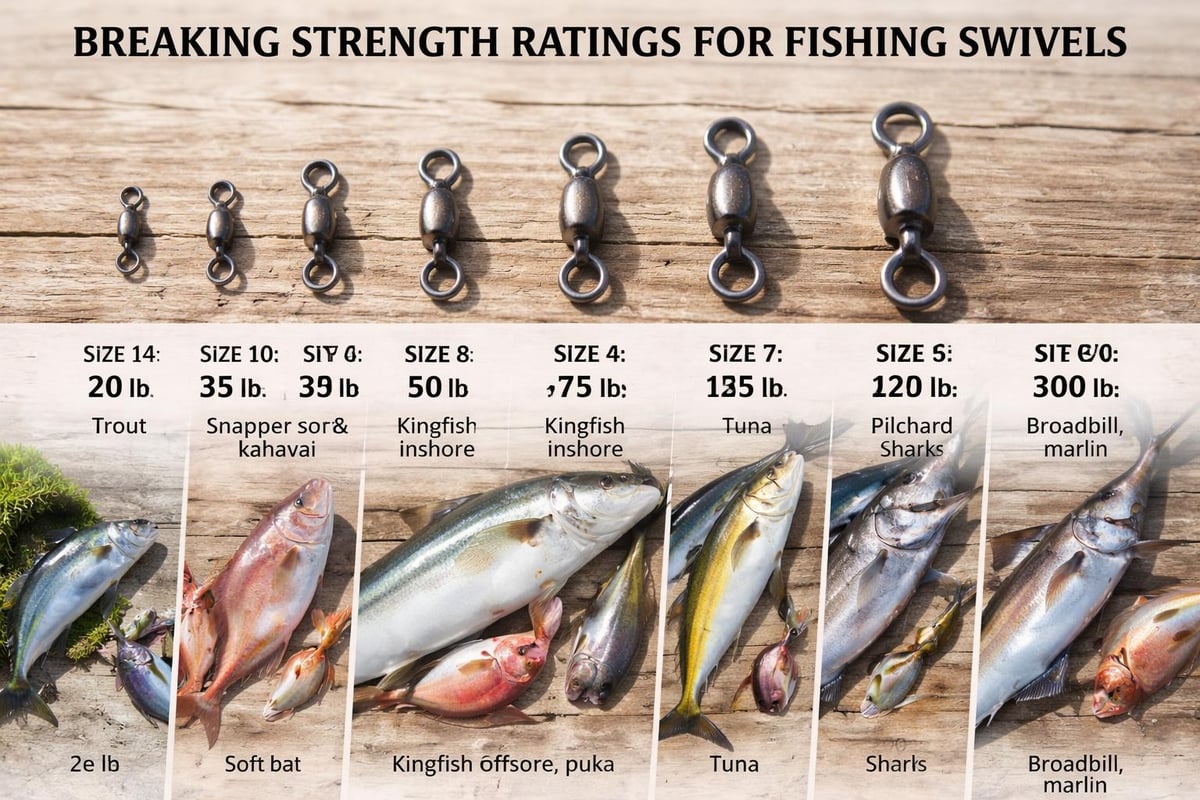
For saltwater fishing applications, ball-bearing swivels rated for 80-150 lbs work well for medium trolling setups targeting kingfish. The increased rotation efficiency prevents line twist from diving lures or bibbed minnows that create significant torque.
Soft-bait fishing for snapper typically requires smaller barrel swivels in the 30-50 lb range. The swivel sits above the leader connection, preventing mainline twist as soft plastics rotate during the retrieve or sink through current.
Matching Swivels to Line Types
Different fishing line materials interact with swivels in varying ways:
- Monofilament has memory and twists easily, benefiting significantly from quality swivels
- Braided line telegraphs twist directly, making swivels critical for certain presentations
- Fluorocarbon leaders resist twist better but still require protection on long trolling runs
When connecting braided mainline to fluorocarbon leaders, many anglers incorporate a quality ball-bearing swivel as part of the connection system. This provides rotation while joining dissimilar line types that don't bond well with standard knots.
Common Mistakes and Solutions
Even experienced anglers make errors when selecting or rigging fishing swivels nz components. Understanding these pitfalls helps avoid equipment failure and lost fish.
Undersizing Swivel Strength
Perhaps the most dangerous mistake involves using swivels rated below actual fighting loads. A 60 lb swivel seems adequate for 50 lb line, but dynamic loads during fish runs can exceed static ratings by 200% or more.
Best practice recommendations:
- Select swivels rated minimum 2x your line breaking strength
- For big game fishing, use 3x ratings for safety margin
- Replace swivels showing wear, corrosion, or rough rotation
- Test rotation smoothness before critical fishing trips
Excessive Swivel Use
While swivels solve specific problems, overusing them adds bulk and creates unnecessary connection points. Some anglers incorporate three or four swivels in a single rig, dramatically increasing failure probability.
There are specific situations when swivels provide genuine benefits and other times when direct connections work better. Evaluate whether each swivel serves a clear purpose or simply adds complexity.
Maintenance and Storage Best Practices
Proper care extends swivel life and maintains performance, especially important for commercial operations using thousands of units annually.
Saltwater Corrosion Prevention
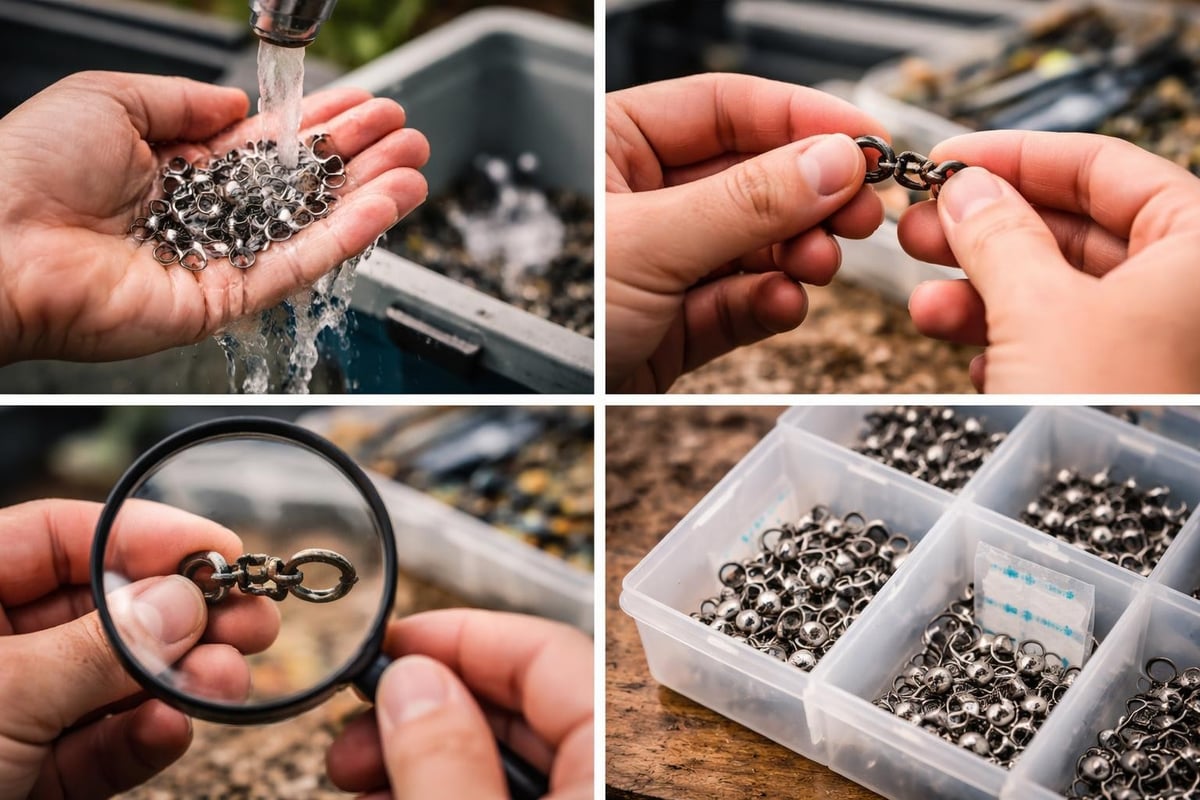
After each saltwater fishing session, rinse swivels thoroughly with freshwater. Saltwater accelerates corrosion even in stainless steel components, particularly in crevices where bearing systems meet body rings.
| Maintenance Task | Frequency | Method |
|---|---|---|
| Freshwater rinse | After each use | Running water, 30 seconds |
| Rotation check | Weekly | Spin each ring freely |
| Oil application | Monthly | Light machine oil on bearings |
| Replacement assessment | Quarterly | Inspect for pitting, roughness |
For commercial operators, establishing systematic maintenance schedules prevents unexpected failures during critical fishing periods. Bulk swivel replacement at regular intervals costs less than lost fishing time from equipment failure.
Storage Conditions
Store swivels in dry environments away from moisture sources. Sealed containers with desiccant packets work well for long-term storage between fishing seasons. Organize swivels by size and type for quick selection when rigging operations begin.
The comprehensive fishing equipment available through Action Outdoors Limited includes storage solutions designed for marine environments. Proper organization of terminal tackle, including fishing swivels nz inventory, streamlines rigging and reduces costly delays.
Integration with Modern Fishing Systems
Contemporary fishing techniques increasingly incorporate specialized rigging methods where swivels play crucial roles. Understanding these applications helps optimize terminal tackle configurations.
Longline Commercial Setups
Commercial longline fishing for deepwater species requires precise terminal tackle placement. Swivels positioned at strategic points prevent gangion twist and maintain proper hook orientation as lines soak for extended periods.
Modern longline systems often incorporate three-way swivels at 5-10 meter intervals along mainlines. These connection points attach gangions carrying baited hooks while allowing the mainline to rotate independently based on current flow. This design significantly reduces tangles and maintains fishing efficiency across kilometers of setline.
Gillnet Float Systems
While gillnets themselves don't typically incorporate swivels, the float systems and anchor rigging often benefit from strategic swivel placement. When strong currents act on extended gillnet panels, torque can twist setting ropes and compromise net geometry.
Action Outdoors Limited, as New Zealand's largest fishing net manufacturer producing over 350,000 meters annually, understands how terminal components interact with netting systems. Their expertise in fishing repairs and techniques extends to proper swivel integration with commercial fishing nets.
Innovative 2026 Applications
Recent developments in fishing technology have created new applications for traditional components. The exciting fishing innovations for 2026 include improved swivel designs incorporating composite materials and advanced bearing systems.
Smart swivel prototypes with embedded sensors can monitor rotation rates and loading, providing data about lure action and fish strikes. While still in development, these technologies may revolutionize how commercial and recreational anglers optimize their fishing swivels nz selections.
Environmental and Sustainability Considerations
As awareness of marine plastic pollution grows, the fishing industry faces increasing pressure to minimize environmental impact. Terminal tackle components, including swivels, contribute to this challenge when lost or discarded improperly.
Responsible Tackle Management
Sustainable practices for swivel use:
- Recover and recycle worn metal swivels rather than discarding
- Use biodegradable materials where appropriate for certain applications
- Maintain tackle properly to extend usable life
- Choose quality over quantity to reduce replacement frequency
New Zealand's fishing industry has made significant progress in sustainable practices. Commercial operators increasingly adopt comprehensive tackle recovery programs that reclaim metal components for recycling. This reduces both environmental impact and operating costs over time.
Material Selection Impact
Stainless steel swivels, while more expensive initially, offer superior longevity compared to brass or coated alternatives. This durability reduces replacement frequency and minimizes tackle loss that contributes to marine debris.
Recent research into fishing equipment materials explores how component design affects environmental footprint. Manufacturers now consider full lifecycle impacts when developing new swivel designs, balancing performance requirements with sustainability goals.
Regional Considerations for New Zealand Waters
New Zealand's diverse marine environments present unique challenges that influence fishing swivels nz selection. From the subtropical waters around the Three Kings Islands to the sub-Antarctic conditions near the Auckland Islands, temperature, current, and species variations demand adaptable equipment.
North Island Coastal Fishing
Warmer northern waters support aggressive pelagic species that create extreme tackle loads. Kingfish, marlin, and yellowfin tuna generate powerful runs that test every component in the fishing system. Ball-bearing swivels rated for 200+ lbs become essential rather than optional for serious gamefishing.
The variable current around headlands and islands also contributes to line twist. Swivels positioned strategically in the leader system prevent cumulative rotation that would otherwise compromise line strength and lure action.
South Island Deep Water Applications
Southern waters offer exceptional deepwater fishing for species like blue cod, groper, and various rockfish. These fisheries often involve vertical jigging or bottom fishing in depths exceeding 100 meters.
Deep water creates unique pressure on tackle. Swivels must function properly under significant water pressure while managing line twist from current action and lure movement. Three-way swivels work particularly well for dropper rig configurations targeting multiple depth zones simultaneously.
Pacific Island Export Markets
Action Outdoors Limited supplies fishing equipment across Pacific Island markets where environmental conditions vary significantly from New Zealand waters. Tropical temperatures, coral reef fishing, and different target species require tailored terminal tackle recommendations.
Understanding regional variations helps commercial fisheries select appropriate fishing swivels nz products for their specific operational areas. Consultation with experienced suppliers ensures compatibility between equipment and local fishing conditions.
Cost-Benefit Analysis for Commercial Operations
Commercial fishing operations must balance equipment quality against operating budgets. Fishing swivels represent a small percentage of overall costs but can significantly impact efficiency and success rates.
Initial Investment Versus Longevity
| Swivel Type | Unit Cost | Expected Uses | Cost Per Use |
|---|---|---|---|
| Economy barrel | $0.75 | 10-20 | $0.05-$0.08 |
| Standard stainless | $1.50 | 30-50 | $0.03-$0.05 |
| Premium ball-bearing | $8.00 | 100-200 | $0.04-$0.08 |
While premium swivels cost significantly more upfront, their extended lifespan often delivers better value through repeated use. For commercial operators running consistent fishing patterns, investing in quality components reduces long-term tackle costs and minimizes in-season failures.
Bulk Purchasing Strategies
Commercial operations benefit from establishing relationships with reliable suppliers who offer consistent quality and competitive pricing on bulk orders. Action Outdoors Limited's focus on New Zealand-made quality ensures dependable supply chains and quick turnaround times for fishing swivels nz requirements.
Seasonal planning allows commercial fisheries to purchase swivels and other terminal tackle during off-peak periods when pricing may be more favorable. Maintaining adequate inventory prevents rushed purchases at premium prices when fishing seasons begin.
Technical Specifications and Testing Standards
Understanding how manufacturers rate and test fishing swivels helps operators make informed purchasing decisions. Breaking strength ratings provide essential information but don't tell the complete performance story.
Breaking Strength Ratings
Published breaking strengths indicate the load at which swivels fail during controlled testing. However, real-world conditions introduce variables that affect actual performance:
- Dynamic loading from fish runs exceeds static test conditions
- Corrosion reduces strength over time and use
- Knot strength at connection points often fails before swivel body
- Temperature variations affect metal properties and performance
Conservative selection practices account for these variables by choosing swivels rated well above expected loads. This safety margin prevents catastrophic failures during trophy fish encounters or critical commercial operations.
Rotation Testing Methodology
Premium manufacturers test swivel rotation under various loads to ensure consistent performance. Smooth rotation under 50% of rated load indicates quality bearing systems and precision manufacturing.
Field testing complements laboratory evaluations. Commercial operators often conduct their own performance assessments using actual fishing conditions to verify swivel quality before committing to large purchases.
Selecting and maintaining appropriate fishing swivels represents a small but crucial aspect of successful fishing operations in New Zealand waters. Whether you're rigging commercial longlines or preparing recreational tackle for weekend fishing, understanding swivel types, applications, and maintenance practices ensures reliable performance when it matters most. For comprehensive fishing and marine equipment needs backed by New Zealand manufacturing expertise, explore the extensive product range available through Action Outdoors Limited, where quality components support successful fishing operations across the Pacific region.
发表评论