

Choosing the right net supplies in 2026 can mean the difference between success and frustration, whether you are a commercial fisher, hobbyist, or aquaculture operator. The landscape of netting materials, technology, and supply options is evolving rapidly, making it more important than ever to stay informed.
With updated knowledge of net supplies, you can boost your performance, increase safety, and support sustainable practices. This guide will help you make informed, cost-effective decisions for your fishing or aquaculture needs.
Here, you will find an essential, up-to-date resource covering net supply types, material innovations, accessories, maintenance strategies, and buying tips. Use this guide to navigate the latest trends and choose the best solutions for your operations in 2026.
Understanding Net Supplies: Types and Uses
Selecting the right net supplies is crucial for success in fishing, aquaculture, sports, and environmental management. As 2026 approaches, innovations in net types and applications are transforming how users approach their needs. Understanding the range of net supplies, their uses, and industry trends will help you make informed decisions.
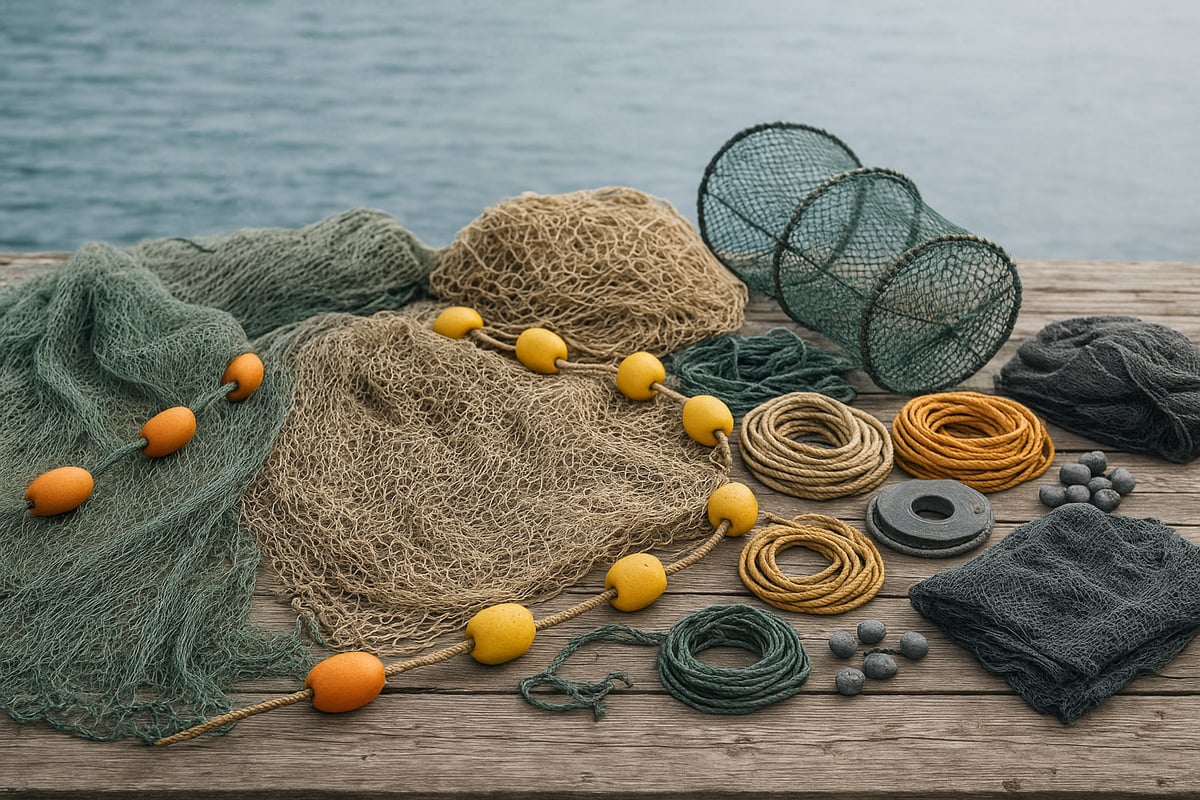
Overview of Net Types
Net supplies come in several primary forms, each optimized for specific environments and target species. The most common types include cast nets, gill nets, seine nets, trammel nets, dip nets, and trap nets. Each is designed to address distinct challenges, from commercial harvests to scientific sampling.
| Net Type | Typical Use | Example Species | Environment |
|---|---|---|---|
| Gill Net | Commercial, research | Walleye, salmon | Freshwater, saltwater |
| Seine Net | Schooling fish, debris | Smelt, baitfish | Coastal, rivers |
| Trap Net | Crustaceans, eels | Crabs, lobsters | Bays, estuaries |
| Cast Net | Bait collection, sport | Shrimp, mullet | Shallow water |
| Trammel Net | Mixed species, research | Flatfish | Lakes, inshore |
| Dip Net | Sampling, aquaculture | Juvenile fish | Ponds, tanks |
Mesh size is a defining factor in net supplies, influencing both the catch rate and bycatch levels. Small mesh targets smaller species but may increase bycatch, while larger mesh can help comply with regulations and protect non-target species. Net designs are also tailored for freshwater or saltwater use, with material and coating adaptations to resist corrosion and fouling.
For a deeper dive into these types, see this fishing nets overview and types resource.
Specialized Netting Applications
Modern net supplies are not limited to fishing. Aquaculture operations rely on predator exclusion nets, containment barriers, and specialized feeding nets to enhance yield and safety. Sports facilities use netting for baseball backstops, golf driving ranges, and custom installations to protect players and spectators.
Research and sampling nets are designed for precision, including dip nets for juvenile fish, block nets for habitat surveys, and insect nets for entomological studies. Environmental applications are also expanding, with debris nets used in harbors, barrier nets for invasive species control, and safety nets for construction or public spaces.
This broadening of net supplies demonstrates their adaptability, supporting multiple industries beyond traditional fishing.
Choosing the Right Net for Your Needs
When selecting net supplies, assess your target species, water conditions, and intended use. Legal requirements, such as mesh size restrictions and species protection, are critical to ensure compliance and sustainability.
Consider these factors:
- Target Species: Match mesh size and net type to minimize bycatch.
- Water Conditions: Adapt material and construction for saltwater or freshwater.
- Net Shape and Size: Optimize for efficiency and ease of deployment.
- Twine Thickness: Thicker twine increases durability but may reduce catch rates.
- Regulations: Stay updated on local laws governing net supplies.
For example, survival gill nets are a popular choice for emergency preparedness, offering compact storage and quick deployment. Always verify that your net supplies meet regional regulatory standards before use.
Trends in Net Supply Demand for 2026
The net supplies market is experiencing dynamic growth, with increasing demand for multi-purpose and custom solutions. Commercial suppliers such as Lee Fisher and Duluth Fish Nets are expanding their offerings to include specialty nets tailored for unique applications.
Recreational and small-scale aquaculture users are driving a rise in net supplies for personal and community use, reflecting a broader interest in sustainable resource management. Eco-friendly options, such as biodegradable nets and recycled materials, are gaining popularity as both regulatory bodies and consumers prioritize environmental responsibility.
Looking forward, expect net supplies to continue evolving, with customization, sustainability, and advanced materials shaping the industry's future.
Net Materials: Innovations and Comparisons
Staying ahead in the world of net supplies requires understanding the evolution of netting materials. In 2026, fishers and aquaculture operators have access to a range of traditional and advanced options, each offering unique performance, durability, and sustainability benefits.
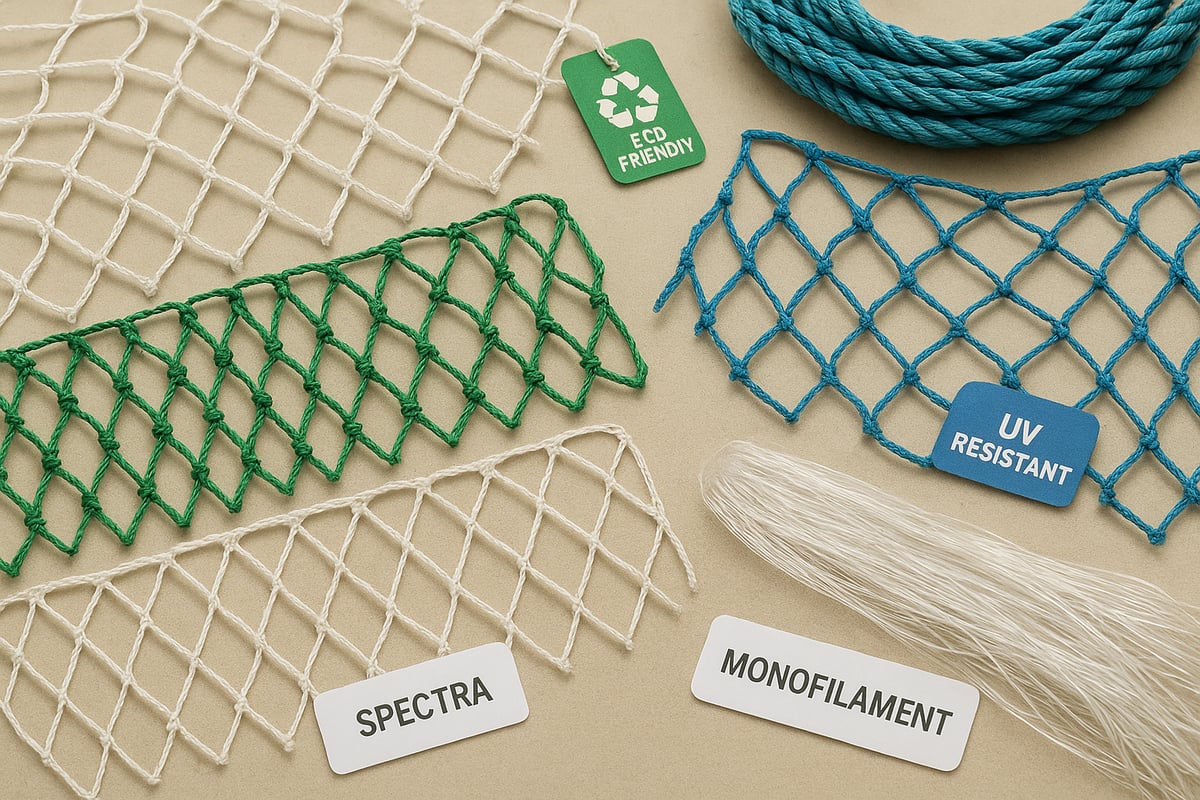
Traditional Materials: Nylon, Polyethylene, and Polypropylene
Traditional materials remain a cornerstone of net supplies. Nylon is prized for its impressive strength and abrasion resistance, making it a top choice in gill and cast nets. Its flexibility allows for both braided and twisted netting, which affects handling and repair.
Polyethylene (PE) is lightweight and cost-effective, often found in barrier and sports netting. Its buoyancy and ease of handling make it popular for surface applications. Polypropylene stands out for its high buoyancy and chemical resistance, an advantage in challenging water conditions.
When selecting net supplies, users consider not only the material but also the construction. Nylon braided nets offer increased durability, while twisted nylon can be easier to repair. Choosing the right material ensures that the net matches the intended use, from commercial to recreational settings.
Advanced Materials: Spectra, Monofilament, Multifilament
The landscape of net supplies has evolved with the introduction of advanced materials. Spectra and other high-strength polymers deliver exceptional durability with reduced weight, making them ideal for operations requiring robust yet manageable nets.
Monofilament netting is nearly invisible underwater, enhancing catch rates for species sensitive to visual cues. It is a favorite for gill nets targeting clear-water fish. Multifilament nets provide superior knot strength and flexibility, often used in trammel nets and experimental setups.
Comparing monofilament and multifilament options reveals trade-offs. Monofilament nets often yield higher catch rates due to their stealth, while multifilament nets excel in strength and adaptability. For those sourcing net supplies in 2026, these advanced materials offer tailored solutions for diverse fishing environments.
Knotless vs. Knotted Netting
Knotless and knotted netting represent two fundamental choices in net supplies. Knotless netting reduces abrasion and enhances net longevity, making it a popular choice for sports and research applications. Its smoother texture also minimizes injury to captured species.
Knotted netting, valued for its traditional design, is prevalent in commercial fishing. These nets are often easier to mend and typically come at a lower cost. The choice between knotless and knotted netting impacts not only performance but also maintenance routines.
For example, knotless seines are increasingly used for smelt fishing due to their gentle handling and extended lifespan. Understanding these differences helps users select net supplies that align with both operational needs and species conservation goals.
Material Selection for Longevity and Performance
Selecting the right materials for net supplies directly affects net longevity and effectiveness. Modern netting often includes UV resistance and anti-fouling treatments, which can extend a net’s usable life by up to 30 percent, according to industry data.
Environmental conditions such as salinity and temperature are critical factors. Nets used in saltwater require materials that resist corrosion and fouling, while freshwater operations may prioritize flexibility and abrasion resistance. UV inhibitors and anti-fouling coatings are now standard in high-wear applications, reducing maintenance costs over time.
For those investing in net supplies, matching material properties to the fishing environment ensures reliability and sustained performance, protecting both the gear and the operator’s bottom line.
Sustainability and Eco-Friendly Netting
Sustainability is shaping the future of net supplies. Biodegradable netting options are now available for 2026, addressing concerns about marine debris and ghost fishing. Recycled materials are increasingly used, with industry initiatives supporting circular economies.
Regulatory trends are encouraging eco-friendly netting, and pilot programs in Pacific fisheries are already trialing biodegradable twines. For a closer look at innovative efforts, see how Puglia is pioneering sustainable fishing gear, with new designs aimed at reducing pollution and supporting marine ecosystems.
By choosing sustainable net supplies, fisheries and aquaculture operators can meet regulatory requirements, support environmental initiatives, and maintain efficient operations in the years ahead.
Essential Net Accessories and Components
Outfitting your gear with the right net supplies accessories transforms an ordinary net into a high-performance tool. Whether you fish commercially, manage aquaculture, or pursue recreational angling, each component plays a critical role. Understanding these essentials helps you maximize efficiency, safety, and the lifespan of your net supplies.
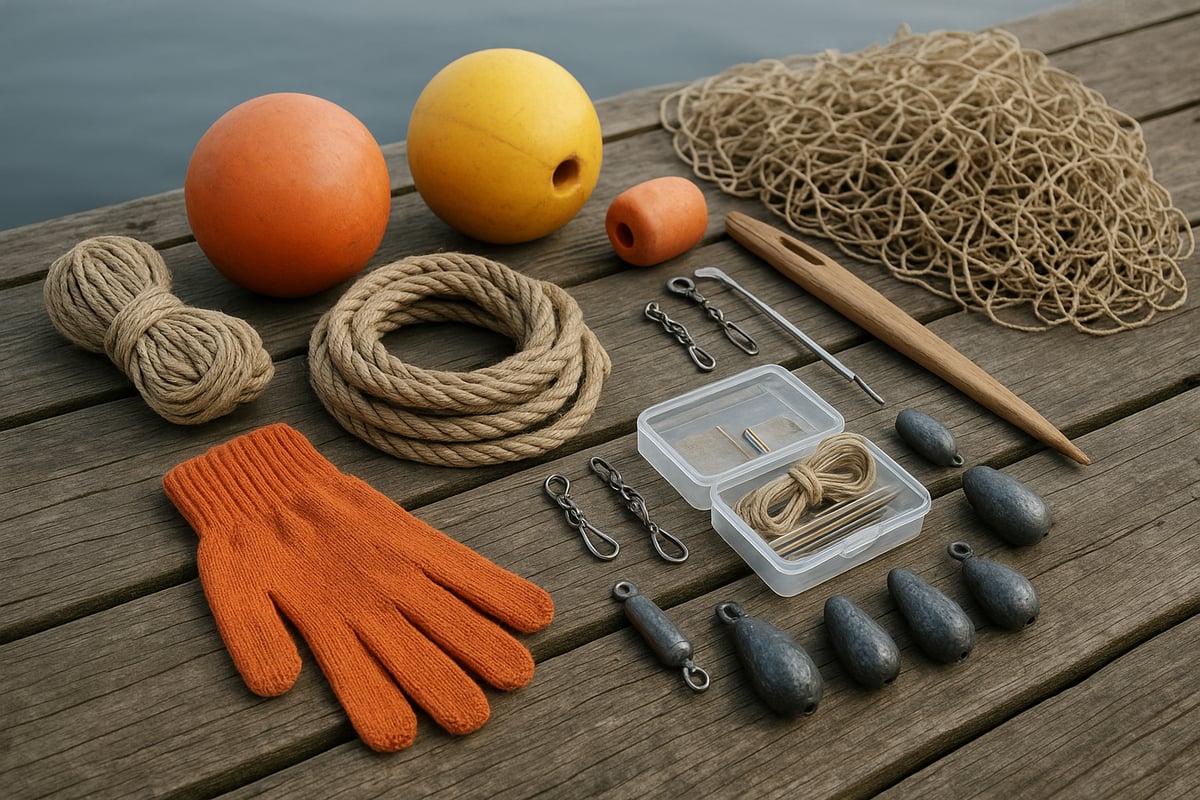
Ropes, Twines, and Lines
Every net starts with the right ropes and twines. These crucial net supplies determine the net's strength, flexibility, and handling. Common rope types include lead core ropes for weighting, float lines for buoyancy, and hollow braid or twisted ropes for general net assembly.
Selecting the right twine is just as important. Nylon, polyethylene (PE), and Spectra are popular choices, each with unique properties. Nylon offers strength and abrasion resistance, while PE is lightweight and affordable. Spectra provides high strength for demanding applications.
Matching ropes and twines to your specific net supplies ensures optimal performance. For instance, a leadcore rope is ideal for bottom-weighted gill nets, keeping your net in place. Explore the full range of high-strength ropes and twines to find the best fit for your needs.
Floats, Buoys, and Markers
Floats and buoys are indispensable net supplies for maintaining visibility and function on the water. They come in various materials such as foam and durable plastics, and sizes range from small float beads to large flag marker buoys. Choosing the right size and placement ensures your net remains visible and properly aligned, which is essential for safe operation.
Regulations often require specific markings for commercial nets, so selecting compliant floats and buoys is vital. Costs vary widely, with basic floats starting around $0.69 and larger marker buoys reaching up to $22.00. Investing in reliable net supplies like these reduces the risk of lost gear and improves retrieval.
Marker buoys with flags are especially useful in busy waterways, alerting others to the position of your net supplies. Always verify local guidelines before deploying net supplies with floats and markers.
Weights and Sinkers
Weights and sinkers are fundamental net supplies for achieving the right depth and spread. Traditional lead weights are popular for their density, but chain and eco-friendly alternatives are also available due to environmental regulations.
Distribution of weight is key. For example, leaded bottom lines are commonly used in gill and seine nets to ensure an even sink and effective catch. The correct arrangement of weights prevents tangling and improves your net supplies' performance.
Environmental considerations are increasingly important. Many regions now restrict lead use, encouraging the adoption of alternative materials. Choosing the right weights for your net supplies balances efficiency and compliance, ensuring responsible fishing practices.
Net Needles, Mending Kits, and Repair Tools
Regular maintenance is essential for extending the life of your net supplies. Net needles, available for $2.50–$6.00, allow for precise repairs and mending. Selecting the appropriate needle and twine for your net type ensures strong, long-lasting fixes.
Net repair kits typically include various needles, twines, and sometimes patching materials. Essential tools like mud rollers and fish picks help with cleaning and handling, removing debris that could damage your net supplies.
Consistent repairs minimize downtime and preserve your investment. Having the right tools on hand makes it easy to address issues quickly, keeping your net supplies in top condition for every outing.
Additional Hardware and Accessories
Beyond the basics, a range of additional hardware enhances the functionality of your net supplies. Swivels prevent twisting, horns and sleeves secure lines, and cable ties or hooks facilitate assembly. These small components can significantly improve ease of use and reliability.
Storage solutions are another important aspect of net supplies. Fish boxes, buckets, and totes help organize gear and protect nets during transport. Prices for fish boxes range from $30 to $107, offering options for all budgets.
Safety gear is essential when handling net supplies. Gloves, boots, and aprons protect against abrasion and injury, especially during commercial operations. Incorporating the right accessories ensures your net supplies are both safe and efficient.
Step-by-Step Guide: Selecting and Sourcing Net Supplies in 2026
Choosing the right net supplies in 2026 requires a clear, systematic approach. Whether you are a commercial operator, aquaculture specialist, or recreational angler, following these steps ensures you select, source, and maintain net supplies that fit your needs, environment, and budget.
Step 1: Assess Your Netting Needs
Start by identifying your primary objectives for net supplies. Are you targeting specific fish species, managing an aquaculture site, or preparing for emergency scenarios? Consider the water type—freshwater, saltwater, or brackish—as it affects material selection and net longevity.
Think about the frequency of use and the conditions your nets will face, such as debris, temperature, or high current. For instance, an aquaculture operator may prioritize predator exclusion and durability, while a recreational angler may focus on portability and ease of use.
List your must-haves:
- Target species and size
- Water conditions and environment
- Legal requirements and regulations
- Frequency and method of use
Defining these factors will streamline your search for net supplies and help you avoid costly mistakes. To visualize practical differences between options, check out fishing net review videos that compare net types in real-world settings.
Step 2: Choose the Appropriate Net Material
With your needs defined, match net supplies materials to your application. Nylon offers excellent strength and abrasion resistance, making it ideal for high-wear environments. Polyethylene is affordable and lightweight, while Spectra provides advanced durability for demanding tasks.
Consider visibility and stealth—monofilament is less visible in water, a benefit for gill nets. Factor in maintenance demands, as some materials require regular cleaning to prevent fouling. Sustainability is increasingly important; biodegradable and recycled materials are now widely available for eco-conscious users.
Balance cost and performance:
- Nylon for strength and resilience
- Polyethylene for budget-friendly, lightweight use
- Spectra for advanced durability
- Biodegradable options for sustainability
Selecting the right material directly impacts the performance and lifespan of your net supplies.
Step 3: Select Key Accessories and Components
Net supplies are more than just netting. Essential accessories like ropes, floats, weights, and repair tools must be compatible with your chosen net type and fishing method.
Checklist for accessories:
- Ropes: lead core for bottom-weighted nets, float lines for surface nets
- Floats and buoys: ensure proper net buoyancy and visibility
- Weights and sinkers: distribute evenly for efficient net spread
- Repair kits: mending needles, tarred or untarred twine, mud rollers for cleaning
For example, if you fish in muddy environments, a mud line rope enhances net performance and longevity. Always verify that all components work together to maximize the effectiveness of your net supplies.
Step 4: Evaluate Quality and Supplier Reputation
Quality net supplies start with reputable suppliers. Research company backgrounds, product warranties, and customer reviews. Prioritize suppliers that offer a wide range of products, customization options, and a track record of reliability.
Look for:
- Compliance with local and international regulations
- Expertise in commercial, aquaculture, or sport-specific nets
- Transparent return and support policies
Building a relationship with a trusted supplier ensures you receive consistent quality, timely support, and access to the latest innovations in net supplies.
Step 5: Purchase and Inspect Supplies
Before finalizing your net supplies order, inspect all items upon delivery. Check for defects, correct mesh sizes, proper hardware, and completeness. Use detailed checklists for large or complex orders to minimize errors.
Create a supplier contact log for future support and easy reordering. For commercial operations, document all purchase details for regulatory compliance and inventory tracking.
Key reminders:
- Inspect nets, ropes, floats, and repair tools
- Confirm sizing and specifications
- Keep supplier information organized
By following these steps, you will secure net supplies that meet your needs, support your goals, and deliver reliable, long-term performance.
Pro Tips for Net Maintenance, Repair, and Longevity
Proper care for your net supplies is essential for maximizing their performance and extending their service life. Whether you use nets for commercial fishing, aquaculture, or recreation, a well-maintained net can save you time, money, and frustration. Below are expert tips for inspection, repair, storage, seasonal care, and responsible upgrading.
Routine Inspection and Cleaning
Regular inspection is the first defense in preserving your net supplies. Look for signs of wear, such as frayed twine, torn mesh, or broken floats. Early detection of small issues can prevent larger, costly repairs later.
After each use, rinse your nets thoroughly with freshwater to remove salt, mud, and debris. Pay special attention to knots and seams, as dirt can accumulate in these areas. Utilize mud rollers for stubborn residue, especially after use in muddy or silty environments.
Industry estimates show that consistent cleaning can increase the lifespan of net supplies by 20 to 30 percent. A clean net not only lasts longer but also performs more efficiently, reducing drag and fouling during use.
Repair Techniques and Tools
Prompt repairs are crucial for maintaining the integrity of your net supplies. Begin by identifying damaged sections, such as holes or broken twine. Select an appropriate mending needle and matching twine, considering whether the original material is nylon, PE, or another fiber.
For high-abrasion areas, tarred twine offers extra durability. Net repair kits, which include needles and assorted twines, are invaluable for quick on-site fixes. Mastering essential rope knots is also important for secure repairs and assembly; you can enhance your skills with this Strongest rope knots guide.
Keep a dedicated repair kit with you during every outing. Addressing small tears immediately helps prevent them from expanding, ensuring your net supplies remain reliable.
Storage and Handling Best Practices
Proper storage plays a significant role in the longevity of your net supplies. Always dry nets completely before storing to avoid mold and rot. Hang them in a well-ventilated area or spread them out on clean surfaces to accelerate drying.
Fold or roll nets loosely to prevent kinks and deformation. Use storage containers such as fish boxes, totes, or buckets to protect nets from physical damage and environmental exposure. Avoid storing nets in direct sunlight, as prolonged UV exposure can weaken fibers and reduce durability.
Handle nets gently during transport and deployment. Wearing gloves not only protects your hands but also reduces accidental snags and tears in the net supplies.
Seasonal and Long-Term Maintenance
End-of-season deep cleaning and inspection are essential for all net supplies. Soak nets in mild detergent and rinse thoroughly to remove any buildup of algae or contaminants. Examine all components, including floats, weights, and ropes, and replace any that show signs of significant wear.
For commercial operations, consider scheduling professional servicing to ensure optimal performance. Document maintenance schedules and track the condition of your net supplies to anticipate replacements before failures occur.
Regular maintenance routines help avoid unexpected downtime and contribute to safer, more efficient operations throughout the year.
Upgrading and Recycling Old Nets
Knowing when to upgrade your net supplies is vital for safety and efficiency. Signs that nets may need replacement include excessive fraying, persistent holes, and stretched or deformed mesh. When retiring old nets, seek out recycling programs where available.
Innovative initiatives are turning waste nets into valuable materials for new products. For example, the process of recycling waste fishing nets for textiles offers both economic and environmental benefits, helping reduce marine pollution.
Alternatively, consider repurposing old net supplies for debris barriers, garden trellises, or community projects. Responsible disposal and recycling support sustainability and protect aquatic environments.
Where to Buy: Top Net Supply Sources and What to Look For
Finding the right source for net supplies is crucial for both performance and long-term value. With so many options available in 2026, knowing where and how to buy your net supplies can save you time, money, and frustration.
Leading Net Supply Retailers and Manufacturers
When sourcing net supplies, start with established retailers and manufacturers. Reliable names like Lee Fisher and Duluth Fish Nets have built reputations for quality and consistency. These suppliers offer a wide range of net supplies, from custom gill nets to specialized aquaculture solutions.
Specialty suppliers often provide custom fabrication, large-scale orders, and expert guidance. Working with industry leaders ensures your net supplies meet regulatory standards and deliver on durability. For research or unique gear, look for suppliers who innovate, such as those developing advanced trawl nets for fisheries research. For example, innovative trawl net for U.S. West Coast surveys highlights how supplier expertise drives new solutions.
What to Look for in a Net Supply Partner
Choosing the right net supply partner helps guarantee reliable service and product quality. Look for a supplier with a broad product range, deep expertise, and proven after-sales support. Export capability and customization options are essential for commercial buyers or those with unique requirements.
A knowledgeable supplier can advise on net supplies that match your specific needs, from regulatory compliance to environmental considerations. Confirm that your supplier keeps up with industry changes and offers documentation or guidance for new regulations.
Online vs. Local Purchasing Considerations
Deciding between online and local sources for net supplies depends on your priorities. Online platforms offer convenience, a wide product selection, and the ability to compare user reviews. However, shipping costs and wait times can be drawbacks, especially for urgent needs.
Local shops allow you to inspect net supplies in person, ask questions, and access immediate support. For complex or custom orders, local expertise can be invaluable. Balancing convenience with quality assurance leads to better purchasing decisions.
Cost Factors and Budgeting Tips
Cost is a key consideration when investing in net supplies. Prices vary widely based on material, size, and accessory needs. For example, floats can range from $0.69 to $22.00 each, while fish boxes range from $30 to $107. Custom nets and specialty gear may command higher prices.
To manage your budget, compare suppliers, look for bulk discounts, and take advantage of seasonal promotions. Prioritize quality for nets and accessories that see heavy use, and consider long-term value over short-term savings.
| Item | Price Range |
|---|---|
| Floats | $0.69 – $22.00 |
| Fish Boxes | $30 – $107 |
| Mending Needles | $2.50 – $6.00 |
| Storage Buckets | Varies |
Action Outdoors: New Zealand’s One-Stop Net Supply Source
For those seeking a comprehensive source for net supplies, Action Outdoors Limited stands out as New Zealand’s largest fishing net manufacturer. Producing over 350,000 meters of nets each year, Action Outdoors serves commercial and community fisheries across the Pacific.
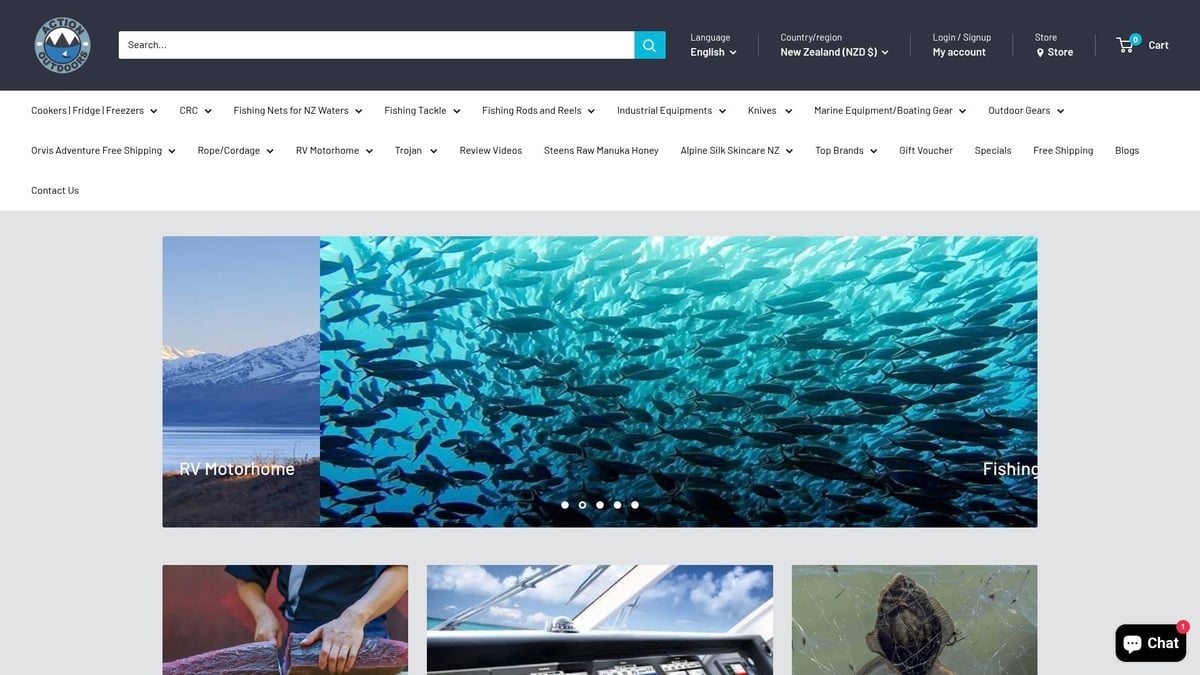
Their product line covers fishing nets, ropes, floats, slings, and marine equipment, making them a reliable one-stop shop. With a focus on NZ-made quality, fast turnaround, and export-ready service, Action Outdoors supports both commercial operators and recreational users. Whether you need custom net supplies or standard gear, their expertise ensures you get dependable products for every application.
As we’ve explored, staying updated on the latest net materials, accessories, and maintenance strategies can make a real difference—whether you’re a commercial operator or just passionate about fishing. If you’re ready to put this knowledge into action and want reliable, high-quality supplies from a trusted New Zealand manufacturer, you don’t have to look far. Action Outdoors Limited offers a wide range of fishing nets, ropes, floats, and more—all backed by local expertise and quick turnaround times. Take the next step and ensure you’re fully equipped for 2026 by visiting Buy Now.