Terminal Tackle NZ: Complete Guide for Fishing Success
Terminal tackle represents the critical connection between your fishing line and the business end of your rig-the components that directly interact with fish. In New Zealand's diverse fishing environments, from commercial operations in the Pacific to weekend recreational outings, selecting the right terminal tackle can mean the difference between a successful catch and a frustrating day on the water. Whether you're rigging nets for commercial fisheries or preparing personalized setups for targeting snapper off the coast, understanding terminal tackle nz options ensures your equipment performs when it matters most.
Understanding Terminal Tackle Components
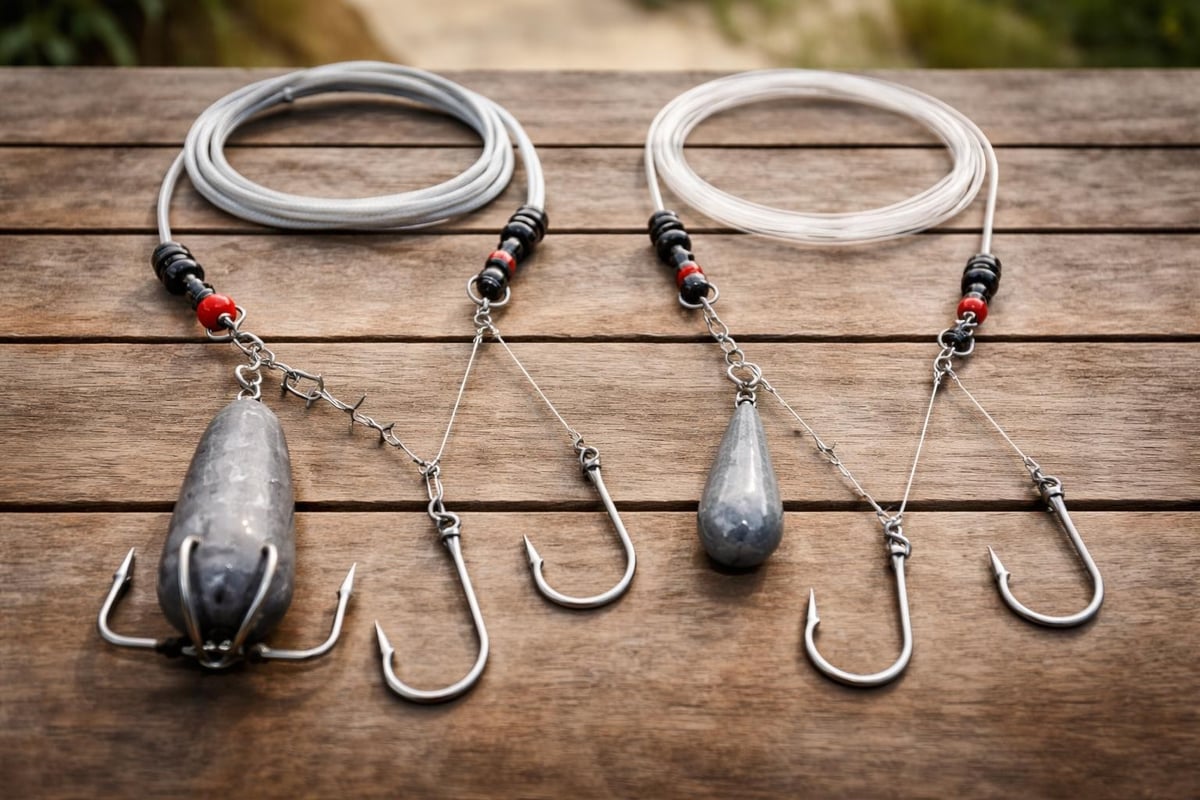
Terminal tackle nz encompasses everything attached to the end of your fishing line, forming the essential link between angler and catch. This category includes hooks, swivels, sinkers, snaps, leaders, and specialized rigging accessories designed to withstand New Zealand's challenging marine conditions.
The foundation of any terminal setup begins with quality hooks. Different hook patterns serve specific purposes-circle hooks for catch-and-release fishing, J-hooks for traditional techniques, and treble hooks for lure fishing. New Zealand waters demand corrosion-resistant materials, particularly stainless steel or chemically sharpened high-carbon steel with protective coatings.
Swivels prevent line twist, a common issue when trolling or using spinning lures. Ball bearing swivels offer superior rotation compared to barrel swivels, though both have their place in a well-stocked tackle box. For heavy-duty commercial applications, crane swivels provide exceptional strength ratings necessary for larger species and demanding conditions.

Essential Swivel Types and Applications
| Swivel Type | Best Use | Strength Range | Key Advantage |
|---|---|---|---|
| Barrel Swivel | General fishing, light tackle | 10-100 kg | Cost-effective, reliable |
| Ball Bearing | Trolling, spinning lures | 15-150 kg | Superior rotation, reduced twist |
| Crane Swivel | Heavy commercial fishing | 50-300 kg | Maximum strength for big fish |
| Three-Way Swivel | Bottom rigs, dropper setups | 15-80 kg | Multiple line attachment points |
Sinkers and weights complete the fundamental terminal tackle nz arsenal. Depending on fishing conditions, anglers choose between:
- Ball sinkers for general-purpose applications
- Bean sinkers for snapper fishing and bottom bouncing
- Running sinkers for live bait presentations
- Snapper leads specifically designed for New Zealand conditions
- Pyramid sinkers for surf fishing on sandy beaches
The comprehensive range of terminal tackle from Nacsan demonstrates the variety available to New Zealand anglers, with Korean-made components known for exceptional quality-to-price ratios.
Selecting Quality Terminal Tackle for New Zealand Conditions
New Zealand's saltwater environment presents unique challenges for terminal tackle. The combination of strong currents, rocky structures, and powerful fish species demands equipment that won't fail under pressure. When evaluating terminal tackle nz suppliers, prioritize components manufactured to withstand corrosion, abrasion, and the substantial forces generated by kingfish, marlin, and tuna.
Material selection directly impacts performance longevity. Stainless steel components offer excellent corrosion resistance for marine environments, though high-carbon steel hooks often provide superior sharpness and penetration. Many experienced anglers maintain separate terminal tackle sets for freshwater and saltwater fishing, recognizing that saltwater rapidly degrades inferior materials.
Commercial Fishing Considerations
Commercial operations require terminal tackle that balances cost-effectiveness with reliability. When rigging hundreds of meters of net or long-line setups, component failure becomes exponentially more problematic than in recreational fishing. Industrial-grade swivels, heavy-duty crimps, and reinforced hooks justify their higher initial investment through reduced replacement frequency and improved catch rates.
Complementing net manufacturing operations, proper terminal tackle ensures the complete fishing system functions optimally. Action Outdoors' fishing accessories include components that integrate seamlessly with commercial fishing nets, creating comprehensive solutions for Pacific fisheries.
Regional Suppliers and Quality Standards
The terminal tackle nz market features several reputable suppliers, each offering distinct advantages. Wild Blue Tackle has built its reputation over 25 years through hand-tied rigs and terminal tackle manufactured in New Zealand, emphasizing local quality and specialized knowledge of regional fishing conditions.
Understanding quality standards helps anglers make informed purchasing decisions. Japanese manufacturers like Mustad have established legendary reputations for hook sharpness and durability. Mustad's terminal tackle range exemplifies premium craftsmanship, with hooks undergoing rigorous quality control processes and swivels engineered to eliminate line twist through precision manufacturing.

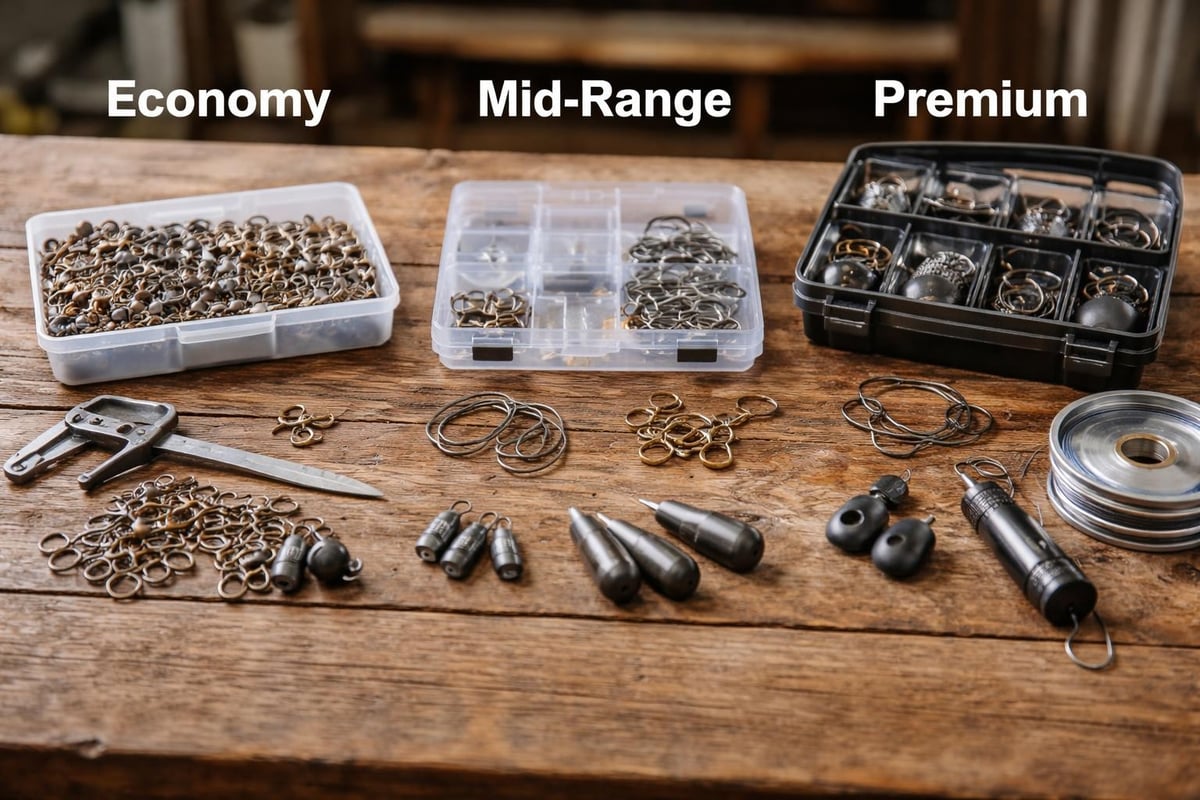
Price points vary considerably across terminal tackle nz options:
Economy Range:
- Basic hooks: $3-8 per pack
- Standard barrel swivels: $5-12 per pack
- General-purpose sinkers: $4-10 per pack
Mid-Range Options:
- Quality hooks with chemical sharpening: $10-20 per pack
- Ball bearing swivels: $15-30 per pack
- Specialized sinkers: $12-25 per pack
Premium Products:
- Japanese-manufactured hooks: $18-40 per pack
- Heavy-duty commercial swivels: $25-60 per pack
- Custom-weight sinkers: $20-45 per pack
The extensive selection at Tackleman showcases this pricing spectrum, allowing anglers to select components matching their budget and fishing intensity.
Rigging Techniques and Best Practices
Proper rigging transforms individual terminal tackle nz components into effective fishing systems. The Palomar knot remains one of the strongest connections for attaching hooks and swivels, retaining approximately 95% of line strength when tied correctly. For fluorocarbon leaders, the double Uni knot provides reliable connections between different line diameters.
Step-by-Step Snapper Rig Assembly:
- Thread running sinker onto main line
- Attach barrel swivel using Palomar knot
- Connect 30-50cm fluorocarbon leader to swivel
- Tie recurve or circle hook to leader end
- Bait hook and adjust sinker weight for conditions
Stray line rigs, popular for targeting snapper in New Zealand waters, incorporate a three-way swivel allowing the sinker to sit on the bottom while the baited hook drifts naturally in current. This presentation proves particularly effective around rocky structures where snapper congregate.
Crimping Versus Knotting
Commercial operations frequently employ crimping rather than knotting for terminal connections. Properly executed crimps create stronger, more compact connections than most knots, though they require specialized tools and technique. Single-barrel crimps suit lighter applications, while double-barrel crimps handle heavy-duty commercial fishing demands.
Viper Wholesale's offshore terminal tackle includes comprehensive crimping solutions, from economy copper crimps to professional-grade stainless steel options designed for multi-strand wire leaders.
Maintenance and Storage Strategies
Terminal tackle nz requires proper maintenance to deliver consistent performance. Saltwater exposure necessitates thorough freshwater rinsing after each fishing session. Even stainless steel components benefit from this practice, as salt crystals accelerate corrosion in microscopic surface imperfections.
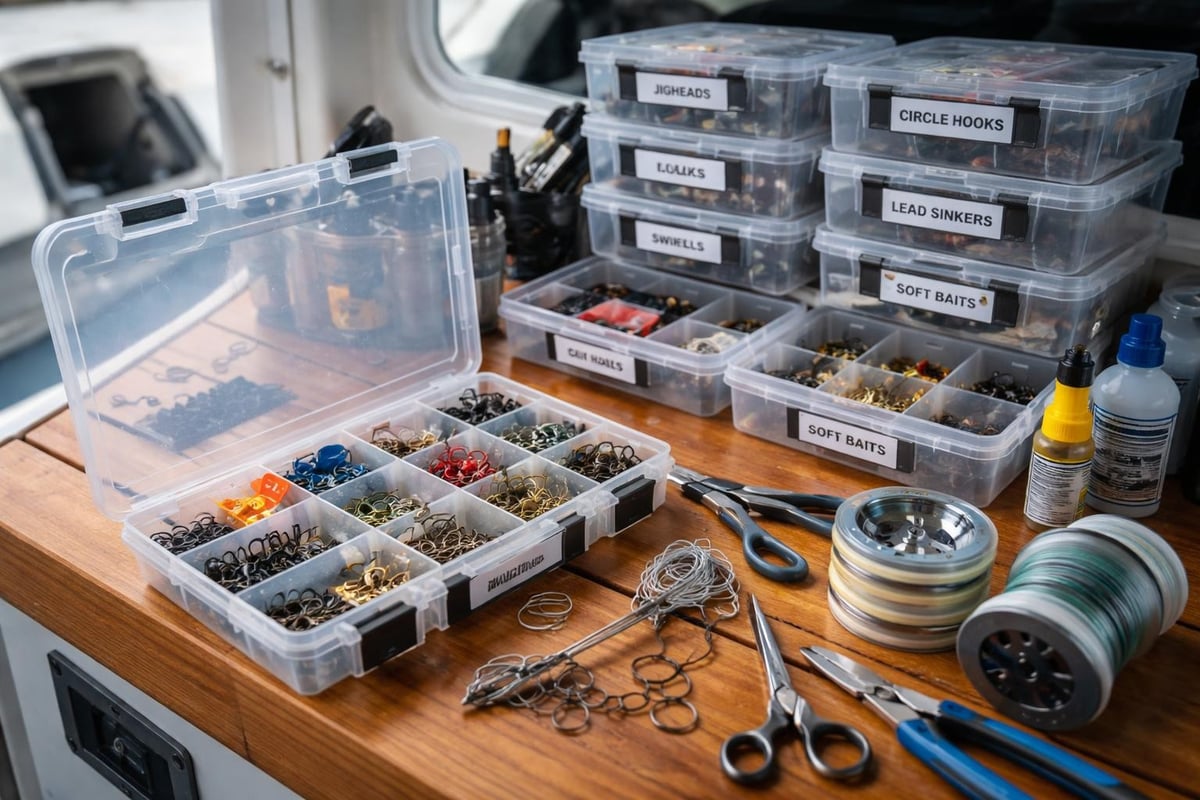
Organization systems prevent tangled leaders and damaged hooks. Tackle boxes with individual compartments keep different hook sizes separated, while swivel storage in small plastic containers prevents scratching and maintains smooth rotation. Many commercial operators use labeled zip-lock bags for bulk terminal tackle storage, enabling quick inventory assessment and restocking.
Monthly Maintenance Checklist:
- Inspect all swivels for smooth rotation
- Check hooks for rust spots or dull points
- Replace any corroded or weakened components
- Reorganize tackle boxes and remove damaged items
- Inventory critical components and reorder as needed
Hook sharpness directly impacts hookup ratios. A sharp hook penetrates with minimal resistance, improving catch rates especially when fish bite tentatively. Touch the hook point gently to your thumbnail-a sharp hook catches immediately rather than sliding across the surface. Diamond hook sharpeners restore points quickly, though heavily damaged hooks warrant replacement.

Specialized Applications in Pacific Fisheries
Pacific Island fisheries present unique terminal tackle nz requirements. Higher ambient temperatures, intense UV exposure, and different target species influence component selection. Tropical fishing often demands heavier leaders and larger hooks compared to temperate New Zealand waters, accommodating species like giant trevally, wahoo, and dogtooth tuna.
Understanding local fishing methods enhances terminal tackle effectiveness. Traditional Pacific fishing techniques sometimes incorporate natural materials alongside modern components-combining traditional knowledge with contemporary terminal tackle technology creates systems optimized for specific conditions and species.
Export Considerations for Pacific Markets
When supplying terminal tackle to Pacific Island communities, consider cultural fishing practices and economic constraints. Versatile components that serve multiple purposes provide greater value than highly specialized items. Quality remains essential-component failure during fishing trips to remote locations creates significant problems beyond simple inconvenience.
Packaging bulk terminal tackle for export requires protection against moisture and physical damage during shipping. Vacuum-sealed bags with desiccant packets preserve component quality during transport and storage in humid tropical environments. Clear labeling in multiple languages ensures proper component selection and usage.
The comprehensive marine equipment range from Action Outdoors addresses these export requirements, offering terminal tackle alongside fishing nets, floats, and ropes designed for Pacific conditions. Manufacturing over 350,000 meters of fishing nets annually provides insight into the specific terminal tackle requirements for commercial operations throughout the region.
Environmental and Sustainability Factors
Responsible terminal tackle nz usage includes minimizing environmental impact. Lost fishing gear contributes to marine pollution, with hooks and leaders posing risks to wildlife. Using appropriate terminal tackle for target species reduces lost gear-oversized hooks for small fish increase snag rates and breakoffs, while undersized components fail under load from larger catches.
Biodegradable options have entered the terminal tackle market, though performance often lags behind traditional materials. Circle hooks reduce deep hooking and improve release survival for undersized or non-target species. For catch-and-release fishing, barbless hooks facilitate quick, low-trauma hook removal while maintaining adequate holding power during the fight.
Sustainable Terminal Tackle Practices:
- Match component size to target species
- Inspect and replace worn terminal tackle before failure
- Retrieve lost rigs whenever possible
- Choose corrosion-resistant materials for longevity
- Support manufacturers with environmental commitments
Integration with Commercial Fishing Systems
Commercial fishing operations view terminal tackle nz as integral system components rather than standalone items. Long-line fishing requires thousands of individually rigged hooks, making component reliability and cost-effectiveness critical. Automated rigging machines in large-scale operations demand consistent terminal tackle dimensions and quality.
Net fishing operations incorporate terminal tackle for repairs, modifications, and specialized applications. Quality swivels connect nets to tow cables in trawl fishing, while heavy-duty hooks attach marker floats and identification tags. The synergy between net manufacturing and terminal tackle supply creates operational efficiencies for commercial fisheries.
| Fishing Method | Primary Terminal Tackle | Quantity Scale | Critical Factor |
|---|---|---|---|
| Long-lining | Hooks, swivels, crimps | 1000+ per vessel | Consistency |
| Trawling | Heavy swivels, shackles | 50-200 per vessel | Strength rating |
| Set netting | Float clips, anchors | 100-500 per operation | Corrosion resistance |
| Recreational | Hooks, sinkers, swivels | 50-200 per angler | Versatility |
Understanding these commercial requirements helps recreational anglers appreciate quality standards in terminal tackle nz. Components engineered for professional applications deliver exceptional performance in recreational contexts, though premium pricing may exceed casual fishing budgets.
Selecting appropriate terminal tackle nz represents a fundamental decision affecting fishing success across commercial and recreational applications. Quality components withstand New Zealand's challenging marine conditions while providing reliable performance that justifies their investment through reduced failure rates and improved catch results. Whether you're rigging commercial fishing nets for Pacific operations or assembling weekend fishing setups, Action Outdoors Limited provides comprehensive fishing and marine equipment solutions backed by New Zealand manufacturing quality and expertise spanning over 350,000 meters of fishing net production annually, ensuring your complete fishing system performs when it matters most.
发表评论