
Email

When commercial fisheries and recreational anglers across New Zealand search for reliable terminal tackle, nap swivels represent a critical component that separates successful operations from frustrating tangles and lost catches. These specialized connectors serve a fundamental role in preventing line twist, maintaining net integrity, and ensuring smooth operation of fishing gear in the challenging Pacific waters surrounding New Zealand. Understanding the proper selection and application of nap swivels nz can dramatically improve fishing efficiency, reduce equipment downtime, and maximize the return on investment for both commercial operations and serious recreational fishermen.
Nap swivels function as rotating connectors that allow independent movement between different sections of fishing line, leaders, or net components. The term "nap" traditionally refers to a specific style or configuration, though in New Zealand fishing circles, it often encompasses several swivel types used in demanding marine environments.
These components address one of the most persistent challenges in fishing: line twist. When lures spin, currents create rotation, or nets turn during deployment and retrieval, the accumulated twist can weaken lines, create tangles, and compromise the entire fishing system. Fishing swivels prevent this destructive twisting by providing a bearing point that absorbs rotational forces.
For commercial fisheries operating in New Zealand waters, the reliability of every component matters. A failed swivel during a major set can mean lost nets, damaged gear, and significant financial losses. This is why selecting appropriate nap swivels nz requires careful consideration of load ratings, corrosion resistance, and operational conditions.
Different fishing applications demand specific swivel configurations:
The choice between these options depends on load requirements, rotation frequency, and the specific fishing method employed. Commercial longline operations require different specifications than recreational trolling setups.
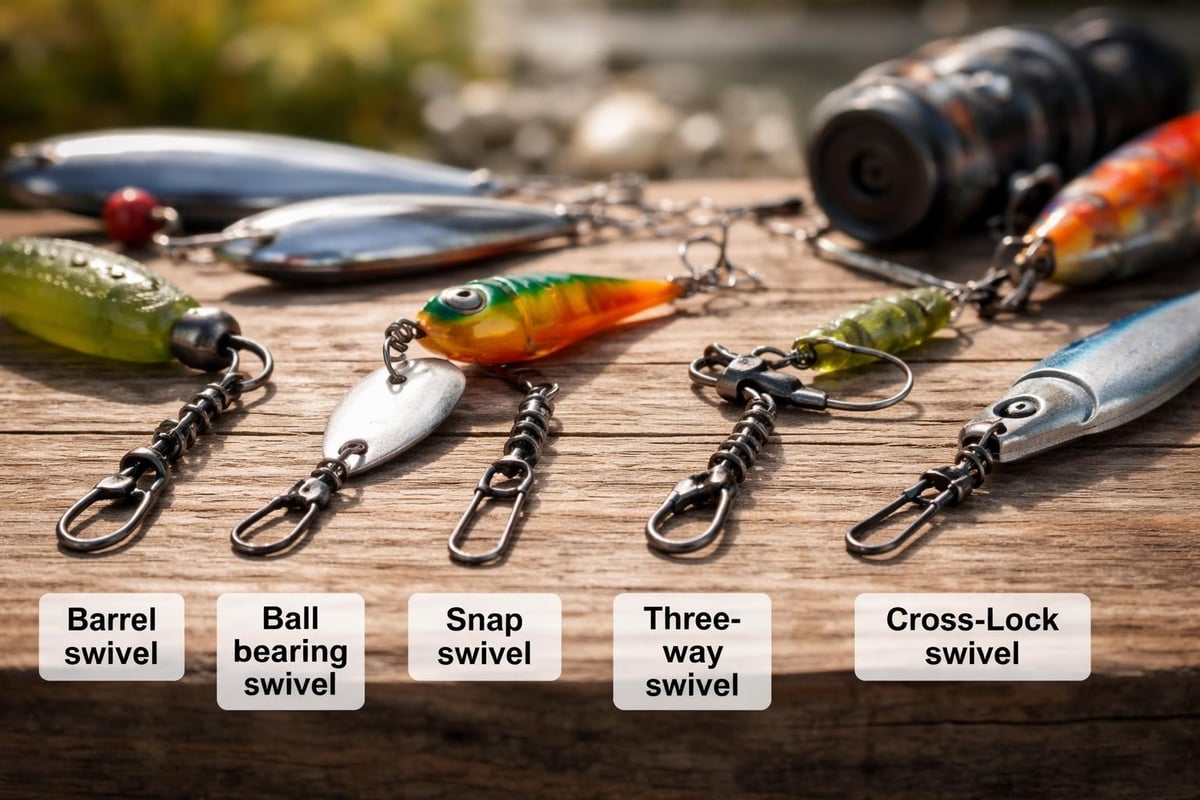
Material composition determines both performance and longevity in marine environments. Stainless steel swivels offer superior corrosion resistance, essential for saltwater applications around New Zealand's coastline. Brass provides good strength at lower cost but requires more frequent replacement in harsh conditions.
Load rating represents the most critical specification. Commercial fishing operations must match swivel strength to the maximum expected loads, including dynamic forces during rough weather retrieval. A swivel rated for 100kg static load might fail under sudden shock loads of 50kg if quality is insufficient.
| Swivel Type | Typical Load Range | Best Applications | Corrosion Resistance |
|---|---|---|---|
| Barrel (Brass) | 10-100kg | Freshwater, light saltwater | Moderate |
| Barrel (Stainless) | 20-200kg | Commercial nets, heavy tackle | Excellent |
| Ball Bearing | 30-300kg | Trolling, high-rotation lures | Excellent |
| Three-Way | 25-150kg | Drop-shot rigs, spreader bars | Good to Excellent |
When sourcing nap swivels nz, verify that suppliers provide clear load specifications and material certifications. Inferior products may look identical but fail catastrophically under working loads.
Swivel size must balance strength requirements against bulk and water resistance. Oversized swivels create unnecessary drag and weight, while undersized units risk failure. For net manufacturing and repair, swivels integrated into the netting system must allow smooth passage through retrieval systems without snagging.
The configuration chosen affects rigging efficiency. Different types of fishing swivels serve distinct purposes, and understanding these differences prevents common mistakes. Three-way swivels excel in situations requiring dropper lines or spreader configurations, while barrel swivels handle inline connections with minimal profile.
Commercial fisheries working with fishing nets across New Zealand and Pacific Islands often require custom swivel specifications to match net mesh sizes and working loads. Standard retail swivels may not meet the demands of professional operations deploying hundreds of meters of netting.
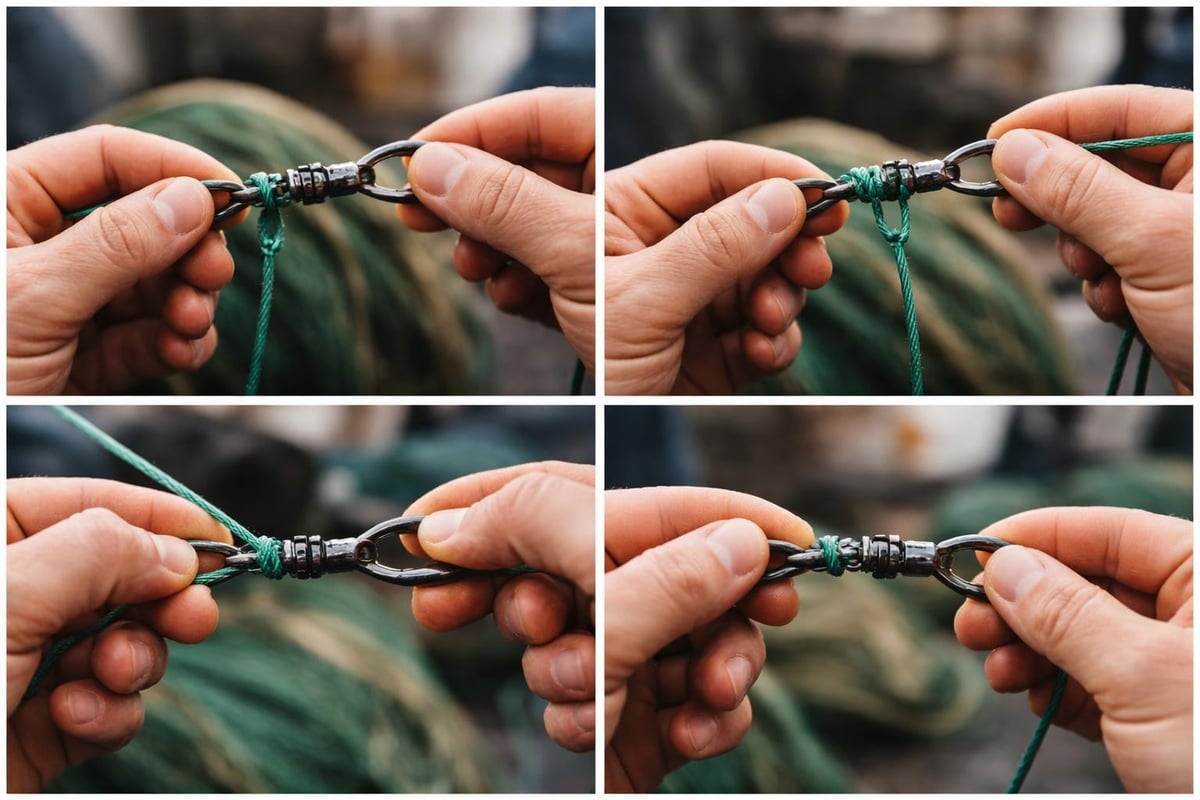
Proper installation determines whether swivels perform as designed or become weak points in your fishing system. The connection method between swivel and line significantly impacts overall strength and reliability.
Knot selection matters critically. The improved clinch knot, Palomar knot, and uni knot each offer different characteristics for swivel attachment:
Never trust a swivel connection without testing. A gentle pull test confirms the knot seated properly, while visual inspection catches any obvious defects before gear enters the water.
Even experienced fishermen sometimes compromise swivel performance through improper installation:
The marine environment around New Zealand presents unique challenges for fishing tackle. Cold Southern Ocean currents, strong tidal movements, and variable salinity levels all affect swivel performance and longevity.
Corrosion remains the primary enemy of metal fishing components. Even stainless steel swivels experience degradation when exposed to saltwater, particularly in crevices where oxygen-depleted water creates localized corrosion cells. Regular freshwater rinsing after each fishing session dramatically extends swivel life.
Temperature variations impact swivel mechanics. Bearing surfaces that function smoothly in warm conditions may stiffen in cold water, reducing rotation efficiency and increasing line twist potential. Ball bearing swivels generally handle temperature changes better than simple barrel designs, though at higher cost.
Professional fishing operations implement systematic inspection schedules to catch swivel degradation before failure occurs:
Documentation of swivel replacement helps identify patterns. If certain positions consistently fail faster, rigging modifications may distribute loads more effectively. This systematic approach aligns with professional fishing equipment maintenance practices that maximize operational uptime.
When swivels show any sign of binding, rough rotation, or visible corrosion, immediate replacement prevents cascading failures. The cost of a swivel represents a tiny fraction of potential losses from failed gear during active fishing operations.
Not every fishing situation requires swivels, and understanding when they genuinely add value versus when they create unnecessary complexity helps optimize rigging. Specific scenarios benefit most from swivel use, while others perform better with direct connections.
High-rotation lures absolutely demand swivels. Spinners, spoons, and certain trolling lures generate tremendous rotational force that transfers directly to fishing line without swivel intervention. The accumulated twist severely weakens line and creates unmanageable tangles.
Commercial net deployment requires swivels at strategic points where net sections experience differential rotation. As nets move through currents or during fish concentration, sections rotate relative to attachment points. Swivels prevent this rotation from transferring to mooring lines or retrieval systems.
Drop-shot and bottom fishing rigs benefit from three-way swivel configurations that keep sinkers separate from hook leaders. This prevents tangles during descent and allows more natural bait presentation.
| Fishing Method | Swivel Necessity | Recommended Type | Key Benefit |
|---|---|---|---|
| Trolling with spinners | Essential | Ball bearing | Prevents line twist |
| Bait fishing (static) | Optional | None or barrel | Minimal advantage |
| Commercial netting | Essential | Heavy barrel/cross-lock | System integrity |
| Fly fishing | Rarely | None | Affects presentation |
However, some experienced anglers avoid swivels in certain situations due to added complexity, potential failure points, and effects on lure action. Understanding both perspectives allows informed decisions based on specific conditions.
The New Zealand fishing market offers swivels across a wide quality spectrum. Distinguishing professional-grade components from budget alternatives requires attention to specifications, manufacturer reputation, and real-world testing results.
Import swivels dominate the market, though some local manufacturing produces specialized units for specific applications. When evaluating suppliers, consider:
For commercial operations, establishing relationships with reliable suppliers ensures consistent access to proven components. The lowest price rarely represents the best value when gear failure costs far exceed component savings.
Nap swivels nz function as part of complete fishing systems rather than isolated components. The interaction between swivels, lines, nets, and other terminal tackle determines overall performance. Marine equipment and boating gear suppliers understand these system relationships and can provide guidance on optimal configurations.
When specifying swivels for net manufacturing or repair, compatibility with existing net meshes and rigging systems takes priority. Custom solutions sometimes outperform standard retail options for specialized commercial applications. Working with manufacturers experienced in Pacific fisheries ensures swivels meet the unique demands of New Zealand and regional operations.
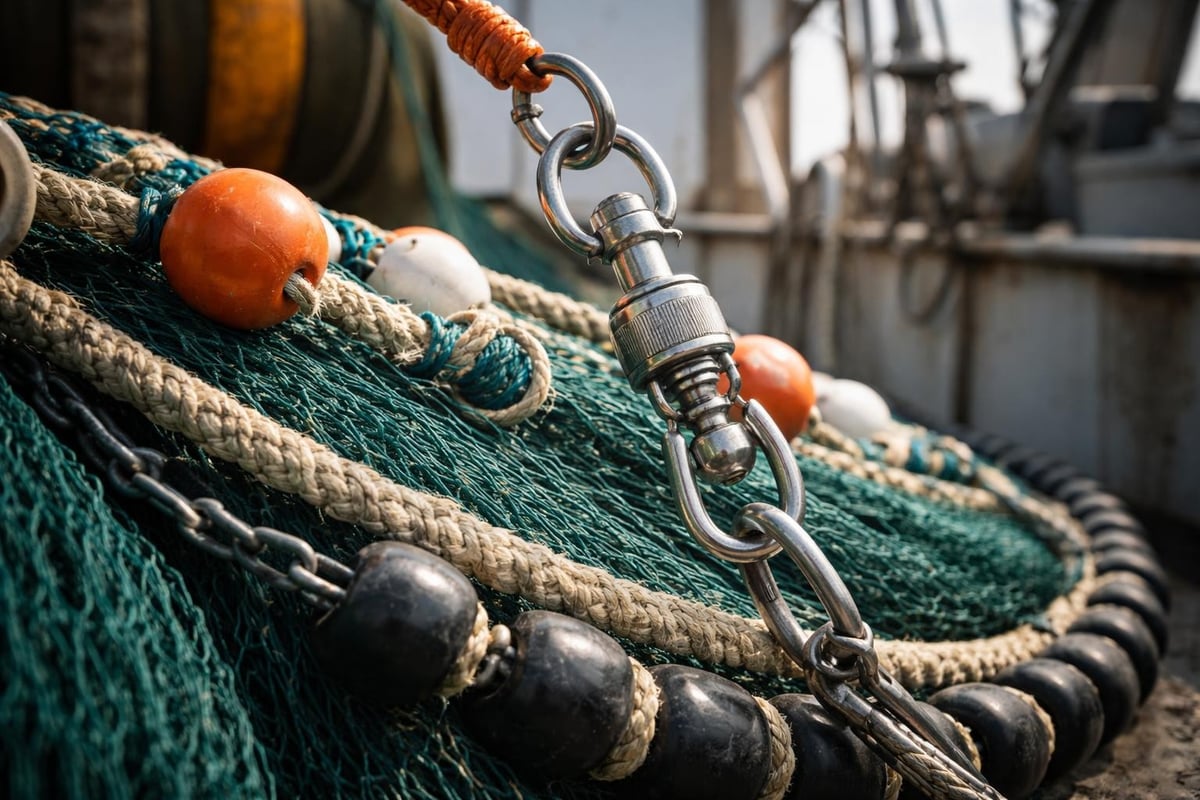
Beyond standard fishing applications, nap swivels nz serve specialized roles in marine operations. Commercial fisheries employ swivels in:
Net panel connections where different mesh sections require independent movement during towing or setting. The swivels prevent differential rotation from creating stress concentrations that tear netting.
Mooring and anchoring systems benefit from swivels that accommodate tidal and current-induced rotation without transferring twist to anchor lines. This extends line life and reduces maintenance requirements.
Multi-hook longline systems space hooks along main lines using branch line swivels. These prevent individual hooks from tangling with neighbors during deployment, soaking, or retrieval. The efficiency gains in large-scale operations justify premium swivel investment.
Some commercial operations develop custom swivel configurations for unique requirements:
These specialized applications require consultation with experienced fishing equipment suppliers who understand the engineering principles involved. Improper swivel specification in critical applications creates dangerous failure scenarios.
When fishing performance declines, swivels often contribute to problems in ways not immediately obvious. Systematic troubleshooting identifies swivel-related issues before they escalate.
Persistent line twist despite using swivels indicates either swivel failure or incorrect placement. Test swivel rotation by hand after retrieval. Binding or rough rotation confirms replacement necessity. If swivels rotate smoothly but twist persists, the swivel may be positioned incorrectly relative to rotation sources.
Unexpected gear failures sometimes trace to swivels working as unintended weak points. When swivels fail below rated loads, examine knot placement and condition. Line damage near swivel connections often results from rough swivel eyes or improper knot selection rather than swivel body failure.
Increased snagging on bottom structure may result from swivel bulk or configuration. Understanding when swivels help versus hinder prevents using them in inappropriate situations. Sometimes eliminating swivels from rigs improves performance despite conventional wisdom suggesting their inclusion.
Maximizing swivel effectiveness requires attention to details beyond basic installation:
Documentation of swivel performance across different conditions builds institutional knowledge. Commercial operations benefit from recording which swivel types, sizes, and configurations work best for specific fishing methods and locations.
New Zealand serves as a supply hub for fishing operations throughout Pacific Island nations. Understanding how nap swivels nz perform in tropical and subtropical conditions ensures appropriate specifications for equipment destined for regional export.
Warmer water temperatures generally improve swivel bearing performance, though increased biological fouling creates new challenges. Marine growth accumulates faster in tropical waters, potentially binding swivel mechanisms if not regularly cleaned.
Increased UV exposure in equatorial regions affects synthetic components surrounding metal swivels. While the swivels themselves resist sunlight, attached lines and leaders degrade faster, creating weak points that compromise overall system strength.
Shipping and storage considerations matter for swivels exported to Pacific markets. Proper packaging prevents corrosion during transport, particularly for non-stainless components. Including basic maintenance instructions helps end users maximize swivel longevity in local conditions.
The fishing methods common across Pacific Island nations often differ from New Zealand practices, requiring different swivel specifications. Consultation with experienced Pacific fishing equipment suppliers ensures swivels match actual usage patterns rather than assumptions based on different fishing traditions.
Initial swivel cost represents only a fraction of total ownership expenses. Cheap swivels that fail prematurely create costs far exceeding the purchase price difference between budget and premium options.
Failure cost analysis should include:
For commercial operations, premium ball bearing swivels often deliver superior value despite 3-5x higher purchase prices compared to basic barrel swivels. The extended service life, superior rotation performance, and reduced failure rates justify the investment for professional applications.
Recreational fishermen face different cost-benefit calculations. Weekend anglers may find basic stainless barrel swivels provide adequate performance without the expense of premium ball bearing units. However, serious tournament fishers or those targeting trophy fish should not compromise on swivel quality.
Commercial fisheries benefit from bulk swivel purchases that reduce unit costs while ensuring adequate inventory. Strategic stocking prevents operational delays from swivel shortages during peak fishing seasons.
Inventory management should balance:
Working with suppliers who maintain New Zealand stock provides faster access to replacement swivels compared to overseas ordering. This responsiveness proves particularly valuable during active fishing seasons when equipment failures create immediate replacement demands.
Lost or discarded swivels contribute to marine debris, though their small size and metal composition create less persistent pollution than plastic components. Responsible fishing operations minimize swivel losses through:
Some manufacturers now offer swivels with reduced environmental impact through recyclable materials and minimized packaging. While performance remains the primary selection criterion, environmental considerations increasingly influence purchasing decisions for operations committed to sustainable fishing practices.
Regulatory compliance in various fishing jurisdictions may specify terminal tackle requirements. Ensuring nap swivels nz meet applicable standards prevents violations that could result in fines or fishing access restrictions. This particularly matters for operations fishing across multiple territorial waters with varying regulations.
Selecting and maintaining appropriate nap swivels nz represents a crucial aspect of successful fishing operations across commercial and recreational applications. The right swivels prevent line twist, maintain system integrity, and reduce costly failures that compromise fishing efficiency. Whether you're operating commercial fisheries throughout the Pacific or pursuing serious recreational fishing in New Zealand waters, Action Outdoors Limited provides the marine equipment expertise and quality components necessary for reliable fishing success. Contact our team to discuss swivel specifications matched precisely to your fishing requirements and operating conditions.
Shop related products at Action Outdoors: Fishing Nets · Fishing Lures · Sinkers
Leave a comment