
Email

Sport tackle represents the backbone of successful fishing operations, whether you're a recreational angler or managing commercial fisheries across Pacific waters. The term encompasses everything from basic hooks and lines to sophisticated netting systems, each component playing a crucial role in catching efficiency and sustainability. Understanding the right sport tackle for your specific fishing conditions can dramatically improve your results while ensuring responsible fishing practices that protect marine ecosystems for future generations.
Sport tackle systems consist of multiple interconnected elements that work together to create successful fishing outcomes. The foundation includes terminal tackle such as hooks, swivels, and sinkers, combined with lines, leaders, and specialized equipment like nets and floats.
Terminal tackle forms the business end of any fishing setup, directly connecting anglers to their target species. Hooks vary widely in size, style, and strength ratings, with Pacific fishing requiring robust options that withstand powerful game fish and corrosive saltwater environments. Swivels prevent line twist during retrieval, particularly important when trolling or using spinning lures that rotate during movement.
Weight systems serve multiple purposes in sport tackle configurations:
Understanding fishing tackle components helps anglers select appropriate gear combinations for their target species and fishing conditions.
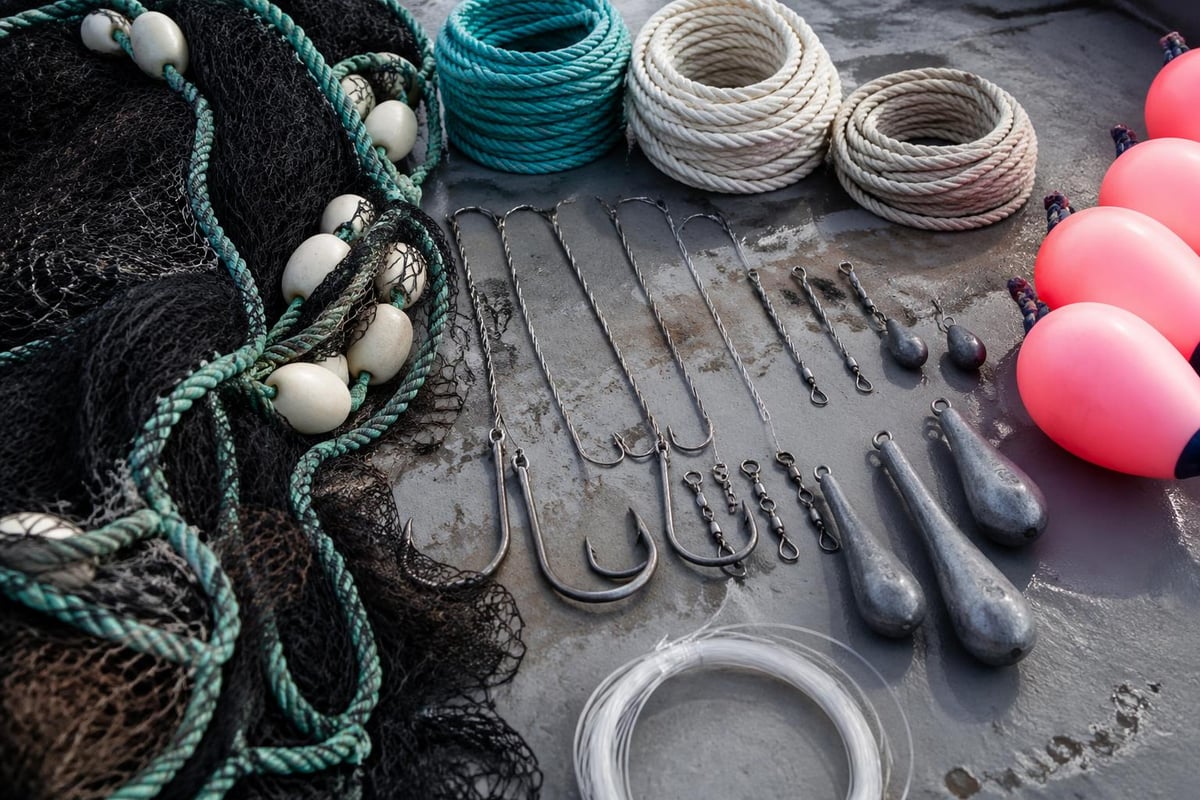
Monofilament, braided, and fluorocarbon lines each offer distinct advantages in sport tackle applications. Monofilament provides stretch and shock absorption, valuable when fighting large fish that make sudden runs. Braided lines deliver superior sensitivity and strength-to-diameter ratios, allowing anglers to feel subtle bites and use lighter tackle.
Leader material protects main lines from abrasion and reduces visibility near hooks. Pacific fishing often demands heavy leaders rated for species with sharp teeth or rough jaw structures. Wind-on leaders streamline the connection between main line and terminal tackle, eliminating weak points that could fail during critical moments.
| Line Type | Strength | Visibility | Stretch | Best Use |
|---|---|---|---|---|
| Monofilament | Good | Moderate | High | General purpose, shock absorption |
| Braided | Excellent | High | Minimal | Sensitivity, deep water |
| Fluorocarbon | Very Good | Low | Low | Leader material, clear water |
Fishing nets represent perhaps the most critical sport tackle component for commercial operations and serious recreational anglers throughout the Pacific region. Net construction, mesh size, and material selection directly impact catch efficiency, species selectivity, and operational longevity.
Commercial fisheries depend on purpose-built nets designed for specific target species and fishing methods. Gillnets intercept fish as they swim, with mesh sizes calibrated to target particular size ranges. Purse seines encircle schools of fish, then close at the bottom like a drawstring purse. Trawl nets drag through water columns or along bottom structures.
Material selection determines net performance and durability:
The latest fishing innovations for 2026 include advanced netting materials that reduce bycatch while maintaining target species efficiency.
Sport tackle for recreational fishing includes landing nets, cast nets, and crab nets. Landing nets secure hooked fish during the final stages of landing, preventing losses at the boat or shoreline. Quality landing nets feature rubberized or knotless mesh that protects fish slime coats, important for catch-and-release fishing.
Cast nets allow anglers to harvest baitfish efficiently, providing fresh live bait for target species. Proper cast net technique requires practice, but skilled users can cover large areas and capture substantial quantities of bait with single throws. Mesh size regulations vary by region, so anglers must understand local requirements before deploying cast nets.
Rope serves countless functions in sport tackle systems, from anchor lines to mooring systems, net repairs to equipment securing. Natural fiber ropes like manila provide traditional aesthetics and functional grip, while synthetic options offer superior strength-to-weight ratios and weather resistance.
Proper anchoring keeps vessels positioned over productive fishing grounds despite wind, current, and tidal movements. Anchor rope diameter must match anchor weight and vessel size, with adequate scope (length relative to water depth) ensuring reliable holding.
Rope selection criteria include:
Mooring systems require additional considerations including chafe protection where ropes contact boat fittings and regular inspection for wear from constant movement.
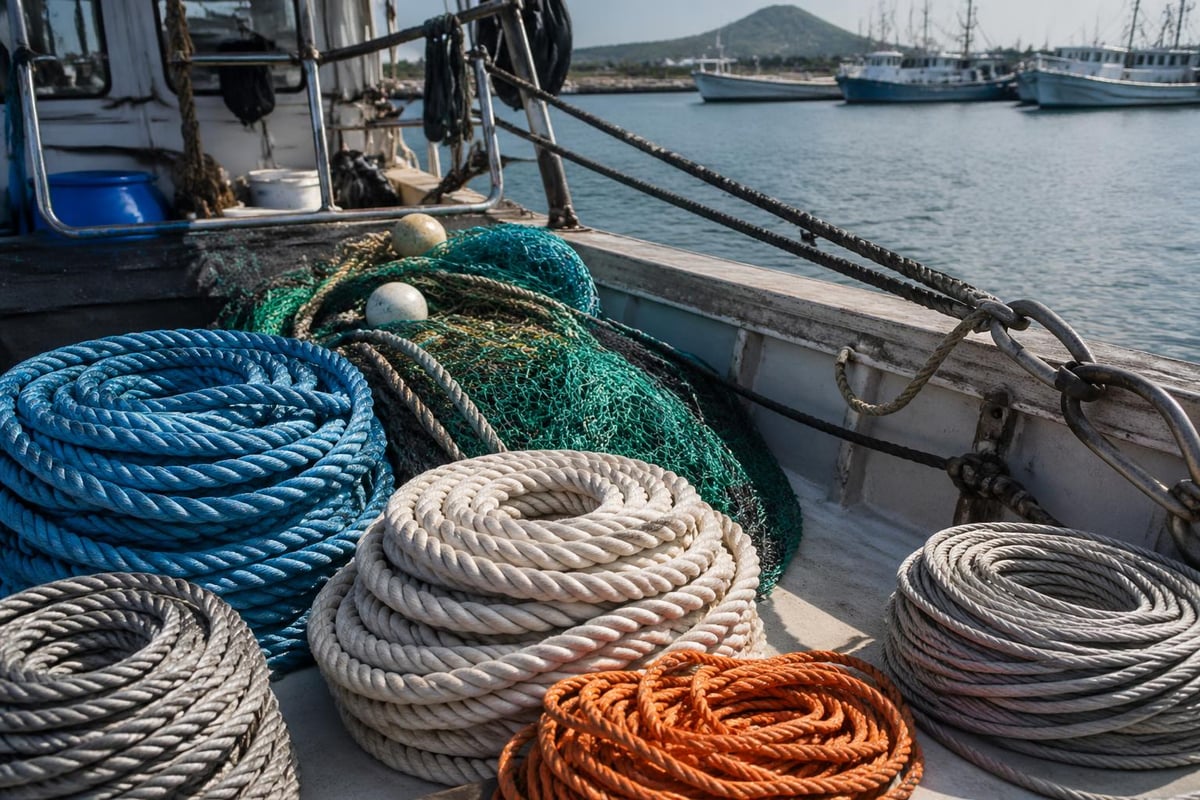
Understanding rope and cordage enables anglers to maintain and repair sport tackle components, particularly netting systems. Net repairs require specialized twine matched to original construction, along with knowledge of proper knotting techniques that maintain net integrity.
Manila rope remains popular for decorative applications and situations requiring natural fiber characteristics, despite synthetic alternatives offering greater durability. Quality manila rope demonstrates consistent diameter, minimal loose fibers, and tight lay that resists unraveling during handling.
Floats mark net positions, suspend fishing lines at specific depths, and indicate locations of deployed gear. Sport tackle float systems range from simple foam bobbers to sophisticated electronic marker buoys with GPS tracking and remote monitoring capabilities.
Commercial fishing nets require carefully calculated float systems that provide adequate buoyancy while accounting for net weight, target depth, and water conditions. Float spacing along net perimeters maintains proper net geometry, ensuring mesh opens correctly to intercept fish effectively.
Float materials include:
Color selection improves visibility for net retrieval and helps vessel operators avoid deployed gear. High-visibility colors like orange and yellow show clearly against ocean backgrounds, while specialized colors may reduce seabird attraction in sensitive fisheries.
Sport tackle for saltwater fishing often incorporates sliding floats that suspend baits at precise depths while allowing fish to take line freely. Fixed floats work well in shallower water where depth control remains constant throughout fishing sessions.
Balloon floats extend range beyond traditional casting distances, carrying baits offshore with current and wind assistance. This technique proves particularly effective for species that cruise beyond normal casting range but remain accessible with creative sport tackle applications.
Controlling depth represents a fundamental challenge in Pacific fishing, where target species occupy specific water column levels based on temperature, light penetration, and food availability. Weight systems and downriggers provide precise depth control across varying conditions.
Trolling weights range from simple inline sinkers to sophisticated planers that dive to predetermined depths. Trolling leads attach directly to fishing lines or run on separate cables with release clips that free fighting fish from weight resistance.
| Weight Type | Depth Range | Advantages | Best Applications |
|---|---|---|---|
| Inline sinkers | 0-15 meters | Simple, affordable | Near-surface species |
| Diving planers | 5-30 meters | Self-adjusting | Mid-water trolling |
| Downrigger balls | 10-100+ meters | Precise control | Deep water, multiple lines |
| Kite systems | Surface | Live bait presentation | Pelagic gamefish |
Modern downriggers offer electric motors, depth counters, and programmable routines that automatically vary lure depths during trolling passes. This technology allows anglers to cover more water column efficiently, identifying productive depth ranges faster than manual adjustments permit.
Release mechanisms must balance secure line retention with clean releases when fish strike. Adjustable tension settings accommodate different line weights and target species, from light sport tackle setups to heavy gear for large pelagic gamefish.
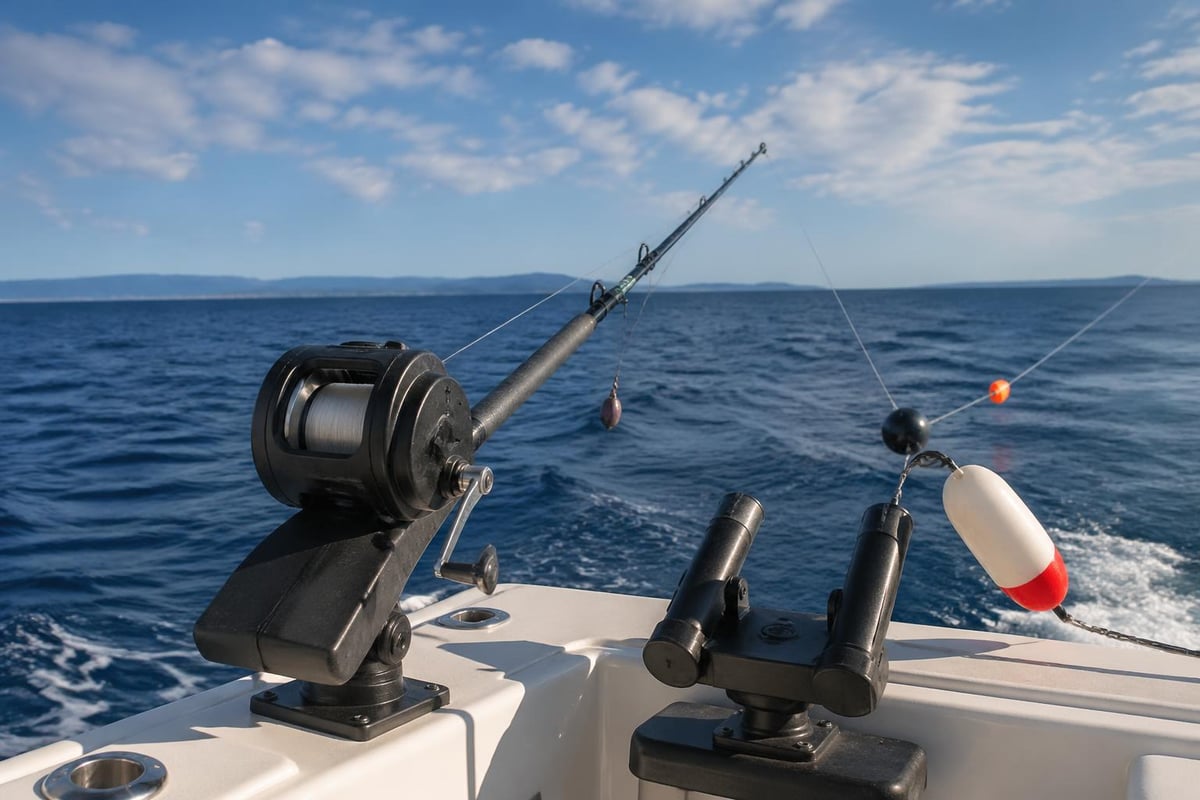
Effective rod holder systems expand fishing capacity, allowing anglers to deploy multiple sport tackle setups simultaneously. Quality mounting hardware withstands marine environments while providing secure, adjustable positioning for various fishing techniques.
Stainless steel construction ensures longevity in saltwater environments, with 316-grade stainless offering superior corrosion resistance compared to 304 alternatives. Adjustable rod holders accommodate different rod angles and positions, important when trolling multiple lines at varying distances from the vessel.
Clamp-on designs provide installation flexibility without permanent boat modifications. Quick-release mechanisms allow rapid repositioning as fishing conditions change or when clearing deck space for other activities.
Permanently installed rod holders integrate cleanly with vessel design, providing dedicated positions that don't interfere with movement or other deck operations. Flush mounts typically offer 360-degree rotation and locking positions at regular intervals.
Installation considerations include:
Proper storage extends sport tackle lifespan while improving fishing efficiency. Organized systems allow quick access to specific components, reducing time spent searching and increasing productive fishing time.
Small fishing kits offer convenience for anglers who fish multiple locations or prefer minimalist approaches. Compact storage contains essential terminal tackle, a selection of lures, and basic tools in weather-resistant cases.
Modular tackle systems allow customization based on target species and fishing methods. Interchangeable trays organize hooks, swivels, weights, and other components by size and type, while transparent lids enable quick visual inventory without opening compartments.
Dedicated tackle lockers protect gear from weather exposure and saltwater spray. Ventilated designs prevent moisture accumulation that promotes corrosion and deterioration. Rod storage tubes or racks protect expensive rods from impact damage during transport and storage.
Net storage requires adequate space for proper drying between fishing sessions. Hanging systems promote air circulation, preventing mildew and extending net service life. Separate storage for different net types prevents tangling and reduces setup time before fishing trips.
Regular maintenance preserves sport tackle performance and extends equipment lifespan. Saltwater environments accelerate corrosion and degradation, making preventive care essential for reliable operation.
Freshwater rinses after each saltwater exposure remove salt crystals before they attract moisture and promote corrosion. Special attention to moving parts, connections, and fittings prevents salt buildup in critical areas. Mild detergent solutions remove fish slime, blood, and organic residue that harbors bacteria and accelerates deterioration.
Post-fishing maintenance routine:
Regular inspection identifies wear before equipment failure occurs during critical fishing moments. Line inspection checks for abrasion, weak spots, and memory that reduces casting performance. Terminal tackle examination looks for hook point damage, swivel binding, and split ring fatigue.
Net inspection focuses on mesh integrity, float security, and rope condition. Small tears repaired promptly prevent expansion into larger damage requiring extensive reconstruction. Understanding recreational fishing equipment standards helps anglers maintain gear according to manufacturer specifications and safety requirements.
Responsible sport tackle selection and use protects marine ecosystems while ensuring sustainable fishing opportunities. Circle hooks reduce deep hooking and improve release survival rates. Biodegradable options for certain tackle components minimize environmental impact from inevitable losses.
Proper mesh sizing in nets reduces bycatch of non-target species and undersized fish. Understanding species behavior and habitat preferences allows targeted fishing that minimizes ecosystem disruption. Release techniques using appropriate sport tackle components ensure maximum survival rates for returned fish.
Sustainable practices include:
Lost fishing gear continues catching fish and marine life for extended periods, creating ghost fishing problems. Careful gear deployment and retrieval reduces losses, while participation in cleanup efforts removes abandoned equipment from fishing grounds.
Recycling programs accept old fishing nets, ropes, and other tackle components for repurpose into new products. This circular economy approach reduces waste while creating market demand for recovered materials that might otherwise pollute marine environments.
Different fish species require specialized sport tackle approaches based on their size, behavior, and habitat preferences. Bottom-dwelling species need different setups than pelagic gamefish cruising open water. For comprehensive guidance on species-specific equipment, consult resources on bottom fishing gear matched to particular fishing scenarios.
Rocky reef environments demand abrasion-resistant sport tackle that withstands contact with sharp coral and rock formations. Heavier leaders protect against structure while providing adequate strength for powerful reef species. Specialized sinkers minimize snags while maintaining bottom contact necessary for detecting subtle bites.
Open ocean species require different sport tackle configurations emphasizing speed, strength, and fighting capability. Trolling setups cover large areas searching for scattered fish, while live bait presentations target visible surface activity. High-capacity reels store adequate line for extended runs by powerful gamefish.
Selecting and maintaining appropriate sport tackle transforms fishing success across New Zealand and Pacific waters, combining proven traditional methods with modern innovations. Whether you're outfitting commercial operations or planning recreational fishing adventures, quality equipment matched to specific conditions delivers consistent results and sustainable practices. Action Outdoors Limited provides comprehensive fishing and marine equipment backed by New Zealand manufacturing excellence, offering everything from specialized netting systems to complete tackle solutions with dependable service across the Pacific region.
Leave a comment