
Email

New Zealand's rugged coastline offers some of the most rewarding surfcasting opportunities in the world, from the wild west coast beaches to the sheltered eastern bays. Selecting the right equipment is critical for success, and among the most important decisions an angler makes is choosing the proper surfcasting rod. Whether you're targeting snapper, kahawai, or kingfish from the shore, understanding the specifications and features of surfcasting rods NZ anglers rely on will dramatically improve your fishing experience and catch rates.
When evaluating surfcasting rods NZ coastal conditions demand, several key specifications determine performance and suitability. Rod length, power rating, action, and material construction all play critical roles in casting distance, fish-fighting capability, and overall fishing effectiveness.
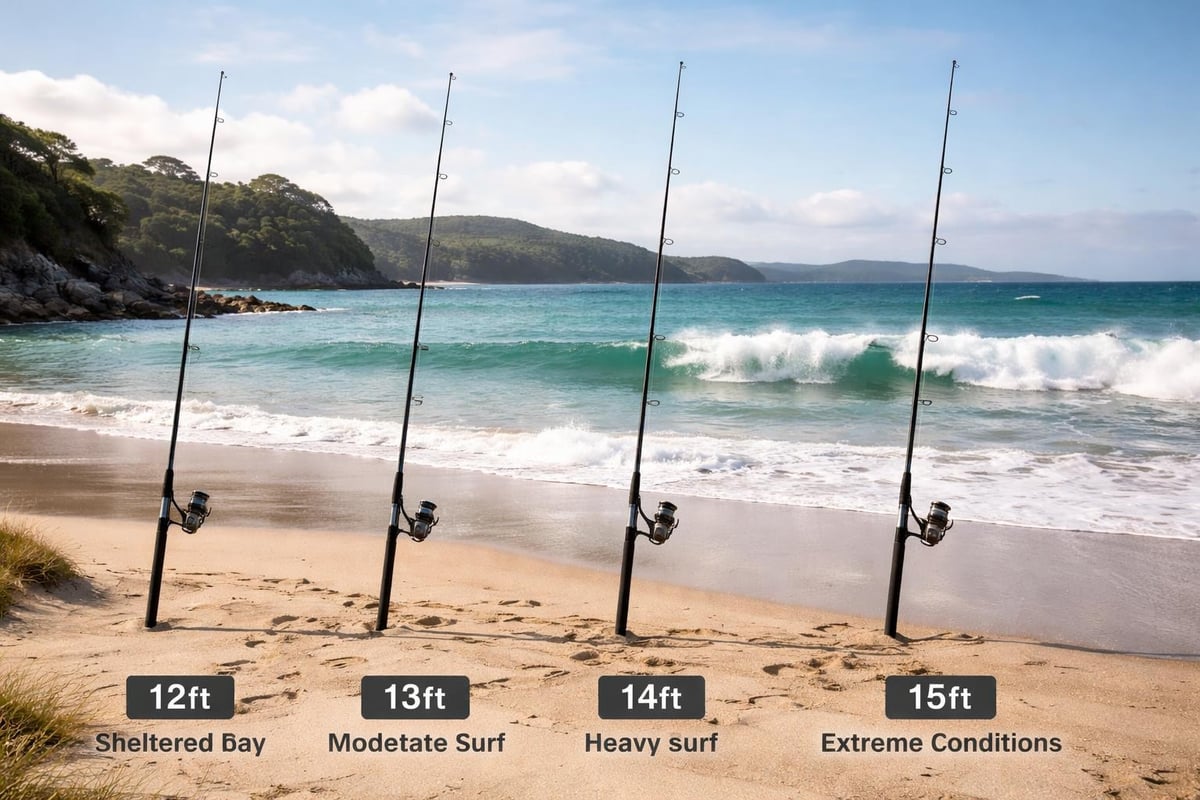
The length of your surfcasting rod directly impacts casting distance and line control. New Zealand surfcasting typically requires rods between 12 and 15 feet, though specific conditions may call for variations.
Common length categories include:
Understanding how to match surfcasting rod length, power, and combos to your specific fishing environment ensures optimal performance. Taller anglers often find longer rods more manageable, while compact designs suit those fishing from rocky platforms or confined spaces.
Power describes the rod's resistance to bending under load, while action indicates where the rod flexes along its length. These characteristics determine how effectively you can cast weights and fight fish.
| Power Rating | Casting Weight | Target Species | Surf Conditions |
|---|---|---|---|
| Light | 2-4 oz | Kahawai, small snapper | Calm to moderate |
| Medium | 4-6 oz | Snapper, gurnard | Moderate surf |
| Medium-Heavy | 6-8 oz | Large snapper, kingfish | Heavy surf |
| Heavy | 8+ oz | Trophy fish, extreme distance | Rough conditions |
Fast action rods bend primarily in the upper third, providing sensitivity and powerful hook sets. Moderate action rods flex further down the blank, offering more forgiveness when fighting fish and casting lighter baits.
Modern surfcasting rods NZ anglers prefer are typically constructed from graphite (carbon fiber), fiberglass, or composite materials combining both. Each material offers distinct advantages depending on fishing style and budget.
Graphite rods dominate the premium surfcasting market due to their exceptional strength-to-weight ratio. These rods transmit vibrations clearly, allowing anglers to detect subtle bites in challenging conditions. High-modulus carbon construction reduces weight while maintaining power, making all-day casting less fatiguing.
Premium models feature advanced resin systems and multi-directional fiber weaving that enhances torsional strength. This construction prevents the blank from twisting during powerful casts, improving accuracy and distance. For serious anglers seeking top performance, checking out New Zealand's best fishing rod brands for 2026 provides valuable manufacturer comparisons.
Fiberglass rods offer exceptional durability and forgiveness at lower price points. While heavier than graphite alternatives, they excel in situations requiring maximum toughness, such as fishing around sharp rocks or handling rough beach conditions.
Composite rods blend both materials:
New Zealand's diverse coastal geography requires different rod approaches depending on location. Understanding regional fishing patterns helps optimize equipment selection for specific areas.
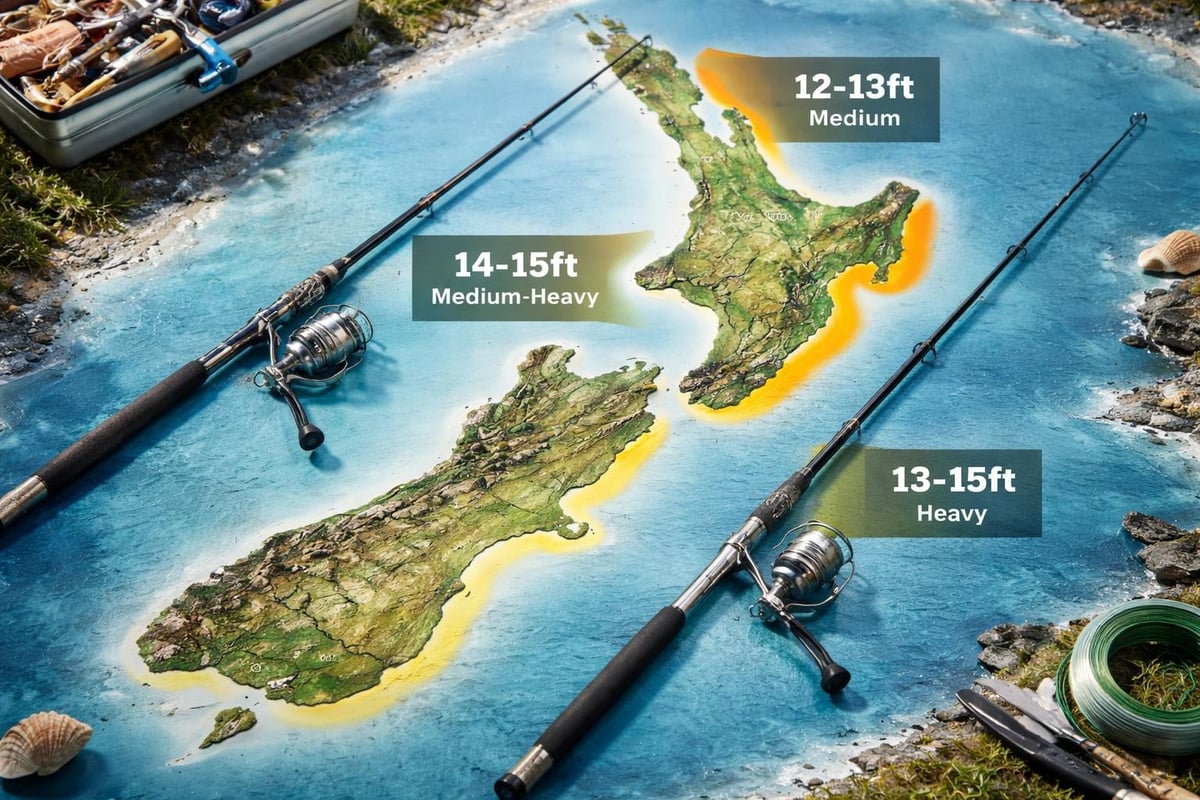
The North Island presents varied conditions from the black sand beaches of the west coast to the gentler eastern shores. Popular locations like Ninety Mile Beach and the Coromandel Peninsula demand different rod specifications.
Western beaches typically require longer rods (14-15 feet) to punch baits through heavy surf and maintain line contact in strong currents. The comprehensive surfcasting buyers guide covers these regional nuances in detail. Eastern coasts often allow shorter rods (12-13 feet) with lighter power ratings for more enjoyable fishing.
South Island surfcasting presents unique challenges with colder water temperatures, stronger winds, and rougher sea conditions. Canterbury and Otago beaches often require robust medium-heavy to heavy power rods capable of handling 6-8 ounce sinkers.
The rugged west coast demands maximum casting distance to reach productive gutters and channels beyond the breaking waves. Anglers fishing these waters benefit from rods with progressive actions that load smoothly during the cast while providing backbone for fighting powerful fish in turbulent water.
The connection between rod and reel significantly impacts performance and comfort during extended fishing sessions. Quality surfcasting rods NZ specialists recommend feature reinforced reel seats and strategically positioned guides.
Contemporary guide configurations distribute line stress across the entire blank, reducing weak points and improving casting distance. Stainless steel or titanium guides resist saltwater corrosion while maintaining smooth line flow.
Key guide features include:
Single-foot guides have become increasingly popular on modern surfcasting rods, offering weight reduction without sacrificing strength. These minimalist designs also enhance sensitivity, transmitting more vibration from the line directly to the blank.
Graphite and aluminum reel seats each offer advantages. Graphite seats reduce overall weight and provide better sensitivity, while aluminum offers superior durability and secure reel mounting. Premium models feature ergonomic contouring and non-slip surfaces for confident handling in wet conditions.
Matching your casting style to rod characteristics maximizes distance and accuracy. New Zealand surfcasting employs several casting methods, each requiring specific rod attributes.
This powerful technique generates maximum distance by loading the rod deeply before releasing the sinker at optimal trajectory. Rods designed for overhead casting typically feature fast to extra-fast actions with progressive power curves.
The technique requires rods between 13-15 feet with sufficient backbone to handle the compression forces during the loading phase. Learning proper surfcasting rig setup and techniques complements rod selection for improved overall performance.
Advanced anglers seeking extreme distance employ the pendulum cast, which requires specialized rods with specific flex characteristics. These rods typically measure 14-15 feet with carefully tuned actions that accommodate the pendulum motion without collapsing under load.
The Akios Hellrazor SS420 represents this specialized category, offering the length and power needed for tournament-level distance casting. However, this technique demands practice and may not suit all fishing situations.
For confined spaces or windy conditions, side casting provides a practical alternative. Shorter rods (12-13 feet) with moderate to fast actions work effectively for these techniques, offering better control in challenging environments.
| Casting Method | Ideal Rod Length | Action Type | Skill Level |
|---|---|---|---|
| Overhead Thump | 13-15 ft | Fast | Intermediate |
| Pendulum | 14-15 ft | Extra-Fast | Advanced |
| Side Cast | 12-13 ft | Moderate-Fast | Beginner |
| Off-Ground | 13-14 ft | Fast | Intermediate |
Several manufacturers produce surfcasting rods specifically designed for New Zealand conditions. Understanding the options helps anglers make informed purchasing decisions based on budget and performance requirements.
Mojo Surfcasting stands out as a locally-focused brand creating rods specifically for Kiwi coastal conditions. Their designs incorporate feedback from experienced New Zealand surfcasters, resulting in rods optimized for local species and geography.
Daiwa's New Zealand range includes models like the Emcast Surf Rods, featuring hi-viz tips for low-light fishing and custom designs suited to Pacific conditions. These rods balance international manufacturing expertise with regional fishing requirements.
Entry-level surfcasting rods NZ retailers stock typically range from $150-$300, offering fiberglass or basic graphite construction suitable for casual anglers. Mid-range options ($300-$600) provide improved materials, better guide systems, and enhanced sensitivity for regular surfcasters.
Premium rods exceeding $600 incorporate advanced materials, custom components, and refined actions for serious anglers demanding maximum performance. These investments prove worthwhile for dedicated surfcasters fishing multiple times weekly.
Proper care extends the lifespan of surfcasting equipment and maintains peak performance. New Zealand's harsh saltwater environment requires diligent maintenance practices.
Essential maintenance steps include:
Sand and salt crystals accumulate in guide frames and reel seats, causing abrasion and corrosion over time. A soft brush helps remove debris from hard-to-reach areas. Never use high-pressure water directly on ferrule joints, as this can force particles into the connection points.
Store rods horizontally or vertically in a cool, dry location away from direct sunlight. UV exposure degrades epoxy finishes and weakens graphite fibers over time. Rod tubes or cases provide protection during transport and storage, preventing accidental damage.
For two-piece or telescopic models, ensure ferrule connections remain clean and properly aligned. Applying a thin coat of ferrule wax or candle wax creates a smooth connection while preventing stuck joints.
The relationship between rod specifications and terminal tackle determines overall fishing effectiveness. Surfcasting rods NZ anglers select must complement sinker weights, hook sizes, and bait presentations.
Using sinkers within the rod's optimal casting weight range maximizes distance while preventing blank damage. Exceeding recommended weights risks fracturing the rod during powerful casts, while underweighting reduces casting efficiency.
Weight matching guidelines:
Current strength and bait size also influence sinker selection. Strong offshore currents may require heavier weights than the surf conditions alone would suggest. Similarly, larger baits create more drag during casting, necessitating increased power ratings.
Simple running rigs work effectively with most rod types, while complex multi-hook ledger rigs benefit from rods with moderate to moderate-fast actions. These softer actions absorb shock better when casting heavily-rigged baits, reducing the risk of tangle or component failure.
Anglers targeting multiple species often maintain several rods rigged with different setups. This approach allows quick adaptation to changing conditions without re-rigging. Quality fishing nets for landing larger catches complement proper rod selection, and understanding fishing net selection and uses enhances overall fishing success.
New Zealand's seasonal fishing patterns influence optimal rod selection throughout the year. Understanding these cycles helps anglers prepare appropriate equipment for peak fishing periods.
Warmer months bring snapper, kahawai, and trevally closer to shore, often requiring shorter, lighter rods for enjoyable fishing. Dawn and dusk sessions during summer produce excellent results with medium-power rods in the 12-13 foot range.
Calmer sea conditions allow use of lighter sinkers and more delicate presentations. Fast-action rods provide the sensitivity needed to detect subtle bites from finicky summer fish.
Colder months see rougher seas and stronger offshore winds, demanding robust equipment. Heavy-power rods between 14-15 feet excel during winter, punching baits through breaking waves and maintaining bottom contact in strong currents.
Larger fish move into deeper water during winter, often requiring maximum casting distance to reach productive zones. The extra length and power of winter-specific rods prove essential for consistent success during challenging conditions.
Getting equipment safely to remote fishing locations requires planning and appropriate transportation solutions. Multi-piece rods offer advantages for anglers traveling to distant beaches or hiking to secluded spots.
Two-piece rods provide the best balance of transportability and performance. Modern ferrule technology creates solid connections that perform nearly identically to one-piece blanks. These rods fit easily in standard vehicles while maintaining the casting characteristics serious anglers demand.
Telescopic rods sacrifice some performance for maximum portability. These designs suit anglers combining fishing with tramping or those with severe transport restrictions. However, the multiple connection points introduce potential weak spots and reduce sensitivity compared to traditional designs.
Arriving at the beach with properly organized equipment accelerates setup and maximizes fishing time. Rod holders, bait containers, and tackle boxes arranged systematically reduce confusion during low-light conditions.
Consider investing in quality sand spikes or rod holders that secure equipment above the tide line. This prevents damage from waves and keeps rods readily accessible when multiple lines are being fished simultaneously. For anglers pursuing night fishing sessions, specialized fishing lights and equipment enhance visibility and safety.
Experienced surfcasters often customize rods to match specific preferences and fishing styles. These modifications range from simple grip additions to complete component upgrades.
Extended handles provide increased leverage during long-distance casting, particularly beneficial for overhead thump and pendulum techniques. Custom cork or EVA foam grips improve comfort during extended sessions and can be tailored to individual hand sizes.
Some anglers add butt extensions or fighting gimbals for increased leverage when battling large fish. These additions prove valuable when targeting trophy snapper or kingfish from the shore.
Replacing factory guides with premium alternatives reduces friction and increases casting distance. Fuji or AFTCO guides with titanium frames and silicon carbide inserts represent popular upgrade choices among serious surfcasters.
Strategic guide repositioning optimizes line flow for specific casting styles and reel sizes. However, these modifications require expertise and specialized equipment, making professional installation advisable for valuable rods.
Responsible surfcasting includes minimizing environmental impact and following sustainable fishing practices. Rod selection plays a role in reducing unintended consequences of shore fishing.
Rods with appropriate power ratings facilitate quicker fish landings, reducing stress on released fish. Overly light tackle extends fight times unnecessarily, potentially harming fish intended for release.
Barbless hooks and proper handling techniques complement equipment choices in promoting sustainable fisheries. Many New Zealand beaches now encourage or require catch limits and size restrictions, making ethical angling practices increasingly important.
Properly matched surfcasting rods NZ fishers use reduce the likelihood of break-offs and lost terminal tackle. Rods with adequate backbone for the fishing situation allow anglers to apply appropriate pressure without exceeding line breaking strain.
Lost sinkers, hooks, and line contribute to marine pollution and present hazards to wildlife. Using tackle appropriate for conditions, combined with quality knots and connections, minimizes gear loss while improving fishing success.
Selecting the right surfcasting rod for New Zealand's diverse coastal environments requires balancing length, power, action, and construction materials with personal fishing style and target species. Whether you're pursuing snapper off a Canterbury beach or kahawai along the Coromandel coast, proper equipment selection significantly impacts your success and enjoyment. For all your fishing equipment needs, from premium rods and reels to commercial-grade nets and marine supplies, Action Outdoors Limited provides New Zealand-made quality with quick turnaround times and dependable service across the Pacific region.
Leave a comment