
Email

Mastering the art of casting bait net can be the difference between returning empty-handed and securing a livewell full of prime bait. Whether you are new to fishing or a seasoned angler, having the right casting bait net techniques is crucial for success in 2026. This guide delivers practical skills, up-to-date gear recommendations, and troubleshooting tips to help you maximize your bait catch rates. You will learn how to choose the perfect net, refine your casting method, follow safety and regulations, and maintain your equipment for long-lasting performance. Get ready to transform your fishing results with expert, step-by-step advice.
Choosing the right bait net is essential for anyone serious about casting bait net techniques. With modern innovations, anglers have more options than ever to improve their catch rates and ensure compliance with local laws. Understanding the differences in net types, materials, and sizing will help you make informed choices and get the most from every cast.
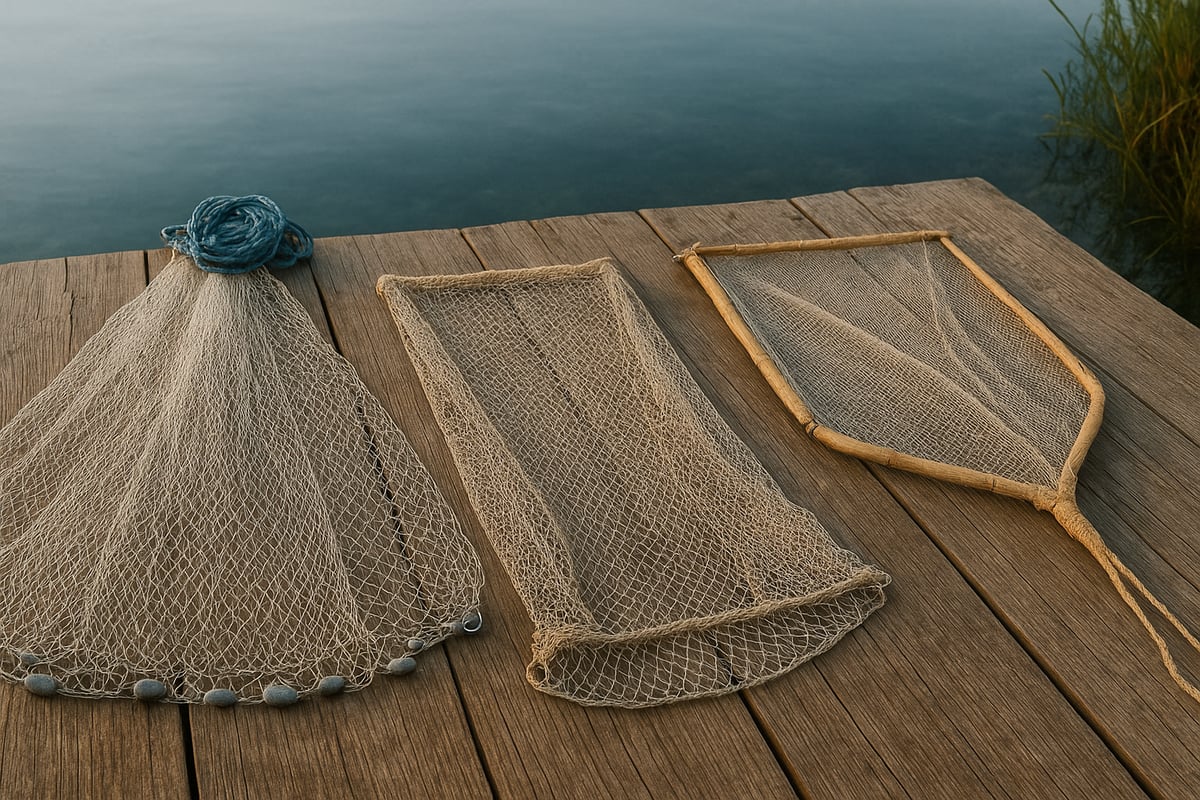
There are several main types of nets used for casting bait net techniques: cast nets, seine nets, lift nets, and drop nets. Each is designed for specific conditions and bait species.
| Net Type | Typical Use | Best For | Common Mesh Size |
|---|---|---|---|
| Cast Net | Thrown by hand, circular | Mullet, sardine, pilchard | 1/4" to 1/2" |
| Seine Net | Dragged through water | Shallow schools, shrimp | 1/4" to 3/8" |
| Lift Net | Lowered then lifted | Piers, docks, small fish | 1/8" to 3/8" |
| Drop Net | Lowered vertically | Deep water species | 1/4" to 1/2" |
The choice between monofilament and multifilament mesh plays a big role. Monofilament is nearly invisible underwater, making it ideal for clear water, while multifilament offers more strength and durability.
Mesh size directly impacts which baitfish you can target with your casting bait net. For example, 1/4" mesh is perfect for shrimp and small herring, while 1/2" is suitable for larger mullet. Legal requirements also dictate mesh size and overall net diameter in many regions. For instance, both New Zealand and Australia set strict mesh size limits to protect juvenile fish populations.
A 2025 survey found that over 70% of recreational anglers prefer cast nets for live bait. When choosing a net, consider not only your target species but also local regulations and your preferred technique. For those interested in specialized options, you can explore American style cast nets for bait, which are designed for effective live bait catching in a range of conditions.
Selecting the right net type is the first step to efficient and compliant casting bait net use.
Innovations in netting materials have transformed the casting bait net landscape in recent years. Today, high-strength nylon is commonly used, offering both flexibility and resilience. Knotless mesh designs, now widely available, reduce friction and tangling, ensuring smoother spreads and faster sinking.
Anti-fouling coatings are another breakthrough. They help minimize algae and debris buildup, keeping your casting bait net cleaner and more efficient. When choosing between lightweight and heavy-duty nets, consider the balance between portability and lifespan. Lightweight nets are easier to throw and handle, while heavy-duty options last longer and withstand tougher environments.
Recent advances in lead line and horn design have also made casting bait net handling simpler. Modern lead lines feature evenly distributed weights for rapid sinking, while ergonomic horns improve grip and control.
A 2024 product comparison found that knotless nets last 30% longer than traditional knotted nets, providing greater value over time. These advances mean today’s anglers can rely on their gear for many seasons, provided they choose wisely and maintain their nets properly.
Selecting the correct diameter and mesh size is critical for casting bait net success. For small baitfish like shrimp, a 1/4" mesh is ideal. For herring or pilchard, a 3/8" mesh provides the right balance between catch rate and selectivity.
Water depth and clarity also influence net choice. In clear, shallow waters, a smaller, more transparent net is less likely to spook baitfish. In deeper or murkier water, a larger diameter net increases your chances of success.
Net size should match both your target species and your skill level. Larger nets, such as those 8 to 10 feet in diameter, can increase catch rates but require advanced casting bait net techniques for proper deployment. Beginners are advised to start with 6-foot nets, which are easier to handle and less prone to tangling.
Choosing the right net size and mesh ensures you maximize efficiency without harming non-target species or violating regulations. With the correct setup, your casting bait net will help you catch more live bait and enjoy a productive day on the water.
Learning the right approach to casting bait net is essential for every angler aiming for consistent success. By following a methodical process and using the latest techniques, you can maximize your catch and minimize frustration. This guide breaks down each phase so you can confidently master casting bait net, whether you are a first-timer or looking to refine your skills.
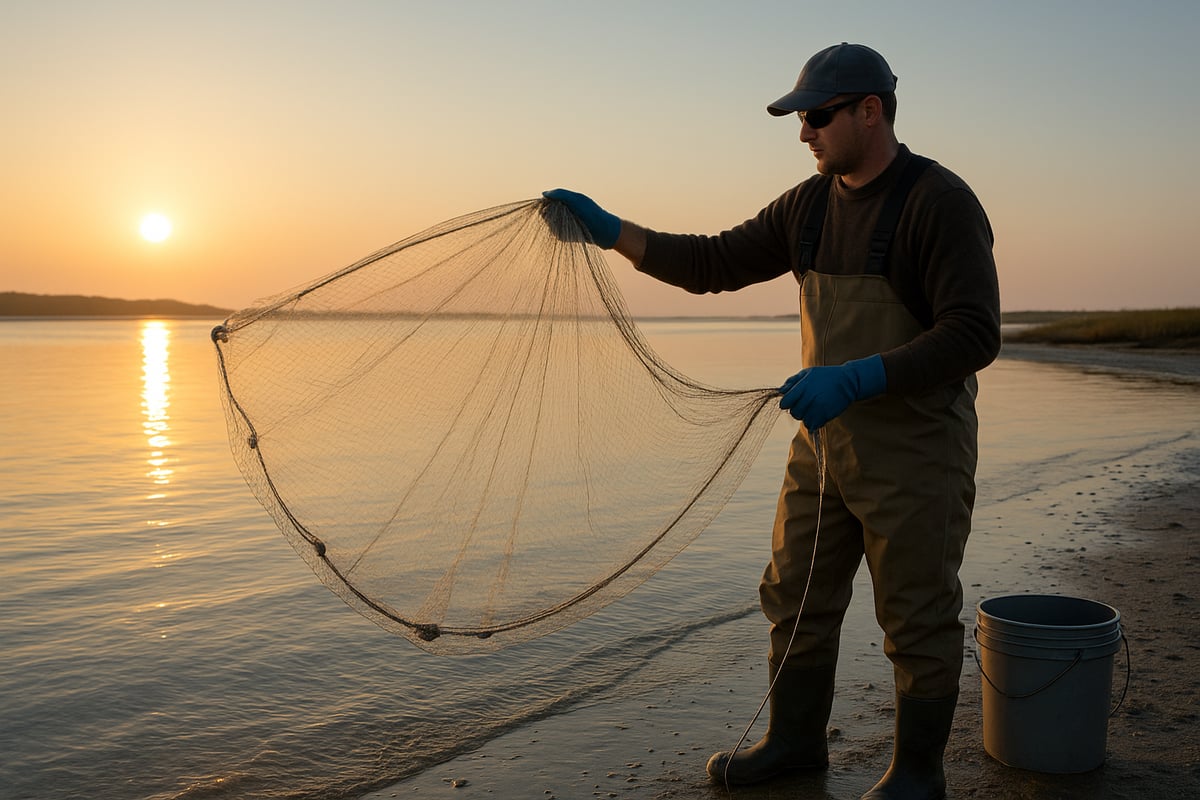
Start by thoroughly inspecting your casting bait net for any tangles, tears, or salt deposits. Damaged nets reduce efficiency and risk losing bait. Always check the hand line for knots and ensure it is coiled neatly, which prevents snags during the throw.
Pre-soak your net in fresh water before use. This step softens the mesh and allows for a smoother, wider spread. Choose a sturdy, appropriately sized bucket or tub to store your net, keeping it loose to avoid creases.
A well-organized gear checklist makes a difference:
Preparation is the foundation of effective casting bait net. When your equipment is ready, you can focus on technique instead of troubleshooting gear problems.
Success with casting bait net begins with finding the right spot. Look for visible signs of baitfish such as surface ripples, jumping schools, or bird activity. Electronics like sonar and fish finders can increase your efficiency, especially in deeper water.
Early morning and late afternoon are typically the best times to target baitfish. Tidal movement also plays a crucial role. According to recent data, casting bait net during the first hour of daylight in estuaries can increase your catch by up to 40 percent.
Assess wind and current direction before each cast. Position yourself so the wind helps spread the net, not hinder it. Water clarity is another consideration: clear water lets you spot schools, while murky conditions require more patience and careful observation.
Safety is paramount. Avoid rocky or snag-prone areas, and never wade into unknown depths. Always let someone know your location when heading out alone for casting bait net.
A consistent step-by-step approach ensures your casting bait net opens fully and sinks quickly. Here is a proven sequence, with tips at each stage for optimal results:
Step 1: Grip
Hold the hand line securely in your non-dominant hand. Gather the net’s lead line with your dominant hand, making sure the mesh hangs straight.
Step 2: Load
Load the net for throwing. The “mouth load” method involves holding a section of the net in your teeth, while the “shoulder load” drapes part of the net over your arm. Beginners often find the shoulder load safer and more comfortable.
Step 3: Spread
Fan the lead line out in an arc, ensuring the mesh is not twisted. A well-spread net covers more area and traps more bait.
Step 4: Cast
Swing your body smoothly, using your hips and shoulders to generate momentum. Release the net with a sharp motion, aiming for a flat, circular spread.
Step 5: Sink and Retrieve
Allow the net to sink fully, then pull in the hand line steadily. Gather the net and check for bait.
For visual learners, resources like the Cast netting techniques and tips page offer helpful video demonstrations and additional insights.
Practice each step until it feels natural. Over time, your casting bait net performance will become more reliable and efficient.
Even seasoned anglers encounter problems with casting bait net. Here are frequent challenges and practical fixes:
Statistics show that one in three beginners struggles with opening the net fully. Regular practice and attention to setup details will quickly improve your results. Remember, every successful cast with your casting bait net builds confidence and skill.
Mastering the casting bait net technique is not just about skill. It also requires a strong understanding of legal, safety, and environmental factors. Ensuring you follow current standards protects both your catch and the habitats you rely on.
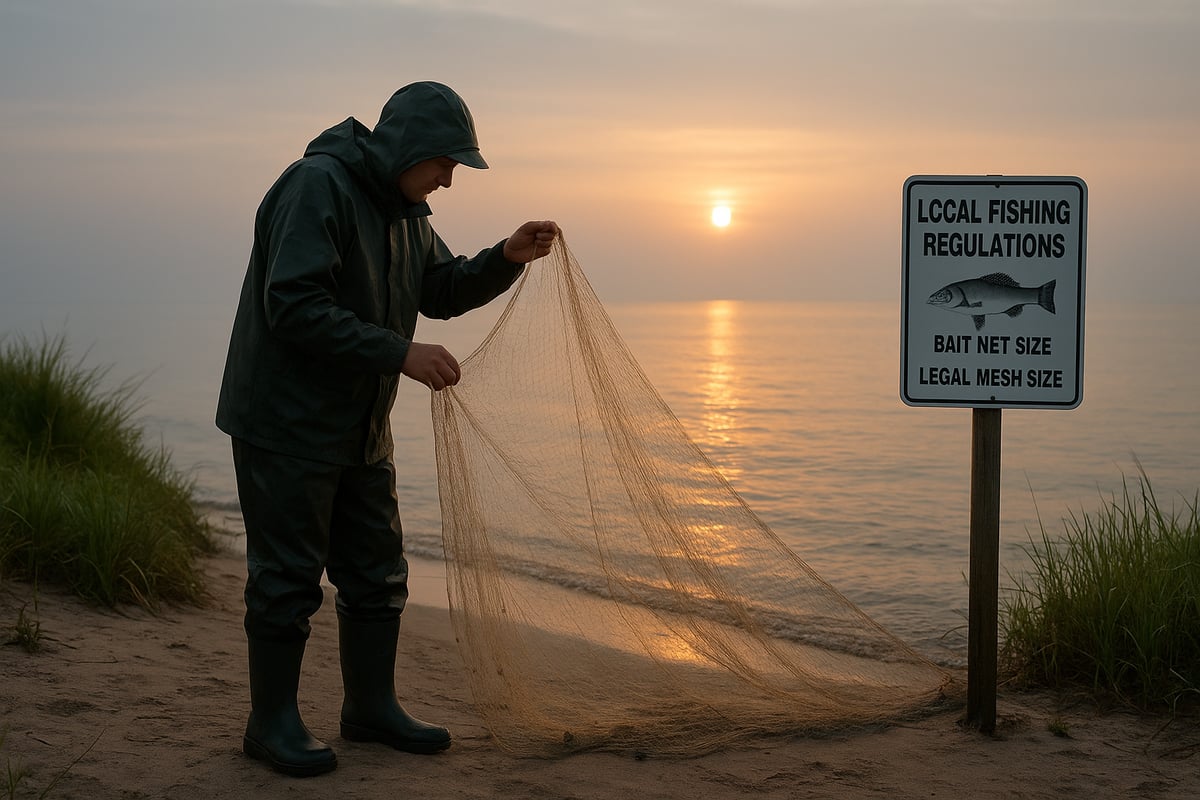
Every region has unique laws that affect casting bait net activities. Before you hit the water, research the latest rules for your location. In New Zealand and Australia, regulations commonly specify minimum mesh sizes, net diameters, and permitted species. Recreational and commercial users may need licenses or permits, and many areas require reporting of catches.
For instance, some U.S. states enforce strict rules. Virginia, for example, outlines permit fees, mesh measurements, and catch limits for netting fish. You can review the details of netting fish regulations in Virginia to see how specific these requirements can be. Failing to comply may result in fines, confiscation of equipment, or even bans from local waters.
Stay updated on any seasonal changes or emergency restrictions. Enforcement is increasing, and recent statistics show a 15 percent rise in penalties for illegal net use since 2024. Always keep your permits handy and double-check that your gear meets current standards before each trip.
Personal safety is paramount when casting bait net. Wear gloves to prevent cuts, use non-slip footwear, and stay alert to your surroundings, especially on slippery rocks or muddy banks. Prepare your net carefully to avoid entanglement, and never cast near swimmers or boat traffic.
Environmental responsibility is just as important. Minimize bycatch by selecting the right mesh size for your target baitfish. Avoid sensitive habitats, such as seagrass beds or spawning areas, to help preserve essential ecosystems. When a net becomes damaged, dispose of it properly to prevent ghost fishing. According to a 2025 study, discarded nets now make up 10 percent of coastal marine debris, posing risks to wildlife.
By following these guidelines, anglers who use the casting bait net method can protect both personal safety and the environment. Responsible practices ensure that future generations can enjoy abundant, healthy fisheries.
Unlocking the full potential of your casting bait net requires more than just basic skills. In 2026, advanced techniques and technology give anglers a competitive edge, whether targeting elusive baitfish or maximizing efficiency in challenging conditions.
Selecting the right casting technique can make a dramatic difference in your bait catching success. The one-handed cast, also called the quick cast, is ideal for confined areas or when speed is essential. It offers a compact motion that lets you deploy your casting bait net efficiently from tight banks or docks.
On the other hand, the two-handed cast is favored by tournament anglers for its ability to achieve maximum net spread. This method uses both arms and a coordinated body rotation, allowing the net to open fully and cover a larger area. If you are working from a boat or open shoreline, the two-handed technique can increase your catch rates significantly.
The choice of net style also affects your results. For those seeking precision and ease of use, exploring Japanese style cast nets guide can introduce you to nets designed for both one-handed and two-handed casting. These nets offer unique loading and throwing options, making them popular among experienced anglers.
Mastering both styles ensures you can adapt your casting bait net approach to any environment.
Modern technology has revolutionized baitfish detection for casting bait net enthusiasts. Fish finders and side-scan sonar units allow you to pinpoint schools of bait beneath the surface, even in murky or deep water. By reading sonar images, you can determine baitfish density, depth, and movement patterns before deploying your net.
Drones have become increasingly valuable for scouting from above. Aerial views reveal subtle surface disturbances and large bait schools that are invisible from ground level. Since 2024, drone usage among anglers has risen 20 percent, reflecting their effectiveness in maximizing casting bait net success.
To get the best results, combine sonar and drone scouting with traditional visual cues, such as flickering water or diving birds. This multi-layered approach increases your chances of locating and intercepting bait schools quickly.
Environmental variables can challenge even the most skilled casting bait net users. Wind and current require you to adjust your throwing angle and timing for optimal net spread. When casting from a boat, maintain a stable stance and account for vessel movement to avoid tangles.
In shallow water, use a lighter net that sinks gently without disturbing the bottom. For deep or fast-moving water, a heavier net with a robust lead line ensures rapid descent and better coverage. Night netting presents its own challenges, but using LED float lines can improve visibility and boost catch rates by up to 15 percent.
Always check your surroundings for hazards and adapt your casting bait net technique to the specific conditions for safety and efficiency.
Choosing the right gear is critical for casting bait net success. Action Outdoors stands out as New Zealand’s trusted supplier of high-quality bait nets, offering products tailored to local regulations and Pacific Island environments. They provide over 350,000 meters of ready-to-use nets each year, ensuring a wide range of sizes and mesh options for every angler.

Their expert team helps you select the ideal casting bait net for your target species and fishing location. Whether you need lightweight nets for portability or heavy-duty versions for durability, Action Outdoors delivers fast NZ-based shipping and proven customer support.
Investing in reliable gear from Action Outdoors means your casting bait net will perform efficiently and last longer, making every outing more productive.
Proper care and storage are essential for any angler who wants to get the most out of their casting bait net. Routine maintenance not only extends your net's lifespan but also ensures peak performance on every trip. Let’s break down the steps that keep your gear in top shape and ready for action.
After each outing, rinse your casting bait net thoroughly with fresh water. This simple habit prevents salt and debris buildup, which can weaken mesh fibers and reduce effectiveness. Lay the net flat and inspect for any tangles or visible damage. Pay special attention to knots, lead lines, and connection points.
If you spot holes or frayed sections, repair them immediately using a net repair kit. Prompt fixes help avoid bigger issues later. Allow the net to dry completely before storage. Hang it in a shaded, well-ventilated area to prevent mold and rot. Avoid direct sunlight, which can degrade materials over time.
Here’s a simple cleaning schedule:
| Task | After Use | Weekly | Monthly |
|---|---|---|---|
| Rinse Net | ✓ | ||
| Check for Damage | ✓ | ||
| Deep Clean | ✓ | ||
| Repair Holes | ✓ |
Consistent cleaning and inspection are non-negotiable for anyone serious about casting bait net longevity.
Storing your casting bait net properly is just as important as cleaning it. Always coil the net loosely to prevent tangling and reduce stress on the mesh. Use a ventilated net bag or a sturdy bucket to keep the net organized and protected from UV rays.
Place your net in a cool, dry location away from direct sunlight. For the off-season, avoid storing the net in a compressed or folded state, as this can create weak spots. Instead, hang the net or store it flat whenever possible.
Consider investing in specialized fishing net accessories and gear such as net bags, repair kits, and float lines. These tools help maintain order and extend your net’s functional life. Organized storage also means you’re always ready for your next casting bait net session.
To maximize the life of your casting bait net, apply anti-fouling sprays and UV protectants as recommended by manufacturers. These treatments shield your net from algae growth and sun damage. Schedule regular inspections—at least once a month—to identify minor issues before they escalate.
Perform minor repairs promptly. Replace worn hand lines or lead lines as soon as you notice signs of wear. Store your maintenance tools and spare parts in a dedicated kit for easy access. According to a 2025 industry survey, well-maintained nets can last up to five years longer than neglected ones.
Maintenance is not just about fixing problems. It’s about proactive care that saves money and improves your casting bait net effectiveness season after season.
Having the right accessories and gear is essential for anyone looking to improve their casting bait net results. The right tools not only increase efficiency but also help you adapt to changing conditions and keep your bait in top condition.
Essential Gear Checklist
| Accessory | Purpose | Pro Tip |
|---|---|---|
| Bucket/Bait Tub | Net storage, bait transport | Use rounded tubs to avoid tangling |
| Bait Tank | Keeps baitfish alive longer | Oxygenate water for best survival |
| Gloves | Protect hands from cuts, blisters | Choose quick-dry, non-slip gloves |
| Polarized Sunglasses | Spot baitfish, reduce glare | Amber lenses for low-light fishing |
| Net Repair Kit | Fix small tears on the go | Keep in your tackle bag |
When selecting your casting bait net accessories, pay close attention to the mesh size and material. For example, small mesh fishing nets for baitfish are ideal when targeting herring, pilchards, or other small species, ensuring you catch the right bait while staying compliant with local rules.
Modern technology can make a significant difference in your casting bait net experience. Waterproof headlamps are invaluable for pre-dawn or night netting, while compact fish finders help locate bait schools quickly. Keep a set of spare float lines and lead lines in your kit to minimize downtime if equipment fails.
Bait tanks have become a staple for serious anglers, boosting live bait survival by up to 60 percent. Investing in a reliable tank with aeration gives you a distinct advantage during long sessions.
Budget gear might be tempting, but premium accessories often last longer and perform better under tough conditions. Items like UV-resistant net bags and corrosion-proof tools are worth the extra upfront cost for long-term reliability.
Always bring extra essentials—spare gloves, hand lines, and a backup bucket—to ensure your casting bait net session runs smoothly, even when unexpected challenges arise. Smart preparation and the right accessories make every outing more productive.
As you’ve discovered, mastering bait net casting is as much about technique as it is about having the right gear. Whether you’re just starting out or refining your approach for better results, using high quality, reliable nets truly makes a difference in your catch rates and overall fishing experience. If you’re ready to upgrade your equipment and put these expert tips into action, you’ll find everything you need from New Zealand’s largest fishing net manufacturer. Explore their range and set yourself up for success—your next great day on the water starts here: Buy Now
Leave a comment