
Email

Jigging has transformed how anglers approach New Zealand's diverse fishing grounds, offering an active and highly effective method for targeting species from shallow reefs to deepwater drop-offs. Understanding jigging lures nz options and techniques can dramatically improve your success rate, whether you're chasing kingfish in the Hauraki Gulf or exploring southern hapuku grounds. This comprehensive guide explores everything from lure selection to advanced techniques, helping both beginners and experienced anglers maximize their time on the water.
Jigging represents a departure from traditional bait fishing methods, relying on artificial lures worked vertically through the water column. The technique's effectiveness lies in its ability to trigger predatory responses through precise lure movement and presentation.
New Zealand's varied underwater terrain creates ideal conditions for jigging. From rocky pinnacles to deep channels, these environments hold numerous species that respond aggressively to properly presented jigs. Jigging offers distinct advantages over traditional bait methods, particularly during spring and summer when fish are actively feeding.
The mechanical action of jigging creates vibrations and flash patterns that mimic injured baitfish. This triggering mechanism proves especially effective in New Zealand's clear coastal waters where fish rely heavily on visual hunting.
Key advantages include:
The vertical presentation allows anglers to maintain lure position despite strong currents, a common challenge in New Zealand's tidal environments. This control enables targeted fishing around structures where trophy fish congregate.
The jigging lures nz market offers extensive variety, with each lure type designed for specific conditions and techniques. Understanding these differences helps anglers build effective tackle selections.
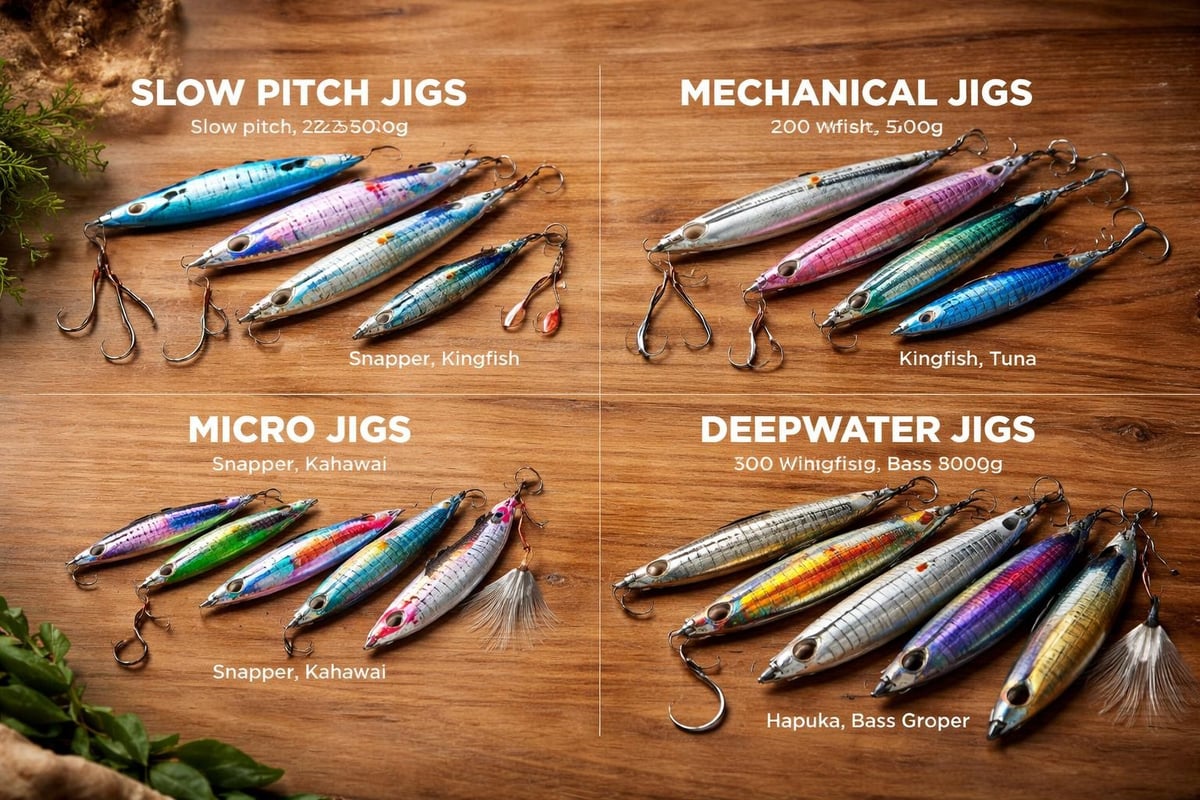
Slow pitch jigging has gained tremendous popularity in New Zealand since its introduction from Japan. These asymmetrical jigs create distinctive flutter and spiral actions with minimal rod input.
| Feature | Specification | Application |
|---|---|---|
| Weight Range | 60g - 300g | Reef and mid-depth fishing |
| Action Type | Flutter and slide | Snapper, terakihi, gurnard |
| Retrieve Speed | Slow to medium | Structure fishing |
| Hook Configuration | Assist hooks top and bottom | Maximizes hookup ratio |
The design philosophy emphasizes natural falling action rather than aggressive jigging strokes. This approach proves deadly on educated fish that have seen traditional lures.
Traditional mechanical jigs remain highly effective for New Zealand conditions. Understanding the fundamentals of mechanical jigging provides beginners with essential knowledge for getting started.
These streamlined lures excel in deeper water and stronger currents. Their knife-like profiles cut through water efficiently, allowing anglers to maintain bottom contact even in challenging conditions.
Popular mechanical jig weights:
The straight retrieve pattern with sharp upward jerks creates erratic baitfish behavior that triggers strikes from kingfish, hapuku, and bass.
Lighter jigging lures between 20g and 80g target inshore species in shallower environments. These smaller profiles match prevalent baitfish sizes in harbors and estuaries.
Micro jigging proves particularly effective for kahawai, trevally, and smaller snapper. The technique allows anglers to fish from shore structures, wharves, and shallow-water boats with lighter tackle configurations.
Mastering various jigging styles expands an angler's capability across different scenarios. Different jigging styles including slow pitch, power slow, and deepwater techniques each have specific applications in New Zealand waters.
Slow pitch jigging requires patience and rhythm rather than physical exertion. The technique involves lifting the rod tip smoothly, then allowing the jig to fall on semi-slack line while maintaining tension.
Most strikes occur during the controlled fall phase when the jig exhibits maximum action. Maintaining awareness during descent proves critical for detecting subtle bites.
This aggressive approach suits active pelagic species like kingfish and tuna. The fast retrieve creates competition triggers and reaction strikes from territorial fish.
Essential technique elements:
Physical stamina becomes important when employing high-speed techniques for extended periods. Proper body positioning and ergonomic tackle selection reduce fatigue.
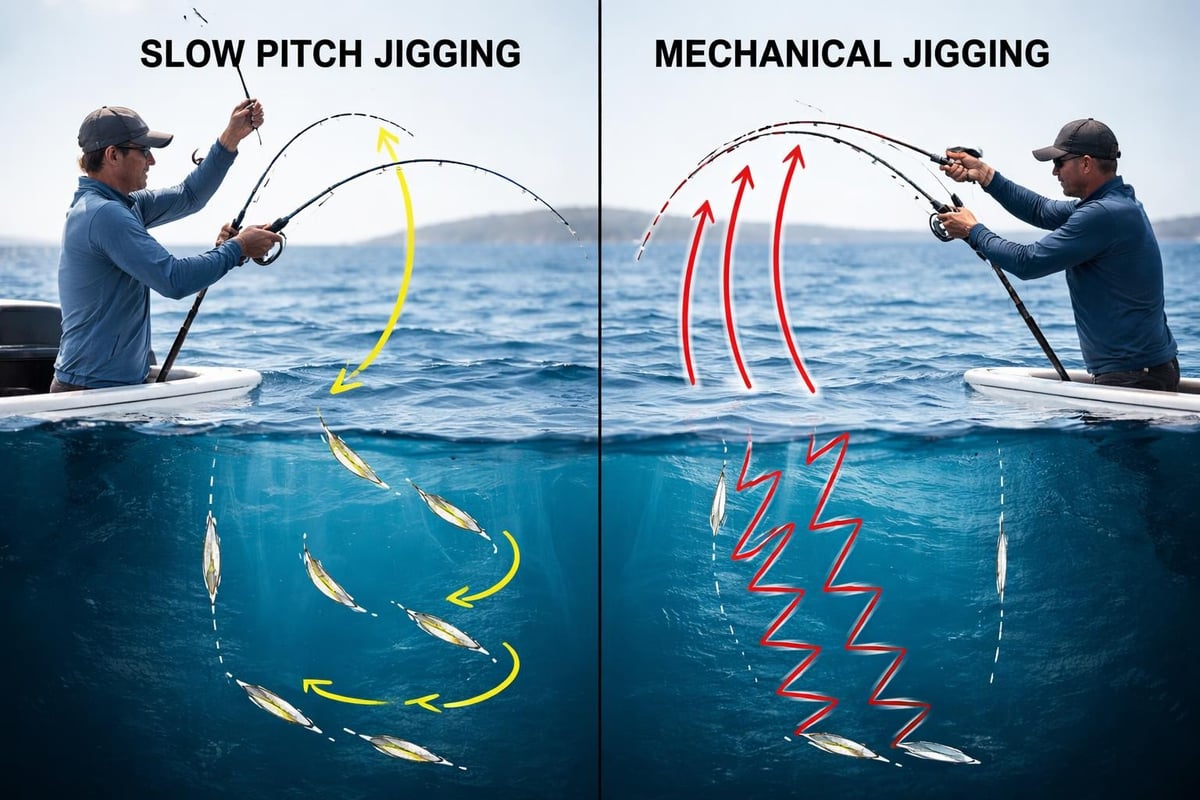
Targeting deepwater species like bluenose, hapuku, and bass requires specialized approaches. Heavier jigs (400g-1000g) overcome depth and current challenges while maintaining bottom contact.
| Depth Range | Recommended Jig Weight | Target Species | Technique Notes |
|---|---|---|---|
| 80-150m | 400-600g | Hapuku, bass | Moderate jigging action |
| 150-250m | 600-800g | Bluenose, gemfish | Slower presentation |
| 250m+ | 800g-1kg | Deep bass, alfonsino | Minimal movement |
Deepwater jigging demands quality tackle capable of withstanding extreme loads. Marine equipment selection should prioritize durability and reliability.
Understanding species preferences helps anglers choose appropriate jigging lures nz options for their fishing objectives. Different fish respond to varying lure characteristics including color, size, and action.
New Zealand snapper demonstrate opportunistic feeding behavior, responding to both slow pitch and mechanical jigs. Color selection varies with water clarity and depth.
Effective snapper colors:
Jig weights between 80g and 200g cover most snapper fishing scenarios. Smaller profiles (100-120mm) often outperform larger options in shallow reefs.
Kingfish require robust jigs capable of withstanding powerful runs and aggressive strikes. These apex predators respond to fast-moving targets that trigger their chase instincts.
Longer jigs (180-220mm) in weights from 150g to 300g create substantial profiles visible from distance. Blue, green, and chrome finishes mimic prevalent baitfish like kahawai and mackerel.
Deepwater dwellers including hapuku, bass, and bluenose prefer slower presentations near structure. These species often take jigs during pauses or slow falls rather than aggressive retrieves.
Glow-in-the-dark finishes prove particularly effective in deep environments where ambient light diminishes. Charging the jig with a flashlight before deployment enhances visibility.
Proper equipment selection directly impacts jigging effectiveness and enjoyment. Balanced tackle configurations reduce fatigue while maximizing control and sensitivity.
Jigging rods feature fast-action tips for imparting lure movement combined with powerful butt sections for fighting fish. Length typically ranges from 5'6" to 6'6" depending on technique.
Slow pitch rods exhibit more parabolic actions, loading deeply during lifts to create characteristic jig movement. Mechanical jigging rods remain stiffer for transmitting aggressive rod strokes directly to the lure.
Weight ratings should match intended jig sizes:
Overhead reels dominate the jigging scene, offering superior line capacity and drag systems. Gear ratios between 5.3:1 and 6.3:1 provide optimal retrieval speed while maintaining cranking power.
Narrow-spool designs minimize line twist while maximizing capacity. Quality drag systems become essential when targeting powerful species in deep water.
Braid line in 30-50lb class provides necessary strength with minimal diameter. This thin profile reduces water resistance, allowing lighter jigs to reach depth effectively.
Assist hooks mounted on the jig's top eye account for most hookups during slow pitch fishing. Twin hook configurations increase landing percentages without excessive snagging.
Essential terminal components include:
Fishing tackle stores stock comprehensive selections of terminal tackle suited to New Zealand jigging applications.
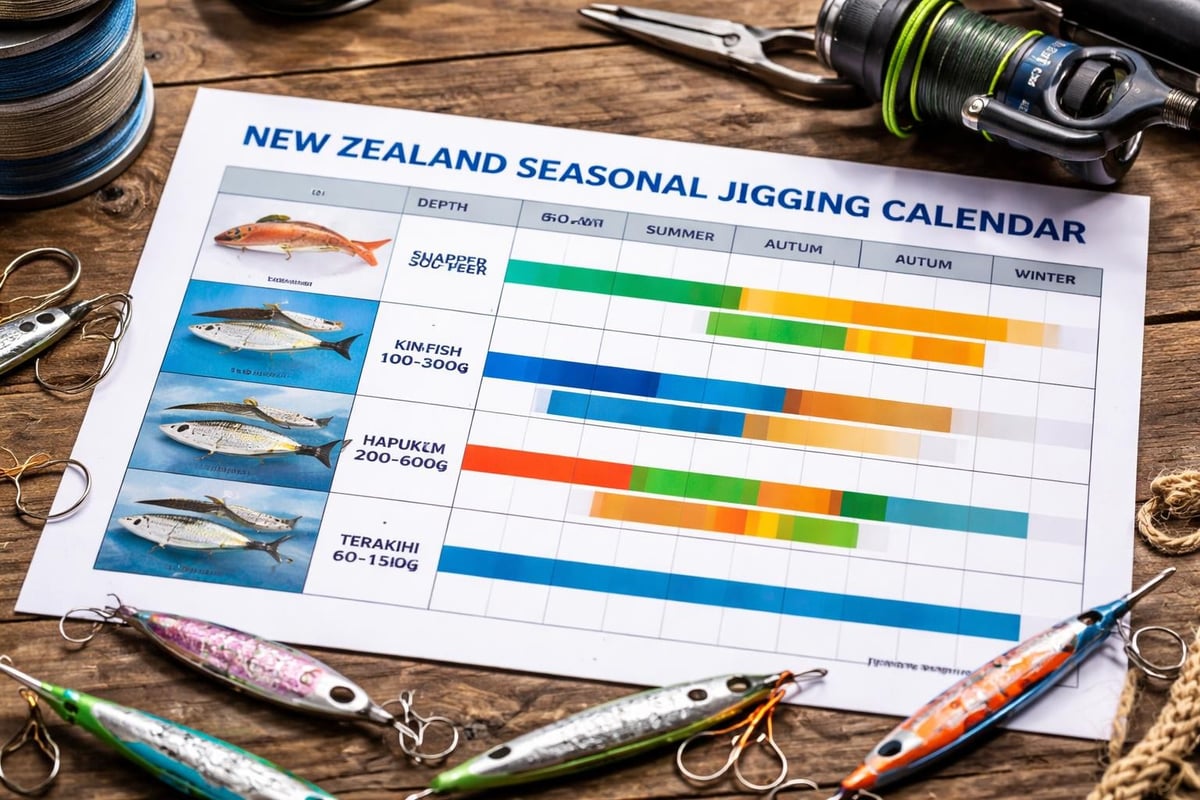
Understanding when and where to apply jigging techniques maximizes productivity. New Zealand's seasonal fish movements create distinct opportunities throughout the year.
Warmer months bring peak activity as fish move onto shallow reefs and pinnacles. This period offers excellent opportunities for lighter jigging approaches targeting snapper, kahawai, and trevally.
Kingfish congregate around northern structures from November through March, responding aggressively to fast-worked jigs. Top fishing rod brands offer specialized equipment for pursuing these powerful predators.
Cooler temperatures push some species deeper while concentrating others around specific structures. Snapper form large schools on mid-depth reefs, creating exceptional slow pitch opportunities.
Deepwater species remain accessible year-round, with winter months often producing quality fish. Stable weather patterns in some regions allow consistent access to offshore grounds.
Productive jigging locations share common characteristics that concentrate fish and create feeding opportunities. Understanding these features helps anglers identify new spots.
| Feature Type | Fish Attraction | Jigging Approach |
|---|---|---|
| Rocky pinnacles | Ambush points | Vertical presentation |
| Channel edges | Current breaks | Drift jigging |
| Wrecks and reefs | Structure dwelling species | Precision casting |
| Deep drop-offs | Deepwater species | Heavy jig selection |
Electronic fish finders prove invaluable for identifying structure and marking fish. Modern units display jig position relative to bottom and fish, enabling precise presentation.
Beyond conventional jigging for finfish, specialized techniques target specific species using adapted approaches. These niche applications require modified tackle and tactics.
While distinct from metal lure jigging, squid jigging represents an important fishery with specific regulations. Squid jig information covers essential details for targeting these cephalopods.
Anglers should familiarize themselves with squid jigging restrictions outlined in New Zealand fishing regulations to ensure compliance.
Jigging techniques have crossed into freshwater applications with surprising effectiveness. Small jigs and micro presentations account for trout in lakes and reservoirs.
Lighter tackle and finesse approaches suit freshwater environments. Jig heads from 3g to 10g paired with soft plastics imitate prevalent forage species.
Modern jig designs incorporate advanced features enhancing effectiveness. Built-in sound and UV glow properties help lures stand out in competitive feeding situations.
These technological enhancements prove particularly valuable in stained water or low-light conditions. Sound-producing jigs create additional sensory triggers beyond visual attraction.
Proper maintenance extends tackle lifespan while ensuring reliable performance. Saltwater exposure demands consistent cleaning and inspection routines.
Rinse all jigging equipment with fresh water after each outing. Pay particular attention to reel internals, rod guides, and terminal tackle connections.
Essential maintenance steps:
Organize jigs by weight and type for quick selection on the water. Tackle boxes with adjustable compartments accommodate various jig sizes while preventing tangling.
Store assist hooks separately to prevent dulling from contact with metal jigs. Regular sharpening maintains hook performance across multiple fishing sessions.
Rust prevention becomes critical in marine environments. Applying protective coatings to hooks and split rings extends usability between replacements.
Developing a comprehensive tackle selection requires strategic purchasing focused on versatility and local conditions. Starting with core selections allows gradual expansion based on experience.
New jigging enthusiasts should focus on proven lure types covering common scenarios. This foundation enables effective fishing while learning technique fundamentals.
Recommended initial selection:
This basic kit addresses most inshore and mid-depth situations encountered in New Zealand waters. Expanding the collection should follow actual fishing experiences and identified needs.
Experienced anglers develop specialized collections addressing specific scenarios and preferences. Color variety allows matching different water conditions and baitfish populations.
Reviewing specific jig designs helps anglers understand performance characteristics before purchasing. Investing in proven designs reduces trial-and-error while building confidence.
Quality over quantity should guide purchasing decisions. Ten reliable jigs outperform fifty mediocre options, particularly when targeting trophy fish in challenging conditions.
Jigging lures represent significant investments, particularly premium Japanese designs. Balancing quality with budget constraints requires strategic selection.
Entry-level options provide acceptable performance for learning fundamentals. As skills develop, upgrading to higher-quality jigs delivers noticeable improvements in action, durability, and finish quality.
Purchasing from reputable suppliers ensures genuine products with proper construction. Action Outdoors Limited maintains comprehensive marine equipment selections supporting various fishing applications throughout New Zealand and the Pacific.
Environmental factors significantly influence jigging success. Understanding how conditions affect fish behavior and lure presentation helps anglers adapt effectively.
Strong winds create drift challenges affecting lure presentation. Heavier jigs maintain vertical orientation despite surface movement, ensuring proper action delivery.
Current strength dictates necessary jig weight for maintaining bottom contact. Insufficient weight results in excessive drift and poor presentation control.
Current speed adjustments:
Visibility affects color selection and jigging style effectiveness. Clear water favors natural finishes and subtle presentations while stained conditions benefit from bright, contrasting colors.
Glow finishes bridge the gap in moderate visibility, providing enhanced attraction without appearing unnatural. UV-reactive paints offer advantages during bright conditions when ultraviolet penetration remains strong.
Mastering jigging lures nz techniques opens remarkable fishing opportunities across New Zealand's diverse marine environments, from shallow harbors to deepwater grounds. Success comes through understanding species behavior, selecting appropriate tackle, and developing effective presentation skills. Whether you're outfitting a commercial fishing operation or pursuing recreational goals, having access to quality marine equipment and fishing supplies makes the difference. Action Outdoors Limited provides comprehensive fishing and marine solutions backed by New Zealand manufacturing quality and expert service. Explore our full range of marine equipment, fishing supplies, and expert resources to elevate your fishing success in 2026 and beyond.
Shop related products at Action Outdoors: Fishing Rods · Marine Electronics · Fishing Lures
Leave a comment