
Email

Proper fishing equipment storage is essential for maintaining the quality and longevity of your gear, whether you're operating a commercial fishing operation or pursuing recreational angling in New Zealand waters. From fishing nets and ropes to rods, reels, and tackle, each piece of equipment requires specific storage conditions to prevent damage from moisture, UV exposure, and general wear. For commercial fisheries across the Pacific region and community fishing operations, implementing organized storage systems not only protects valuable investments but also ensures equipment remains ready for deployment whenever needed. Understanding the fundamentals of proper storage techniques will save time, reduce replacement costs, and maintain the reliability of your fishing gear year-round.
Commercial fishing operations and serious recreational anglers alike face significant financial losses when equipment degrades due to improper storage. Fishing nets, which represent a substantial investment for any operation, can deteriorate rapidly when exposed to prolonged sunlight, stored while wet, or tangled during off-season periods. The same principles apply to rods, reels, and specialized marine equipment.
Moisture represents the primary enemy of fishing equipment storage systems. When nets, lines, and metal components remain damp, they become susceptible to mold, mildew, and corrosion. Salt water compounds these issues, as crystallized salt continues to attract moisture even after equipment appears dry. Establishing a routine that includes thorough cleaning and complete drying before storage prevents most deterioration issues.
Temperature fluctuations also impact stored fishing gear. Extreme heat can weaken synthetic fibers in nets and fishing lines, while freezing temperatures may make materials brittle. Creating a climate-controlled environment or selecting storage locations that avoid temperature extremes helps preserve equipment integrity throughout the year.
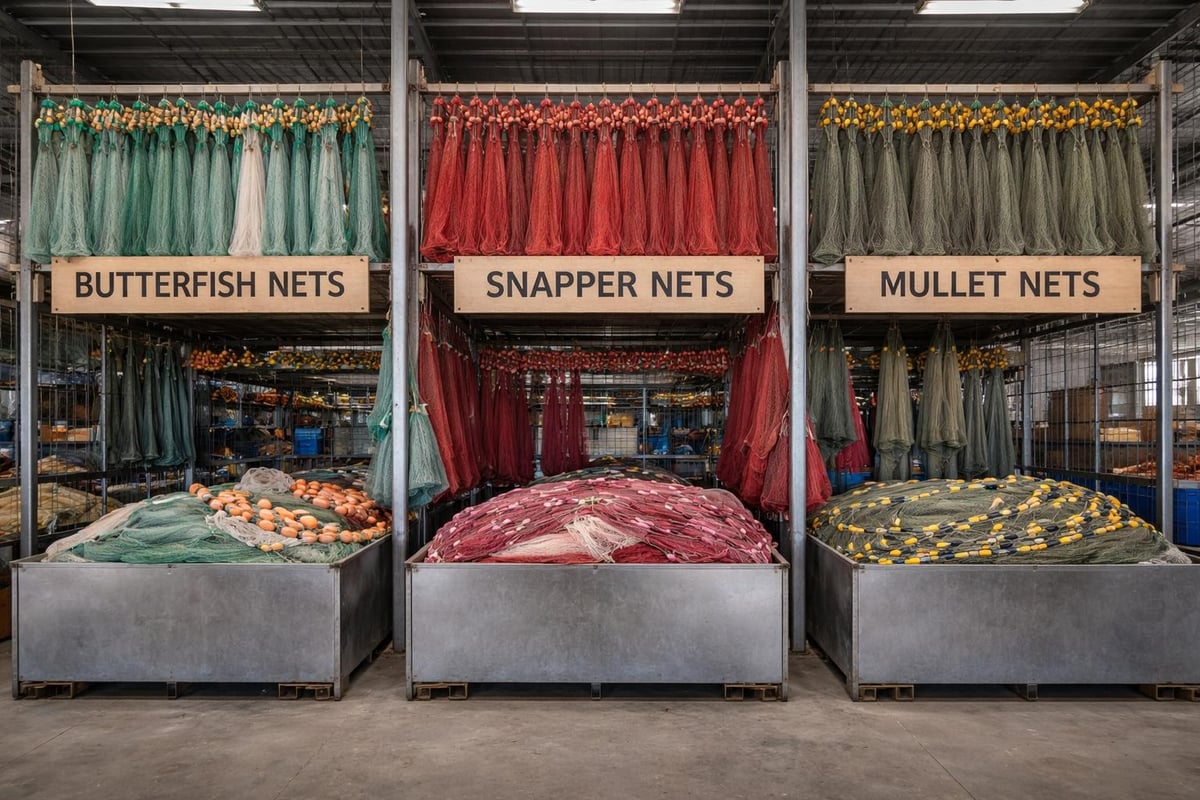
For operations managing hundreds of meters of fishing nets, organizing fishing equipment requires dedicated space and systematic approaches. Commercial-grade nets used for butterfish, snapper, mullet, and other species need special consideration due to their size and value.
Essential steps for commercial net storage include:
Large-scale operations benefit from dedicated net storage facilities that provide protection from elements while maintaining accessibility. Overhead storage systems maximize floor space, while wall-mounted solutions keep nets organized by type and size. Properly maintaining fishing equipment extends the usable life of commercial nets significantly, protecting the substantial investment these items represent.
Fishing rods require vertical or horizontal storage solutions that prevent warping and protect delicate tips. The proper storage of fishing rods and reels involves several key considerations that apply whether you're storing two rods or twenty.
Vertical storage maximizes space efficiency in garages, sheds, and dedicated fishing equipment areas. Wall-mounted rod racks, ceiling-mounted overhead systems, and free-standing vertical holders each offer distinct advantages depending on available space and the number of rods requiring storage.
Benefits of vertical rod storage:
Before placing rods in vertical storage, ensure all guides are free from debris and salt deposits. Reel seats should be clean and dry to prevent corrosion of metal components. Many anglers prefer removing reels for separate storage, while others keep complete setups ready for quick deployment.
Reels contain complex mechanical systems that require protection from moisture and dust during storage periods. After each fishing session, reels should receive a freshwater rinse, focusing on areas where salt can accumulate. Once completely dry, a light application of reel oil to moving parts prevents corrosion and keeps mechanisms functioning smoothly.
| Storage Method | Pros | Cons | Best For |
|---|---|---|---|
| Dedicated reel bags | Maximum protection, portable | Requires storage space | High-end reels |
| Shelf storage | Easy access, visual inspection | Exposed to dust | Frequently used reels |
| Drawer systems | Organized, protected | Less accessible | Large collections |
| On-rod storage | Ready to fish | Occupies more space | Active setups |
Maintaining organized tackle and equipment storage creates efficiency when preparing for fishing trips. Understanding which storage method suits your specific needs depends on fishing frequency, available space, and budget considerations.
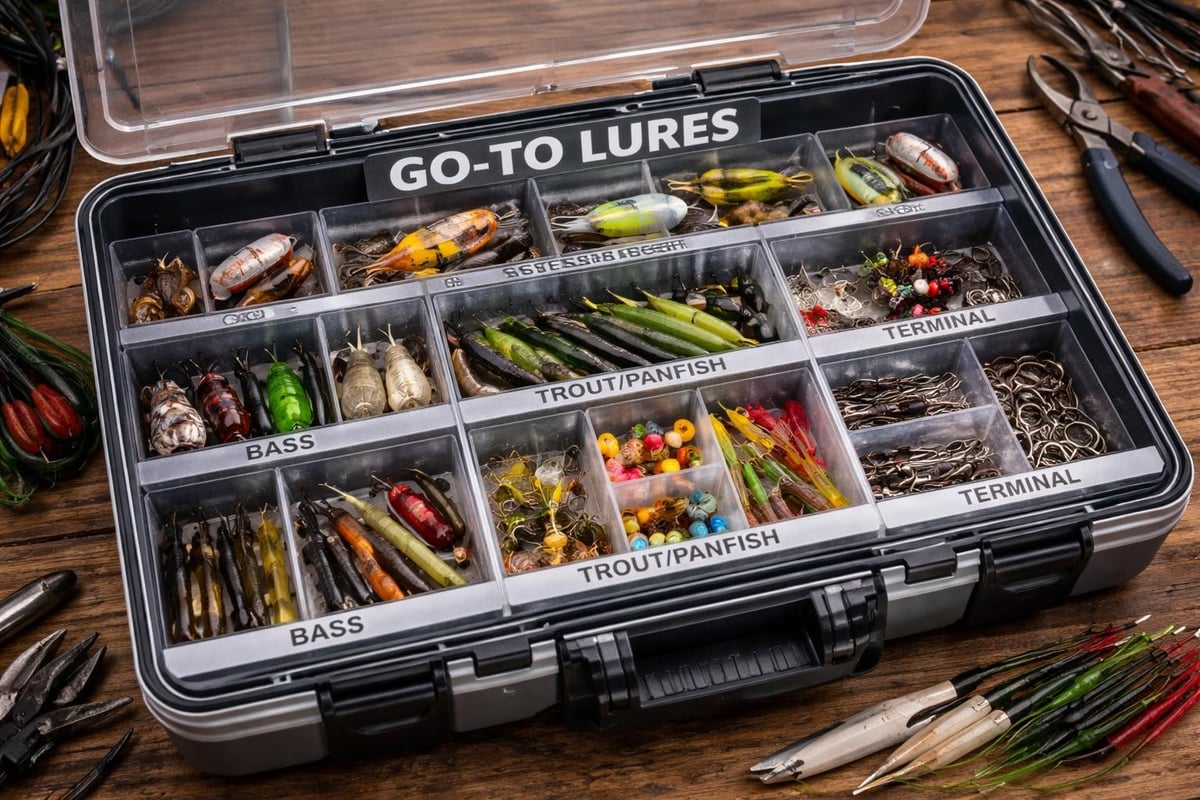
Effective tackle box organization transforms chaotic collections of lures, hooks, and accessories into efficient systems. Whether using traditional tackle boxes, bag systems, or modular storage solutions, the principles remain consistent across all approaches.
Organizing tackle by target species creates logical groupings that simplify preparation for specific fishing trips. Alternatively, organizing by lure type, size, or water condition allows anglers to adapt quickly to changing situations on the water.
Adjustable divider systems within tackle boxes accommodate different-sized items while maintaining separation. Soft plastic baits require individual storage to prevent chemical interactions that can melt or degrade materials. Using sealed bags or compartmented containers specifically designed for soft plastics preserves these items effectively.
Hooks, swivels, sinkers, and other small components easily become disorganized without proper fishing equipment storage systems. Clear containers allow quick visual identification, while labeled sections prevent mixing different sizes or types. Magnetic trays capture loose metal components, preventing loss and reducing search time.
Knife maintenance deserves special attention within storage routines. Fishing knives require cleaning, drying, and light oiling before storage to prevent rust. Keeping knives sharp and well-maintained ensures they remain effective tools rather than becoming neglected equipment.
Commercial fishing operations and serious anglers accumulate substantial quantities of rope, floats, slings, and other marine equipment requiring dedicated fishing equipment storage solutions. These items present unique challenges due to size, weight, and material composition.
Ropes used in fishing operations come in various materials including manila, nylon, and polyester, each requiring slightly different storage approaches. Natural fiber ropes like manila must remain completely dry during storage to prevent rot, while synthetic ropes resist moisture better but still benefit from dry storage conditions.
Proper rope storage procedures:
Wall-mounted rope reels or dedicated rope storage racks keep lines organized and accessible. For operations managing multiple rope types and lengths, labeling systems identifying rope specifications streamline equipment selection for specific applications.
Fishing floats and buoys require protection from crushing and UV exposure during storage periods. Stacking floats creates pressure points that can cause deformation, while exposure to sunlight degrades foam and plastic materials over time.
Overhead storage using nets or mesh bags suspends floats without compression while maintaining organization. Alternatively, shelf systems with adequate spacing prevent crushing while allowing visual inventory checks. Keeping floats clean and dry prevents organic growth that can degrade materials and add unwanted weight.
Many fishing operations experience seasonal fluctuations requiring extended storage periods for equipment. Winter storage preparations become crucial for protecting investments during off-season months, particularly in regions experiencing harsh weather conditions.
Before placing equipment in long-term storage, thorough preparation prevents deterioration and ensures gear remains ready for the next fishing season. This process requires time investment but pays dividends through extended equipment life and reduced replacement costs.
Complete pre-storage preparation includes:
Temperature-controlled environments provide ideal conditions for extended fishing equipment storage, though most equipment tolerates standard garage or shed conditions when properly prepared. Avoiding damp basements and unventilated spaces prevents mold and mildew issues.
Operations fishing year-round benefit from rotating equipment based on current target species and techniques. Storing off-season nets and gear frees working space while maintaining organization. Systematic rotation ensures all equipment receives regular inspection and maintenance rather than degrading unused.
Implementing inventory systems tracking equipment location and condition supports efficient rotation schedules. Simple spreadsheets or dedicated fishing operation management software can track which nets are deployed, which require maintenance, and which remain in storage ready for use.

Not every fishing operation enjoys unlimited storage space. Maximizing available space requires creative solutions that maintain organization while accommodating equipment within physical constraints.
Walls and ceilings represent underutilized storage areas in most garages and sheds. Installing overhead rod racks, ceiling-mounted net storage, and wall-mounted reel organization systems dramatically increases storage capacity without consuming floor space.
| Solution Type | Space Saved | Installation Difficulty | Cost Range |
|---|---|---|---|
| Ceiling rod racks | High | Moderate | Medium |
| Wall-mounted hooks | Medium | Easy | Low |
| Overhead platforms | Very High | Difficult | High |
| Magnetic strips | Low | Easy | Low |
| Pegboard systems | Medium | Easy | Low-Medium |
Adjustable systems accommodate changing equipment collections as fishing interests evolve or operations expand. Modular approaches allow gradual expansion matching budget availability rather than requiring complete installation simultaneously.
Equipment serving multiple functions maximizes value in limited spaces. Workbenches incorporating tackle storage drawers, rod holders doubling as display features, and storage containers that also serve as seating all contribute to efficient space utilization.
Creating dedicated repair stations within storage areas ensures maintenance happens regularly rather than being postponed due to lack of appropriate workspace. Including tool storage, adequate lighting, and comfortable working height encourages timely equipment servicing.
Fishing equipment storage extends beyond home base to include transportation and on-water organization. Boat storage, vehicle organization, and portable systems each require specific approaches maintaining accessibility while protecting equipment during transport.
Dedicated fishing vessels benefit from custom storage solutions maximizing limited onboard space. Rod holders mounted on gunwales or T-tops keep rods secure and accessible during transit. Tackle storage integrated into seating areas or dedicated compartments protects equipment from spray and impact.
Securing nets and lines during transport prevents tangling and damage. Purpose-built net bins or bags containing individual nets simplify deployment while protecting mesh from snags. Rope storage bags or mounted rope reels maintain organization and prevent trip hazards on deck.
Anglers accessing fishing locations via vehicle require storage solutions protecting equipment during transport while facilitating quick setup upon arrival. Rod tubes prevent breakage during transit, while tackle bags or boxes with secure closures prevent spills and loss during travel.
Trailer accessories and equipment used for transporting boats and larger equipment require the same organizational approach as fishing gear itself. Maintaining trailer safety equipment alongside fishing supplies ensures complete readiness for fishing trips.
Effective fishing equipment storage systems integrate maintenance activities rather than treating storage and upkeep as separate processes. Regular inspection schedules combined with storage routines identify problems early, preventing small issues from becoming major failures.
Systematic approaches to equipment maintenance ensure nothing gets overlooked. Simple checklists covering cleaning, inspection, lubrication, and repair activities provide structure to maintenance routines.
Monthly maintenance activities:
Quarterly deep-cleaning sessions address equipment needing more intensive maintenance. This includes complete reel teardown and servicing, thorough net repairs, and replacement of worn terminal tackle. Scheduling these sessions during slower fishing periods maximizes efficiency.
Tracking equipment condition, maintenance performed, and replacement schedules supports informed decision-making about repairs versus replacement. Simple logbooks recording maintenance dates and activities completed provide valuable reference information.
For commercial operations managing extensive equipment inventories, detailed records become essential for business management. Tracking net performance, repair costs, and replacement frequency informs purchasing decisions and identifies equipment providing best value over time. Reliable fishing equipment suppliers understand these operational needs and provide products designed for longevity with proper maintenance.
Large-scale fishing operations require sophisticated fishing equipment storage systems matching their operational complexity. Managing hundreds of meters of nets, multiple vessel equipment sets, and diverse gear requires professional-grade organization.
Dedicated storage facilities for commercial fishing equipment incorporate industrial shelving, overhead crane systems, and organized zones for different equipment categories. Climate control protects valuable inventory, while security systems prevent theft and unauthorized access.
Inventory management systems tracking equipment location, condition, and deployment status provide operational visibility. Barcode or RFID tagging enables quick equipment location and supports accurate inventory counts. Integration with business management software streamlines operations from storage through deployment and maintenance.
Commercial operations involving multiple crew members require standardized storage procedures ensuring everyone follows consistent practices. Written protocols documenting proper storage methods, equipment locations, and maintenance responsibilities eliminate confusion and prevent equipment mishandling.
Regular training sessions reviewing storage procedures keep teams aligned with best practices. New crew members receive thorough orientation covering storage expectations, while experienced team members benefit from refresher training introducing improved methods or addressing identified issues.
Training investments pay returns through reduced equipment damage, improved organization, and increased operational efficiency. Comprehensive marine equipment management becomes achievable when entire teams understand and execute proper storage practices consistently.
Implementing proper fishing equipment storage systems protects your investment while ensuring gear remains ready for productive fishing trips. Whether managing commercial fishing operations across the Pacific or organizing personal fishing equipment, these systematic approaches extend equipment life and improve operational efficiency. Action Outdoors Limited understands the storage challenges facing New Zealand fishing operations, offering durable fishing nets, ropes, floats, and marine equipment designed for long service life with proper care. Explore our complete range of New Zealand-made fishing equipment and supplies at Action Outdoors Limited to outfit your operation with quality gear backed by dependable local service.
Leave a comment