

Fishing Net Sizes: Complete Guide for 2026
Selecting the proper fishing net sizes represents one of the most critical decisions commercial and community fisheries make throughout the Pacific region. The dimensions of your net, particularly mesh size, directly impact catch efficiency, regulatory compliance, and the sustainability of fish populations. From gillnets targeting specific species to larger seining operations, understanding how to match net specifications to your fishing objectives ensures both productive harvests and responsible resource management. This comprehensive guide explores the technical aspects, regulatory frameworks, and practical considerations that inform fishing net size selection in 2026.
Understanding Mesh Size Fundamentals
Mesh size forms the foundation of net specification and determines which fish species and sizes your equipment will capture. The measurement typically refers to the distance between opposite knots in a stretched mesh, though different measurement methods exist across regions and applications.
Standard Measurement Methods
Measuring mesh accurately requires understanding the distinction between stretched and unstretched dimensions. Stretched mesh measurement involves pulling the mesh diagonally to its full extension and measuring between knot centers. This method provides the most commonly referenced specification in regulatory documents and product listings.
Different jurisdictions apply varying measurement standards:
- Bar length: Distance from knot center to adjacent knot center
- Full mesh: Total distance across a single mesh opening when stretched
- Square mesh: Measured with the mesh oriented in a square position
- Diamond mesh: Measured with the mesh in its natural diamond configuration
The International Seafood Sustainability Foundation explains mesh size concepts in detail, emphasizing how proper measurement techniques prevent juvenile fish capture and support sustainable fishing practices.
Mesh Size Impact on Selectivity
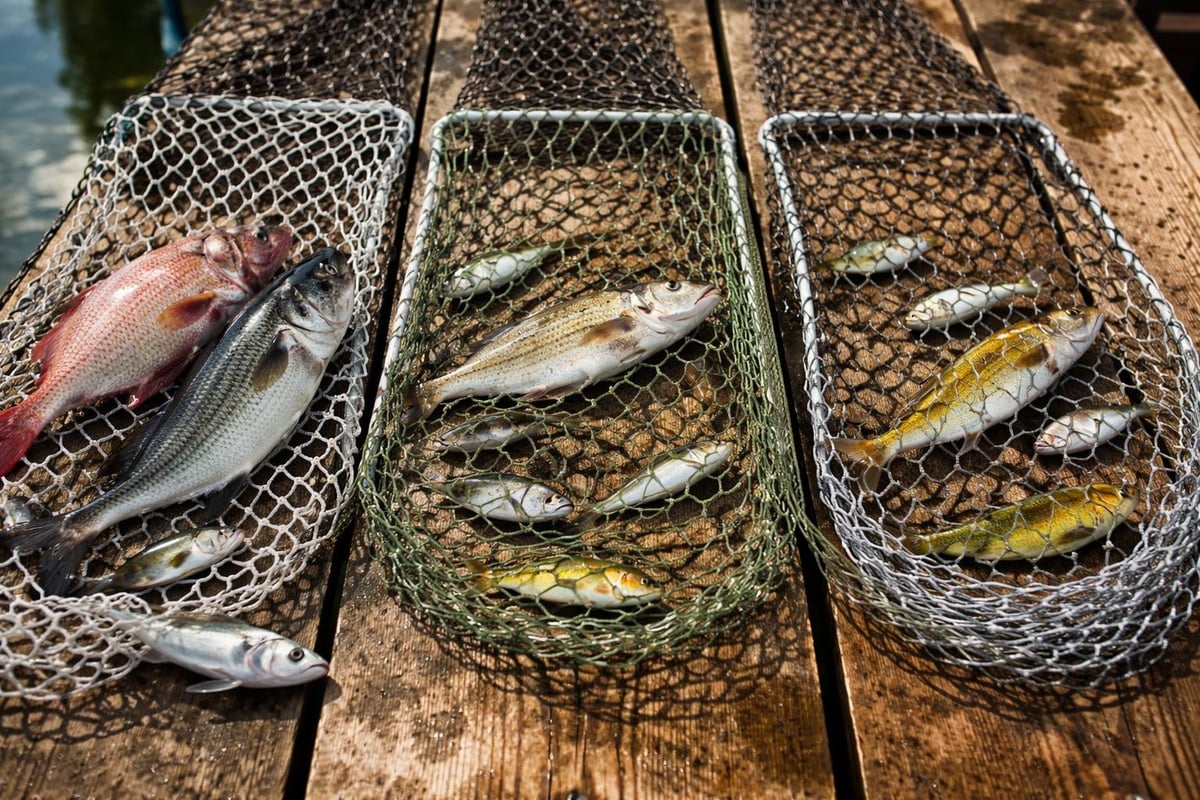
Your choice of fishing net sizes directly controls species selectivity and size range of captured fish. Smaller mesh dimensions retain smaller fish but may not effectively target larger species. Conversely, larger mesh allows smaller fish to escape while retaining mature specimens.
Commercial operators typically consider these selectivity factors:
- Target species body shape - Deep-bodied fish require different mesh than elongated species
- Seasonal size variations - Fish sizes change throughout the year
- Bycatch reduction - Larger mesh releases non-target species
- Regulatory minimum sizes - Compliance with harvest regulations
Regulatory Requirements and Compliance
Fishing net sizes face extensive regulation across jurisdictions to protect fish stocks and ensure sustainable harvesting. Commercial and community fisheries must navigate complex requirements that vary by location, target species, and fishing method.
Pacific Region Standards
New Zealand and Pacific Island nations maintain specific mesh size requirements for different fishing activities. The Hawaii Division of Aquatic Resources specifies minimum mesh sizes for various net types, providing a model similar to regulations found throughout the Pacific.
| Net Type | Minimum Mesh Size | Common Applications |
|---|---|---|
| Gillnet | 75-100mm | Reef fish, pelagics |
| Seine | 50-75mm | School fish, mullet |
| Trawl | 40-60mm | Bottom species |
| Cast Net | 25-50mm | Bait fish, small species |
These specifications represent general guidelines, with actual requirements depending on specific fishery management plans and local regulations.
Species-Specific Requirements
Many jurisdictions implement fishing net sizes based on target species characteristics. The Code of Federal Regulations details minimum mesh sizes for specific species like king and Spanish mackerel, demonstrating how regulatory frameworks protect particular fish populations.
Commercial operators targeting multiple species often maintain several net configurations to remain compliant across different fisheries. This approach ensures flexibility while meeting all applicable standards.
Commercial Gillnet Specifications
Gillnets represent one of the most widely used commercial fishing methods across the Pacific, with size specifications critical to operational success. These nets work by allowing fish to pass their heads through mesh openings but prevent passage of their bodies, effectively "gilling" them in the netting.
Standard Commercial Dimensions
Commercial gillnet fishing net sizes vary considerably based on target species and fishing conditions. NOAA Fisheries provides comprehensive gillnet information, including how mesh sizes target specific fish populations.
Common gillnet specifications include:
- Mesh size range: 50mm to 200mm stretched mesh
- Depth: 1.2m to 10m depending on target depth
- Length: 20m to 100m+ per panel
- Twine thickness: 0.2mm to 1.5mm monofilament or multifilament
Larger mesh dimensions (150mm-200mm) typically target species like tuna and large reef fish, while medium sizes (75mm-125mm) work effectively for snapper, mullet, and similar species. The wholesale fishing accessories market continues expanding with specialized gillnet options for diverse Pacific fisheries.
Mesh Size Selection Strategy
Choosing appropriate gillnet fishing net sizes requires analyzing target species characteristics and fishing conditions. Key selection factors include:
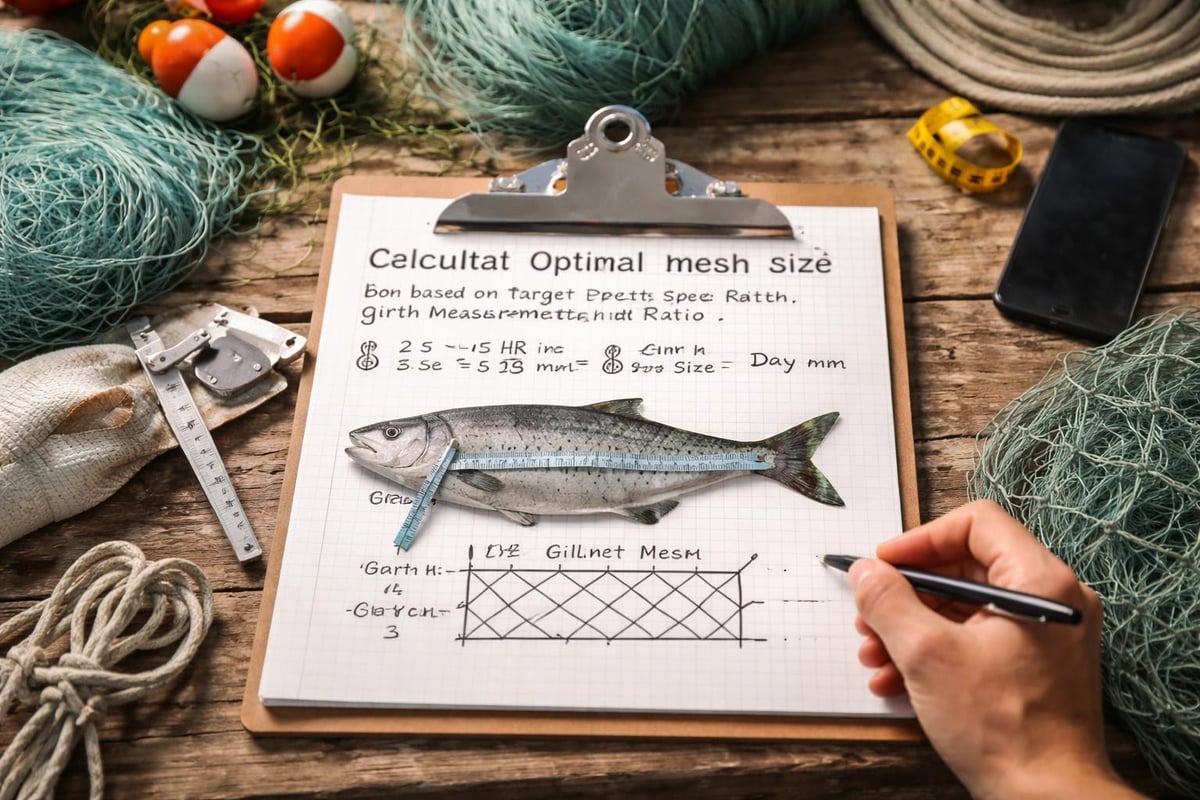
- Maximum girth measurement of target species
- Water clarity affecting visibility
- Current strength determining hang ratio
- Seasonal migration patterns of target fish
- Bycatch mitigation requirements
Professional fisheries managers often calculate optimal mesh size using the formula: ideal mesh = (maximum fish girth / 2) with adjustments for hang ratio and twine thickness.
Seine Net Dimensions and Applications
Seine nets serve both commercial and community fishing operations throughout the Pacific region. These nets encircle schools of fish, with size specifications critical to effective deployment and harvest success.
Beach Seine Specifications
Beach seines, deployed from shore, require specific fishing net sizes to function effectively in shallow water environments. Typical configurations include:
- Mesh size: 25mm to 75mm depending on target species
- Length: 30m to 200m total sweep
- Depth: 2m to 6m at the center bag
- Bag mesh: Often smaller than wing mesh for retention
The center bag typically features smaller mesh (25mm-40mm) to retain catch, while wings use larger mesh (50mm-75mm) to herd fish toward the center. This graduated approach maximizes efficiency while meeting regulatory requirements for minimum mesh sizes.
Purse Seine Dimensions
Larger purse seines deployed from vessels feature different sizing considerations:
| Component | Typical Dimensions | Purpose |
|---|---|---|
| Main Body | 60-100mm mesh, 200-400m length | Encircle fish schools |
| Bunt | 40-60mm mesh | Final concentration area |
| Depth | 40-120m | Match target depth |
| Purse Line | Reinforced bottom | Close net bottom |
Commercial purse seine operations targeting tuna and similar pelagic species use these larger configurations, with fishing net sizes carefully matched to target species and operational capabilities.
Specialized Net Applications
Beyond gillnets and seines, numerous specialized fishing methods require specific net dimensions. Understanding these applications helps commercial operators select appropriate equipment for diverse fishing scenarios.
Cast Net Specifications
Cast nets, though smaller than commercial gear, still require careful size selection. These circular nets spread over a target area and capture fish as the weighted perimeter sinks:
- Radius: 1.2m to 3.6m when fully spread
- Mesh size: 6mm to 50mm
- Weight distribution: 0.5kg to 3kg of lead weights
- Monofilament thickness: 0.15mm to 0.40mm
Smaller mesh sizes (6mm-12mm) work for bait fish collection, while larger specifications (25mm-50mm) target food fish species. The FAO guidelines on mesh size selection emphasize choosing appropriate dimensions for representative sampling and sustainable harvest.
Trawl Net Dimensions
Bottom and mid-water trawl nets represent significant commercial fishing methods with complex size specifications:
Key trawl net measurements:
- Cod end mesh: 40mm to 120mm (heavily regulated)
- Body mesh: Progressive sizing from opening to cod end
- Headline height: 3m to 20m for pelagic trawls
- Footrope length: 15m to 50m+ for bottom trawls
The New York regulations on mesh size and gear restrictions demonstrate how jurisdictions control trawl fishing net sizes to protect juvenile fish and maintain stock health. Similar frameworks exist throughout the Pacific region.
Custom Net Manufacturing Considerations
Commercial fisheries often require custom fishing net sizes to match specific operational requirements. New Zealand manufacturers like Action Outdoors Limited produce ready-to-use nets with precise specifications for Pacific markets.
Design Parameters
Custom net manufacturing involves several critical design decisions:
- Material selection - Monofilament, multifilament, or braided construction
- Mesh configuration - Square, diamond, or hexagonal patterns
- Twine diameter - Balancing strength and visibility
- Color options - Matching water conditions and target species behavior
- Flotation and weight systems - Ensuring proper net orientation
The Action Outdoors fishing equipment range includes comprehensive net manufacturing capabilities with specifications tailored to commercial and community fishery requirements.
Quality Standards for Pacific Fisheries
Nets destined for Pacific commercial operations must withstand challenging marine environments. Quality benchmarks include:
- Knot strength: Minimum 90% of twine breaking strength
- UV resistance: Extended exposure tolerance for tropical conditions
- Abrasion resistance: Withstand coral, rock, and vessel contact
- Mesh uniformity: Consistent dimensions throughout the net
- Edge reinforcement: Strengthened boundaries and hang lines
Professional manufacturers conduct regular testing to ensure fishing net sizes remain consistent throughout the production run, with quality control measures verifying mesh dimensions, knot integrity, and overall construction standards.
Maintenance and Size Verification
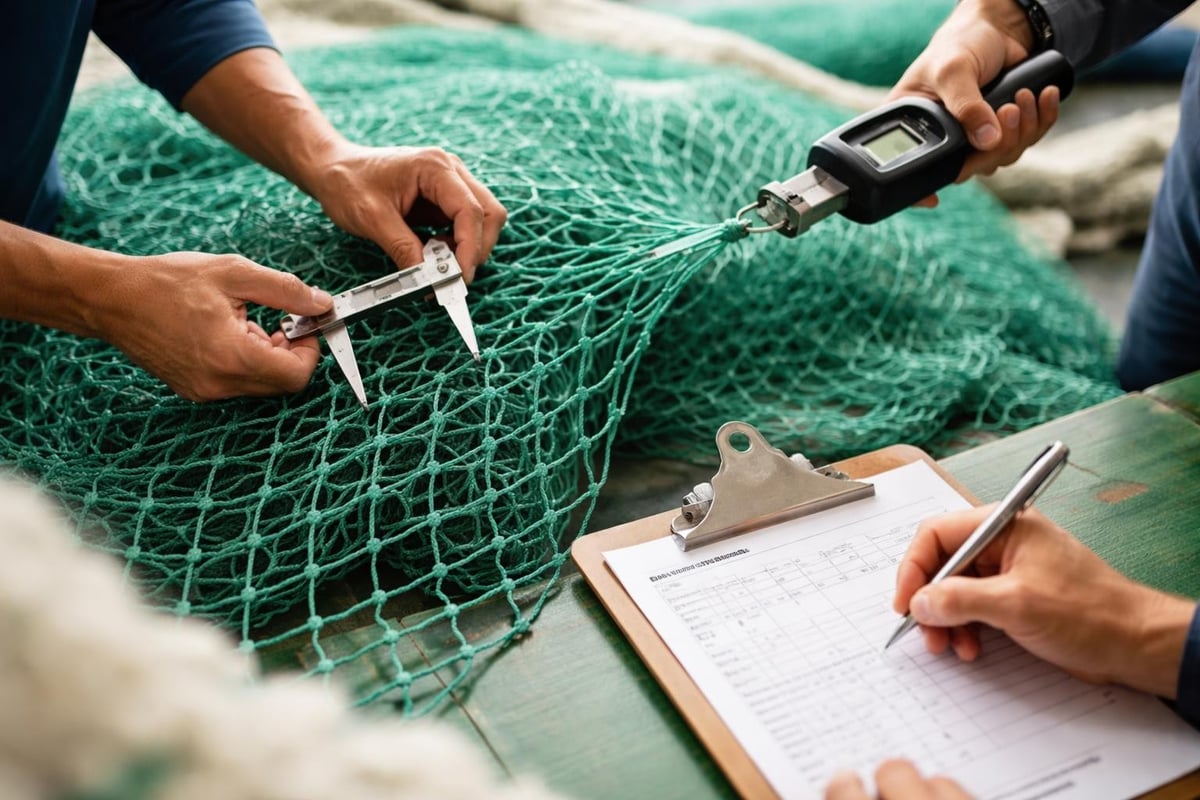
Even properly manufactured nets require regular inspection to maintain correct fishing net sizes throughout their service life. Mesh dimensions can change due to stretching, wear, and environmental exposure.
Regular Inspection Protocols
Commercial operators should implement systematic inspection schedules:
- Pre-season inspection: Complete size verification before fishing season
- Weekly checks: Quick visual inspection during active use
- Monthly measurement: Detailed mesh size confirmation in high-wear areas
- Post-damage assessment: Immediate checking after snags or tears
- Annual recertification: Professional measurement and documentation
The practical guide to measuring net mesh size demonstrates proper measurement techniques that ensure compliance with regulatory standards.
Repair Impact on Mesh Dimensions
Net repairs can alter fishing net sizes if not executed properly. Best practices for maintaining specifications include:
| Repair Type | Size Impact | Mitigation Strategy |
|---|---|---|
| Patch insertion | Can create tight spots | Match original mesh exactly |
| Rehanging sections | May alter overall dimensions | Maintain original hang ratio |
| Replacing panels | Risk of mismatched mesh | Source identical specifications |
| Edge reinforcement | Can restrict mesh stretch | Use appropriate materials |
Professional repair services understand the importance of maintaining original net specifications, using matching materials and proper techniques to preserve both size accuracy and regulatory compliance.
Emerging Technologies and Future Trends
Fishing net technology continues evolving, with innovations affecting how commercial operations approach size selection and net design. Understanding these developments helps fisheries plan equipment investments for coming years.
Advanced Materials
Modern fishing net sizes benefit from new materials offering improved performance:
- High-density polyethylene (HDPE): Superior strength-to-weight ratios
- Dyneema and spectra fibers: Extreme strength with minimal diameter
- UV-stabilized monofilaments: Extended service life in tropical conditions
- Bio-based polymers: Reduced environmental impact from lost gear
These materials allow manufacturers to produce nets with smaller twine diameters while maintaining strength, potentially improving catch efficiency through reduced visibility.
Smart Net Technology
Emerging sensor and monitoring technologies provide real-time data on net performance:
- Mesh dimension monitors tracking stretch and wear
- Catch composition sensors identifying species in real-time
- Depth and temperature logging optimizing deployment
- GPS tracking preventing gear loss
- Automated retrieval systems reducing handling damage
While still developing, these technologies promise enhanced fishing efficiency and improved sustainability through better understanding of how fishing net sizes perform under actual operating conditions.
Environmental and Sustainability Considerations
Responsible selection of fishing net sizes supports long-term fishery health and marine ecosystem protection. Commercial operations increasingly recognize sustainability as both an ethical obligation and business necessity.
Bycatch Reduction Through Size Selection
Appropriate mesh dimensions significantly reduce unwanted catch:
- Juvenile fish escapement: Larger mesh allows immature fish to escape
- Species selectivity: Size-specific targeting reduces non-target capture
- Sea turtle and marine mammal protection: Appropriate mesh prevents entanglement
- Seabird interaction reduction: Proper net dimensions minimize surface contact
The comprehensive overview of fishing nets explores how different net types and sizes affect various marine species, providing context for environmental impact considerations.
Regulatory Evolution
Fishing net size regulations continue evolving based on stock assessments and ecosystem research. Commercial operators must stay current with changing requirements:
Key regulatory trends include:
- Increasing minimum mesh sizes for overfished species
- Area-specific requirements based on juvenile distribution
- Seasonal mesh size variations matching fish migration patterns
- Technology-based monitoring replacing physical measurement in some jurisdictions
- International harmonization of standards across Pacific nations
Proactive fisheries maintain relationships with regulatory authorities and participate in management discussions to anticipate requirement changes.
Practical Size Selection Framework
Commercial fisheries benefit from systematic approaches to selecting fishing net sizes. This framework integrates technical, regulatory, and operational considerations into coherent decision-making processes.
Assessment Steps
Follow this structured selection process:
- Identify target species and their size ranges throughout fishing season
- Research applicable regulations for all jurisdictions where fishing occurs
- Analyze fishing method requirements and vessel capabilities
- Calculate optimal mesh dimensions using species data and selectivity models
- Consider environmental conditions including currents, depths, and bottom types
- Evaluate economic factors balancing efficiency against equipment costs
- Plan for flexibility maintaining multiple net sizes for varying conditions
This systematic approach ensures fishing net sizes align with both operational objectives and regulatory requirements.
Documentation and Record Keeping
Professional operations maintain comprehensive records of net specifications:
- Purchase documentation showing original mesh sizes
- Regular measurement logs tracking dimensional changes
- Repair records noting materials and methods used
- Catch data correlated with specific net configurations
- Regulatory compliance certificates and inspection results
These records support regulatory compliance, inform future purchasing decisions, and provide valuable operational data for optimizing fishing efficiency. The essential fishing equipment guide emphasizes the importance of proper documentation for commercial fishing operations.
Regional Variations in Pacific Fisheries
Different Pacific locations present unique requirements for fishing net sizes based on local species, regulations, and fishing traditions. Understanding these regional differences helps commercial operators serving multiple markets.
New Zealand Commercial Standards
New Zealand maintains rigorous standards for commercial fishing net sizes, with specifications varying by quota management area and target species. These requirements reflect the country's commitment to sustainable fishery management and stock protection.
Common New Zealand specifications:
- Inshore gillnets: 100mm minimum for most species
- Set nets: Area and species-specific requirements
- Trawl cod ends: Minimum 100mm for most finfish fisheries
- Purse seines: Regulated by species and area
Manufacturers in New Zealand, including major producers, ensure nets meet these standards while providing the durability required for commercial operations.
Pacific Island Requirements
Island nations throughout the Pacific implement fishing net size regulations suited to local conditions:
| Region | Typical Mesh Standards | Primary Considerations |
|---|---|---|
| Fiji | 50-100mm gillnets | Reef protection, subsistence rights |
| Samoa | 75-125mm commercial nets | Tuna fisheries, small-scale commercial |
| Tonga | Species-specific minimums | Seasonal fishing, traditional methods |
| Cook Islands | 60-100mm range | Tourism impact, sustainable harvest |
Commercial operators supplying these markets must understand local requirements and cultural fishing practices that influence net size preferences.
Selecting appropriate fishing net sizes requires balancing technical specifications, regulatory compliance, target species characteristics, and operational efficiency. From mesh dimension fundamentals to advanced material technologies, commercial fisheries must consider multiple factors when specifying nets for Pacific operations. Whether you need custom gillnets for specific species, seine nets for community fisheries, or specialized configurations for unique fishing applications, working with experienced manufacturers ensures you receive properly sized equipment that meets both performance and compliance requirements. Action Outdoors Limited produces over 350,000 meters of ready-to-use fishing nets annually, providing New Zealand-made quality with quick turnaround times for commercial and community fisheries throughout the Pacific region.
Leave a comment