
Email

New Zealand's reputation as a world-class fly fishing destination demands equipment that can handle the country's diverse aquatic environments. From the pristine trout streams of the South Island to the challenging saltwater flats of the North, selecting the right fly rod requires understanding local conditions, target species, and fishing techniques. Whether you're a seasoned angler or just beginning your fly fishing journey, the choices you make regarding rod weight, length, action, and construction materials will significantly impact your success on the water. This comprehensive guide explores everything you need to know about new zealand fly rods in 2026, helping you make informed decisions that match your fishing style and the unique challenges presented by Kiwi waters.
Rod weight represents the most critical specification when choosing new zealand fly rods. The weight rating corresponds to the fly line weight the rod is designed to cast, ranging from delicate 1-weight rods to powerful 14-weight models for large game fish.
For New Zealand's legendary trout fisheries, most anglers select rods between 4-weight and 6-weight. These middle-weight options provide the versatility needed for various conditions, from small backcountry streams to larger rivers and lakes. A 5-weight rod remains the most popular choice among local guides and experienced anglers because it handles everything from dry flies to weighted nymphs with equal competence.
When purchasing the correct fly rod, consider these weight recommendations for New Zealand conditions:
Rod length significantly affects casting distance, line control, and fish-fighting capability. New Zealand fly rods typically range from 8 feet to 10 feet, with 9-foot rods representing the standard for river fishing. Longer rods provide better line control for nymphing techniques and help keep your fly line above bankside vegetation.
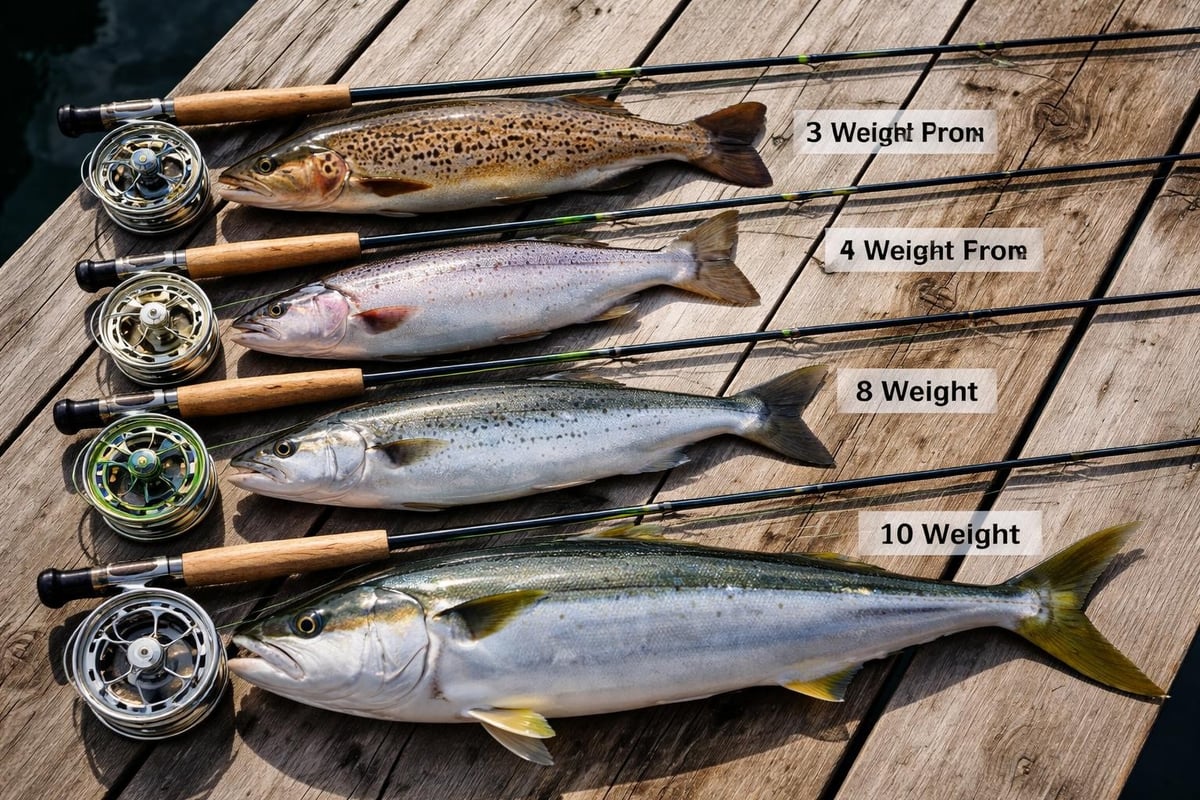
Modern new zealand fly rods utilize advanced materials that deliver exceptional performance while reducing weight and increasing durability. Understanding these materials helps you evaluate quality and value when selecting your next rod.
Graphite remains the dominant material in contemporary fly rod construction. High-modulus graphite provides the stiffness and light weight that serious anglers demand. Premium rods use higher modulus ratings (40 million to 60 million), resulting in faster action and lighter overall weight. These advanced materials allow manufacturers like the world-famous fly fishing rods made in Wanaka to create exceptional tools for demanding conditions.
| Material Type | Advantages | Disadvantages | Best For |
|---|---|---|---|
| High-modulus graphite | Lightweight, sensitive, fast recovery | Higher cost, can be brittle | Experienced anglers, precision casting |
| Standard graphite | Good performance, affordable | Slightly heavier | Beginners, all-around use |
| Fiberglass | Durable, forgiving action, nostalgic feel | Heavier, slower action | Close-range work, traditional methods |
| Bamboo | Classic feel, smooth action, collectible | Expensive, requires maintenance | Collectors, traditional enthusiasts |
Rod action describes how the rod bends when loaded with line during casting. This characteristic dramatically influences casting style, presentation accuracy, and fish-fighting dynamics.
Fast action rods bend primarily in the upper third of the blank, providing quick line speed and tight loops. These rods excel in windy conditions common around New Zealand's lakes and coastal areas. Fast action also helps anglers make longer casts when covering water efficiently.
Medium action rods bend through the middle sections, offering a balance between power and finesse. This versatility makes medium action rods popular for New Zealand's varied fishing situations, from nymphing deep pools to presenting dry flies on spring creeks.
Slow action rods bend deeply into the lower sections, creating wide loops and gentle presentations. While less common in New Zealand fly rods today, slow action excels for delicate dry fly fishing on calm waters where presentation trumps distance.
New Zealand presents extraordinarily diverse fishing environments, each demanding specific rod characteristics. Understanding these relationships ensures you select equipment that performs optimally in your preferred waters.
Fly fishing in New Zealand rivers requires rods that handle variable conditions. Backcountry streams demand accuracy and delicate presentations, while larger rivers need power for long casts and controlling fish in strong currents.
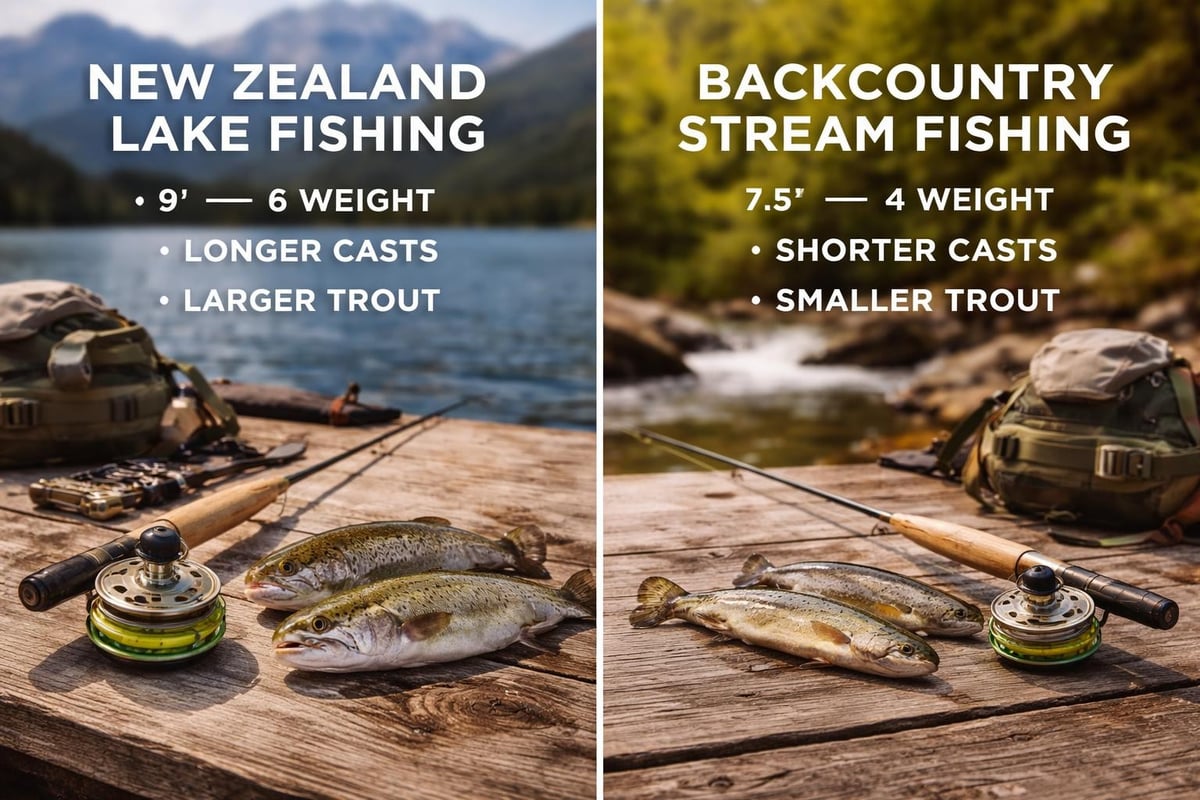
For small to medium streams, a 9-foot 4-weight or 5-weight rod provides ideal performance. These specifications allow precise casts to tight lies while maintaining enough backbone to handle fish up to 6 pounds. The lighter weight also reduces fatigue during long days exploring remote waters.
Larger rivers like the Clutha, Rangitikei, or Tongariro benefit from 9 to 9.5-foot rods in 5-weight or 6-weight configurations. The additional power helps punch casts into headwinds and provides better line control when nymphing deep runs with weighted flies and indicators.
New Zealand's lakes present unique challenges that influence rod selection. Rotorua's geothermal lakes, the massive Taupo fishery, and South Island hydro lakes all require equipment capable of covering extensive water and handling substantial fish.
A 9.5 to 10-foot rod rated for 6-weight or 7-weight line serves lake anglers well. The extra length improves line control when retrieving streamers or lures, while the additional power handles larger average fish sizes and assists in casting bulky flies considerable distances.
Wind represents a constant challenge on exposed lake surfaces. Fast-action rods cut through wind more effectively, and the additional weight rating (6-7 weight versus 4-5 weight) helps turn over larger flies and sinking lines when targeting deeper-holding trout.
The expansion of saltwater fly fishing in New Zealand has created demand for specialized equipment capable of handling powerful ocean species. Saltwater fly rods must resist corrosion, provide substantial lifting power, and endure the punishment delivered by hard-fighting fish.
New Zealand's coastline offers incredible opportunities for species like kahawai, kingfish, trevally, and snapper. These fish require substantially heavier equipment than freshwater applications.
Saltwater rods should feature corrosion-resistant components, including anodized or powder-coated reel seats, stainless steel guides with ceramic or titanium inserts, and sealed ferrules that prevent saltwater intrusion. After each saltwater session, thoroughly rinse your rod with fresh water and periodically check all connections for signs of corrosion.
Beyond the blank itself, the quality of components significantly affects new zealand fly rods performance and longevity. Guides, reel seats, grips, and ferrules all contribute to overall functionality.
Modern guide systems use lightweight, durable materials that reduce swing weight and improve casting efficiency. Snake guides remain standard for fly rods, but the quality of frames and inserts varies considerably between price points.
Premium rods feature hard chrome or titanium snake guides that resist wear from fly lines. The guide spacing and sizing affect how energy transfers through the rod during casting, with optimized spacing delivering smoother casts and better accuracy.
Reel seats secure your fly reel to the rod, and quality matters for both security and weight distribution. Anodized aluminum seats provide excellent durability while minimizing weight. Uplocking seats place the reel closer to your hand, improving balance, while downlocking configurations offer traditional aesthetics and functionality.
Cork grips remain the gold standard for fly rod handles due to cork's natural cushioning, moisture resistance, and comfortable feel during extended use. Full wells, half wells, and cigar grips each offer different ergonomics suited to various casting styles and hand sizes.
| Component | Budget Option | Mid-Range | Premium |
|---|---|---|---|
| Guides | Chrome-plated steel | Hard chrome | Titanium, ceramic inserts |
| Reel seat | Graphite | Anodized aluminum | Custom machined aluminum |
| Grip material | Composite cork | Quality cork | AAA flor-grade cork |
| Ferrules | Standard spigot | Reinforced | Precision-machined |
New Zealand manufacturers have established international reputations for producing exceptional fly rods tailored specifically to local conditions. Companies like Epic Fly Rods and others combine advanced materials science with intimate knowledge of Kiwi waters to create purpose-built equipment.
These locally-made new zealand fly rods often incorporate design features that address specific challenges faced by domestic anglers. Reinforced lower sections handle the stress of fighting large fish in powerful currents, while optimized actions suit the nymphing techniques popular throughout New Zealand rivers.
Supporting local manufacturers ensures you're getting equipment designed and tested in the exact conditions where you'll fish. The innovative designs from New Zealand companies often lead global trends in fly rod technology, bringing cutting-edge performance to anglers worldwide.
Proper maintenance extends the life of your fly rod investment and ensures consistent performance season after season. New Zealand's varied environments expose equipment to harsh conditions that accelerate wear without appropriate care.
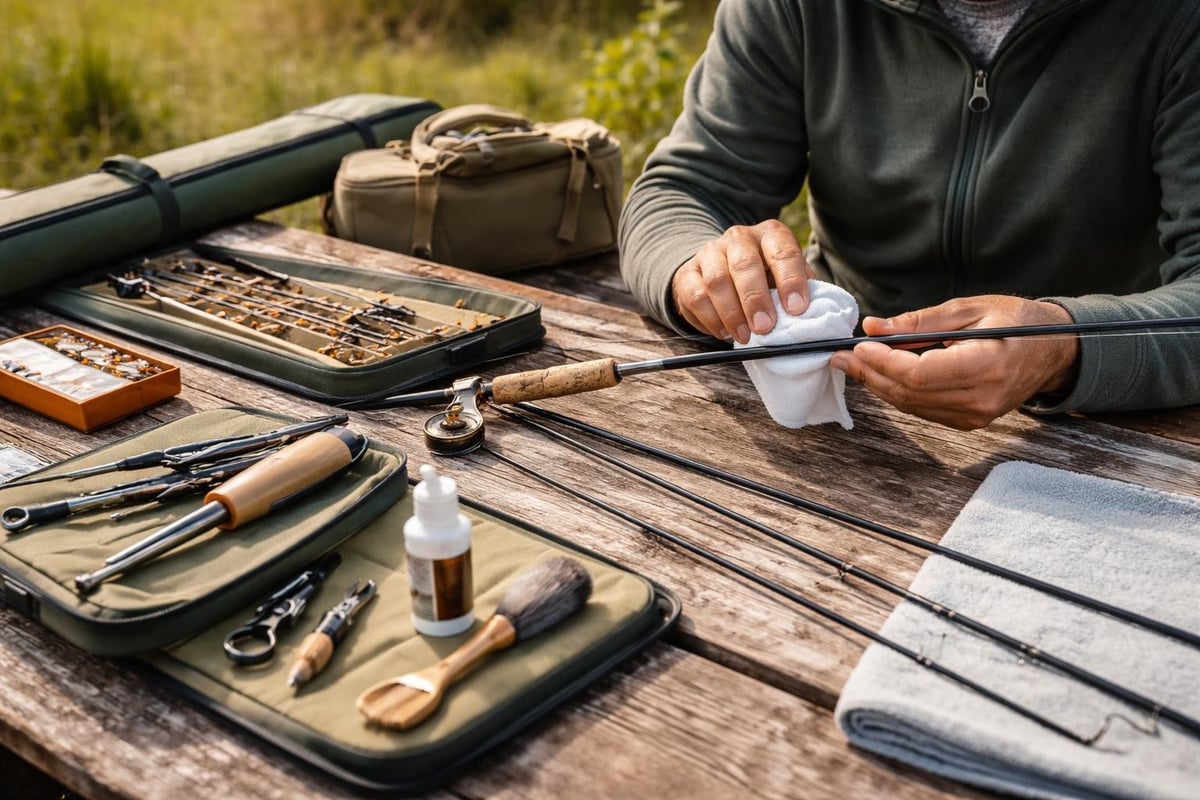
After each fishing session, wipe down your rod with a soft, damp cloth to remove dirt, sand, and residue. Pay special attention to ferrule connections, removing any grit that could damage the precision-fit joints. For saltwater use, thorough freshwater rinsing prevents corrosive salt buildup.
Store rods in protective tubes when transporting or storing long-term. Avoid leaving rods in hot vehicles where extreme temperatures can weaken epoxy bonds and damage rod finish. When storing multiple rods, avoid leaning them against walls where they might take a permanent bend or set.
Regular inspections catch minor issues before they become catastrophic failures. Run your fingers along the rod blank feeling for cracks, checks, or soft spots that indicate structural compromise. Inspect guide wraps for fraying thread and loose guides that need re-wrapping.
Check ferrule alignment by assembling the rod and sighting down its length. Misaligned sections create weak points and reduce casting efficiency. If ferrules become loose, a small application of ferrule wax restores proper fit without permanent modification.
Your fly rod represents just one component of an integrated system that includes fly lines, leaders, tippets, and reels. Optimizing the entire system delivers performance far exceeding any single premium component used with mismatched gear.
Selecting appropriate fly lines dramatically affects how new zealand fly rods perform. Modern lines come in numerous configurations designed for specific applications, from delicate dry fly presentations to deep nymphing and aggressive streamer fishing.
Weight-forward lines remain most popular because they concentrate weight in the forward section, facilitating easier casting and better distance. Double-taper lines provide delicate presentations and can be reversed when one end wears. Shooting heads and Skagit heads suit specialized applications like two-handed casting or delivering heavily weighted flies.
Line density variations expand your rod's versatility. Floating lines work for surface presentations and shallow nymphing. Sink-tip lines keep flies in productive zones when fishing deeper water. Full-sinking lines reach bottom in lakes and slow pools where large fish hold.
Balancing your rod with an appropriately sized reel affects casting comfort and fish-fighting capability. The reel should counterbalance the rod's weight, creating a system that feels neutral when held at the grip.
For trout rods (4-6 weight), reels need sufficient capacity for the fly line plus 50-100 meters of backing. Smooth drag systems matter more than brute stopping power, as gradual pressure tires fish without breaking light tippets.
Saltwater applications demand reels with sealed drags resistant to sand and salt intrusion. Larger arbor designs retrieve line faster, critical when kingfish or tuna make sustained runs. Corrosion-resistant materials like machined aluminum with anodized finishes withstand harsh marine environments.
New zealand fly rods span price ranges from under $200 for entry-level outfits to over $1,500 for premium handcrafted models. Understanding what drives these price differences helps you identify the best value for your specific needs and budget.
Entry-level rods sacrifice some performance characteristics but deliver adequate function for beginners developing casting skills and determining preferred fishing styles. These rods typically use lower-modulus graphite, simpler component packages, and less refined cosmetic finishes.
Mid-range rods ($400-$800) represent the sweet spot for most serious anglers. These models incorporate quality materials, proven designs, and components that balance performance with durability. Many experienced anglers fish mid-range rods exclusively, finding negligible performance differences compared to premium offerings.
Premium rods justify higher prices through advanced materials, refined actions, superior components, and often, handcrafted construction. These rods deliver marginal performance gains that matter most to expert casters and anglers pursuing demanding situations. The workmanship and attention to detail also contribute to longevity that amortizes higher initial costs over decades of use.
Serious anglers often maintain multiple rods covering different situations rather than attempting to find one perfect all-around tool. This approach optimizes performance while providing backup equipment and specialized options for varying conditions.
A three-rod collection handles virtually all New Zealand fishing scenarios:
This progression allows you to match equipment precisely to conditions while maintaining reasonable investment levels. As skills develop and fishing interests evolve, additions might include specialized nymphing rods, two-handed Spey rods for larger rivers, or additional saltwater weights for specific species.
New Zealand's best fishing often requires hiking into remote locations or traveling significant distances. Travel rods with four or more sections pack into compact cases that fit easily in backpacks or luggage compartments.
Modern multi-piece rods perform virtually identically to two-piece models, with properly designed ferrules maintaining blank integrity through multiple connections. When selecting travel rods, prioritize reputable manufacturers with proven multi-piece designs rather than budget options that compromise action and durability.
The fly rod industry continues evolving with material science advances and manufacturing innovations. Several trends are shaping new zealand fly rods available in 2026.
Nano-resin systems bond graphite fibers more efficiently, creating blanks with improved strength-to-weight ratios. These advanced resins resist micro-fracturing better than previous generations, extending rod lifespan even under demanding use.
Hybrid construction techniques combine different modulus graphite in strategic blank sections. Lower sections might use more robust, lower-modulus material for power and durability, while tip sections incorporate ultra-high-modulus graphite for sensitivity and rapid recovery. This segmented approach optimizes performance characteristics throughout the rod's length.
Component miniaturization reduces overall rod weight without sacrificing strength. Lighter reel seats, smaller guides with improved materials, and refined grip designs contribute to rods that swing effortlessly during long casting sessions while maintaining the backbone needed for landing substantial fish.
Anglers exploring the latest fishing innovations will find these technological advances delivering measurable performance improvements compared to previous generations of equipment.
Quality manufacturers back their new zealand fly rods with comprehensive warranties that protect your investment against defects and, in some cases, accidental breakage. Understanding warranty terms influences long-term value calculations when selecting rods.
Lifetime warranties against manufacturing defects represent the industry standard among premium brands. These warranties cover structural failures, component separations, and manufacturing flaws but typically exclude damage from misuse, accidents, or normal wear.
Many companies offer reasonably priced repair or replacement programs for accidental breakage. These programs acknowledge that fly rods encounter hazards from car doors, errant backcasts, and streamside mishaps beyond the angler's control. Repair costs typically represent 20-40% of original rod value, making coverage economically sensible for premium equipment.
Customer service quality varies significantly between manufacturers. Companies with responsive support teams, clear warranty processes, and readily available replacement sections demonstrate commitment to long-term customer relationships beyond the initial sale.
Maximizing your new zealand fly rods requires appropriate supporting equipment that protects your investment and enhances functionality. Several accessories prove essential for serious anglers.
Rod tubes protect rods during transport and storage. Hard cases with padded interiors safeguard rods during airline travel or vehicle transport over rough roads. Soft cases work well for day-to-day use and streamside protection from scratches and minor impacts.
Fly fishing vests and packs organize terminal tackle, flies, leaders, and accessories while keeping hands free for casting and fish handling. Modern sling packs offer quick access to frequently used items without the bulk of traditional vests.
Landing nets assist in securing fish while minimizing handling stress. Rubber mesh nets protect fish slime and prevent fly tangles better than traditional knotted netting. Working with quality fishing equipment suppliers ensures you're getting gear that stands up to New Zealand conditions.
Wading gear including boots, waders, and wading jackets extends your fishing season and provides access to productive water inaccessible from shore. New Zealand rivers often require wading to reach optimal casting positions and approach wary fish.
New zealand fly rods selection varies somewhat by region, reflecting differences in predominant species, water types, and fishing techniques popular in different areas.
North Island anglers often fish the Rotorua lakes, Taupo fishery, and excellent river systems like the Rangitikei and Mohaka. Lake fishing dominates, with streamer fishing and lure techniques requiring 6-7 weight rods capable of casting larger flies and sinking lines.
Saltwater opportunities abound along both coasts, with kahawai, kingfish, and trevally accessible from beaches, rocky shorelines, and estuaries. This proximity to productive saltwater fishing encourages North Island anglers to maintain dedicated 9-10 weight saltwater outfits alongside their freshwater gear.
South Island fishing centers on backcountry streams and sight-fishing to individual trout in crystal-clear water. This technical fishing rewards lighter rods (4-5 weight) capable of delicate presentations and precise casting to specific feeding lies.
Larger rivers like the Clutha provide opportunities for swinging flies and nymphing deep runs where 6-weight rods prove advantageous. The variety of water types within short distances encourages South Island anglers to carry multiple rod weights, changing outfits as they explore different river sections and techniques.
Professional guides provide invaluable insights into new zealand fly rods selection and technique refinement. Guided experiences allow anglers to test different rod weights, actions, and configurations before making purchase decisions.
Most guide services provide equipment for clients, offering opportunities to cast premium rods from various manufacturers in actual fishing conditions. This hands-on experience proves far more informative than showroom casting pools or brief handling in tackle shops.
Guides also demonstrate how subtle technique adjustments maximize specific rod characteristics. Learning to load rods properly, develop efficient casting strokes, and match presentation styles to rod actions accelerates skill development and helps identify equipment that suits your natural casting motion.
Responsible anglers consider environmental impacts when selecting fishing equipment. Several factors relate new zealand fly rods to conservation values and sustainable practices.
Catch-and-release fishing, now standard practice across most New Zealand fisheries, requires equipment capable of landing fish quickly to minimize stress and improve survival rates. Appropriately weighted rods prevent prolonged fights that exhaust fish beyond recovery.
Barbless hooks facilitate easier releases and reduce tissue damage. Using hooks designed for catch-and-release fishing complements quality rod equipment in supporting healthy fish populations.
Supporting manufacturers with demonstrated environmental commitments aligns purchase decisions with conservation values. Companies using recycled materials, minimizing waste in production processes, and supporting habitat restoration initiatives deserve consideration from environmentally conscious anglers.
Selecting the right fly rod for New Zealand's diverse fishing environments requires understanding rod specifications, construction quality, and how equipment matches specific conditions. Whether targeting backcountry trout or coastal gamefish, informed choices deliver better performance and more enjoyable experiences on the water. For anglers seeking comprehensive fishing gear beyond rods, Action Outdoors Limited provides an extensive range of New Zealand-made fishing equipment, nets, marine supplies, and accessories built to withstand demanding Pacific conditions, backed by the quality and service that comes from over three decades of manufacturing excellence.
Shop related products at Action Outdoors: Fishing Nets · Fishing Rods · Fishing Lures
Leave a comment