

Small Landing Nets: Essential Guide for 2026
Fishing success often hinges on the final moments when you bring your catch to hand. Whether you're angling in New Zealand's pristine rivers or fishing the Pacific coastline, having the right equipment for landing fish safely and efficiently makes all the difference. Small landing nets have become essential tools for anglers who prioritize portability, fish welfare, and practical functionality. These compact nets offer versatility across multiple fishing environments while maintaining the durability needed for both recreational and light commercial applications.
Understanding Small Landing Net Construction and Design
Small landing nets distinguish themselves through specific size parameters and construction features that balance functionality with portability. These nets typically feature hoop diameters ranging from 12 to 20 inches and handle lengths between 18 and 36 inches, making them ideal for wade fishing, kayak angling, and shore-based fishing where larger nets become cumbersome.
The construction quality of small landing nets directly impacts their performance and longevity. Hoop materials include aluminum alloys, fiberglass composites, and occasionally carbon fiber for premium models. Each material offers distinct advantages: aluminum provides excellent strength-to-weight ratios, fiberglass delivers flexibility that prevents breakage, and carbon fiber maximizes strength while minimizing weight.
Frame Geometry and Mesh Configuration
The shape of the net hoop significantly influences how effectively you can land fish. Teardrop profiles provide deeper bags that prevent fish from escaping during the netting process, while traditional circular hoops offer easier maneuvering in tight spaces. Understanding different net types and their applications helps anglers match their equipment to specific fishing scenarios.
Mesh materials have evolved considerably in recent years:
- Rubber-coated nylon mesh protects fish slime coating and reduces hook entanglement
- Knotless nylon mesh minimizes damage to delicate fins and scales
- Traditional knotted nylon offers durability for heavier catches and rough handling
- Micromesh options accommodate smaller species without loss through gaps
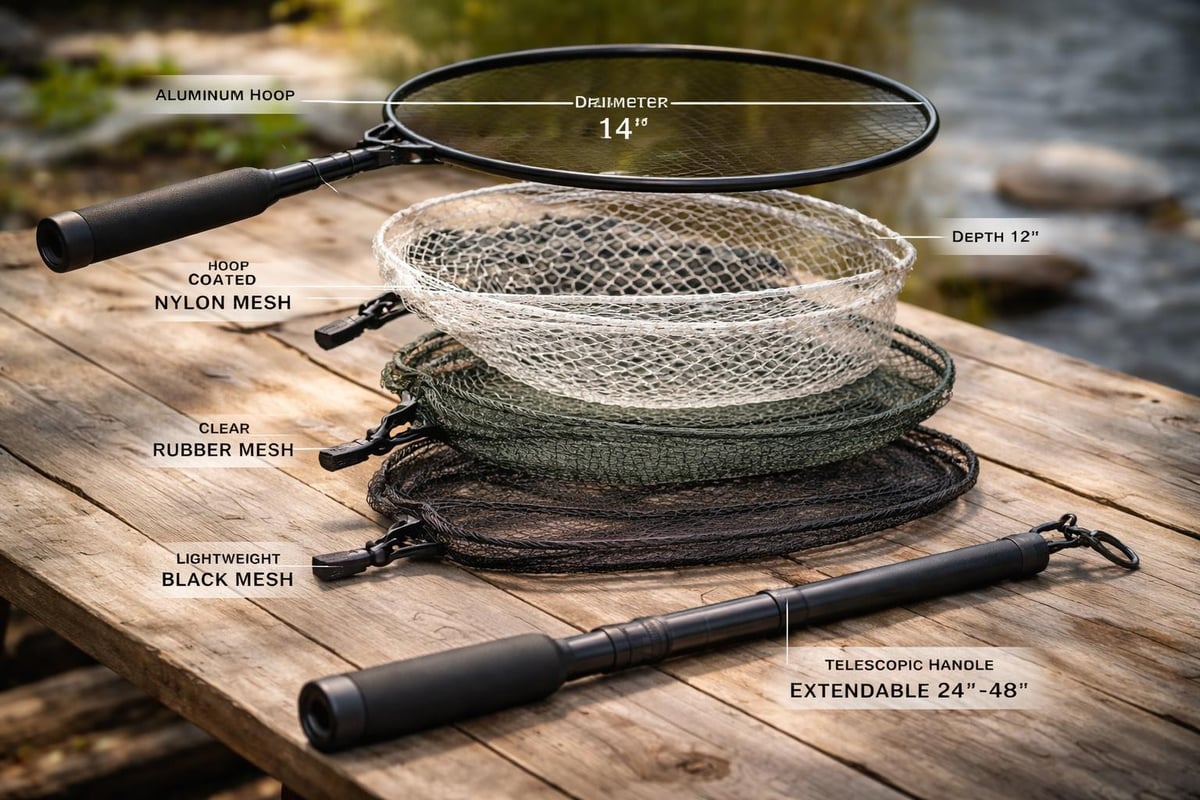
The bag depth matters more than many anglers realize. Shallow bags work well for quick catch-and-release but may allow aggressive fish to jump free. Deeper bags secure catches more reliably but require more storage space. Most small landing nets feature bags between 12 and 18 inches deep, providing adequate security without excessive bulk.
Selecting Small Landing Nets for Different Fishing Scenarios
Your fishing environment and target species should drive your small landing net selection. Freshwater stream anglers pursuing trout need different features than saltwater kayak fishers targeting snapper or kahawai. Specialized landing nets demonstrate how design variations accommodate diverse fishing applications.
Freshwater Stream and River Applications
Stream fishing demands compact, easily maneuverable small landing nets that won't snag on vegetation or rocks. Nets with 12 to 16-inch hoops and 18 to 24-inch handles provide optimal control in confined spaces. Rubber-coated mesh proves essential for catch-and-release fishing, protecting native species like brown trout and rainbow trout that populate New Zealand's waterways.
| Feature | Stream Fishing | Saltwater Fishing | Kayak Fishing |
|---|---|---|---|
| Hoop Size | 12-16 inches | 16-20 inches | 14-18 inches |
| Handle Length | 18-24 inches | 24-36 inches | 20-30 inches |
| Mesh Type | Rubber-coated | Knotless nylon | Rubber or nylon |
| Bag Depth | 12-15 inches | 15-18 inches | 14-16 inches |
| Weight | Under 1 lb | 1-1.5 lbs | Under 1.2 lbs |
Saltwater applications require corrosion-resistant materials and reinforced construction. Anodized aluminum frames and stainless steel hardware withstand harsh marine environments. Consider fishing equipment suppliers who understand Pacific Island fishing conditions when sourcing saltwater-appropriate gear.
Kayak and Small Boat Considerations
Kayak anglers face unique challenges that make small landing nets particularly valuable. Limited deck space necessitates compact storage solutions, while seated positions require nets that can reach the water surface easily. Telescoping handles or collapsible frames address these constraints effectively, and portable landing net designs showcase innovations in space-saving engineering.
Key features for kayak fishing:
- Magnetic release systems that attach to kayak hulls for quick access
- Floating handles that prevent loss if dropped overboard
- Attachment points for lanyards or retractable tethers
- Flat-folding frames that fit into rod holder compartments
- Non-slip grip materials for wet hand security
Shore-based fishing from rocks or jetties benefits from small landing nets with extended handles. The additional reach helps navigate wave action and rocky outcrops while maintaining compact dimensions for hiking to remote locations.
Maintenance and Longevity of Small Landing Nets
Proper maintenance extends the functional life of small landing nets significantly, protecting your investment and ensuring reliable performance when you need it most. Saltwater exposure, UV radiation, and physical stress all degrade net materials over time, but systematic care routines mitigate these effects.
After each saltwater use, thoroughly rinse all net components with fresh water. Salt crystals accumulate in mesh knots and frame joints, causing corrosion in metal parts and brittleness in synthetic materials. Pay particular attention to moving parts like hinges, locking mechanisms, and telescoping sections where salt can create friction and wear.
Mesh Inspection and Repair
Regular mesh inspection prevents unexpected failures during critical moments. Look for abrasion points where mesh contacts the frame, UV damage indicated by discoloration or stiffness, and developing tears at stress points near attachment areas.
Small tears in mesh can be repaired using marine-grade nylon thread and a basic needle. Larger damage requires mesh replacement, a straightforward process for most small landing nets. Many anglers maintain spare mesh bags as affordable insurance against equipment failure during multi-day fishing trips.
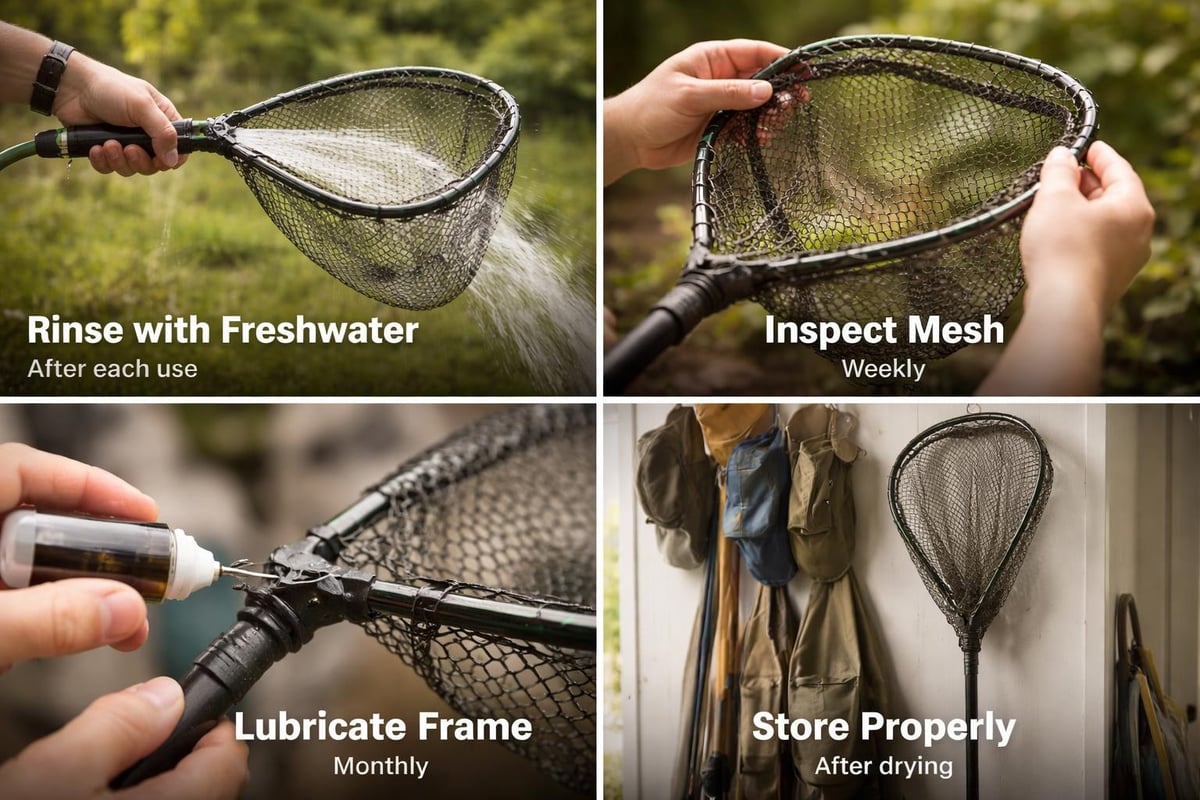
Frame maintenance varies by material. Aluminum frames benefit from occasional inspection of rivet points and frame welds. Apply marine grease to moving joints annually to prevent seizing. Fiberglass and carbon fiber frames require less maintenance but should be checked for stress cracks, particularly near high-load points.
Fish Handling Techniques with Small Landing Nets
Effective net usage requires technique as much as equipment quality. Small landing nets demand precise timing and positioning to secure fish successfully. The compact dimensions leave less margin for error compared to larger nets, making skillful handling essential.
Proper netting sequence:
- Maintain steady rod pressure to guide the fish toward the net
- Submerge the net completely before bringing the fish within range
- Lead the fish head-first into the net, never chase from behind
- Lift the net smoothly once the fish crosses the hoop
- Keep the net in the water during hook removal whenever possible
Never swing a fish through the air into the net. This practice stresses fish unnecessarily and risks injury from impact with the frame or the ground if you miss. Instead, maneuver the fish over the submerged net and lift together, supporting the fish's weight with water until the final moment.
Species-Specific Netting Considerations
Different fish species require adjusted netting approaches. Trout and salmon often make last-second runs when they see the net, requiring patience and readiness to extend line. Position the net further ahead than seems necessary, accounting for these escape attempts.
Flatfish like flounder present unique challenges due to their body shape. A wider, shallower net works better than a narrow, deep design. The commercial fishing nets available from experienced manufacturers often incorporate features refined through thousands of practical applications.
Toothy species demand extra caution. Keep hands away from the mesh when landing barracuda, kingfish, or similar predators. Use long-handled pliers for hook removal rather than risking injury by reaching into the net bag.
Material Selection and Environmental Considerations
The materials used in small landing nets carry implications beyond simple functionality. Environmental consciousness has driven innovation in fish-friendly materials, while durability requirements ensure nets withstand rigorous use without premature replacement that generates waste.
Rubber-coated mesh represents the gold standard for catch-and-release fishing. The soft coating protects the mucous layer that shields fish from infection and disease. Studies demonstrate that fish landed in rubber nets show significantly lower stress markers and higher survival rates post-release compared to those landed in traditional knotted nylon.
Sustainable Manufacturing Practices
Quality manufacturing processes reduce environmental impact through material efficiency and product longevity. New Zealand-made fishing nets exemplify manufacturing standards that prioritize both performance and environmental responsibility. Domestic production reduces shipping emissions while supporting local employment and expertise.
| Material | Durability | Fish Safety | Environmental Impact | Cost |
|---|---|---|---|---|
| Rubber-coated nylon | Excellent | Excellent | Moderate | High |
| Knotless nylon | Very Good | Very Good | Low | Moderate |
| Knotted nylon | Excellent | Fair | Low | Low |
| Natural cotton | Poor | Excellent | Very Low | Very Low |
| Silicone-coated | Very Good | Excellent | Moderate | Very High |
Handle materials also merit consideration. Sustainable hardwood handles from certified sources provide durability and aesthetic appeal while supporting responsible forestry. Handcrafted landing nets demonstrate how traditional materials and methods create products with decades-long service lives.
Aluminum and carbon fiber handles offer lighter weight but require energy-intensive manufacturing. The environmental equation balances production impact against longevity and performance benefits. A lightweight net encourages all-day carry, potentially increasing its utility and value over time.
Portability Features and Storage Solutions
The portability advantages of small landing nets multiply when paired with thoughtful storage solutions. Compact dimensions mean little if the net remains at home because carrying it proves inconvenient. Modern design innovations address this challenge through collapsible frames, retractable handles, and integrated attachment systems.
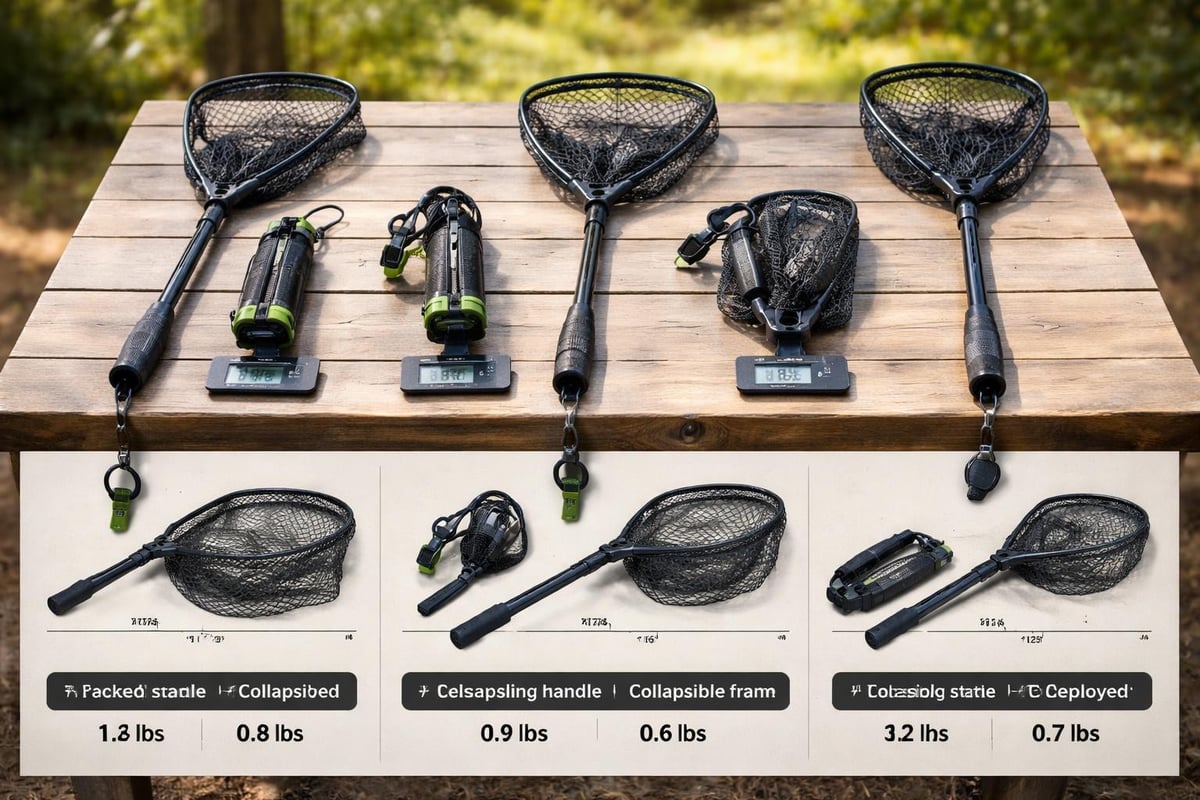
Collapsible frame designs fold to a fraction of their deployed size. Some models compress to under 12 inches in length, fitting easily into backpacks or tackle bags. The engineering challenges of creating strong, reliable folding mechanisms while maintaining structural integrity during use have produced increasingly sophisticated solutions.
Portability enhancement options:
- Telescoping handles that extend from 18 to 36 inches
- Detachable head designs with quick-release couplings
- Integrated belt clips for hands-free carrying
- Magnetic mounting systems for kayak and boat gunwales
- Protective sheaths that prevent mesh snagging during transport
Weight considerations become critical for anglers who hike to remote fishing locations. Every ounce matters when covering miles of terrain. Small landing nets weighing under one pound achieve sweet spots between functionality and portability, making them genuine do-everything tools rather than specialized equipment.
Matching Net Size to Target Species
Selecting appropriately sized small landing nets requires understanding your target species' typical dimensions and behavior. Oversized nets create unnecessary bulk, while undersized nets risk losing fish at the critical landing moment. The "small" category encompasses significant variation, and matching capabilities to needs optimizes performance.
General guidelines suggest net hoop diameter should exceed your target species' maximum width by at least 4 inches. A 16-inch hoop handles fish up to 12 inches wide comfortably, accommodating most recreational catches while remaining compact enough for easy handling. Consult fishing regulations and size limits to understand legal minimum sizes for your target species, ensuring your net accommodates keeper fish appropriately.
Pan-sized trout measuring 10-14 inches fit perfectly in nets with 14-16 inch hoops. Larger specimens require careful technique with smaller nets, potentially necessitating sizing up to 18-20 inch models that still qualify as "small" compared to salmon and steelhead nets exceeding 24 inches.
Multi-Species Versatility
Anglers targeting diverse species benefit from small landing nets with moderate dimensions that handle various catches. A 16-18 inch hoop with 15-inch bag depth proves remarkably versatile, landing everything from small trout to medium-sized saltwater species like snapper, kahawai, or trevally.
The fishing innovations emerging in 2026 include adaptive net designs with modular components. Interchangeable mesh bags in different materials and depths attach to universal frames, allowing customization for specific fishing situations without maintaining multiple complete nets.
Cost Considerations and Value Assessment
Small landing nets span a broad price spectrum, from budget models under $25 to premium handcrafted designs exceeding $300. Understanding what drives these price differences helps anglers make informed purchasing decisions aligned with their fishing frequency, target species, and performance expectations.
Entry-level small landing nets typically feature basic aluminum frames, knotted nylon mesh, and fixed-length foam handles. These nets perform adequately for occasional recreational fishing but may prove disappointing for serious anglers. Weak frame joints, thin mesh material, and poor handle ergonomics characterize budget options.
Mid-range models between $50 and $120 deliver substantially better performance and durability. Quality materials, thoughtful design features, and reliable construction justify the increased investment for regular anglers. Features like rubber-coated mesh, reinforced frame joints, and comfortable grip materials appear at this price point, and durability-focused fishing nets demonstrate how moderate pricing can deliver excellent value.
Premium Features and Customization
Premium small landing nets justify higher prices through superior materials, handcrafted construction, and aesthetic details. Carbon fiber frames, custom wood handles, and artisan mesh work create tools that blend functionality with artistic expression. Custom landing net creators produce one-of-a-kind pieces that become cherished parts of an angler's equipment collection.
Customization options include personalized measurements, wood species selection, frame shape preferences, and mesh specifications. These bespoke nets suit anglers with specific requirements that mass-produced models don't address. The investment makes sense for dedicated anglers who fish frequently and appreciate craftsmanship.
Value factors to consider:
- Fishing frequency and intensity of use
- Target species size and behavior characteristics
- Storage and portability requirements
- Maintenance capability and willingness
- Aesthetic preferences and equipment pride
Warranty coverage and manufacturer support influence long-term value significantly. Companies standing behind their products with comprehensive warranties and readily available replacement parts provide peace of mind that bargain imports cannot match. Sourcing from established fishing equipment providers ensures access to customer service and parts availability.
Regulations and Best Practices for Net Usage
Understanding legal requirements and ethical guidelines for small landing net usage protects both anglers and fish populations. Regulations vary by jurisdiction, species, and fishing location, making compliance research essential before deploying any fishing equipment. New Zealand's conservation-focused approach to fisheries management includes specific provisions regarding net usage in freshwater and marine environments.
Catch-and-release fishing imposes particular obligations on anglers. Using appropriate nets that minimize harm becomes both a legal and ethical requirement. Rubber-coated or knotless mesh meets these standards effectively, protecting fish slime coating and reducing scale damage during handling.
Some fisheries restrict net types or prohibit them entirely in designated catch-and-release zones. Familiarize yourself with local regulations before fishing unfamiliar waters. Conservation officers can impose substantial penalties for improper equipment usage, even if unintentional.
Fish Welfare Protocols
Beyond legal compliance, best practices ensure fish survival after release. Keep fish in water as much as possible during hook removal. Small landing nets with deep bags allow fish to remain partially submerged even when lifted, reducing air exposure time.
Minimize handling duration. Studies show that each additional minute of air exposure significantly decreases survival rates for released fish. Prepare your camera, measurement tools, and other equipment before landing the fish to streamline the process.
Support fish properly during photography and measurement. Never suspend fish vertically by the jaw alone, as this can damage internal organs. Cradle the body horizontally, supporting both the head and tail, or photograph the fish while still in the net bag submerged in water.
Selecting and using small landing nets effectively combines understanding equipment specifications, matching features to fishing scenarios, and maintaining gear properly. Whether you're pursuing trout in mountain streams, snapper from kayaks, or various species across diverse Pacific fishing grounds, the right small landing net enhances your success while protecting fish populations. Action Outdoors Limited manufactures high-quality fishing nets and marine equipment designed for New Zealand and Pacific Island conditions, offering the durability and performance serious anglers demand with quick turnaround times and expert service.
Leave a comment