
Email

New Zealand's rugged coastline offers some of the world's most rewarding surfcasting opportunities, from Northland's sweeping beaches to Canterbury's shingle shores. Selecting the right equipment makes the difference between landing trophy snapper and losing your rig to powerful currents. The top surfcasting rods for NZ beaches combine durability, casting distance, and sensitivity to handle our unique conditions, including strong winds, heavy swells, and powerful fish species. Whether you're targeting kahawai at Muriwai Beach or snapper at Ninety Mile Beach, understanding rod specifications ensures you're properly equipped for success.
The top surfcasting rods for NZ beaches typically range from 12 to 15 feet in length, with most anglers favoring 13 to 14-foot models for versatility. Length directly impacts casting distance, allowing you to reach productive gutters and channels beyond the breaking waves. Shorter rods around 12 feet suit protected beaches and smaller anglers, while 15-foot models excel in rough conditions where maximum distance is essential.
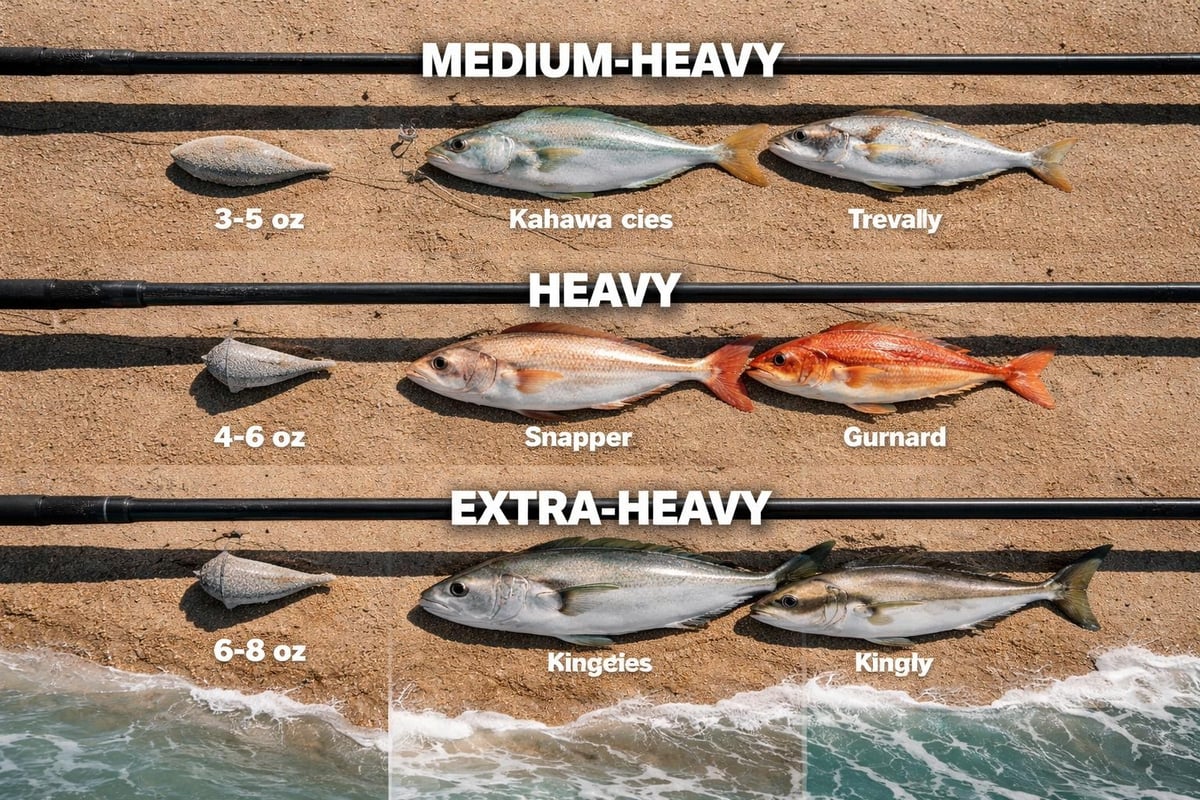
Rod power describes the backbone strength needed to cast heavy sinkers and handle large fish. Medium-heavy to heavy power ratings dominate New Zealand surfcasting, accommodating sinkers from 4 to 8 ounces depending on conditions. Fast action rods provide sensitivity for detecting bites while maintaining backbone for casting distance.
| Power Rating | Sinker Weight | Best For |
|---|---|---|
| Medium-Heavy | 3-6 oz | Calm conditions, smaller species |
| Heavy | 5-8 oz | Standard conditions, snapper, kahawai |
| Extra Heavy | 7-12 oz | Rough seas, large species |
The relationship between power and action determines how your rod performs. A heavy power rod with fast action loads quickly during the cast while providing tip sensitivity for bite detection. This combination proves ideal for New Zealand surfcasting conditions where reading subtle bites in turbulent water requires precision.
Modern surfcasting rods utilize carbon fiber composites that balance strength with weight reduction. High-modulus carbon constructions deliver exceptional sensitivity and power-to-weight ratios, though they require careful handling to prevent breakage on rocky shores. Composite rods blending carbon and fiberglass offer increased durability for rugged New Zealand conditions.
Guide quality significantly impacts casting performance and line management. Stainless steel or titanium oxide guides resist saltwater corrosion while reducing friction during casts. The guide configuration should feature gradually decreasing sizes from butt to tip, facilitating smooth line flow.
Fixed reel seats provide superior stability for heavy-duty applications, while sliding seats allow custom positioning for different casting styles. Ergonomic handles measuring 24 to 30 inches accommodate two-handed casting techniques essential for achieving maximum distance. Cork and EVA foam remain popular grip materials, with EVA offering better durability in harsh marine environments.
Anglers seeking portable solutions might consider telescopic options, though traditional two-piece designs generally provide better performance. For those interested in compact alternatives, our guide to new fishing equipment for 2026 explores innovative portable designs.
Several manufacturers have developed surfcasting rods specifically engineered for New Zealand conditions. These models consistently perform across diverse beach environments from Northland to Southland.
Mojo Silver Bullet 1403 stands out as a 14-foot fast action rod designed for serious surfcasters. Its heavy power rating handles large snapper and kingfish while maintaining sensitivity for detecting tentative bites. The rod's construction balances flexibility in the tip with substantial backbone for fighting powerful fish in strong currents.
The Mojo Thunderbolt Heavy represents another excellent choice, particularly for anglers facing challenging conditions. This robust surfcasting rod delivers exceptional casting distance and fish-fighting power. Its reinforced construction withstands the rigors of New Zealand's exposed beaches where equipment faces constant stress from wind, sand, and saltwater.
Daiwa's New Zealand-specific range includes models engineered for local conditions. Their surf series offerings incorporate advanced materials and guide systems optimized for long-distance casting with heavy sinkers. These rods feature corrosion-resistant components that endure prolonged saltwater exposure.
For anglers seeking quality without premium pricing, several mid-range options deliver impressive performance. These rods typically feature:
Mid-range rods often represent the best value for recreational anglers who fish regularly but don't require cutting-edge materials. They perform reliably in typical conditions while remaining budget-conscious.
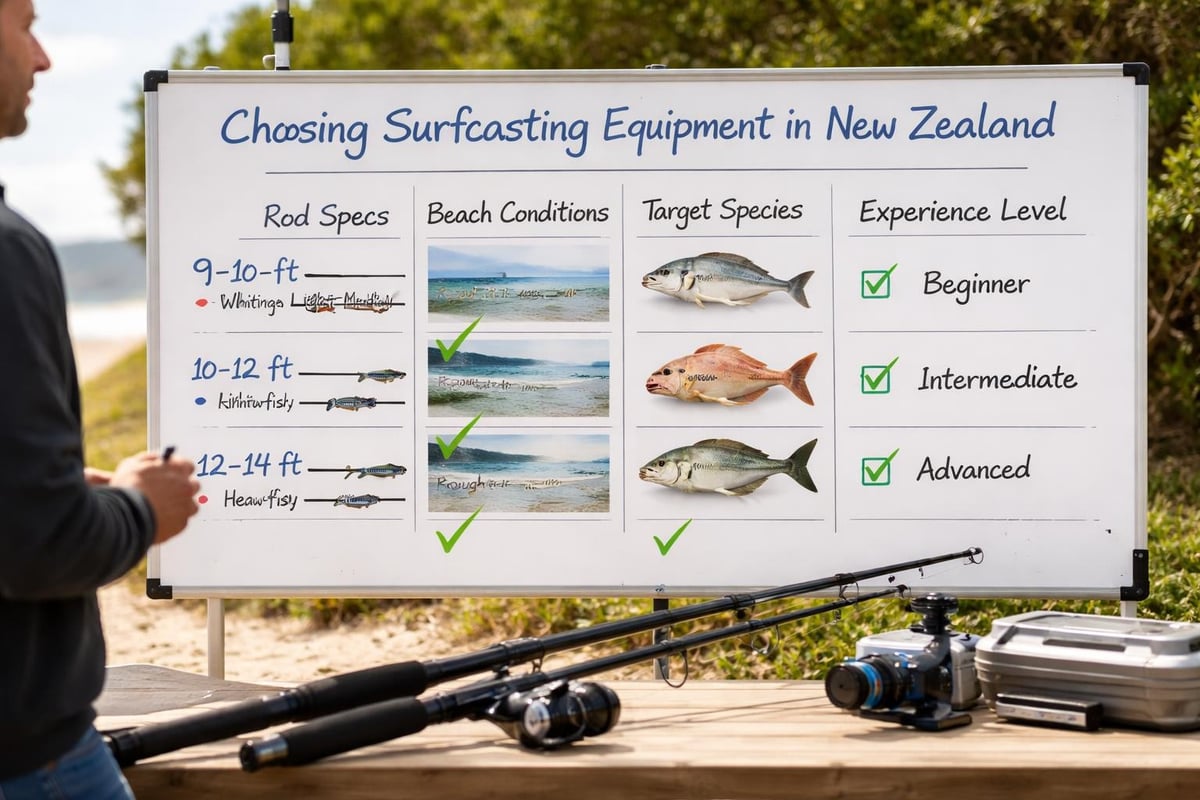
The top surfcasting rods for NZ beaches adapt to varying environments encountered across our coastline. Sandy beaches with gradual slopes typically require longer rods for reaching deeper water beyond the surf zone. West Coast beaches like Muriwai and Piha demand rods capable of casting 100 meters or more to reach productive fishing zones.
Rocky platforms and boulder beaches present different challenges. Shorter, more powerful rods around 12 to 13 feet provide better control when navigating equipment around rocks. The increased backbone helps lift fish quickly, preventing them from seeking refuge in rock crevices.
| Beach Type | Ideal Length | Power Rating | Primary Species |
|---|---|---|---|
| Open sand | 13-15 ft | Heavy | Snapper, kahawai, trevally |
| Protected bays | 12-13 ft | Medium-heavy | Gurnard, flounder, small snapper |
| Rocky platforms | 12-13 ft | Heavy to extra-heavy | Snapper, kingfish, blue cod |
| Estuary mouths | 13-14 ft | Medium-heavy to heavy | Kahawai, mullet, flounder |
Understanding why some rods don't achieve their full casting potential helps anglers select appropriate equipment. Factors including rod loading technique, line quality, and sinker aerodynamics all influence casting distance beyond the rod's inherent capabilities.
Different fish species demand specific rod characteristics. Snapper fishing requires heavy power rods with substantial backbone to extract these powerful fish from rough terrain. Snapper typically range from 1 to 5 kilograms in the surf, though trophy specimens exceeding 10 kilograms occasionally appear.
Kahawai present different challenges with their aggressive strikes and sustained runs. Medium-heavy to heavy rods with fast action tips detect their distinctive bites while providing fighting power. These silver speedsters frequently school along beaches during summer months, offering exciting action for properly equipped anglers.
Targeting kingfish, bronze whaler sharks, or large rays requires extra-heavy power rods capable of handling 8 to 12-ounce sinkers and extreme fish-fighting stress. These specialized applications demand premium construction and robust components that withstand punishment few freshwater rods ever encounter.
When pursuing diverse species, versatility becomes paramount. A 13 to 14-foot heavy power rod with fast action covers most situations encountered on New Zealand beaches. This configuration allows anglers to switch between targeting smaller species like kahawai and larger quarry like snapper without changing equipment.
Proper rigging techniques complement quality rod selection. Learning about effective surfcasting rigs and techniques maximizes your equipment's potential. Terminal tackle configurations significantly influence presentation and hookup ratios across different species and conditions.
The top surfcasting rods for NZ beaches require supporting equipment to perform optimally. Quality reels with corrosion-resistant construction and smooth drag systems match your rod's capabilities. Spinning reels in the 6000 to 8000 size range suit most surfcasting applications, holding adequate line capacity for long casts and powerful fish runs.
Modern braided lines offer superior casting distance and sensitivity compared to monofilament. Braid's thin diameter reduces wind resistance and water drag, allowing smaller sinkers in most conditions. A 20 to 30-pound braid mainline with a monofilament or fluorocarbon shock leader provides optimal performance.
The shock leader absorbs casting stress and provides abrasion resistance near the sinker and hooks. Leaders should measure approximately twice your rod length, calculated as follows:
Monofilament leaders between 30 and 60 pounds suit most applications, with heavier options for rocky environments or large species. The leader's slight stretch cushions hook sets and reduces pulled hooks during fights.
Saltwater's corrosive nature demands diligent maintenance. After each session, rinse your rod with fresh water, paying particular attention to guides and reel seat threads. Remove the reel before rinsing to prevent water entering internal mechanisms. Wipe down the rod with a soft cloth and allow complete drying before storage.
Store rods horizontally or vertically in a cool, dry location away from direct sunlight. UV exposure degrades rod blank materials over time, reducing strength and flexibility. Rod sleeves or tubes protect against physical damage during transportation and storage. For anglers who maintain their own equipment, quality materials like those used in fishing net repairs demonstrate the importance of proper maintenance supplies.
Even the finest equipment underperforms without proper casting technique. The overhead thump cast remains the standard method for surfcasting, delivering maximum distance with reasonable accuracy. This technique involves:
Pendulum casting achieves greater distances but requires extensive practice and open beach space. This advanced technique generates additional rod loading through a swinging motion before the main cast. Competitive surfcasters regularly exceed 200 meters using pendulum casts, though recreational anglers typically manage 100 to 150 meters with standard techniques.
Body positioning significantly affects casting performance. Plant your feet shoulder-width apart with your dominant foot slightly back. Rotate your hips and shoulders through the cast, transferring body weight from back foot to front. This full-body motion generates more power than arm strength alone.
Several errors reduce casting distance and accuracy:
Practicing with lighter sinkers on open beaches builds muscle memory without the fatigue of heavier weights. Video recording your casting sessions reveals technical flaws difficult to detect otherwise. Many experienced anglers benefit from periodic technique reviews, as bad habits develop gradually over time.
Selecting appropriate bait enhances your overall success beyond equipment choice. Learning about the top baits for New Zealand surfcasting complements your rod selection by optimizing presentation for target species. Fresh baits generally outperform frozen alternatives, particularly for finicky species like snapper.
New Zealand's diverse climate creates distinct fishing seasons requiring equipment adjustments. Summer surfcasting (December through February) typically involves calmer conditions and smaller sinkers, allowing medium-heavy power rods to excel. Target species include kahawai, trevally, and smaller snapper actively feeding in warmer water.
Winter months bring rougher seas and larger swells demanding heavy to extra-heavy power rods. June through August sees trophy snapper moving into the surf zone, particularly along the upper North Island. These cooler months produce fewer but larger fish, justifying robust equipment capable of handling substantial specimens.
Northland's Ninety Mile Beach and Karikari Peninsula offer exceptional surfcasting for snapper, trevally, and occasional kingfish. These locations favor 14 to 15-foot heavy power rods for reaching distant channels and handling strong currents. Bay of Plenty beaches including Matata and Papamoa produce excellent kahawai fishing during summer, with shorter 12 to 13-foot rods providing adequate performance.
West Coast locations like Muriwai, Piha, and Raglan face consistent swells requiring maximum casting distance. Fifteen-foot rods with heavy power ratings prove most effective, particularly during autumn when snapper aggregate before moving offshore.
Canterbury's shingle beaches present unique challenges with steep profiles and strong undertows. Fourteen-foot heavy power rods cast effectively while maintaining control in turbulent conditions. Otago and Southland beaches offer excellent blue cod opportunities from rocky platforms where 12 to 13-foot rods provide maneuverability.
The top surfcasting rods for NZ beaches must accommodate our country's varied coastal geography. What works perfectly on one beach may prove suboptimal elsewhere. Anglers fishing diverse locations benefit from maintaining two rods: a 13-foot heavy power model for general use and a specialized option for specific conditions or target species.
Premium surfcasting rods command prices from $300 to $800, delivering cutting-edge materials and construction. These investments prove worthwhile for dedicated anglers fishing regularly in demanding conditions. High-end rods typically feature:
Mid-range options between $150 and $300 represent excellent value for most recreational anglers. These rods incorporate quality materials and construction at accessible prices, performing reliably across typical surfcasting situations. The performance gap between mid-range and premium models often matters less than angler skill and technique.
| Price Range | Typical Features | Best For |
|---|---|---|
| Under $150 | Basic carbon/glass composite, standard guides | Beginners, occasional use |
| $150-$300 | Quality carbon construction, stainless guides | Regular recreational anglers |
| $300-$500 | High-modulus carbon, premium guides | Serious enthusiasts |
| Over $500 | Competition-grade materials, advanced components | Competitive and specialist anglers |
Budget-conscious anglers should prioritize rod performance characteristics over brand prestige. A well-designed mid-range rod often outperforms poorly matched premium equipment. Consider your fishing frequency, target species, and preferred locations when establishing budget parameters.
For those exploring broader fishing innovations, our coverage of exciting new fishing technologies for 2026 highlights emerging equipment trends. While traditional surfcasting rods remain essential, complementary technologies enhance overall fishing success.
The top surfcasting rods for NZ beaches form part of an integrated system including reels, line, terminal tackle, and accessories. System compatibility ensures each component performs optimally without creating weak points. A premium rod paired with an inadequate reel compromises overall performance regardless of rod quality.
Calculate total system investment including rod, reel, line, spare spools, rod holders, tackle boxes, and safety equipment. A complete quality setup typically costs between $500 and $1,200, with premium systems exceeding $2,000. This initial investment provides years of reliable service with proper maintenance.
Essential supporting equipment includes:
Beach fishing presents inherent risks from waves, currents, and weather. Carrying appropriate safety equipment proves essential, particularly when fishing remote locations. A comprehensive first aid kit for outdoor activities should accompany every surfcasting session, addressing common injuries like hook punctures, cuts, and marine stings.
Transport considerations matter when fishing multiple locations. Rod tubes protect equipment during vehicle travel, preventing damage from shifting loads or accidental impacts. Roof-mounted rod carriers accommodate longer surfcasting rods that exceed most vehicle interior dimensions. Secure mounting prevents equipment loss on rough roads accessing remote beaches.
Selecting the top surfcasting rods for NZ beaches requires balancing specifications, construction quality, and budget considerations with your specific fishing applications. Whether targeting snapper on Northland's sweeping sands or kahawai along Canterbury's shingle shores, appropriate equipment dramatically improves your success and enjoyment. While Action Outdoors Limited specializes in fishing nets and marine equipment rather than rods, their comprehensive range of fishing and marine supplies supports complete surfcasting systems with quality accessories, ropes, and rigging components that complement your rod selection perfectly.
Leave a comment