
Email

Selecting the right boat fishing nets requires understanding the specific fishing method, target species, water conditions, and regulatory requirements that apply to your operation. From small-scale recreational fishers to large commercial operations across the Pacific, boat fishing nets serve as essential tools that determine the success, efficiency, and sustainability of fishing activities. Whether you're pursuing mullet in shallow coastal waters or targeting tuna in deep offshore zones, understanding the nuances of different net types, materials, and configurations ensures you maximize your catch while operating within legal parameters and maintaining environmental responsibility.
Boat fishing nets encompass a wide range of specialized equipment designed for deployment from watercraft. The primary categories include seine nets, trawl nets, gill nets, cast nets, and surrounding nets, each engineered for specific fishing techniques and target species.
Seine nets work by encircling schools of fish, with boats playing a crucial role in deployment and retrieval. These nets extend vertically in the water column and can stretch hundreds of meters in length. Seine fishing operations require coordination between vessels and careful attention to water depth, current patterns, and fish behavior.
The fundamental construction of boat fishing nets involves several key components:
Modern boat fishing nets utilize advanced synthetic materials that offer superior durability in saltwater conditions. Nylon provides excellent strength-to-weight ratios and abrasion resistance, making it ideal for operations involving rocky bottoms or coral structures. Polyethylene offers lower cost and reduced water absorption, which means lighter nets when retrieved and faster drying times between deployments.
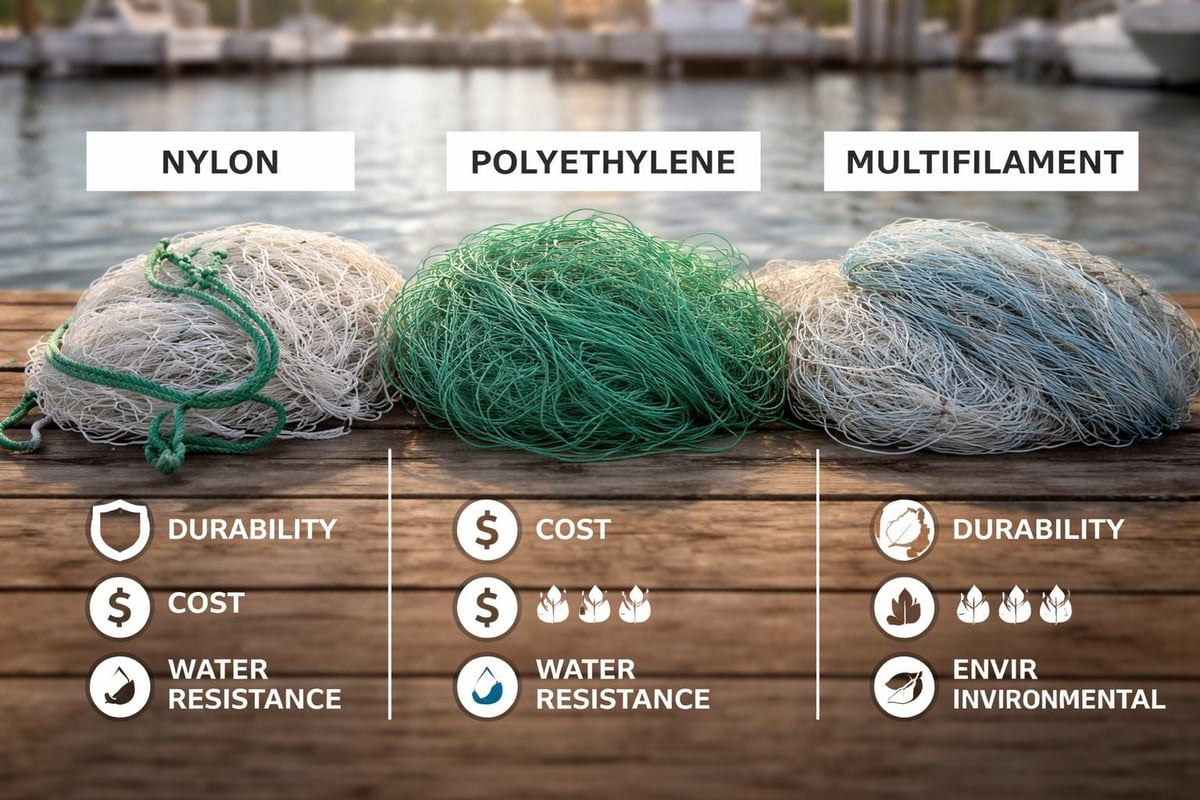
Multifilament netting creates nearly invisible barriers in water, increasing catch rates for wary species. This material proves particularly effective in clear water conditions where fish can detect thicker monofilament strands. However, multifilament requires more careful handling and maintenance to prevent tangling and damage.
| Material Type | Strength Rating | Water Absorption | UV Resistance | Best Applications |
|---|---|---|---|---|
| Nylon | Excellent | Moderate | Good | Trawl nets, heavy-duty seine |
| Polyethylene | Very Good | Low | Excellent | Gill nets, aquaculture |
| Multifilament | Good | High | Moderate | Clear water fishing, sensitive species |
The choice of material directly impacts operational efficiency and longevity. For commercial operations in the Pacific region, where intense UV exposure and warm waters accelerate degradation, selecting UV-stabilized materials extends net lifespan by 30-40% compared to standard synthetics.
Trawling represents one of the most productive commercial fishing methods globally. Trawl nets attach to boats via towing cables and drag through the water at controlled speeds. Bottom trawls scrape along the seafloor, collecting groundfish species, while mid-water trawls target schooling fish in open water columns.
Trawl net design includes:
Commercial trawl operations require robust boat fishing nets capable of withstanding tremendous forces. Modern vessels deploy nets exceeding 100 meters in length, with opening heights of 10-15 meters. The constant friction against seafloor substrates demands reinforced webbing at contact points and regular inspection protocols.
Gill nets function by entangling fish as they attempt to swim through mesh panels. These boat fishing nets hang vertically in the water column, held at the surface by floats and weighted at the bottom. The mesh size determines which species become caught, as fish can only penetrate until their gills catch in the webbing.
Deployment methods vary based on target species and water conditions. Drift gill nets move with currents while attached to drifting boats, covering large areas during a fishing session. Set gill nets anchor to the bottom in fixed locations, marked with buoys for later retrieval.
Understanding fishing net regulations is essential, as many jurisdictions impose restrictions on gill net length, mesh size, and deployment locations. New Zealand fishers must stay current with evolving regulations that protect marine ecosystems while supporting sustainable harvest.
Cast nets represent the most portable boat fishing nets, ideal for capturing baitfish or small food species in shallow waters. The circular net design features weighted perimeters that sink rapidly when thrown, trapping fish underneath before the fisher retrieves the net via attached lines.
Effective cast net operation from boats requires:
Small-scale commercial operations and recreational fishers value cast nets for their versatility and minimal equipment requirements. Modern cast nets feature monofilament mesh that remains nearly invisible in water, significantly improving catch rates compared to older multifilament designs.
Proper sizing of boat fishing nets directly affects fishing efficiency, fuel consumption, and catch quality. Oversized nets require excessive power to deploy and retrieve, while undersized equipment limits potential harvest and may miss target species entirely.
Mesh size determines selectivity, allowing juvenile fish to escape while retaining mature specimens. Regulatory authorities establish minimum mesh sizes for different fisheries to protect breeding populations and ensure sustainable harvest levels.
Common mesh sizes for boat fishing nets include:
Checking current New Zealand fishing regulations ensures compliance with mesh size requirements for your target species and fishing zones. Regulations change periodically based on stock assessments and conservation priorities.
Calculating appropriate net dimensions requires analyzing:
For coastal mullet fishing, nets ranging from 1.2 to 1.4 meters deep with lengths between 20-100 meters provide optimal coverage. Deeper nets prove necessary for offshore operations targeting species that inhabit mid-water zones or near-bottom structures.
Proper maintenance extends boat fishing nets' operational lifespan by years and prevents expensive mid-season failures. Commercial operators running multiple nets simultaneously require systematic maintenance schedules that address wear patterns before catastrophic damage occurs.
After each use, boat fishing nets require thorough rinsing with fresh water to remove salt deposits, organic matter, and debris. Salt crystals accelerate fiber degradation, while organic buildup attracts bacteria that weaken synthetic materials. High-pressure washing systems expedite this process for large commercial nets.
Inspection focuses on:
Minor repairs completed immediately prevent small tears from expanding into major failures during deployment. Carrying repair twine, needles, and replacement webbing allows on-board fixes between fishing sessions.
Proper storage protects boat fishing nets from UV exposure, rodent damage, and mildew formation. Commercial operations utilize specialized net drums or reels that prevent tangling and facilitate rapid deployment. Smaller operations may hang nets in covered areas or store them in breathable bags away from direct sunlight.
| Storage Method | Protection Level | Cost | Best For |
|---|---|---|---|
| Net Drums | Excellent | High | Commercial fleets |
| Hanging Racks | Good | Moderate | Regular operations |
| Breathable Bags | Fair | Low | Occasional use |
| Sealed Containers | Poor (moisture risk) | Low | Not recommended |
Climate-controlled storage proves particularly valuable in tropical Pacific regions where high humidity promotes mildew growth. Ensuring nets are completely dry before storage prevents fungal damage that compromises fiber strength.
Operating boat fishing nets within legal frameworks protects marine ecosystems while ensuring continued access to fishing grounds. Regulations address net specifications, deployment methods, restricted areas, and protected species considerations.
New Zealand's fishing regulations establish detailed requirements for commercial and recreational net fishing. These include restrictions on net length, mesh size minimums, prohibited areas, and seasonal closures that protect spawning populations.
Commercial operators must maintain detailed records of:
Recreational fishers face simpler requirements but must still comply with mesh size regulations, catch limits, and restricted zone designations. Staying informed about regulation changes through official fisheries departments prevents costly violations and supports conservation objectives.
Responsible use of boat fishing nets minimizes ecological impact through several practices. Bycatch reduction devices allow non-target species to escape before entering the cod end. Turtle excluder devices (TEDs) prove particularly important in tropical waters where endangered sea turtles inhabit fishing zones.
Lost or abandoned nets create "ghost fishing" scenarios where equipment continues catching marine life indefinitely. Proper equipment maintenance, secure attachment systems, and retrieval protocols prevent this environmental damage. When net loss occurs, reporting locations to fisheries authorities enables recovery efforts that remove hazards from marine environments.
Innovative conservation approaches, such as underwater structures that deter illegal trawling, demonstrate creative solutions to protect sensitive marine habitats while allowing sustainable fishing in appropriate zones.
Modern boat fishing nets incorporate technological advances that improve catch rates, reduce fuel consumption, and enhance crew safety. These innovations transform traditional fishing methods into precision operations guided by real-time data.
Fish-finding sonar enables captains to locate schools before deploying nets, reducing unproductive sets and fuel waste. Modern systems display fish depth, school density, and species characteristics, allowing operators to adjust net configurations for optimal positioning.
Advanced multibeam sonar creates three-dimensional images of underwater terrain, helping captains avoid snags that damage expensive netting. This technology proves especially valuable when fishing near rocky outcrops, coral formations, or artificial reef structures.
Sensors attached to boat fishing nets transmit real-time data about:
This information allows captains to optimize towing speed, adjust trawl doors, and determine ideal retrieval timing. Preventing net overfilling reduces the risk of tears and makes catch handling safer for crew members.
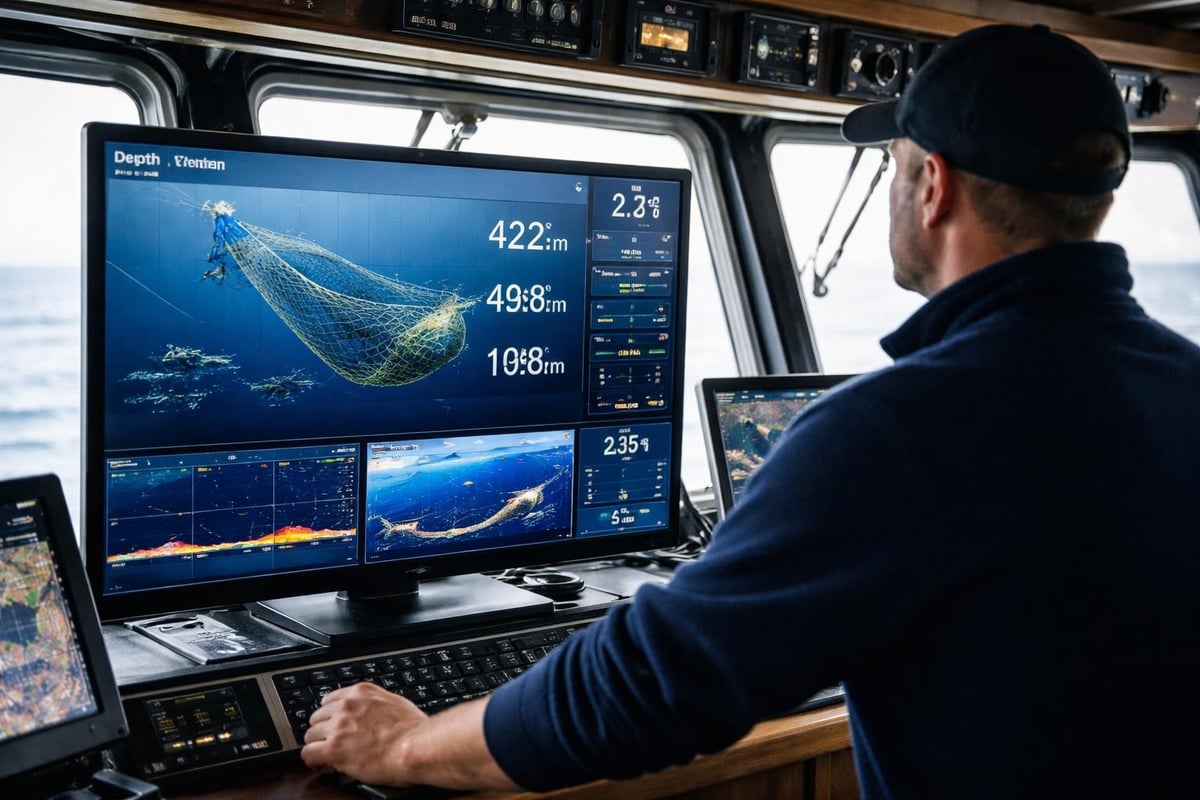
Exploring fishing innovations for 2026 reveals additional technological developments that enhance operational efficiency and sustainability.
Pacific Island fisheries present unique challenges requiring specialized boat fishing nets designed for tropical waters, coral environments, and diverse target species. Water clarity, temperature, and predator pressure influence net selection decisions differently than temperate zone operations.
Warm tropical waters accelerate biological fouling, with algae, barnacles, and other organisms colonizing net surfaces more rapidly than in cooler climates. This fouling increases drag, reduces catch efficiency, and accelerates material degradation. Selecting anti-fouling treated netting or establishing frequent cleaning schedules maintains optimal performance.
UV intensity in equatorial regions exceeds that of higher latitudes, demanding superior UV stabilization in synthetic fibers. Standard nylon deteriorates 40-50% faster in intense tropical sunlight compared to temperate conditions. Premium UV-stabilized materials justify their higher initial cost through extended operational lifespans.
Pacific small-scale fisheries often target multiple species across diverse habitats. This versatility requires boat fishing nets that accommodate varying mesh sizes, depths, and deployment methods. Modular net designs allow operators to reconfigure equipment based on seasonal availability and market demand.
Understanding surrounding net techniques provides additional flexibility for targeting schooling species in open water. These methods prove particularly effective for pelagic species that congregate around fish aggregation devices (FADs) or natural oceanographic features.
Boat fishing nets serve both commercial operations and recreational fishers, though design priorities and performance requirements differ significantly between these applications. Understanding these distinctions ensures appropriate equipment selection for intended use.
Commercial boat fishing nets prioritize durability, capacity, and operational efficiency. Professional fishers require equipment that withstands daily use, handles large catch volumes, and minimizes downtime for repairs. Investment in premium materials and construction methods proves cost-effective through reduced replacement frequency and improved catch consistency.
Fleet operations benefit from standardized net specifications that simplify inventory management, crew training, and maintenance protocols. When multiple vessels use identical equipment configurations, spare parts inventory, repair expertise, and operational knowledge transfer efficiently across the organization.
Recreational fishers and community operations typically deploy boat fishing nets less frequently, allowing lower-cost materials and simpler designs. However, quality construction remains important for safety and reasonable longevity. A well-maintained recreational net should provide 5-10 years of occasional use with proper care.
Community fisheries programs in Pacific Island nations often rely on wholesale fishing accessories suppliers who understand local needs and provide culturally appropriate equipment at accessible price points.
Ready-to-use boat fishing nets arrive with all components assembled and tested, enabling immediate deployment. However, many operators require custom configurations to address specific vessel characteristics, target species, or fishing techniques.
Standard boat fishing nets include:
These configurations cover common fishing scenarios and provide excellent value for operators with typical requirements. Manufacturers like Action Outdoors Limited produce over 350,000 meters annually, ensuring consistent quality across standard product lines.
Custom net building addresses unique operational requirements, including:
Working with experienced manufacturers ensures custom specifications achieve intended performance characteristics. Engineering expertise prevents common design mistakes that compromise efficiency or create safety hazards during deployment and retrieval.
Operating boat fishing nets safely and effectively requires comprehensive training that addresses deployment techniques, maintenance procedures, and emergency response protocols. Experienced crew members significantly reduce equipment damage, improve catch rates, and maintain safer working conditions.
Proper deployment begins with pre-fishing checks that verify equipment integrity, attachment security, and communication systems functionality. Crew members must understand their specific roles during net deployment, including timing of releases, management of lines, and monitoring for snags or entanglements.
Wind and current conditions dramatically affect deployment success. Experienced operators position vessels to use natural forces advantageously, reducing strain on equipment and improving net positioning relative to fish schools. Understanding local oceanographic patterns develops through experience and consultation with veteran fishers.
Equipment failures, weather changes, and unexpected underwater obstructions create emergency situations requiring rapid, coordinated responses. Training programs should address:
Regular emergency drills maintain crew readiness and identify procedural weaknesses before actual incidents occur. Documentation of near-miss events provides valuable learning opportunities that prevent future accidents.
Boat fishing nets represent significant capital investments, particularly for commercial operations deploying multiple specialized nets. Evaluating total cost of ownership rather than initial purchase price provides more accurate economic analysis.
Purchase price varies based on:
Financing options may include equipment leasing, cooperative purchasing through fishing associations, or government programs supporting small-scale commercial fisheries. Pacific Island development organizations sometimes provide equipment grants or subsidized purchasing programs for community fishing operations.
Ongoing expenses include:
| Cost Category | Annual Percentage of Initial Investment |
|---|---|
| Routine maintenance | 5-8% |
| Repairs (average) | 10-15% |
| Cleaning and storage | 2-3% |
| Replacement components | 3-5% |
| Total annual costs | 20-31% |
Well-maintained equipment trends toward the lower end of this range, while operations experiencing rough bottom conditions or inadequate storage facilities face higher maintenance expenses. Establishing dedicated maintenance budgets prevents deferred repairs that lead to catastrophic failures and expensive emergency replacements.
Quality boat fishing nets directly influence catch volumes, operational efficiency, and product quality. Damaged or poorly maintained equipment reduces catches by 30-50% compared to optimal performance levels, while also increasing fuel consumption through higher drag coefficients.
Catch quality affects market prices significantly. Nets that minimize scale damage and bruising command premium prices from buyers seeking high-quality product for fresh fish markets. Commercial operators should calculate return on investment based on catch volume improvements and quality premiums, not just equipment lifespan.
Innovation continues advancing boat fishing nets through materials science, sensor technology, and design optimization. Understanding emerging trends helps operators plan equipment investments and training programs that maintain competitive advantages.
Research into biodegradable fishing net materials aims to reduce ghost fishing impacts from lost equipment. Experimental materials degrade over 2-5 years when exposed to seawater, though current formulations often sacrifice strength or durability. As these technologies mature, they may become viable options for operations prioritizing environmental responsibility.
Integration of artificial intelligence with sensor networks enables predictive analytics that optimize fishing operations. Machine learning algorithms analyze historical catch data, oceanographic conditions, and equipment performance to recommend optimal fishing locations, net configurations, and deployment timing.
These systems potentially reduce fuel consumption by 15-25% through improved efficiency while maintaining or increasing catch volumes. Early adoption by larger commercial operations demonstrates viability, with technology scaling to smaller vessels as costs decrease.
Automated net deployment and retrieval systems reduce crew requirements and improve safety by minimizing manual handling of heavy equipment. Hydraulic systems controlled by programmable logic controllers execute precise deployment sequences while monitoring for abnormal conditions that might indicate equipment problems.
Robotic inspection systems examine retrieved nets for damage, marking problem areas for repair and generating maintenance records automatically. These systems prove particularly valuable for large commercial operations managing extensive net inventories across multiple vessels.
Selecting appropriate boat fishing nets requires balancing operational requirements, regulatory compliance, budget constraints, and environmental considerations. Whether you're equipping a commercial fleet or outfitting a recreational vessel, understanding materials, construction methods, and maintenance requirements ensures optimal performance and longevity. Action Outdoors Limited manufactures New Zealand's highest quality fishing nets, producing over 350,000 meters annually of ready-to-use equipment designed for Pacific conditions. Our comprehensive range includes standard and custom configurations backed by expert support and rapid delivery across New Zealand and Pacific Island markets.
Leave a comment