
Email

Fishing hooks are fundamental tools that connect anglers to their catch, and in New Zealand, selecting the right hook can make the difference between a successful outing and an empty cooler. Whether you're targeting snapper off the coast of Auckland, setting commercial nets in the Pacific, or practicing traditional Māori fishing methods, understanding the diverse range of fishing hooks nz suppliers offer is essential. The country's unique marine environment, combined with strict sustainability regulations and a rich fishing heritage, creates specific demands for hook selection that every serious fisher should understand.
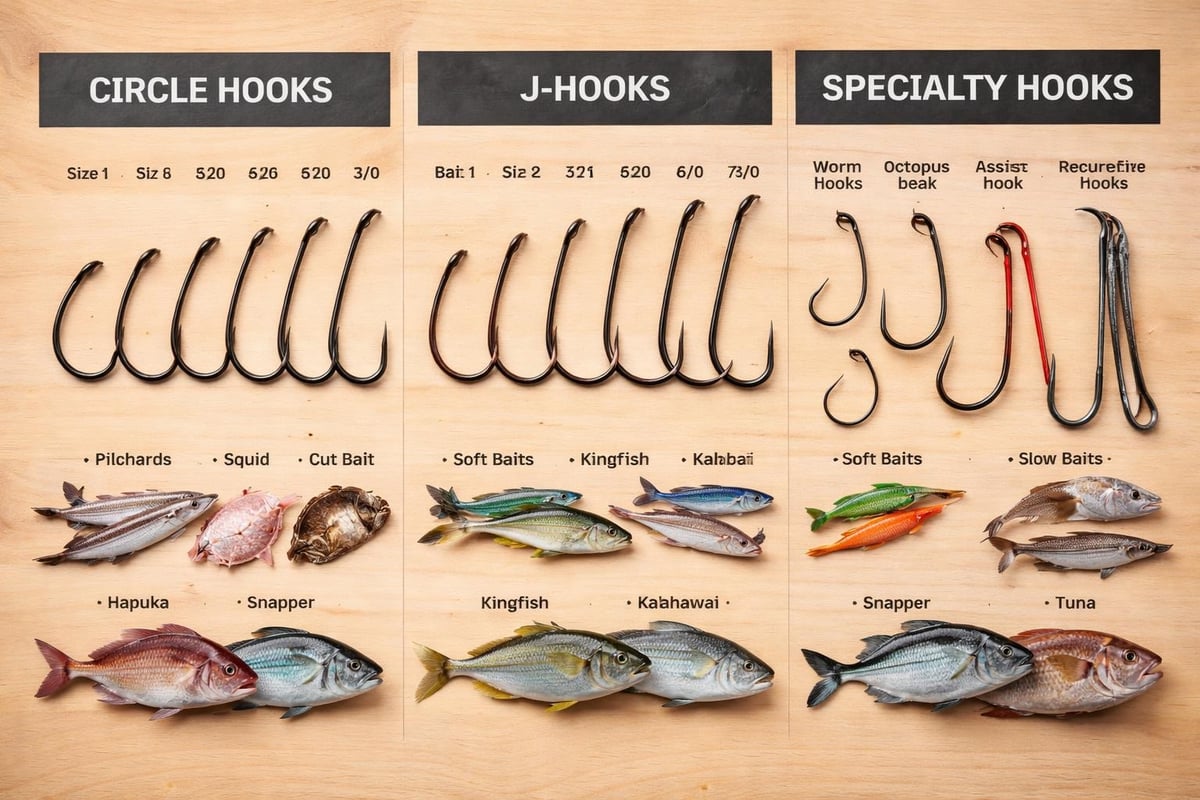
The fishing hooks nz market offers numerous varieties, each designed for specific fishing methods and target species. Circle hooks have gained significant popularity due to their conservation benefits and are now mandatory in certain fisheries. These hooks feature an inward-pointing tip that reduces gut hooking, making catch-and-release more viable.
J-hooks remain the traditional choice for many applications:
Treble hooks serve specialized purposes, particularly in lure fishing scenarios. These three-pronged hooks increase hooking probability but require careful handling to minimize damage to fish. Many recreational anglers now replace treble hooks with single hooks on lures to improve survival rates of released fish.
Beyond standard patterns, fishing hooks nz manufacturers and suppliers stock specialty designs suited to local conditions. Suicide hooks feature offset points ideal for soft-bait fishing, while octopus hooks work exceptionally well for bottom fishing with cut bait. Kahle hooks provide a wide gap perfect for live bait presentations when targeting kingfish or marlin.
The traditional Māori fishing hook, or hei matau, holds profound cultural significance beyond its practical function. As detailed in the Australian Museum's collection, these hooks were crafted from bone, stone, or wood and represent prosperity and safe passage over water. Modern interpretations of these traditional designs still influence contemporary hook manufacturing.
Understanding hook sizing can initially confuse newcomers to fishing, as the numbering system operates inversely to intuition. Smaller numbers indicate larger hooks, while larger numbers denote smaller hooks. A size 1 hook is larger than a size 6, but once you reach 1/0 (one-aught), the scale reverses-2/0 is larger than 1/0.
| Hook Size | Common Applications | Target Species NZ |
|---|---|---|
| 10-8 | Small bait fishing | Spotties, small herrings |
| 6-4 | General bait fishing | Kahawai, small snapper |
| 2-1 | Medium bait/lure | Snapper, gurnard |
| 1/0-3/0 | Large bait fishing | Snapper, blue cod, trevally |
| 4/0-6/0 | Big game fishing | Kingfish, tuna |
| 7/0+ | Heavy offshore | Marlin, sharks |
Choosing the appropriate size depends on multiple factors. Bait size should generally match hook size-forcing large bait onto small hooks or vice versa reduces effectiveness. The target species' mouth size dictates minimum hook dimensions, while fishing method influences maximum size.
Wire thickness significantly affects hook performance across fishing hooks nz applications. Fine wire hooks penetrate easily but bend under heavy loads, making them suitable for smaller species or light tackle fishing. Heavy wire hooks withstand considerable pressure but require more force to set properly.
Key wire gauge considerations include:
The Ministry for Primary Industries provides specific guidelines on hook sizes for certain species, particularly regarding blue cod conservation. These regulations mandate minimum hook sizes to reduce capture of undersized fish, demonstrating how hook selection directly impacts sustainable fishing practices.
Contemporary fishing hooks nz suppliers stock are manufactured from various materials, each offering distinct advantages. High-carbon steel remains the most common base material, providing excellent strength-to-weight ratios and sharpness retention. Stainless steel hooks resist corrosion in saltwater environments but generally cost more and can be harder to sharpen.
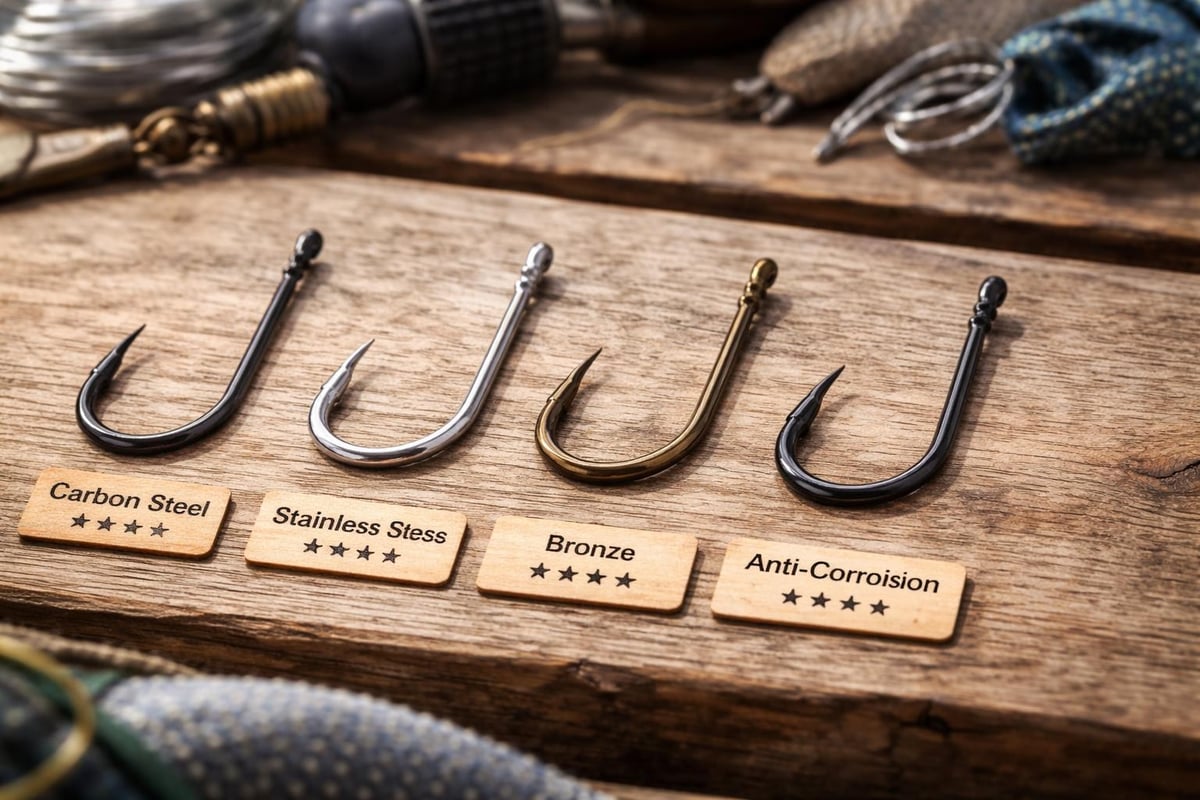
Vanadium steel represents a premium option, delivering superior strength and allowing manufacturers to use thinner wire without sacrificing durability. This material particularly benefits anglers targeting powerful species like kingfish or marlin where hook failure could mean losing a trophy catch.
Protective coatings extend hook lifespan in harsh marine environments. Black nickel finishes provide moderate corrosion protection while maintaining sharpness. Tin coatings offer enhanced rust resistance and work well in saltwater. Bronze hooks, favored by some traditional fishers, develop a patina that some believe attracts certain species.
Modern innovations include chemically sharpened points and chemically etched finishes that enhance penetration. These treatments, combined with quality materials, ensure hooks perform reliably across numerous fishing trips. For commercial operations, where equipment investment directly affects profitability, choosing durable hooks reduces replacement frequency and operational costs.
Different fishing techniques demand specific hook characteristics. Set netting, a common commercial method in New Zealand waters, typically employs ganged hooks on leaders. The hook size and spacing must align with mesh dimensions and target species. Action Outdoors Limited understands these requirements, offering comprehensive fishing equipment alongside their extensive net manufacturing operations.
Recreational fishing methods and hook preferences:
Kontiki fishing, a specialized New Zealand beach fishing method, requires carefully rigged long-line setups with numerous hooks. Circle hooks have become increasingly popular for this application, reducing mortality in released fish while maintaining high catch rates. The Boating New Zealand guide offers detailed insights into selecting hooks for various scenarios, emphasizing the importance of matching hook type to fishing style.
Commercial fisheries operate under strict regulations governing hook specifications. Longline operations targeting species like bluenose or hapuku must use prescribed hook sizes and types to minimize bycatch and ensure sustainability. These requirements reflect New Zealand's commitment to responsible fisheries management.
Circle hooks have become mandatory in certain commercial fisheries due to their conservation benefits. Studies demonstrate these hooks reduce mortality rates in non-target species and undersized fish, supporting long-term fishery health. Commercial operators who invest in compliant gear contribute to maintaining fish stocks for future generations.
Proper maintenance extends the functional life of fishing hooks nz anglers purchase, protecting this essential investment. After each saltwater exposure, thoroughly rinse hooks with fresh water to remove salt deposits that accelerate corrosion. This simple step significantly extends usable lifespan, particularly for non-stainless steel hooks.
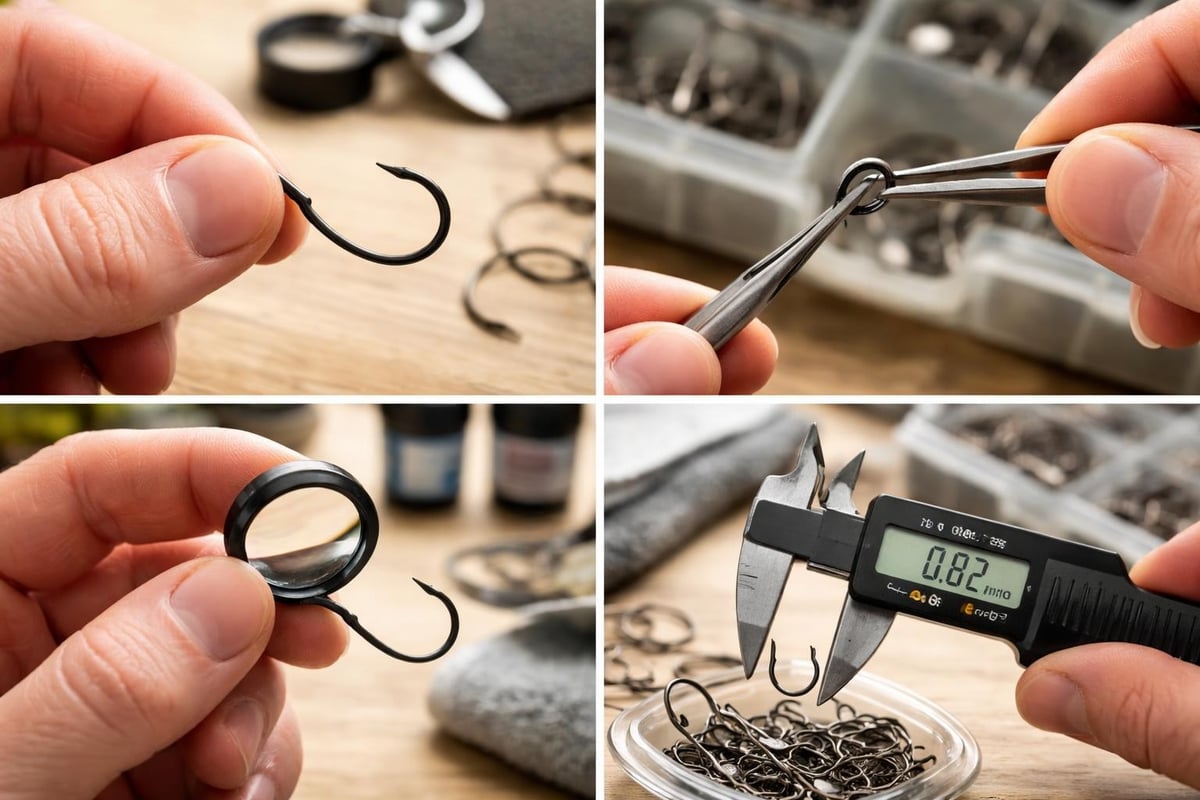
Regular sharpening maintains hook effectiveness. Even premium hooks dull over time through contact with rocks, fish teeth, and repeated use. Testing sharpness is straightforward: a sharp hook catches slightly when drawn across a fingernail, while a dull hook slides smoothly without resistance.
Sharpening methods include:
Inspect hooks regularly for structural damage. Bent points, cracked eyes, and weakened barbs compromise performance and should trigger immediate replacement. For commercial operations processing high volumes, systematic inspection routines prevent equipment failure during critical fishing windows.
Storage conditions significantly impact hook longevity. Keep hooks in dry environments with minimal humidity exposure. Tackle boxes with rust-preventive liners offer protection, while silica gel packets absorb moisture in storage containers. Separating hooks by size and type facilitates quick selection and prevents tangling.
New Zealand's fishing regulations include specific provisions regarding hook usage that all fishers must understand. The Ministry for Primary Industries outlines these rules, covering everything from maximum hook numbers per line to prohibited hook types in certain areas. Compliance protects marine ecosystems while ensuring continued access to recreational and commercial fishing opportunities.
| Fishing Method | Hook Restrictions | Conservation Purpose |
|---|---|---|
| Recreational set nets | Single hooks only on attended lines | Reduce ghost fishing |
| Blue cod fishery | Minimum size 13 required | Protect juvenile fish |
| Longline commercial | Circle hooks in some zones | Reduce seabird bycatch |
| Game fishing | Barbless hooks recommended | Improve release survival |
The cultural significance of the hei matau extends beyond traditional fishing into contemporary conservation ethics. This symbol reminds modern fishers of the deep connection between fishing practices and environmental stewardship, principles that guided Māori fishing for centuries.
Selecting hooks that support sustainable fishing demonstrates environmental responsibility. Barbless hooks or hooks with crimped barbs facilitate quick, low-stress release of undersized or non-target fish. While some fishers worry about losing hooked fish, properly set barbless hooks maintain catch rates while significantly improving survival of released fish.
Non-offset circle hooks represent another conservation-focused choice. These hooks typically lodge in the corner of the mouth rather than deep in the gut, reducing internal injuries and improving post-release survival dramatically. Many fishing hooks nz suppliers now prominently feature these options, reflecting growing environmental awareness among the fishing community.
Biodegradable hooks remain experimental but show promise for certain applications. These hooks dissolve over weeks if lost, reducing long-term environmental impact compared to traditional steel hooks that persist indefinitely. As technology advances, expect wider availability of eco-friendly hook options.
When buying fishing hooks nz retailers stock, several factors separate premium products from inferior alternatives. Point sharpness directly affects hooking efficiency-quality hooks penetrate with minimal pressure, while cheap hooks require excessive force and may fail to set properly.
Quality indicators to evaluate:
Price correlates with quality to some extent, but the most expensive hooks aren't always necessary. Match hook quality to application: premium Japanese-made hooks suit tournament fishing or trophy targeting, while economical options serve casual fishing adequately. Commercial operations should calculate replacement frequency against initial cost to determine true value.
Packaging quantity affects per-unit pricing significantly. Bulk purchases reduce costs for commercial fishers and frequent recreational anglers. However, ensure adequate storage facilities to prevent deterioration of unused hooks. For those exploring exciting new fishing innovations to try in 2026, investing in modern hook designs can enhance success rates.
Fishing hooks nz users select must integrate properly with other tackle components. Line strength should exceed hook breaking strength to prevent losing fish due to hook failure. However, hooks shouldn't be so strong they cause line breaks before straightening, as this can leave hooks embedded in fish.
Terminal tackle compatibility affects presentation effectiveness. Swivels, snaps, and leaders must match hook size and strength. Oversized connectors create unnatural bait movement, while undersized components create weak points in the rigging. Consider the complete system when selecting hooks for specific applications.
Proper knot selection ensures hooks perform to their potential. The Palomar knot provides excellent strength for most hook-to-line connections, while the improved clinch knot offers reliability with easier tying. For heavy tackle and large hooks, the uni knot or loop knot may prove superior.
Snelling hooks directly to leaders creates the strongest possible connection and improves hook-setting mechanics on certain hook styles. This traditional technique particularly benefits bottom fishing applications where strong hook sets overcome water resistance and penetrate tough-mouthed species. Master fishing repairs to maintain your gear effectively throughout the season.
Gang hooks, consisting of two or more hooks tied in sequence, increase hooking probability with larger baits. This rigging proves effective for species like kingfish or tuna when using whole fish baits. However, properly spacing gang hooks requires experience to avoid tangles and ensure both hooks penetrate effectively.
New Zealand serves as a major equipment supplier to Pacific Island fisheries, where fishing hooks nz manufacturers produce face unique environmental demands. Warm tropical waters accelerate corrosion, requiring stainless steel or heavily coated hooks for extended service life. The species profiles differ significantly from temperate New Zealand waters, necessitating different hook selections.
Pacific Island commercial fisheries often target tuna species requiring robust hooks capable of withstanding powerful runs and prolonged fights. Circle hooks have gained widespread adoption in these fisheries, reducing bycatch of turtles and marine mammals while maintaining tuna catch rates. This shift demonstrates how hook technology advances conservation goals without compromising productivity.
Small-scale community fishing operations throughout the Pacific rely on durable, affordable hooks that perform reliably across multiple species. Versatile hook patterns that work for both bottom fishing and pelagic species provide the flexibility these operations require. Suppliers supporting these communities must balance cost considerations with quality to ensure fishing remains economically viable.
Auckland-based fishers often favor hooks suited to snapper, kahawai, and kingfish-the region's dominant sport species. Sizes ranging from 2 to 4/0 see heaviest use, with both J-hooks and circle hooks maintaining popularity. The varied structure and reef systems around Auckland's coastline demand strong hooks that resist bending against rocks.
South Island fishers targeting blue cod, a species with strong regulations, must comply with MPI's minimum hook size requirements to avoid catching undersized fish. This has driven widespread adoption of larger hooks in the region, even among recreational fishers who previously used smaller patterns.
Regional hook preferences by target species:
West Coast fishers encounter unique challenges from rugged coastline and powerful surf conditions. Heavy-wire hooks resist the force of casting large sinkers required to hold bottom in strong currents. The Sport Fishing Council yearbook provides additional context on equipment specifications across different regions.
While Action Outdoors Limited specializes in net manufacturing, understanding hook applications remains relevant for comprehensive fisheries equipment knowledge. Set net operations sometimes incorporate baited hooks on drop lines to supplement net catches or target specific species. These integrated approaches maximize efficiency of fishing effort.
Commercial drag net operations occasionally damage hooks left on fishing grounds, highlighting the importance of responsible hook disposal and recovery. Lost hooks pose risks to marine life and can damage expensive nets. Fishers should retrieve all tackle when possible and support clean-up initiatives that remove derelict fishing gear.
The relationship between net mesh sizes and hook sizes matters for operations using both gear types. Coordinating equipment dimensions prevents hooks from tangling in nets during storage or transport. For businesses like Action Oudoors Limited that supply complete fishing solutions, understanding these interactions ensures customers receive compatible equipment recommendations.
Commercial fishers require reliable suppliers who understand operational demands and timeline pressures. Must-have fishing equipment for 2026 reflects evolving technology and regulatory requirements that commercial operations must navigate. Partnering with knowledgeable suppliers simplifies equipment selection and ensures compliance with changing standards.
Bulk purchasing arrangements help commercial operators manage costs while ensuring consistent gear availability. Establishing relationships with New Zealand-based manufacturers and suppliers provides supply chain reliability, particularly valuable for remote Pacific Island operations where equipment replacement delays directly impact revenue.
Quality assurance matters tremendously in commercial fishing. Equipment failure during productive fishing windows translates to lost revenue and potentially damaged client relationships. Investing in proven hook brands and specifications reduces these risks, making quality a sound business decision rather than an unnecessary expense.
Selecting the right fishing hooks requires understanding species behavior, fishing methods, regulatory requirements, and quality standards. From traditional Māori hei matau to modern circle hooks designed for conservation, fishing hooks nz suppliers offer reflect both heritage and innovation. Whether you're outfitting commercial operations, planning recreational fishing trips, or supplying Pacific Island fisheries, partnering with experienced suppliers ensures you get appropriate equipment for your needs. Action Outdoors Limited brings deep expertise in New Zealand fishing equipment alongside their core net manufacturing capabilities, providing comprehensive support for all your fishing and marine requirements.
Shop related products at Action Outdoors: Fishing Nets · Fishing Lures · Sinkers
Leave a comment