
Email

The world of fishing tackle and accessories encompasses far more than rods and reels. For commercial fisheries operating across the Pacific and recreational anglers alike, understanding the full spectrum of equipment-from specialized nets and marine-grade ropes to precision floats and essential tools-makes the difference between successful catches and missed opportunities. Modern fishing operations require carefully selected gear that withstands harsh marine environments while delivering consistent performance. This comprehensive guide examines the critical categories of fishing tackle and accessories that professional and community fisheries rely upon, with particular focus on the equipment that supports sustainable fishing practices throughout New Zealand and the Pacific region.
Fishing tackle represents the fundamental equipment used to catch fish, and fishing tackle has evolved significantly over centuries of maritime tradition. The category divides into several distinct groups, each serving specific purposes within commercial and recreational operations.
Commercial fishing nets remain the cornerstone of Pacific fisheries operations. These systems include gill nets, trawl nets, seine nets, and cast nets, each designed for different species, depths, and fishing methods. Modern netting incorporates advanced materials that resist degradation from saltwater exposure while maintaining the flexibility needed for deployment and retrieval.
Quality netting systems require several complementary accessories:
The specifications for commercial nets vary dramatically based on target species and fishing zones. Mesh size, breaking strength, and material composition must align with both catch objectives and sustainability regulations governing Pacific fisheries.
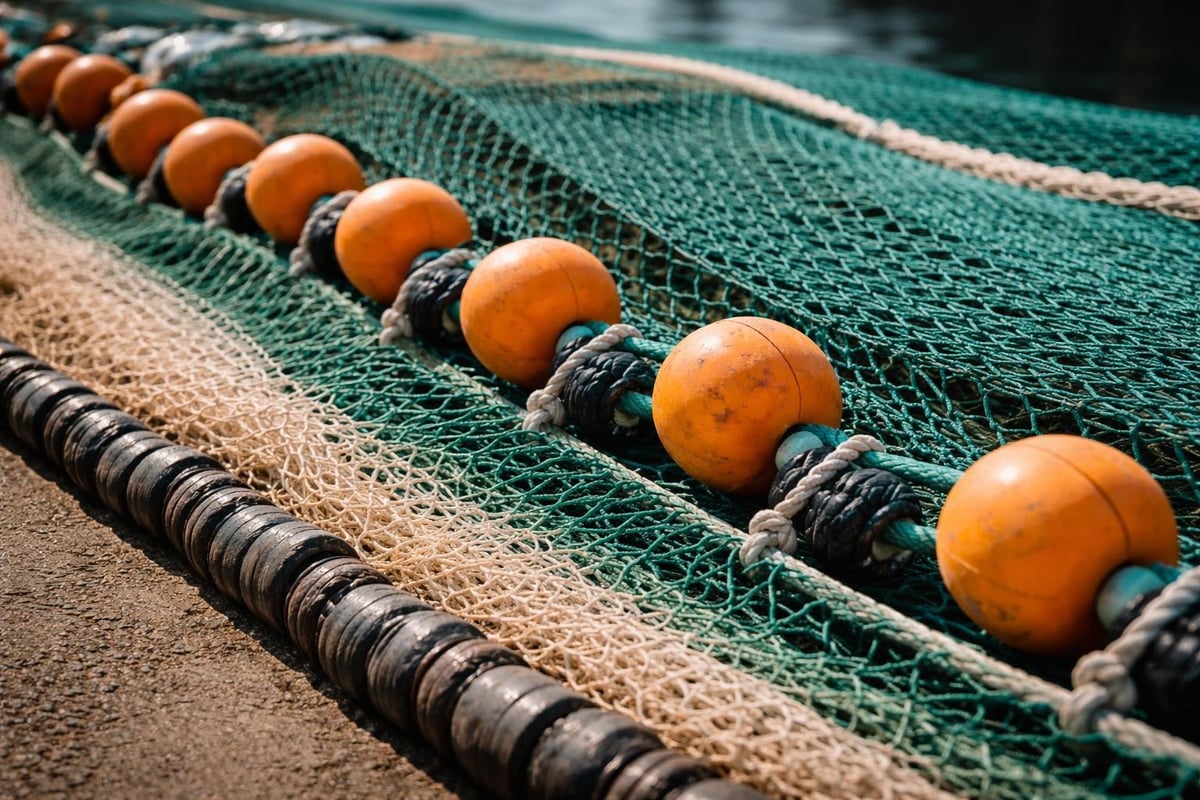
Marine-grade ropes serve multiple critical functions beyond simple net attachment. These include anchor lines, mooring systems, towing connections, and safety equipment. The selection criteria for fishing ropes consider several factors: breaking strength, abrasion resistance, UV stability, and behavior when wet.
| Rope Type | Primary Use | Key Characteristic | Typical Diameter |
|---|---|---|---|
| Nylon Multifilament | Anchor lines, mooring | High stretch, shock absorption | 10-24mm |
| Polypropylene | Floatation lines, markers | Floats, UV resistant | 6-16mm |
| Polyester | General purpose | Low stretch, durability | 8-20mm |
| High-Performance Synthetic | Heavy commercial applications | Extreme strength-to-weight | 12-28mm |
Understanding rope behavior under load proves essential for safety and operational efficiency. Experienced operators maintain multiple rope types aboard vessels to address varying situations and equipment requirements.
Beyond primary tackle, fishing tackle and accessories encompass numerous supporting items that enhance efficiency, safety, and catch quality. These accessories often determine whether fishing operations proceed smoothly or face frustrating delays.
Floatation systems mark net positions, indicate fishing zones, and maintain proper gear orientation underwater. Modern floats utilize high-density foam or hollow plastic construction with bright colors for visibility. Commercial operations require floats rated for specific depths and current conditions.
Specialized float applications include:
Pacific fisheries operating in diverse conditions from shallow reefs to deep-water zones need float inventories that address multiple scenarios. The float fishing kits used by modern operations often include various sizes and buoyancy ratings to accommodate changing conditions.
Professional fishing operations demand reliable tools for equipment deployment, catch processing, and gear maintenance. Knives represent perhaps the most essential category, with specialized designs for different tasks. Processing knives feature hollow-ground blades that facilitate precise cuts while resisting corrosion in saltwater environments.
Hook removers, pliers, cutting tools, and net needles enable field repairs that keep operations running. Many commercial vessels maintain comprehensive tool kits that address both routine maintenance and emergency repairs far from port facilities.
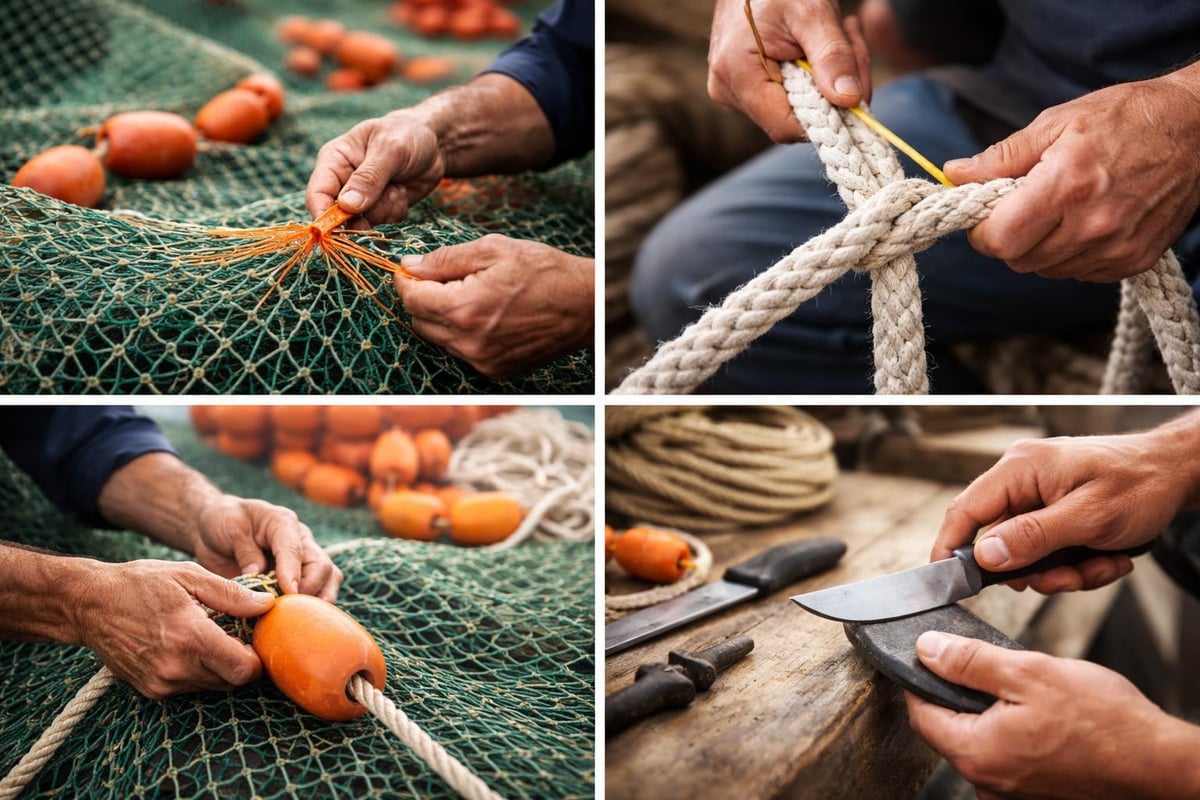
Commercial fisheries operating across Pacific waters face unique challenges that require specialized fishing tackle and accessories. Distance from supply centers, variable weather conditions, and diverse target species create equipment demands distinct from other fishing regions.
Cargo slings facilitate the safe handling of heavy catches, equipment, and supplies aboard fishing vessels. Marine-grade slings withstand repeated exposure to saltwater while maintaining rated load capacities. Modern slings incorporate protective sleeves that prevent damage to both the sling and the cargo being lifted.
Professional operations utilize several sling configurations:
Proper sling selection and inspection protocols prevent accidents and equipment damage that can sideline fishing operations. Load ratings, working limits, and retirement criteria must be understood by all crew members handling lifting operations.
Efficient tackle storage extends equipment life and reduces time wasted searching for specific items. Waterproof containers protect sensitive gear from moisture and salt spray, while organized rack systems keep nets, ropes, and tools readily accessible.
Commercial vessels increasingly adopt systematic storage approaches that designate specific locations for each equipment category. This organization proves particularly valuable during time-sensitive fishing windows when rapid deployment determines catch success. The concept extends to smaller operations, where small fishing kits offer compact solutions for essential gear.
The fishing industry continues embracing technological advances that improve efficiency, sustainability, and safety. Modern fishing tackle and accessories incorporate materials science, engineering innovations, and digital integration that previous generations never imagined.
Contemporary fishing nets utilize synthetic fibers engineered at the molecular level for specific performance characteristics. These materials offer superior strength-to-weight ratios compared to traditional options while resisting degradation from UV exposure, chemical contamination, and biological growth.
Recent innovations include:
Pacific fisheries evaluating these advanced materials must balance performance benefits against cost considerations and proven durability in demanding marine environments. The 7 exciting new fishing innovations to try in 2026 demonstrates how technology reshapes traditional fishing practices.
While traditional tackle remains central to fishing operations, electronic accessories increasingly support decision-making and regulatory compliance. GPS-enabled marker buoys, catch monitoring sensors, and digital logbooks integrate with conventional gear to enhance operational awareness.
These systems help commercial operators track equipment positions, monitor fishing effort, and maintain accurate records required by fisheries management authorities throughout the Pacific region. Integration challenges exist, particularly for smaller operations with limited capital budgets, but the trend toward digitally-augmented fishing operations continues accelerating.
Choosing appropriate gear requires understanding fishing methods, target species, environmental conditions, and regulatory requirements. The selection of fishing accessories impacts both operational success and economic viability for commercial fisheries.
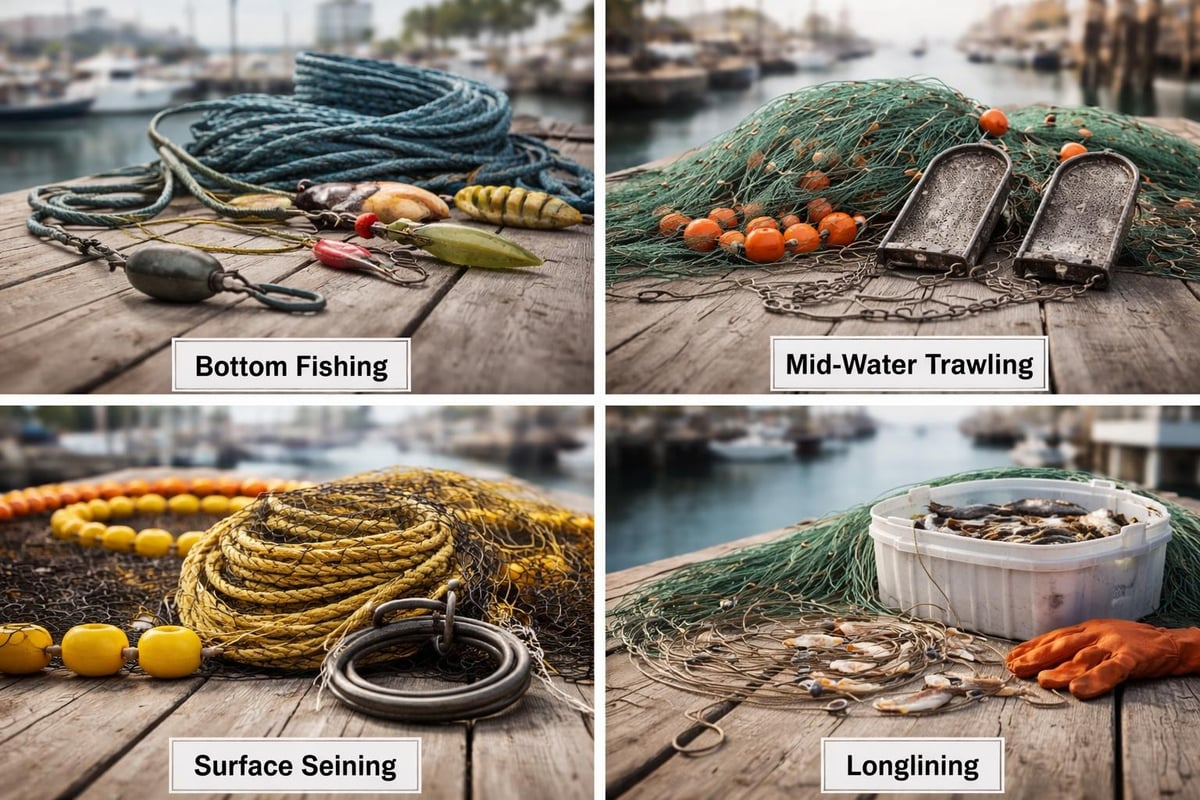
Bottom fishing demands tackle capable of withstanding contact with reef structures, rocky substrate, and strong currents. Nets and lines must resist abrasion while maintaining strength under heavy loads. Anchoring systems require substantial holding power, and weights need careful calibration to maintain proper gear positioning without snagging.
Specialized bottom fishing accessories include rock-hopper gear for trawl nets, abrasion-resistant rope sheaths, and heavy-duty swivels that prevent line twist. Operators targeting species near reef structures invest in equipment that balances durability with the inevitable wear from contact with hard surfaces. For comprehensive equipment considerations, the ultimate guide to bottom fishing gear 2026 offers detailed technical specifications.
Fishing in open water presents different challenges requiring distinct tackle approaches. Pelagic species often require faster deployment and retrieval systems, lighter floats for surface indication, and net configurations optimized for mid-water fishing zones.
| Application | Net Type | Float Requirements | Line Specifications |
|---|---|---|---|
| Tuna purse seining | Large encirclement | High-visibility markers | Heavy-duty synthetic |
| Longline fishing | Hooks on mainline | Radio beacon floats | Monofilament or multifilament |
| Drift netting | Vertical panels | Graduated flotation | UV-resistant nylon |
| Trolling operations | Lures and spreaders | Outrigger floats | Wire or heavy mono |
Understanding species behavior and migration patterns informs tackle selection that maximizes catch efficiency while minimizing bycatch and environmental impact.
Proper maintenance extends the service life of fishing tackle and accessories while ensuring safety and reliability during operations. Saltwater environments accelerate corrosion and material degradation, making systematic care protocols essential for commercial fisheries.
Post-trip cleaning removes salt deposits, organic material, and contaminants that compromise equipment integrity. Nets require thorough freshwater rinsing and inspection for tears, weak spots, and wear patterns. Ropes need examination for fraying, uneven wear, and internal strand damage not visible on the surface.
A comprehensive maintenance schedule addresses:
Professional operations maintain detailed maintenance logs tracking equipment condition, repairs performed, and replacement schedules. This documentation supports both operational planning and regulatory compliance requirements.
Remote Pacific fishing operations benefit enormously from onboard repair capabilities that minimize downtime. Net mending skills, rope splicing proficiency, and mechanical aptitude enable crews to address equipment failures without returning to port.
Essential spare parts inventories include replacement netting panels, rope sections, floats, shackles, and specialized fasteners. The balance between carrying comprehensive spares and managing limited storage space requires careful planning based on equipment types, fishing duration, and distance from supply sources.
Modern fishing operations must navigate complex regulatory frameworks governing gear specifications, catch methods, and environmental protection. Fishing tackle and accessories selection increasingly reflects sustainability priorities alongside operational efficiency.
Most Pacific fisheries jurisdictions mandate specific marking systems for commercial fishing gear. These requirements typically include vessel identification, permit numbers, and contact information displayed on nets, floats, and buoys. Compliance prevents gear conflicts, aids lost equipment recovery, and supports enforcement of fishing regulations.
Marking systems utilize:
Understanding and implementing proper marking systems prevents legal complications and demonstrates professional operation standards. Resources like tackle industry standards provide guidance on best practices for equipment identification and compliance.
Fishing tackle design increasingly incorporates features that reduce unintended catch of non-target species, undersized fish, and protected marine life. Modified net configurations, escape panels, and specialized hooks help fisheries meet conservation objectives while maintaining economic viability.
Sustainable fishing accessories gaining adoption include:
Pacific fisheries committed to long-term resource sustainability view these accessories as investments in future fishing opportunities rather than regulatory burdens. The economic case for conservation-oriented gear strengthens as consumers and markets increasingly demand sustainably harvested seafood.
Commercial fishing operations require reliable access to quality tackle and replacement parts. Supply chain considerations impact operational continuity, cost management, and equipment standardization across fishing fleets.
New Zealand-made fishing equipment offers several advantages for Pacific fisheries. Shorter supply chains reduce lead times for equipment orders and replacement parts. Local manufacturers better understand regional fishing conditions, species characteristics, and operational requirements specific to Pacific waters.
Domestic production supports:
Fisheries operating across multiple Pacific nations benefit from suppliers capable of exporting ready-to-use equipment that meets various national standards and specifications. The production capacity to manufacture over 350,000 meters of fishing nets annually ensures consistent availability for both routine replacement and fleet expansion.
Modern fishing operations require diverse tackle beyond specialized netting systems. Comprehensive suppliers offering ropes, floats, slings, marine equipment, and supporting accessories simplify procurement and reduce the complexity of managing multiple vendor relationships.
Single-source suppliers provide advantages including:
The breadth of available fishing tackle and accessories from integrated suppliers enables operations to standardize equipment across vessels, simplify crew training, and maintain consistent operational procedures. For operations seeking the latest equipment options, guides like 9 must-have new fishing equipment picks for 2026 highlight emerging products worth considering.
Fishing tackle and accessories represent significant capital investments for commercial operations. Economic analysis considers not only initial purchase costs but also service life, maintenance requirements, and operational efficiency impacts.
Smart procurement evaluates equipment across its entire service life rather than focusing solely on upfront pricing. Premium tackle commanding higher initial costs often delivers superior total value through extended durability, reduced maintenance, and better performance.
| Cost Factor | Budget Equipment | Premium Equipment |
|---|---|---|
| Initial purchase | Lower | Higher |
| Expected service life | 1-2 seasons | 3-5+ seasons |
| Maintenance frequency | Weekly repairs | Monthly maintenance |
| Performance reliability | Variable | Consistent |
| Total cost per season | Often higher | Usually lower |
Experienced operators recognize that tackle failures during prime fishing periods cost far more than the price difference between adequate and excellent equipment. Reliability, consistency, and predictable performance justify premium investments for professional fisheries.
Systematic replacement planning prevents emergency purchases at unfavorable prices and ensures equipment availability when needed. Forward-looking operations maintain tackle inventories that support both routine operations and contingency situations.
Effective inventory management balances several considerations:
Professional fisheries develop replacement schedules based on equipment inspection data, historical failure patterns, and planned operational intensity. This approach transforms tackle management from reactive crisis response to proactive operational planning.
Success in modern fishing operations depends on selecting quality fishing tackle and accessories matched to specific applications, maintaining equipment through rigorous care protocols, and partnering with reliable suppliers who understand Pacific fisheries requirements. Whether you operate commercial vessels, supply community fisheries, or support recreational fishing operations, access to dependable, locally-manufactured equipment makes the critical difference in operational efficiency and catch success. Action Outdoors Limited delivers New Zealand-made fishing nets, marine equipment, and comprehensive tackle solutions with the quick turnaround and proven quality that Pacific fisheries demand.
Shop related products at Action Outdoors: Fishing Nets · Fishing Lures · Fishing Hooks
Leave a comment