
Email

Selecting the right fishing line can make the difference between landing your catch and losing it to the depths. Understanding how to choose braid vs mono fishing line requires evaluating your specific fishing conditions, target species, and budget considerations. Both line types offer distinct advantages that serve different purposes in commercial and recreational fishing operations across New Zealand and the Pacific Islands. This comprehensive guide examines the critical factors that influence line selection, helping you make informed decisions that enhance your fishing success.
Braided fishing line consists of multiple fiber strands woven together, creating a thin yet incredibly strong line with minimal stretch. These synthetic fibers, typically made from materials like Spectra or Dyneema, deliver exceptional tensile strength relative to their diameter. Monofilament line, conversely, features a single continuous filament of nylon that offers natural stretch and forgiveness.
The manufacturing processes create lines with drastically different characteristics. Braid's woven construction eliminates stretch almost entirely, providing direct connection to your tackle and immediate bite detection. Monofilament's uniform structure gives it memory properties and buoyancy that braid lacks.
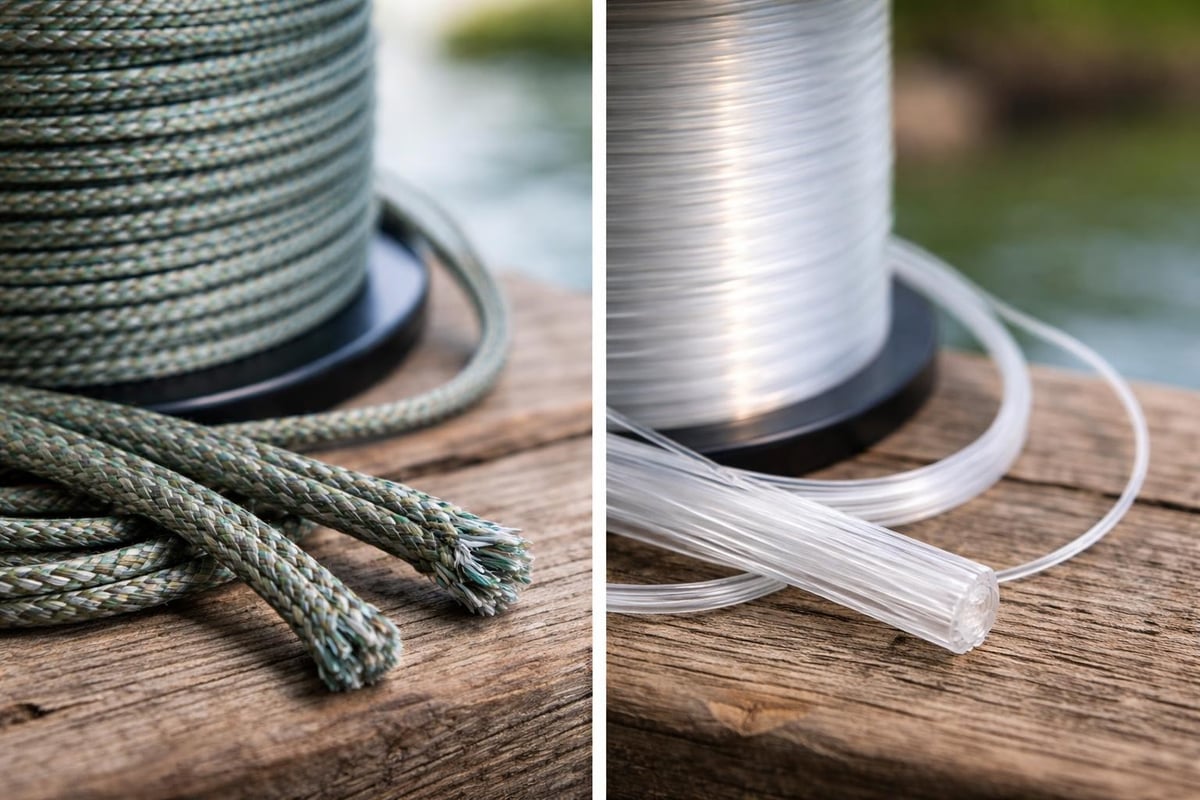
One of the most significant advantages of braided line is its superior strength-to-diameter ratio. A 50-pound test braid typically measures the same diameter as a 12-pound test monofilament. This allows anglers to spool significantly more line on their reels or use smaller, lighter reels for heavy-duty applications.
Key diameter differences include:
Monofilament's thicker diameter for equivalent breaking strength does provide certain benefits. The larger diameter increases abrasion resistance when dragging across rough surfaces like rocks, coral, or oyster beds common in Pacific fisheries.
When learning how to choose braid vs mono fishing line, understanding stretch properties proves essential. Braided line stretches approximately 5-8% under load, while monofilament can stretch 15-30%. This fundamental difference dramatically affects how you experience fishing.
Zero-stretch braid transmits every nibble, bump, and strike directly to your rod. Braided line's sensitivity advantages make it ideal for detecting subtle bites in deep water or when fishing structure. Commercial operations targeting species like snapper or grouper benefit from this immediate feedback.
Monofilament's stretch acts as a shock absorber during aggressive strikes and hard runs. This elasticity prevents hooks from tearing out of soft-mouthed fish and reduces the risk of breaking off during sudden surges. The forgiving nature of mono particularly benefits topwater fishing and situations requiring live bait presentations.
| Property | Braided Line | Monofilament Line |
|---|---|---|
| Stretch | 5-8% | 15-30% |
| Sensitivity | Excellent | Moderate |
| Shock Absorption | Minimal | Excellent |
| Hook Setting Power | Maximum | Moderate |
The stretch differential influences hook-setting techniques. Braid requires less force to drive hooks home due to direct energy transfer, while mono demands more aggressive hook sets to overcome line stretch.
Line visibility significantly impacts fishing success, particularly in clear water conditions prevalent around New Zealand coastlines. Understanding how to choose braid vs mono fishing line based on visibility helps match line selection to water clarity and fish wariness.
Braided line comes in various colors, but its opaque nature makes it more visible underwater than monofilament. Most braids appear as distinct lines that wary fish can detect. Monofilament naturally refracts light similarly to water, creating near-invisible presentation in many conditions.
Clear or low-visibility monofilament excels when targeting line-shy species in shallow, clear water. Many Pacific Island fisheries operate in pristine conditions where fish spook easily from visible lines. Adding a monofilament or fluorocarbon leader to braid combines stealth with strength.
Commercial net operations often prefer high-visibility lines for easier monitoring during net retrieval and maintenance, while recreational anglers prioritize concealment.
Abrasion resistance determines how well fishing line withstands contact with rocks, coral, timber piles, and other structure. This consideration proves particularly relevant for Pacific fisheries where volcanic rock and coral formations create hazardous conditions for fishing lines.
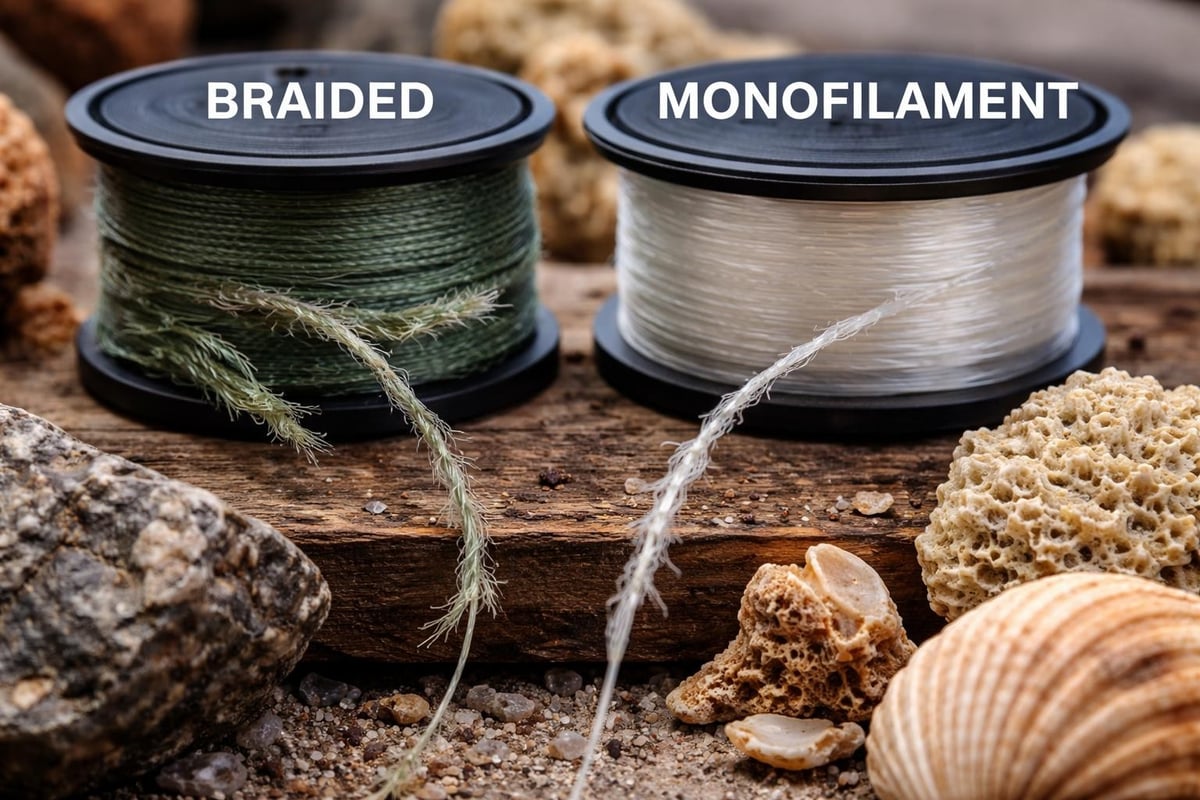
Monofilament's thicker diameter and uniform construction provide excellent abrasion resistance. The nylon material withstands scraping better than individual braid fibers. However, once mono develops a nick or abrasion, it weakens significantly at that point.
Braid's abrasion characteristics include:
Comparing line durability factors reveals that neither line type universally surpasses the other. Environmental conditions and fishing methods determine which performs better.
Monofilament degrades from ultraviolet light exposure, typically requiring replacement annually or after prolonged sun exposure. The nylon material breaks down, becoming brittle and weak. Storing mono away from direct sunlight extends its usable life.
Braided line resists UV degradation better than monofilament, maintaining strength for multiple seasons. The synthetic fibers used in modern braids withstand sun exposure without significant deterioration. However, abrasion from use typically necessitates replacement before UV damage becomes problematic.
Budget constraints influence line selection for both commercial operations and individual anglers. Understanding how to choose braid vs mono fishing line from a cost perspective requires examining initial investment versus long-term value.
Braided line typically costs 2-3 times more than equivalent breaking strength monofilament. A 300-yard spool of quality braid ranges from $25-$60, while comparable mono costs $8-$20. This significant price difference impacts purchasing decisions, especially for commercial operators spooling multiple reels.
Despite higher initial costs, braid often delivers better long-term value. Its extended lifespan means less frequent replacement, offsetting the premium price. Additionally, braid's thinner diameter allows spooling more line per reel, reducing the quantity needed for deep-water applications.
| Cost Factor | Braided Line | Monofilament Line |
|---|---|---|
| Initial Cost per 300 yards | $25-$60 | $8-$20 |
| Typical Lifespan | 2-5 years | 6-12 months |
| Replacement Frequency | Low | High |
| Cost per Season | Moderate | Low-Moderate |
Commercial fishing operations must balance performance requirements against budget realities. Integrating quality fishing equipment into your operation ensures reliable performance without excessive spending.
Casting distance and accuracy significantly impact fishing effectiveness. Braided line's thin diameter and lack of memory create exceptional casting performance. The line flows smoothly through rod guides, achieving greater distances with less effort than monofilament.
Braid casting advantages:
Monofilament develops memory over time, creating coils that reduce casting distance and increase tangles. These memory coils particularly affect spinning reels, where line springs off the spool during casts. Regular line replacement and proper storage minimize memory issues.
Braid requires careful spooling to prevent slippage on the reel arbor. Most anglers apply a monofilament backing or arbor tape before spooling braid. The slick nature of braided line can cause it to spin freely on the spool under load without proper preparation.
Monofilament grips the reel spool naturally, requiring no special preparation. However, overfilling reels with mono can cause line management problems as the line expands slightly when wet and contracts when dry.
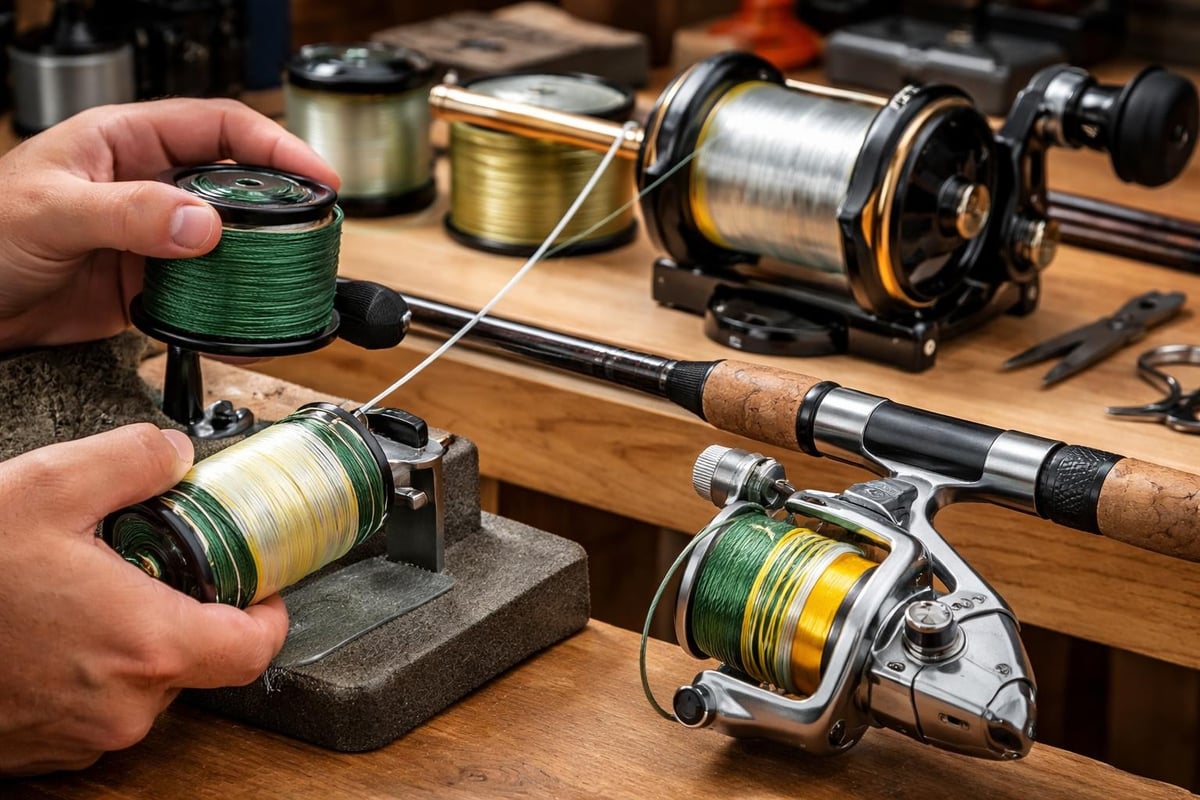
Matching line type to fishing methods optimizes performance. Understanding how to choose braid vs mono fishing line for specific applications ensures the right tool for each job.
Braid dominates deepwater fishing scenarios. Its zero stretch provides sensitivity at extreme depths where monofilament's stretch becomes problematic. When fishing 200+ meters deep, mono's elasticity prevents effective hook sets and bite detection. Commercial operations targeting deepwater species universally prefer braided mainlines.
Monofilament excels in trolling applications where shock absorption prevents pulled hooks during strikes. The line stretch cushions the impact when fish hit lures at speed. Live bait fishing similarly benefits from mono's forgiving nature, allowing fish to take bait naturally without feeling resistance.
Heavy cover situations present competing considerations. Braid's strength allows pulling fish away from structure, while mono's abrasion resistance better withstands contact with rough surfaces. Many experienced anglers use braid for its power but accept occasional break-offs from abrasion.
Monofilament floats naturally, making it ideal for topwater presentations. The floating characteristic keeps surface lures working properly. Braid sinks, pulling topwater lures beneath the surface unless paired with a monofilament leader. The leader also provides necessary stealth for fish observing from below.
Proper knot selection becomes critical when learning how to choose braid vs mono fishing line. Each line type requires specific knots to achieve maximum strength and reliability.
Braided line's slick surface causes traditional knots to slip. Specialized braid knots include:
These knots incorporate extra wraps and specific locking mechanisms that prevent slippage. Understanding proper maintenance techniques extends equipment lifespan and prevents failures.
Monofilament accepts virtually any fishing knot effectively. The improved clinch knot, Palomar knot, and loop knots all function reliably with mono. The material's texture provides sufficient friction to maintain knot security without slippage concerns.
Testing knots before fishing prevents losses. Pull-testing each knot ensures proper tying and adequate strength. Replace any questionable connections immediately.
Many anglers combine braid and mono advantages through leader systems. This approach provides braid's sensitivity and strength for the mainline while adding mono's stealth and abrasion resistance where it matters most.
A typical setup uses braided mainline with a 1-3 meter monofilament or fluorocarbon leader. The leader handles fish contact and provides near-invisible presentation. This combination proves especially effective in clear water conditions common throughout Pacific fisheries.
Selecting appropriate fishing accessories complements your line choice for complete system optimization.
Pacific fishing environments present unique challenges influencing line selection. Understanding how to choose braid vs mono fishing line for these specific conditions optimizes performance.
Tropical Pacific waters rarely experience temperature extremes affecting line performance. However, monofilament becomes more elastic in warm water, increasing stretch characteristics. Braid maintains consistent properties across temperature ranges, providing predictable performance in varying conditions.
Both line types withstand saltwater exposure, though proper rinsing after use extends lifespan. Salt crystals can embed in braided line, creating abrasive particles that damage rod guides. Thorough freshwater rinsing prevents this issue. Monofilament requires similar care to prevent salt-induced degradation.
Strong currents and tidal flows characterize many Pacific fishing locations. Braid's thin diameter cuts through current better than thicker monofilament, maintaining better lure control and bottom contact. This advantage proves significant when fishing deep channels or areas with substantial water movement.
Commercial operations face different constraints than recreational anglers when selecting fishing line. Volume requirements, durability needs, and cost considerations all influence decisions on how to choose braid vs mono fishing line for professional use.
Large-scale commercial operations often standardize on monofilament for cost effectiveness and proven reliability. The material's availability in bulk quantities and lower price point suit high-volume operations. Quality fishing nets and marine equipment complement line selection for comprehensive commercial fishing systems.
Braided lines serve specialized purposes in commercial fishing beyond rod-and-reel applications. Heavy braided cordage provides strength for net repairs, rigging, and equipment securing. The material's resistance to rot and degradation makes it ideal for these supporting roles.
Professional fishermen balance performance requirements against practical considerations. Multi-reel operations benefit from monofilament's lower cost when outfitting entire fleets. Specialized applications justify braid's premium pricing where performance advantages deliver measurable returns.
Evaluating all factors comprehensively leads to optimal line choices. No universal answer exists for how to choose braid vs mono fishing line - the best selection depends on your specific circumstances, target species, fishing methods, and budget constraints.
Decision framework considerations:
Testing both line types in your specific fishing situations provides firsthand experience that guides future decisions. Many successful anglers maintain both options, selecting appropriate line for each fishing scenario they encounter.
Understanding comprehensive line characteristics helps refine your selection process and ensures optimal performance across diverse fishing conditions encountered throughout New Zealand and Pacific waters.
Choosing between braided and monofilament fishing line ultimately depends on matching line characteristics to your specific fishing requirements, whether you're operating commercial nets or pursuing recreational catches across Pacific waters. Both line types deliver proven performance when properly matched to applications and fishing conditions. For comprehensive fishing and marine equipment solutions including quality lines, nets, and accessories manufactured to New Zealand standards, explore the full range available at Action Outdoors Limited. Their extensive catalogue serves commercial operations and individual anglers throughout the Pacific region with reliable, ready-to-use products backed by decades of manufacturing expertise.
Shop related products at Action Outdoors: Fishing Nets · Fishing Lures · Fishing Line
Leave a comment