
Email

Kingfish represent one of the most challenging and rewarding targets for anglers in New Zealand and throughout the Pacific region. These powerful predators demand specialized equipment and techniques that can withstand their explosive runs and relentless fighting spirit. Understanding the best jigging setups for kingfish requires knowledge of rod specifications, reel capabilities, line choices, and jig selection that work together as a cohesive system. Whether you're fishing from a boat, kayak, or targeting these fish around structure, the right setup makes the difference between landing trophy kingfish and watching your gear fail under pressure.
Kingfish typically inhabit rocky reefs, underwater structures, and current-rich areas where baitfish congregate. These ambush predators position themselves near pinnacles, wrecks, and drop-offs where they can attack prey with devastating speed. Understanding kingfish behavior and preferred habitats helps anglers select appropriate jigging locations and techniques.
Water depth significantly influences your jigging setup choices. Shallow water kingfish between 10-30 meters require lighter jigs and more responsive rods, while deep water fish at 50-100 meters demand heavier jigs and specialized gear. Current strength also plays a critical role, as stronger currents necessitate heavier jigs to maintain contact with the bottom.
Kingfish movements follow seasonal baitfish migrations and water temperature changes. Summer months typically offer the most consistent action in New Zealand waters, with fish moving into shallower areas to feed aggressively. Winter fishing often requires targeting deeper structures where kingfish hold in more concentrated schools.
The best jigging setups for kingfish adapt to these seasonal variations by allowing anglers to switch between lighter and heavier jig weights while maintaining the same core rod and reel combination. This versatility ensures year-round effectiveness across different conditions.
Your jigging rod serves as the primary interface between you and the fish, transmitting both lure action and strike detection while providing leverage during the fight. Rod length, power rating, and action all contribute to jigging effectiveness.
Most kingfish jigging specialists prefer rods between 5'6" and 6'6" in length. Shorter rods provide better leverage when fighting fish near structure, while longer rods offer improved casting distance and jig control in deeper water. Rod power ratings typically range from medium-heavy to extra-heavy, with PE3-PE5 ratings being most common for general kingfish applications.
Key rod specifications to consider:
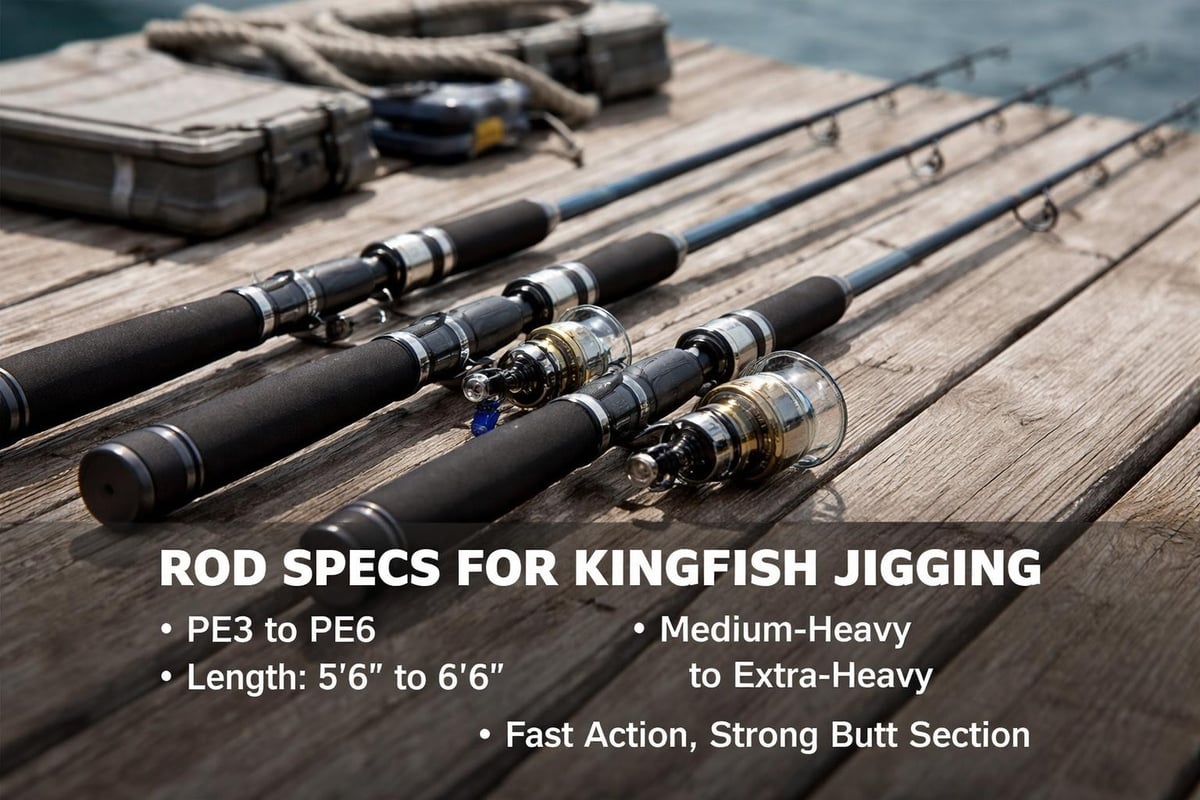
The best jigging setups for kingfish incorporate rods specifically designed for this purpose rather than repurposed boat rods. Specialized jigging rods feature parabolic actions that load progressively during the fight, preventing hooks from tearing out while maintaining constant pressure on the fish.
High-quality spinning reels dominate the kingfish jigging scene in 2026, offering superior line management and drag performance. Reel size, gear ratio, and drag capacity determine your setup's fish-fighting capabilities.
Reel sizes between 6000-10000 provide the line capacity and structural strength needed for kingfish. Larger reels offer more line capacity for deep water applications and provide better cranking power during long battles. Gear ratios between 5.5:1 and 6.2:1 deliver the ideal balance between retrieve speed and torque.
High-speed reels excel when employing various jigging styles including speed jigging techniques that require rapid line recovery. Lower gear ratios suit slow-pitch jigging methods where mechanical advantage becomes more important than retrieve speed.
| Reel Specification | Shallow Water (10-30m) | Deep Water (50-100m) |
|---|---|---|
| Size | 6000-8000 | 8000-10000 |
| Gear Ratio | 5.8:1 - 6.2:1 | 5.5:1 - 5.8:1 |
| Drag Capacity | 15-20kg | 20-25kg |
| Line Capacity | 300m PE3 | 400m PE4 |
Smooth, reliable drag systems prevent break-offs during kingfish runs. Quality reels feature multiple drag washers that dissipate heat effectively and maintain consistent pressure throughout extended fights. Maximum drag capacity should exceed 15kg, though anglers typically fish at 30-40% of maximum drag to maintain control while protecting tackle.
The connection between your reel and jig must withstand incredible stress while remaining nearly invisible to wary kingfish. Mainline and leader choices directly impact both presentation and landing percentages.
PE2-PE4 braided lines provide the ideal combination of strength, diameter, and sensitivity for kingfish jigging. Thinner diameters cut through current more effectively, allowing lighter jigs to reach bottom quickly. Quality braided lines feature tight weaving that resists abrasion while maintaining suppleness for smooth casting.
Most experienced anglers prefer 8-strand braided lines over 4-strand versions for their superior roundness and abrasion resistance. Color-coded lines help track depth and detect subtle strikes in deeper water.
Heavy fluorocarbon leaders between 30-60lb test protect against abrasion from kingfish teeth and rough structure. Leader length typically ranges from 1.5-3 meters, with longer leaders beneficial in clear water conditions. The best jigging setups for kingfish incorporate quality connections between mainline and leader using FG knots, PR knots, or similar high-strength connections.
Leader specifications by fishing environment:
Metal jigs form the foundation of kingfish jigging success, with weight, profile, and action all influencing strike rates. Modern jig designs incorporate sophisticated hydrodynamics that create irresistible movements during the fall and retrieve.
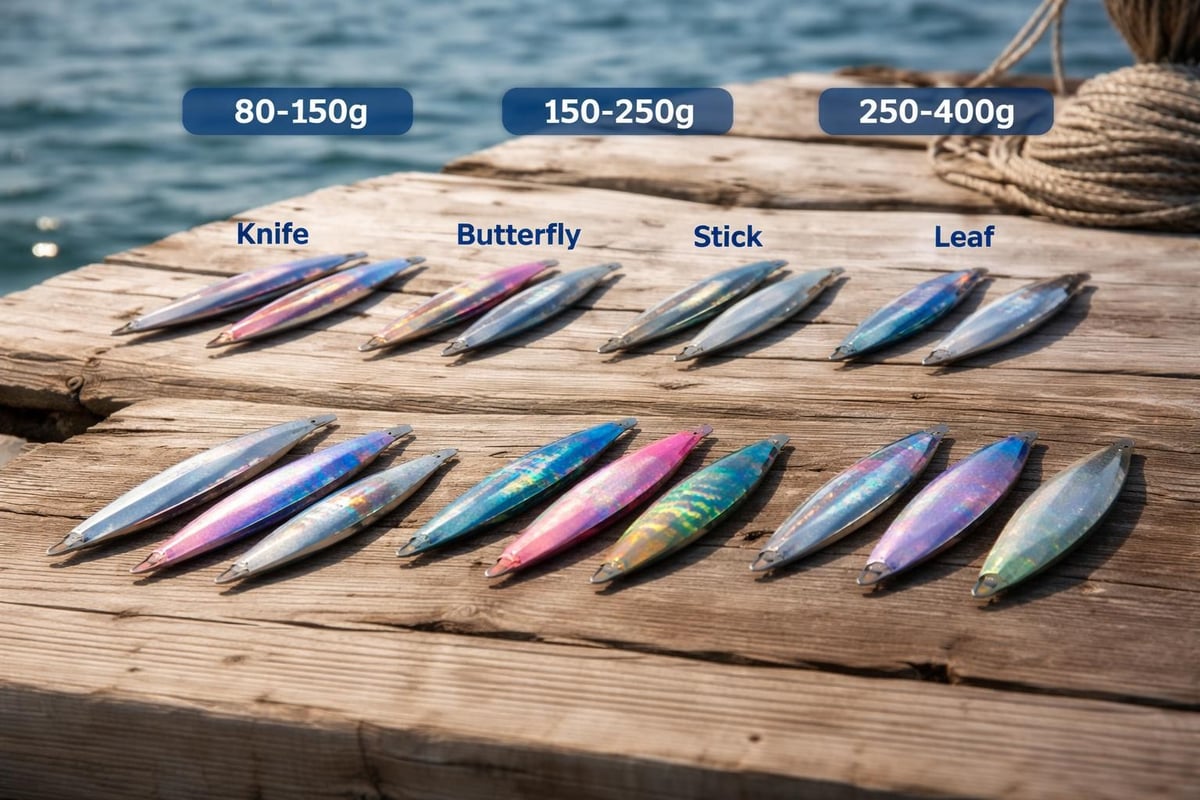
Current strength and water depth determine appropriate jig weights. Specialized tackle setups for targeting yellowtail kingfish emphasize matching jig weight to conditions rather than following arbitrary rules. Jig weights typically range from 80g in calm, shallow conditions to 400g in deep water with strong current.
Common jig profiles include:
Speed jigging involves rapid vertical movements that trigger reaction strikes from aggressive kingfish. This technique excels around current-swept pinnacles and during active feeding periods. Anglers employ fast upward rod sweeps followed by controlled line recovery, creating erratic jig movements that mimic fleeing baitfish.
Slow-pitch jigging utilizes deliberate movements and extended pauses, appealing to less active fish. This method proves particularly effective in deeper water and during colder months when kingfish become more selective. The jig falls on slack line, creating natural flutter that entices wary predators.
For anglers just starting with kingfish, prime locations and beginner strategies for jigging provide valuable insights into technique selection based on local conditions and fish behavior patterns.
Strong, reliable connections between components prevent tackle failure during critical moments. Hooks, split rings, and assist cord must match the quality standards of your primary tackle.
Most modern jigs employ assist hooks rather than treble hooks, reducing snag risk while improving hookup ratios. Quality assist hooks feature wide gaps and ultra-sharp points that penetrate quickly during hard strikes. Hook sizes typically range from 3/0 to 7/0 depending on jig size and target fish dimensions.
Twin assist hooks positioned at the jig head provide better hookup percentages than single hooks, though single hooks reduce weight and improve jig action. Many anglers compromise by using twin hooks on larger jigs (200g+) and single hooks on smaller presentations.
Heavy-duty split rings connect jigs to leaders and assist hooks to jigs. Ring sizes must accommodate leader diameter while maintaining smooth rotation under load. Cheap split rings represent false economy, as failures at this critical connection point result in lost fish and expensive jigs.
| Component | Light Setup | Medium Setup | Heavy Setup |
|---|---|---|---|
| Assist Hook | 3/0 - 4/0 | 4/0 - 5/0 | 6/0 - 7/0 |
| Split Ring | Size 5-6 | Size 6-7 | Size 7-8 |
| Assist Cord | 200lb | 250lb | 300lb |
| Jig Weight | 80-150g | 150-250g | 250-400g |
The best jigging setups for kingfish vary based on fishing platform, target depth, and environmental conditions. Customizing your approach maximizes success across diverse situations.
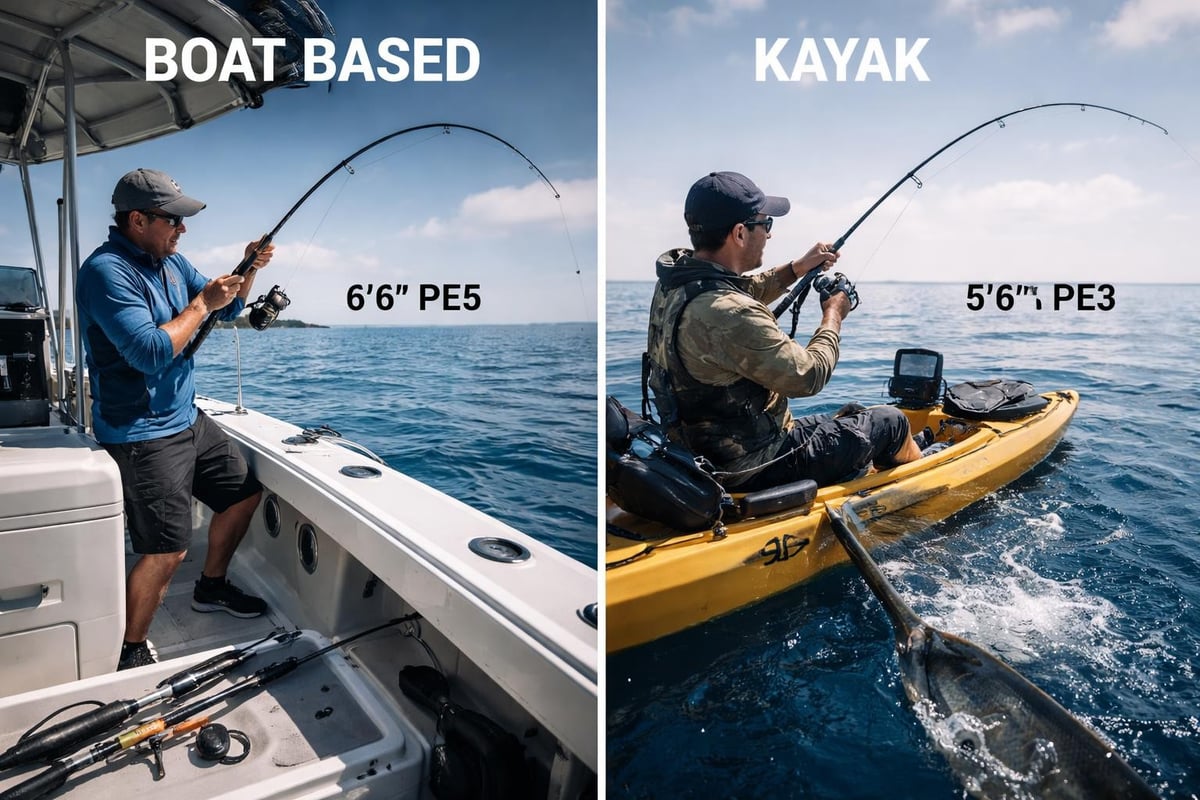
Fishing from dedicated sportfishing boats allows heavier tackle and more aggressive fish-fighting techniques. Anglers can employ vertical presentations directly over structure, maintaining optimal jig positioning throughout the fight. Boat setups typically feature heavier PE ratings and more powerful rods that leverage the stable platform advantage.
When catching kingfish around reefs and wrecks, boat anglers can position themselves upcurrent from structure, allowing jigs to drift naturally into strike zones before beginning the retrieve sequence.
Kayak anglers require more balanced setups that prevent the fish from towing the kayak excessively. Lighter tackle with excellent drag systems allows controlled fights without capsizing risks. Kayak fishing techniques for kingfish emphasize finesse over power, using the kayak's mobility to follow fish rather than stopping them immediately.
Shorter rods (5'6"-6') work better in kayak applications, providing adequate leverage without interfering with paddling or creating awkward angles during hooksets. Reel drags should be set lighter than boat fishing equivalents, allowing fish to take line while the angler maneuvers the kayak.
Quality tackle requires regular maintenance to perform reliably when trophy kingfish strike. Cleaning, inspection, and servicing schedules extend equipment lifespan while preventing failures.
After each fishing session, rinse reels thoroughly with fresh water, paying special attention to drag systems and bail mechanisms. Saltwater crystallization causes premature wear and corrosion that compromises performance. Rod guides should be inspected for cracks or rough edges that damage braided line.
Professional reel servicing every 50-100 fishing hours maintains optimal drag performance and prevents catastrophic failures during fights. This schedule intensifies for anglers who fish regularly in harsh conditions or pursue large kingfish that stress equipment severely. Much like maintaining fishing nets through proper repair techniques, jigging tackle requires consistent attention to detail.
Proper storage protects expensive jigging equipment from environmental damage. Rods should be stored vertically or horizontally with support at multiple points to prevent warping. Reels benefit from loose drag settings during storage, preventing spring compression and premature drag washer deterioration.
Jig collections require organized storage that prevents tangling while allowing quick selection based on conditions. Tackle boxes with individual compartments keep hooks sharp and prevent coating damage that reduces effectiveness.
Assembling the best jigging setups for kingfish involves matching components that work synergistically rather than simply purchasing premium individual items. System compatibility ensures optimal performance across all fishing scenarios.
Anglers new to kingfish jigging can build effective setups without excessive investment. A quality PE3-PE4 spinning rod paired with a 6000-8000 size reel provides adequate capability for most kingfish situations. PE2-PE3 braided mainline and 30-40lb fluorocarbon leaders complete the foundation.
Initial jig selections should include 100g, 150g, and 200g weights in both knife and butterfly profiles, covering the majority of conditions encountered in New Zealand waters. This versatile collection allows experimentation with different techniques while building experience.
Tournament anglers and serious kingfish specialists invest in multiple specialized setups optimized for specific scenarios. These comprehensive systems might include dedicated speed jigging rods (PE5), slow-pitch jigging rods (PE3), and heavy-duty deep water rods (PE6) paired with appropriately sized reels.
Advanced setups incorporate the latest technological innovations, including high-modulus carbon fiber rods, waterproof drag systems, and specialized braided lines with minimal stretch characteristics. Jig collections expand to include dozens of weights and profiles, allowing precise matching to daily conditions. For those seeking comprehensive gear recommendations for 2026, staying current with equipment innovations provides competitive advantages.
Kingfish jigging involves heavy tackle, sharp hooks, and powerful fish that create genuine safety hazards. Protective equipment and safe handling practices prevent injuries while improving fishing efficiency.
Quality fishing gloves protect hands from line cuts during extended fights. Braided line under extreme tension can slice through skin instantly, causing serious injuries. Gloves also improve grip when handling fish for release or landing operations.
Proper footwear with non-slip soles prevents dangerous falls on wet boat decks. Kingfish fights often require rapid movements around the boat, and secure footing ensures anglers can focus on landing fish rather than maintaining balance.
Assist hooks remain extremely sharp and pose puncture risks during rigging, casting, and fish handling. Using pliers for hook removal and carrying a comprehensive first aid kit provides peace of mind during remote fishing adventures. Proper first aid preparation becomes especially important when fishing offshore locations.
Essential safety items for kingfish jigging:
Different Pacific regions develop distinctive preferences for the best jigging setups for kingfish based on local conditions, target fish sizes, and traditional fishing methods. New Zealand anglers often favor balanced setups that handle both jigging and topwater applications, while tropical Pacific regions might emphasize heavier tackle for larger fish.
Water clarity influences leader selection significantly. Crystal-clear waters around offshore pinnacles demand longer fluorocarbon leaders and more subtle presentations, while turbid inshore waters allow heavier, more visible leaders without spooking fish.
Understanding comprehensive kingfish fishing approaches helps anglers adapt their jigging setups to local conditions and integrate multiple techniques into versatile fishing strategies.
Tropical kingfish species often grow larger than their New Zealand counterparts, requiring heavier tackle across all components. PE6-PE8 rods paired with 10000-14000 size reels become standard rather than specialized equipment. Jig weights extend upward to 500g+ for extreme depths and current situations.
These robust setups also suit other large pelagic species that share kingfish habitat, making them versatile choices for mixed-species fishing. Anglers traveling between regions benefit from understanding these variations and adapting their tackle selections accordingly. Commercial fishing net operations across the Pacific demonstrate how equipment specifications must match regional requirements.
Building the best jigging setups for kingfish represents significant investment, though strategic purchasing and maintenance extends equipment lifespan. Budget allocation and value assessment help anglers maximize fishing effectiveness per dollar spent.
Premium rods and reels often cost 3-5 times more than entry-level equivalents, though performance gains don't always justify these price premiums for recreational anglers. Mid-range equipment from reputable manufacturers typically offers excellent reliability and performance at reasonable prices.
Jig costs accumulate quickly when fishing rocky structure where snags occur frequently. Diversifying jig weights and styles while accepting inevitable losses as fishing expenses helps maintain productive inventory without excessive spending. Purchasing jigs in bulk quantities reduces per-unit costs significantly.
Quality tackle maintains resale value better than budget equipment, offsetting higher initial costs. Well-maintained premium reels might retain 50-60% of purchase price after several seasons, while cheap reels become essentially worthless. This consideration becomes relevant for anglers who upgrade regularly or modify their approach based on evolving preferences.
For those exploring new fishing innovations in 2026, understanding how technological advances integrate with existing tackle helps make informed upgrade decisions without replacing entire setups unnecessarily.
Mastering the best jigging setups for kingfish requires understanding how rods, reels, lines, and jigs work together as integrated systems optimized for specific fishing scenarios. Success depends on matching tackle specifications to target depths, current conditions, and fish behavior while maintaining equipment through regular servicing and proper storage. Whether you're outfitting commercial fishing operations, community fisheries across the Pacific, or individual anglers pursuing trophy kingfish, having access to quality marine equipment and fishing supplies makes all the difference. Action Outdoors Limited provides comprehensive fishing and marine equipment solutions backed by New Zealand manufacturing quality and reliable Pacific-wide service.
Leave a comment