
Email

Every successful fishing trip starts with proper preparation, and having the ultimate tackle box checklist ensures you're never caught without critical gear. Whether you're heading out for a morning session on the local river or planning a full day offshore in New Zealand waters, your tackle box serves as your portable fishing workshop. This comprehensive guide covers everything from basic essentials to specialized equipment, helping both novice and experienced anglers organize their gear efficiently. By following this structured approach to tackle box organization, you'll spend less time searching for equipment and more time with your line in the water.
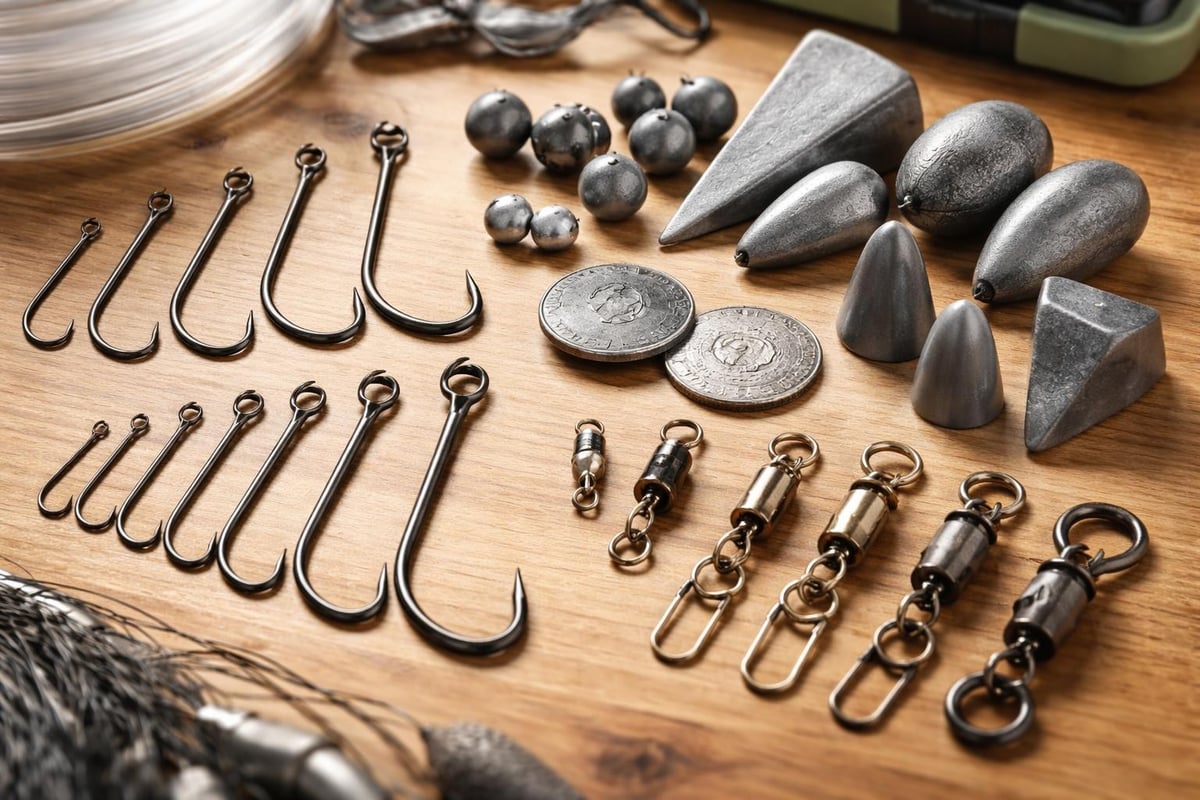
Terminal tackle forms the foundation of any fishing setup, representing the business end of your line that directly impacts your success rate. Your tackle box should contain a diverse selection of hooks ranging from size 2 through 6/0, covering various fishing scenarios from small freshwater species to larger coastal predators.
Sinker selection matters significantly in New Zealand's diverse fishing environments. Stock your box with:
Swivels and snaps prevent line twist and allow quick lure changes. Include sizes ranging from #10 for light tackle up to #2/0 for heavy applications. Ball-bearing swivels offer superior performance when targeting species that spin aggressively. The basic freshwater fishing essentials provide an excellent starting point for understanding terminal tackle needs.
Pre-tied leaders save valuable fishing time, but maintaining trace material allows custom rigging for specific situations. Fluorocarbon leaders in 10-30 lb test handle most recreational scenarios, while wire trace becomes essential when targeting species with sharp teeth. Consider stocking both single-strand wire and multi-strand varieties.
Monofilament remains relevant despite modern alternatives, particularly for shock leaders in surf fishing. Keep spools in graduated strengths from 20 lb through 60 lb test. Those interested in mastering fishing repairs will appreciate having repair twine readily available.
The ultimate tackle box checklist must address line management comprehensively. Spare spools prevent a single line failure from ending your entire trip. Maintain at least one backup spool for each reel you carry, pre-loaded with fresh line appropriate to your target species.
| Line Type | Diameter Range | Primary Applications | Backup Quantity |
|---|---|---|---|
| Monofilament | 6-20 lb | General purpose, topwater | 2 spools |
| Fluorocarbon | 10-30 lb | Clear water, leader material | 2 spools |
| Braided | 15-50 lb | Deep water, sensitivity | 1 spool |
| Wire | 20-60 lb | Toothy species, trolling | 1 spool |
Line conditioner extends the life of your fishing line while improving castability. Small bottles fit easily in tackle boxes and help maintain line performance throughout the season. Don't overlook line scissors or quality cutters designed specifically for braided line, which standard scissors struggle to cut cleanly.
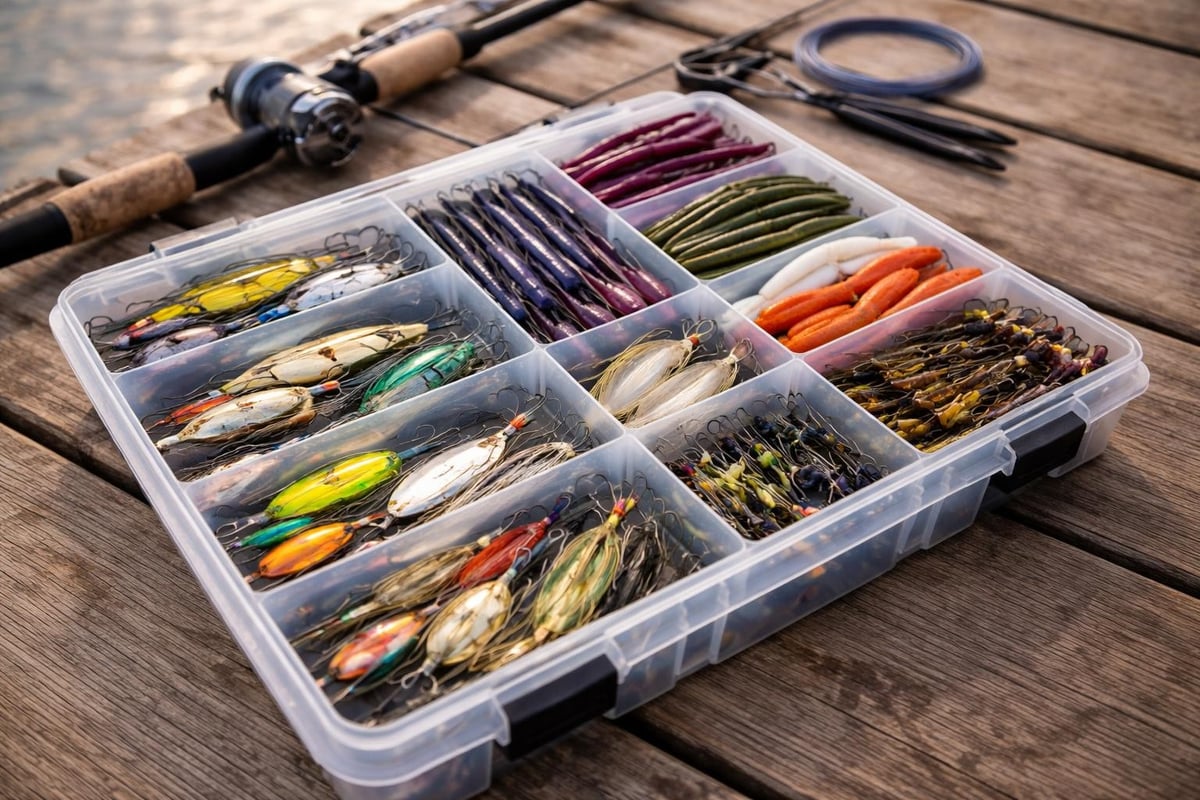
Successful anglers maintain diverse lure collections organized by type and application. Hard-bodied lures should include crankbaits, jerkbaits, and topwater poppers in natural baitfish patterns plus high-visibility options for murky conditions.
Soft plastics offer versatility across fishing environments:
Metal lures including spoons, spinners, and jigs provide effective alternatives when fish show preference for flash and vibration. Chrome and gold finishes remain reliable producers in New Zealand waters. Checking out new fishing equipment picks can introduce you to innovative lure designs gaining popularity in 2026.
Organize lures by type rather than color, using dividers or separate utility boxes. This system allows faster selection based on fishing conditions rather than aesthetic preference.
Beyond lures and terminal tackle, the ultimate tackle box checklist demands essential tools that handle common fishing situations. Quality needle-nose pliers with integrated line cutters serve multiple functions from removing hooks to crimping leaders. Choose corrosion-resistant models designed for saltwater environments.
Hook removal tools prevent injury and minimize damage to fish. Carry both standard hemostats and long-reach hook removers for deep-hooked fish. Fish grips protect both angler and catch during handling, particularly valuable when dealing with species featuring sharp spines or teeth.
A multi-tool designed for fishing applications consolidates several implements into one compact package. Look for models including:
Measuring tape or a marked bump board ensures compliance with size regulations. Digital scales provide accurate weight measurements, valuable for both tournament situations and personal records. The comprehensive fishing checklist offers additional insights into essential tools anglers frequently overlook.
Professional preparation extends beyond fishing equipment to include weather protection and safety essentials. Waterproof storage bags protect electronics, licenses, and personal items from inevitable moisture. Include sunscreen rated SPF 30 or higher, specifically formulated for extended water exposure where reflection intensifies UV rays.
Polarized sunglasses serve dual purposes: protecting eyes from harmful rays while allowing better water visibility to spot fish and structure. Keep a backup pair in your tackle box since primary glasses inevitably find their way overboard or suffer damage.
Basic first-aid supplies address common fishing injuries:
Hand warmers prove valuable during early season fishing in New Zealand's cooler months, maintaining dexterity for delicate knot tying. Conversely, cooling towels provide relief during summer sessions. Those planning extended trips should reference first-aid kit essentials for comprehensive medical preparation.
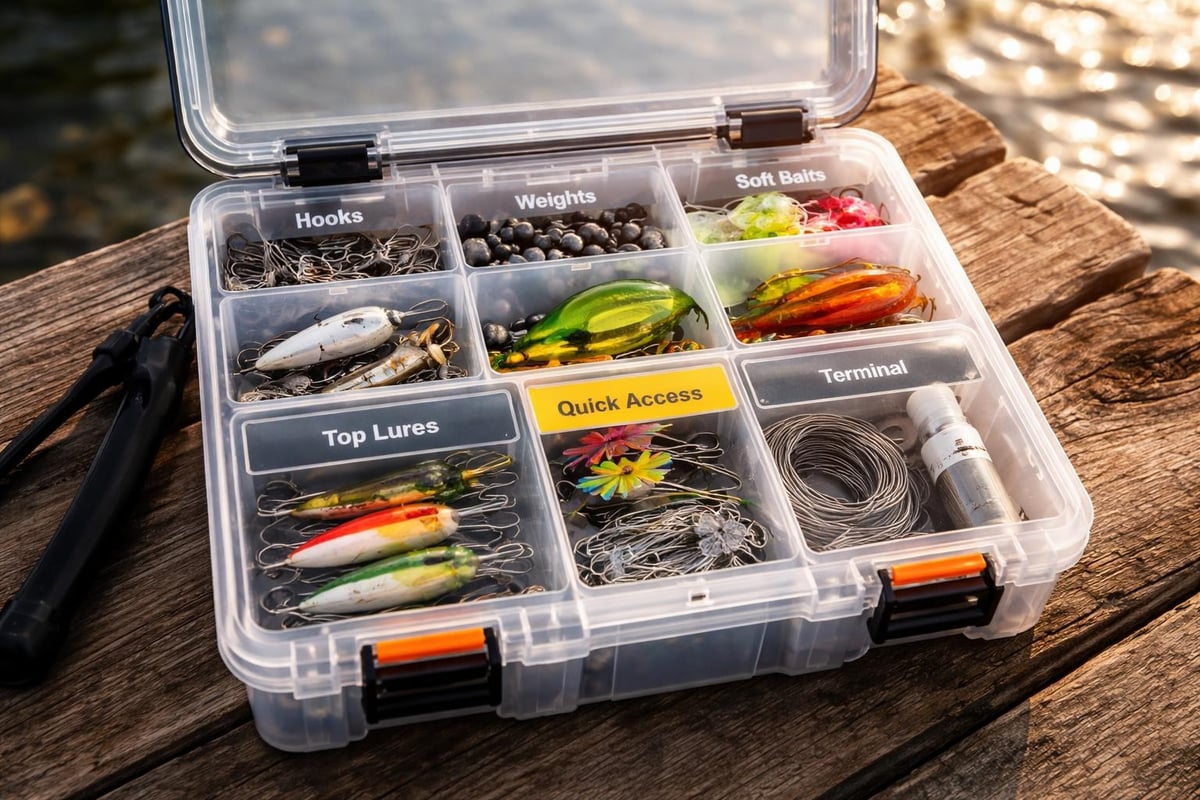
Effective tackle box organization separates successful anglers from those constantly rummaging through jumbled equipment. Waterproof utility boxes with adjustable dividers allow customization based on your specific needs. Clear lids enable quick visual inventory without opening containers.
Label each compartment clearly, particularly when maintaining multiple specialized boxes for different fishing scenarios. A basic labeling system might include:
| Compartment | Contents | Priority Level |
|---|---|---|
| 1 | Most-used hooks, sizes 1-1/0 | High |
| 2 | Sinkers, common weights | High |
| 3 | Swivels and snaps | Medium |
| 4 | Specialty terminal tackle | Low |
| 5 | Spare parts and tools | Medium |
Color-coded systems help differentiate freshwater versus saltwater gear or match tackle to specific target species. This approach prevents cross-contamination between different fishing environments and speeds up tackle selection.
The ultimate tackle box checklist includes ongoing maintenance protocols ensuring equipment remains functional when needed. Inspect terminal tackle monthly for rust, corrosion, or damage. Replace compromised hooks immediately since weakened points fail during critical moments with trophy fish.
Sharpen hooks regularly using a quality file or stone. Even new hooks benefit from touch-ups before use. Test hook points against your thumbnail: sharp hooks grab rather than slide across the surface.
Check fishing line for abrasion, discoloration, or memory coils indicating degradation. Replace main line at least annually with more frequent changes for heavily used setups. Those working with nets should explore fishing innovations that complement traditional tackle box gear.
Clean tackle boxes thoroughly at season's end, removing debris and dried bait residue. Rinse saltwater-exposed equipment with fresh water and dry completely before storage. Apply corrosion inhibitor to metal components protecting against off-season deterioration.
New Zealand's diverse fishing environments demand regional adaptations to the standard tackle box configuration. Coastal anglers targeting snapper and kingfish require heavier terminal tackle than those pursuing trout in mountain streams. Adjust your checklist based on primary fishing locations.
Surf casters need extended supply of larger sinkers, typically 3-6 oz pyramid weights, plus extended leaders up to 60 lb test handling abrasive sandy bottoms. Rock fishermen benefit from gang hooks and heavier monofilament resistant to structure.
Freshwater specialists should emphasize smaller presentations: size 8-14 hooks, micro jigs, and ultra-light sinkers. Fly fishing crossover anglers appreciate having strike indicators, tippet material, and nymph patterns available.
Understanding essential fishing accessories helps identify region-specific additions that enhance local fishing success. Investment in specialized gear pays dividends through increased effectiveness in your primary fishing environments.
Live bait fishing requires dedicated equipment for maintaining bait viability. Portable aerators keep bait lively throughout extended sessions, particularly crucial during warmer months when oxygen levels drop rapidly. Battery-powered models offer flexibility for shore-based fishing.
Bait containers with secure lids prevent escapes while allowing adequate airflow. Insulated models maintain stable temperatures protecting sensitive baits from thermal stress. Include small nets for transferring bait without hand contact that removes protective slime.
Cut bait applications benefit from:
The fishing gear essentials guide provides valuable context for first-time anglers establishing their bait management systems.
Modern tackle boxes increasingly incorporate technology enhancing fishing effectiveness. Portable fish finders provide underwater structure information and fish location data from shore or kayak. Compact models fit within larger tackle boxes protecting electronics during transport.
GPS devices or smartphone apps with GPS functionality help mark productive locations for future reference. Download offline maps before heading to remote areas where cellular service proves unreliable. Battery banks ensure devices remain powered throughout full-day sessions.
Digital fishing logs, whether smartphone apps or waterproof notebooks, document patterns, conditions, and successful techniques. Review this data before trips to identify seasonal trends and productive approaches. Action camera mounts allow hands-free documentation of memorable catches.
Temperature and barometric pressure gauges provide environmental data influencing fish behavior. While smartphones offer this information, dedicated devices function without draining phone batteries needed for emergency communication.
The ultimate tackle box checklist evolves throughout the fishing year. Spring fishing emphasizes spawning patterns with shallower presentations and natural colors mimicking baitfish. Stock lighter tackle as fish feed aggressively during pre-spawn periods.
Summer fishing demands early morning and evening focus when fish avoid midday heat. Include topwater lures for dawn action plus deep-diving crankbaits for thermocline fishing. Increase UV-resistant line capacity since summer sun degrades monofilament faster.
Autumn transitions bring fish into shallow feeding frenzies preparing for winter. Larger profile lures match bigger baitfish prevalent during fall months. Add reaction baits like spinnerbaits and chatterbaits capitalizing on aggressive feeding behavior.
Winter fishing requires downsizing presentations and slowing retrieves matching lethargic fish metabolism. Increase finesse tackle including drop shot weights and smaller soft plastics. Reference the tackle box essentials from The Old Farmer's Almanac for additional seasonal considerations.
Experienced anglers prepare for equipment failures by maintaining redundant critical components. Beyond spare spools, carry backup rod guides, reel handles, and drag washers for common repairs enabling quick field fixes rather than ending trips prematurely.
Waterproof storage for emergency items protects them from moisture damage:
Duct tape and electrical tape handle numerous repair scenarios from cracked rod blanks to securing loose components. Super glue bonds broken guide wraps or split rings. Keep small quantities in waterproof containers preventing dried-out adhesives.
Paracord serves countless applications beyond fishing: equipment repairs, makeshift handles, emergency lashings, or even fishing line in desperate situations. A 20-foot section occupies minimal space while providing maximum versatility.
Legal compliance forms a critical component of the ultimate tackle box checklist. Current fishing licenses must accompany anglers on every trip, with waterproof holders protecting documents from water damage. Know and follow local regulations regarding size limits, bag limits, and seasonal restrictions.
Regulation booklets or laminated quick-reference cards help verify legal requirements in the field. Digital versions on smartphones work well but require battery life and cellular service. Carry physical backups ensuring access regardless of technology failures.
Fish measurement tools including measuring tapes or bump boards with clearly marked increments enable accurate size verification. When fishing near legal minimums, conservative measurement practices prevent unintentional violations. Some anglers photograph fish against measuring devices documenting compliance.
Species identification guides help anglers distinguish between similar-looking fish with different regulations. This proves particularly important in New Zealand waters hosting numerous species with overlapping habitats but varying legal protections.
Serious anglers often maintain multiple specialized tackle boxes rather than one comprehensive system. This approach allows rapid preparation for specific fishing scenarios without carrying unnecessary equipment. A basic three-box system might include freshwater, inshore saltwater, and offshore configurations.
Tournament anglers benefit from pre-rigged leaders and hooks organized by technique. Time saved during competition through efficient tackle access often determines final standings. Clear labeling and consistent organization become even more critical under tournament pressure.
Kayak fishermen prioritize waterproof storage and compact designs fitting limited hull space. Vertical storage systems maximize accessibility while minimizing footprint. Tether valuable items preventing loss during capsizes or while navigating rough water.
Consider tackle bag systems offering modular utility boxes within a main carrier. This approach provides organizational benefits of multiple boxes with single-unit portability. Quality bags include rod holders, pliers sheaths, and external pockets for frequently accessed items.
Assembling the ultimate tackle box checklist ensures preparedness for diverse fishing scenarios while eliminating frustrating equipment gaps during critical moments. Whether you're pursuing New Zealand's abundant coastal species or exploring freshwater opportunities, having properly organized, well-maintained tackle transforms good fishing days into great ones. Action Outdoors Limited offers comprehensive fishing and marine equipment beyond just industry-leading nets, providing everything from terminal tackle to specialized rigging supplies that complement your perfectly stocked tackle box, all backed by New Zealand-made quality and decades of fishing expertise.
Shop related products at Action Outdoors: Marine Electronics · Fishing Lures · Sinkers
Leave a comment